Aeonium Care Guide
Learn how to grow Aeonium, a diverse genus of tree houseleeks with rosettes, branching forms, and seasonal growth often centered on cooler months.



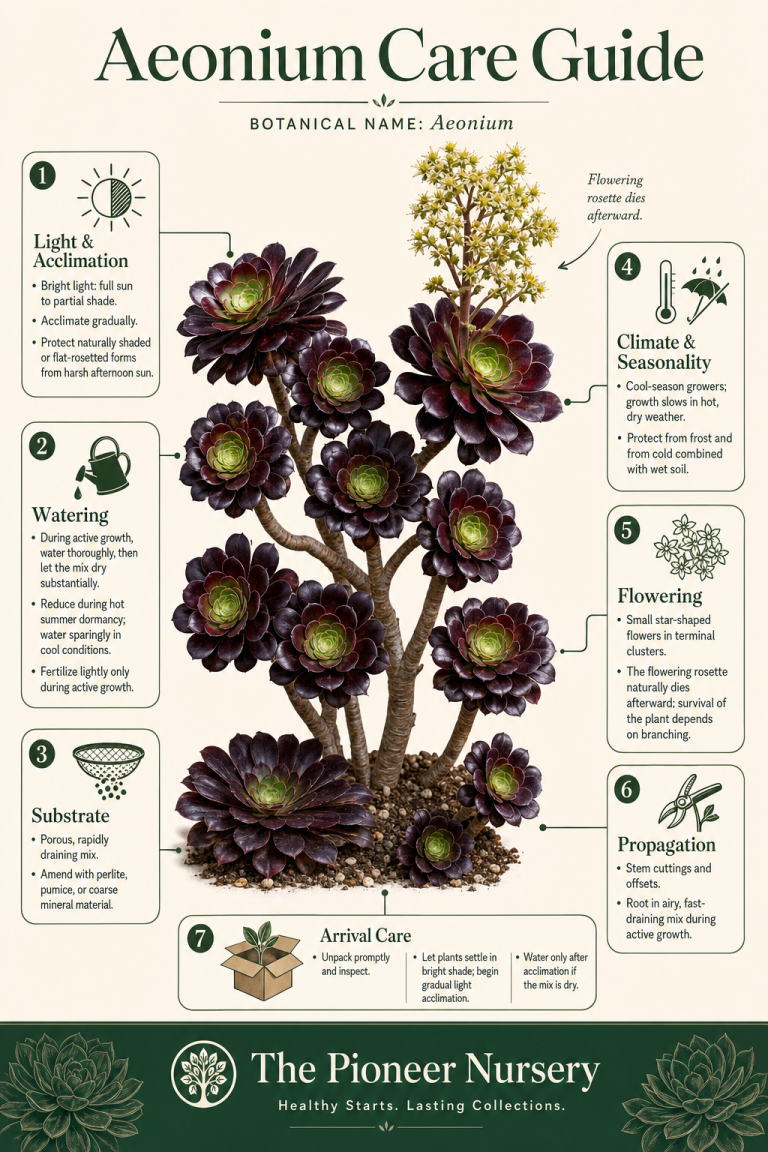
Learn how to grow Aeonium, a diverse genus of tree houseleeks with rosettes, branching forms, and seasonal growth often centered on cooler months.
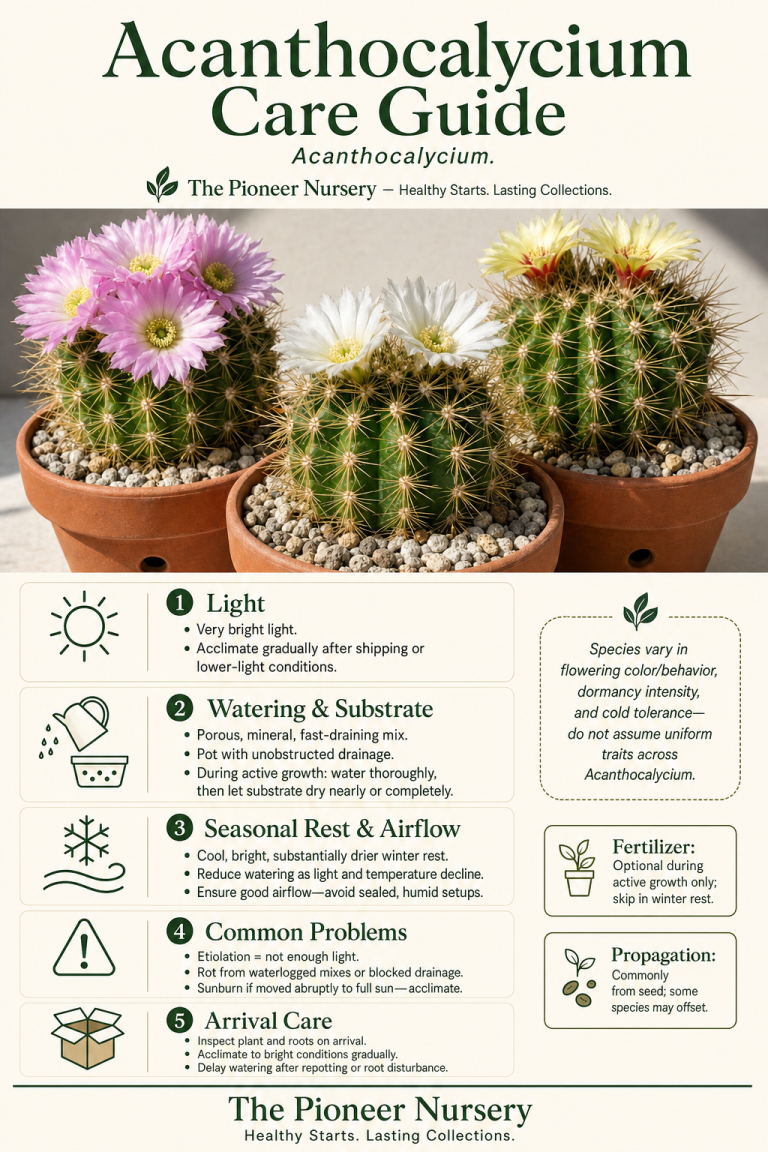
Learn how to grow Acanthocalycium with bright light, fast-draining soil, careful watering, and a drier winter rest. Species vary in flowering, dormancy, and cold tolerance.
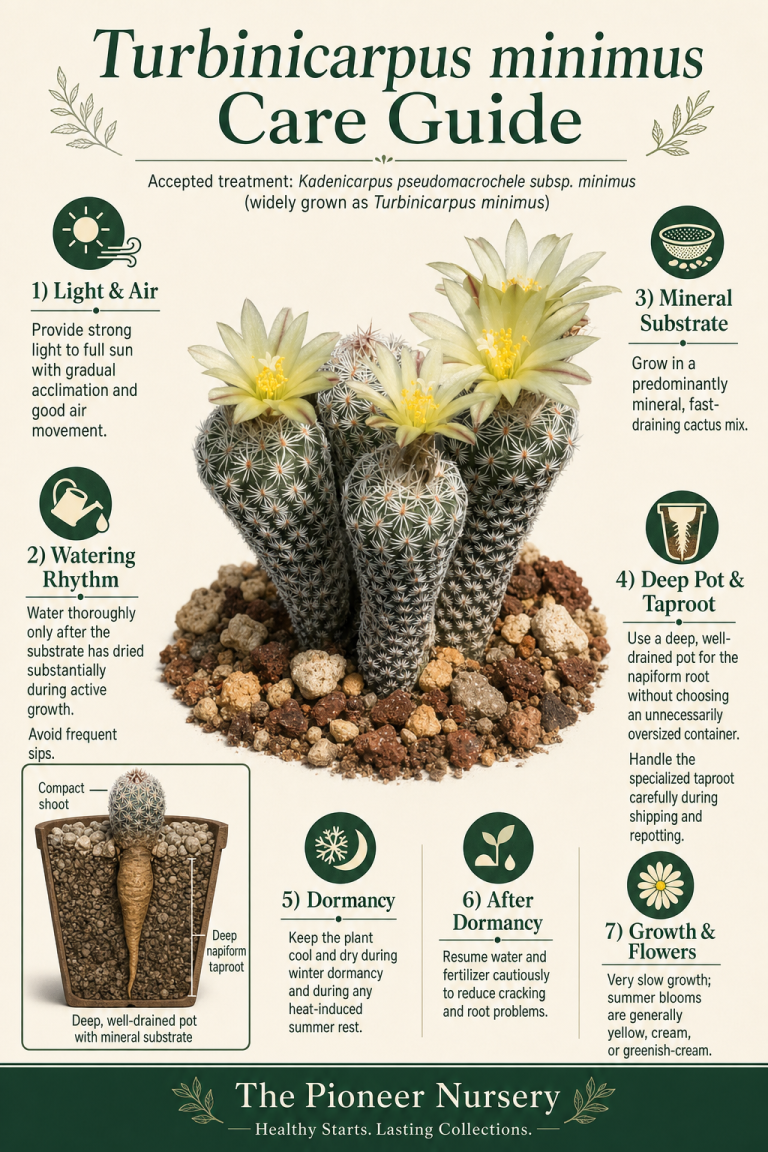
Turbinicarpus minimus, also treated as Kadenicarpus pseudomacrochele subsp. minimus, is a very small, slow-growing cactus with a deep napiform root. Success depends on strong light, mineral soil, careful watering, and a dry winter rest.
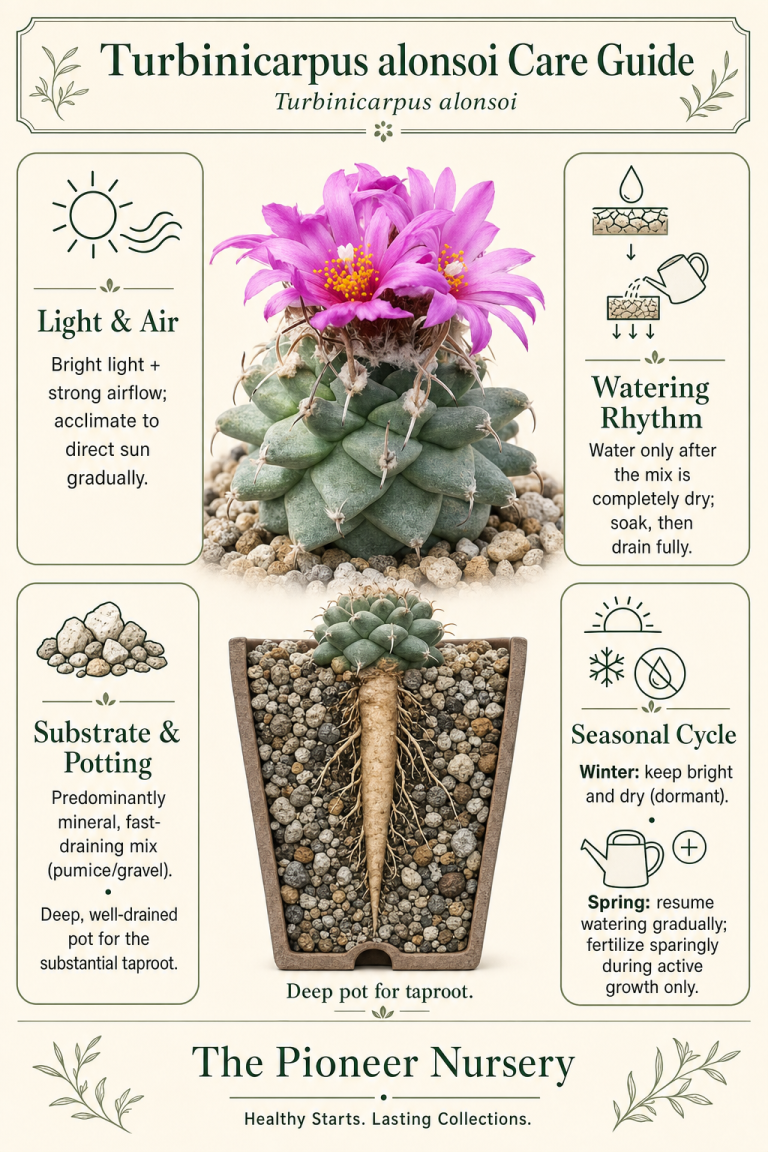
Learn how to grow Turbinicarpus alonsoi, a slow-growing geophytic cactus with a substantial root system, bright-light needs, mineral soil preferences, and a careful winter dormancy cycle.
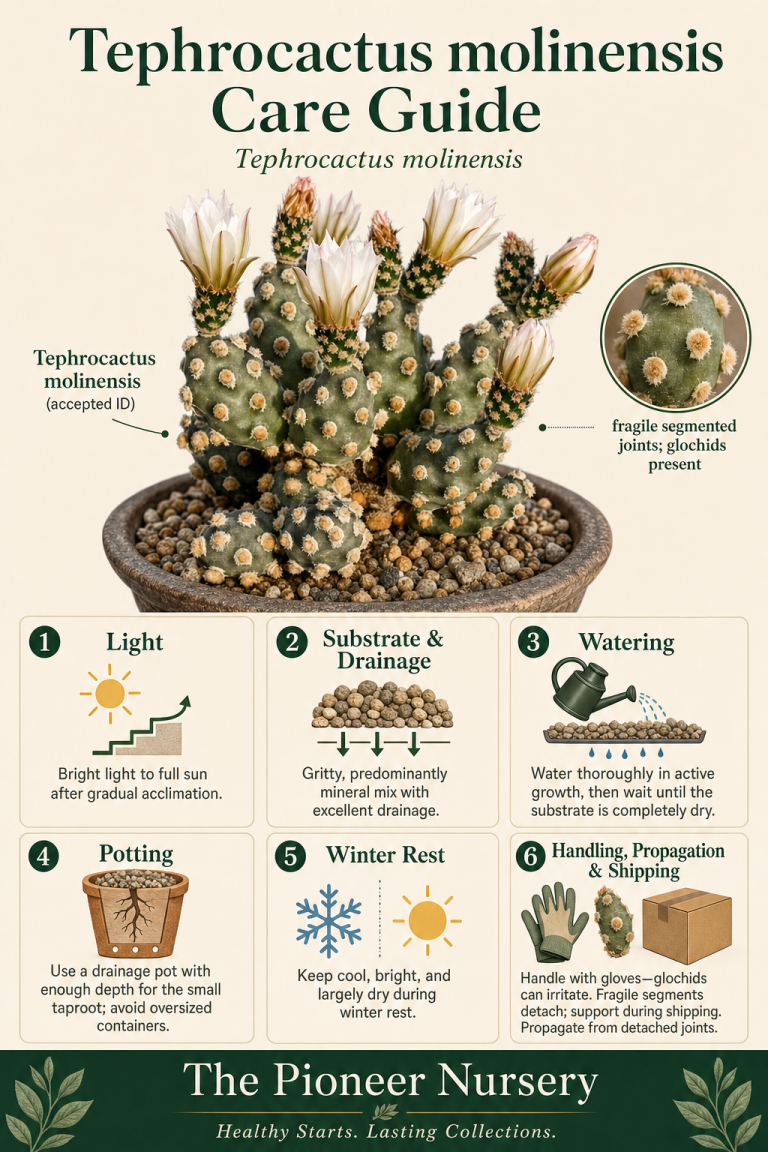
Learn how to grow Tephrocactus molinensis, a small segmented cactus with fragile joints and irritating glochids. Discover its light, watering, soil, dormancy, potting, and propagation needs.
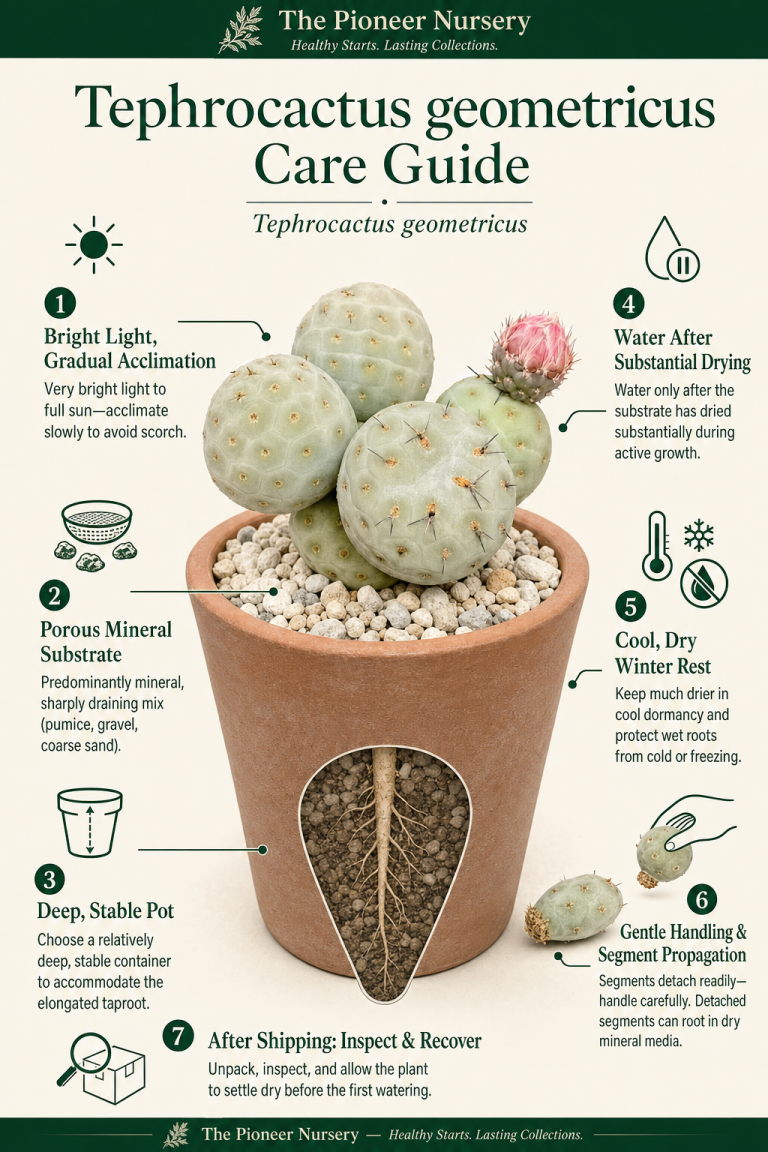
Learn how to grow Tephrocactus geometricus with bright light, mineral soil, careful watering, a deep pot, and a cool, dry winter rest.
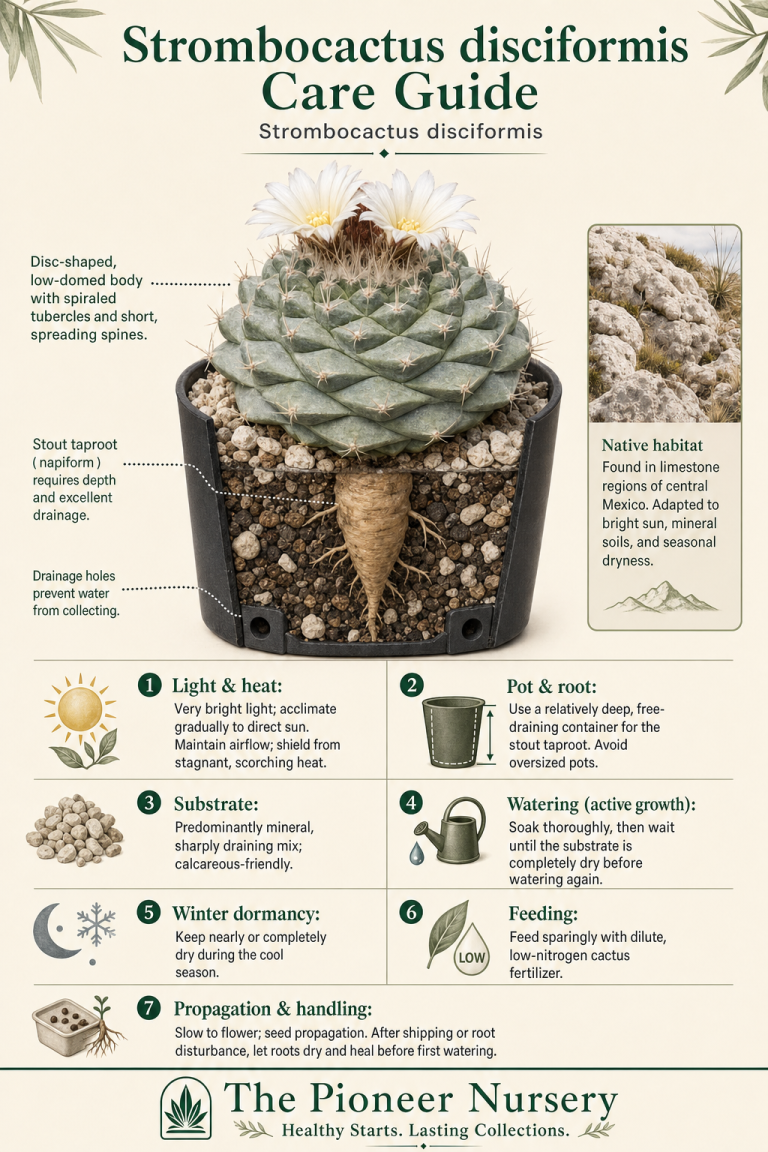
Learn how to grow Strombocactus disciformis, a slow-growing Mexican cactus with a flattened form, stout taproot, bright-light needs, and careful watering requirements.
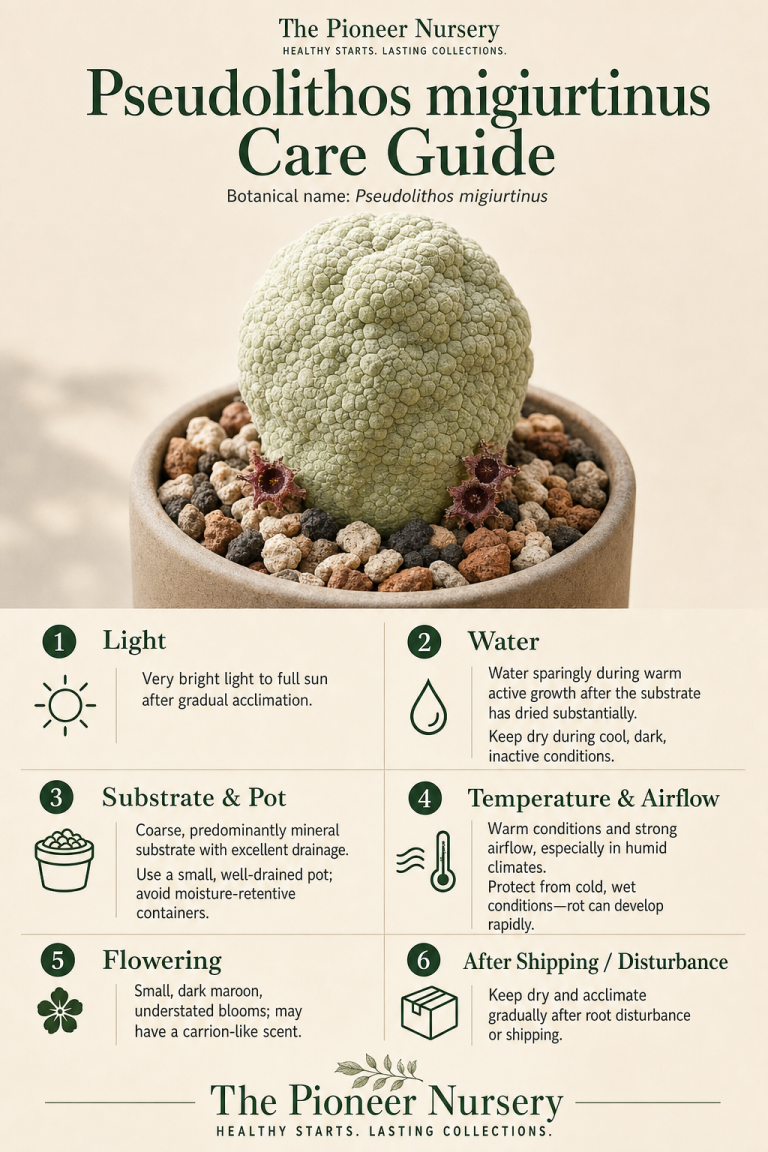
Learn how to grow Pseudolithos migiurtinus, a rounded Somali stem succulent that needs intense light, mineral soil, warm conditions, and careful watering to avoid rot.
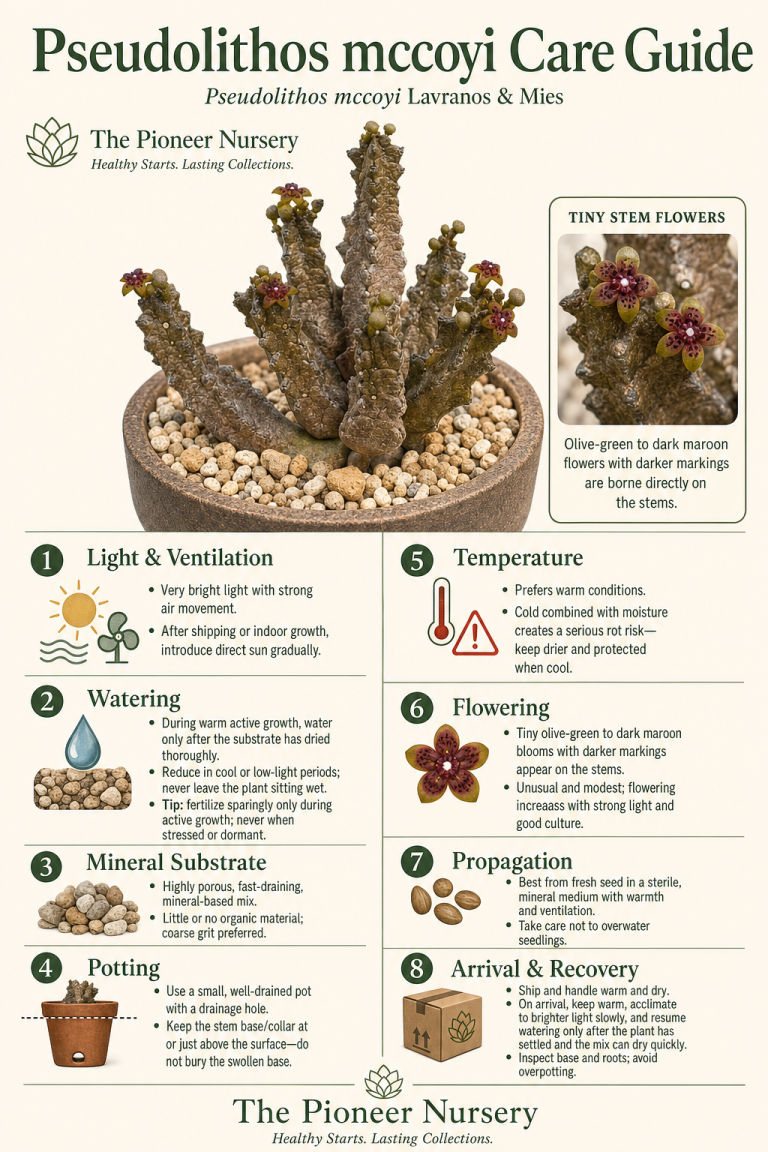
Learn how to grow Pseudolithos mccoyi, a stone-mimicking succulent that needs warm conditions, very porous mineral soil, bright acclimated light, and careful watering.
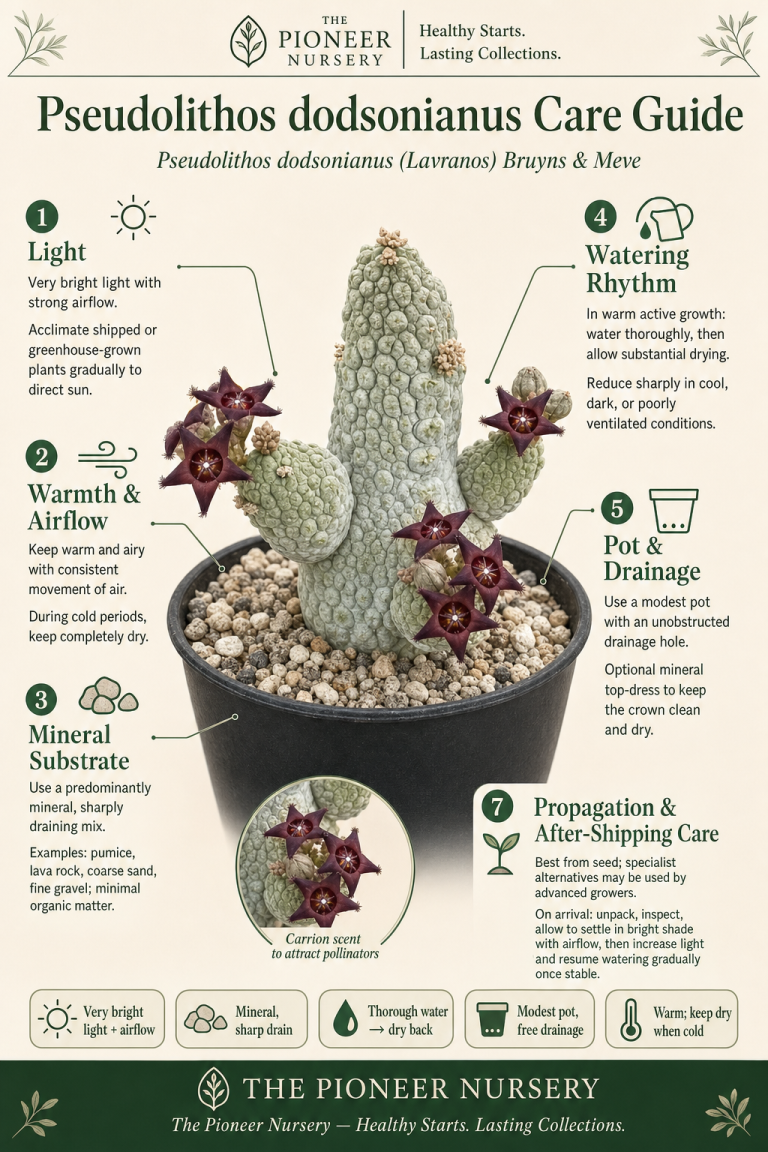
Learn how to grow Pseudolithos dodsonianus, a specialized stapeliad succulent requiring bright light, mineral soil, warmth, airflow, and careful watering.
End of content
End of content