Gymnocalycium damsii — Variegated Care Guide
Learn how to grow variegated Gymnocalycium damsii with bright acclimated light, careful watering, sharp drainage, and a cool, dry winter rest.
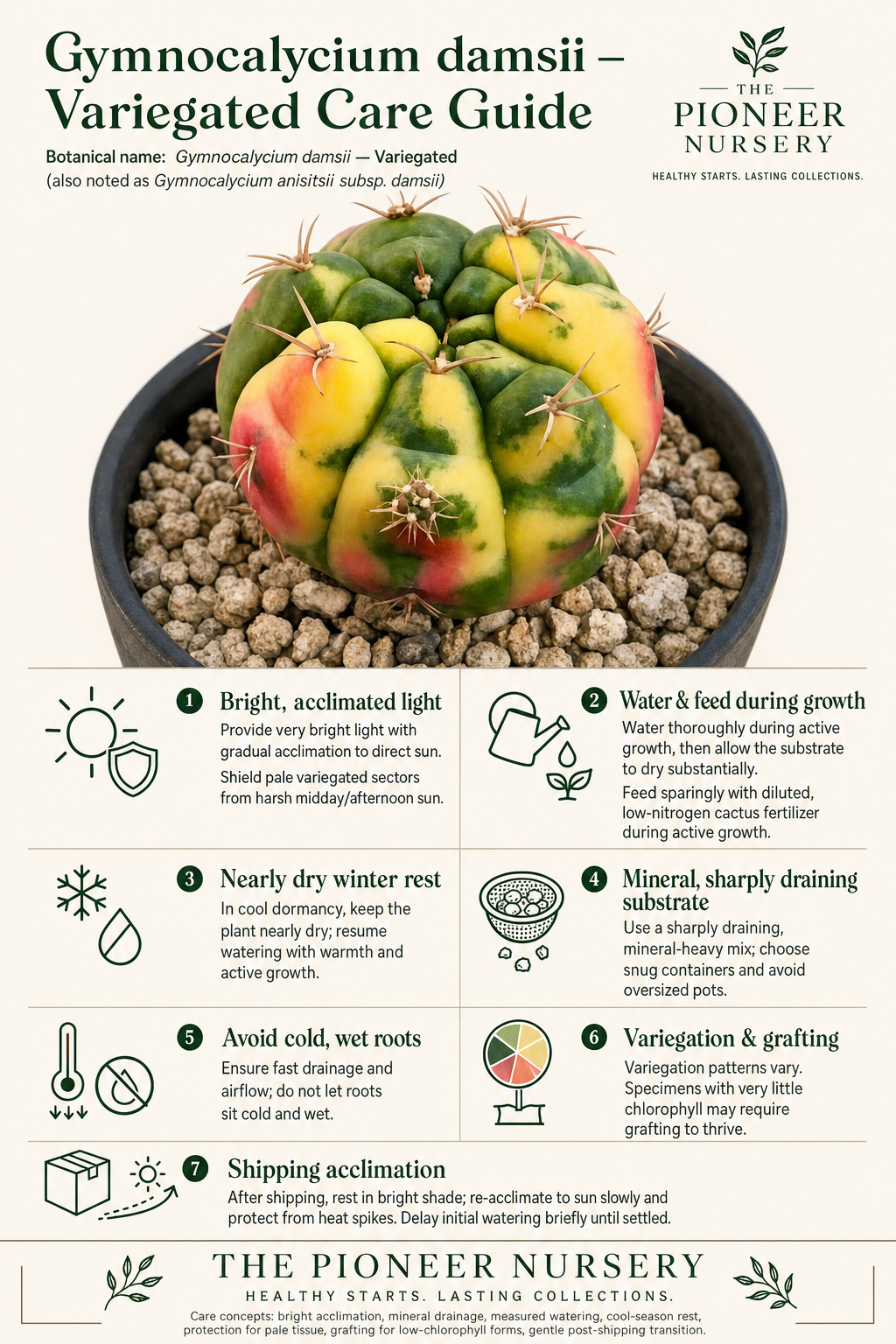
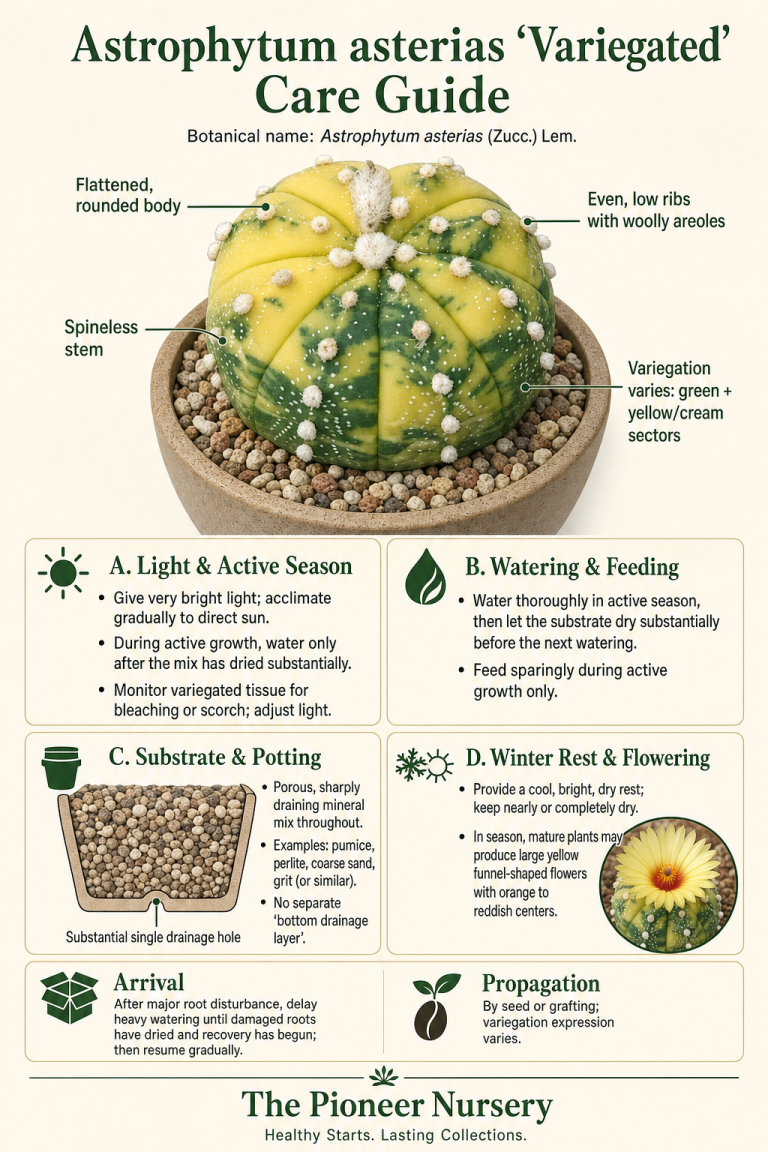
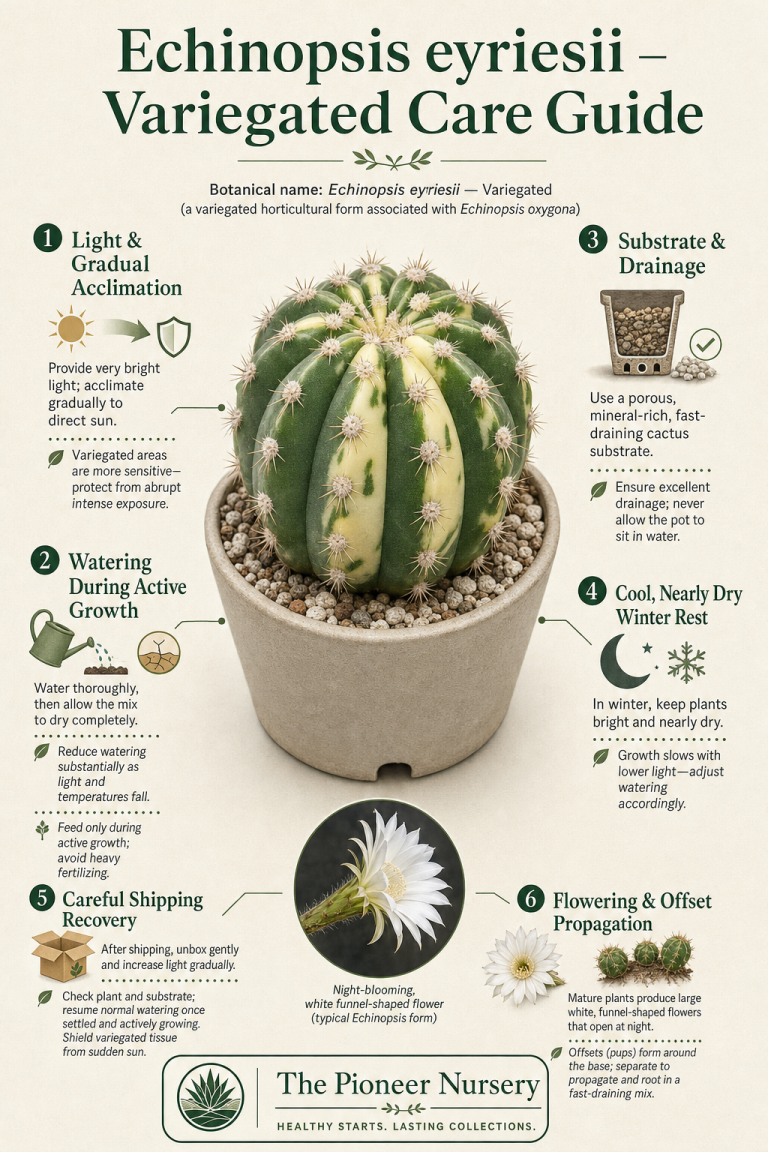
Gymnocalycium damsii — Variegated is the nursery and collector name commonly used for the variegated form of Gymnocalycium anisitsii subsp. damsii. The name Gymnocalycium damsii is treated as a synonym of the accepted subspecies, while “Variegated” describes reduced-chlorophyll sectors, patches, or stripes rather than a formal botanical variety. Care is centered on bright but gradually introduced light, excellent drainage, thorough drying between waterings, and extra protection for pale tissue from harsh sun. Some nearly chlorophyll-free plants may require grafting, while greener specimens can generally grow on their own roots.
Quick Care Summary
- Provide very bright light with gradual acclimation to direct sun.
- Protect pale variegated sectors from harsh midday and afternoon sun.
- Water thoroughly during active growth, then allow the substrate to dry substantially.
- Keep the plant nearly dry during cool winter dormancy.
- Use a sharply draining substrate with a substantial mineral component.
- Avoid cold, wet roots and oversized containers.
- Feed sparingly with diluted, low-nitrogen cactus fertilizer during active growth.
- Nearly chlorophyll-free specimens may require grafting.
About the plant
Variegated specimens can differ substantially in the amount and distribution of green tissue. Plants with more green tissue generally tolerate more direct light and are more likely to maintain own-root growth. Plants that are almost entirely yellow, pink, orange, or white may have too little chlorophyll for sustained own-root growth and may need grafting. The variegation pattern can also change as new growth develops.
Light
Provide very bright light with good air movement. Morning sun or gentle filtered sun is beneficial, but acclimate gradually after shipping or winter storage. Protect pale variegated sectors from intense midday and afternoon sun, which can cause bleaching or scorch. Plants with more green tissue generally tolerate more direct light. Insufficient light can cause elongated, weak growth.
Watering
During active growth, water thoroughly and allow the substrate to dry substantially before watering again. Do not keep the roots constantly wet. Reduce watering in cool, low-light conditions and keep the plant nearly dry during winter dormancy. Cold, wet conditions create a significant risk of root and stem rot.
Soil and substrate
Use a fast-draining, well-aerated cactus substrate with a substantial mineral component such as pumice, perlite, grit, or coarse sand. Avoid dense, water-retentive mixes. A relatively rich but sharply draining substrate can support active growth, but excessive organic matter increases rot risk.
Potting and roots
Choose a container with an unobstructed drainage hole and avoid oversized pots. Repot when the substrate has degraded or the plant has filled its container, preferably during active growth. If roots are damaged, allow them to dry and callus before placing the plant into dry substrate. After significant root disturbance, delay watering until recovery has begun.
Temperature and seasonal growth
Keep the plant above freezing whenever possible, especially when the substrate is not completely dry. It can tolerate brief lower temperatures while dry, but avoid frost, prolonged cold, and wet roots. Growth commonly slows during the cooler, darker part of the year. Maintain bright light, good ventilation, and a cool-to-mild dry rest, then resume watering gradually as light, temperature, and visible growth increase.
Fertilizer
Feed sparingly during active growth with a diluted, low-nitrogen cactus fertilizer. A formulation with relatively more potassium may support flowering and firm growth. Do not fertilize dry, dormant, recently repotted, or stressed plants.
Flowering
Mature plants may flower readily when given bright light and a pronounced dry winter rest. Flowers are typically produced from the upper areoles during the warm growing season. Adequate light, cool dry winter conditions, and restrained nitrogen fertilization support flowering.
Propagation
Propagation is primarily by seed or offsets when available. Seedlings will not reliably reproduce the parent’s variegation pattern, and offsets may differ in color distribution. Green or partially green offsets can be rooted after the cut surface has dried. Severely chlorophyll-deficient sections may require grafting to a compatible green cactus rootstock.
Shipping and arrival care
Protect the plant from freezing, prolonged cold, and wet packaging during shipment. Unpack promptly, inspect for damage, and allow bare-root or recently disturbed plants to recover in dry, bright shade before normal watering. Gradually acclimate the plant to stronger light. Pale variegated tissue is especially vulnerable to sudden intense sun after transport.
Common problems
Root and stem rot usually results from frequent watering, poor drainage, or cool wet conditions. Sunburn and tissue scorch are most likely when pale sectors are moved abruptly into strong sun. Elongated growth indicates insufficient light. Monitor for mealybugs, scale, and root mealybugs. Variegation may become reduced or change distribution in new growth. Severe chlorophyll deficiency can limit survival on the plant’s own roots.
Frequently Asked Questions
How much light does variegated Gymnocalycium damsii need?
Provide very bright light and acclimate gradually. Morning sun or gentle filtered sun is beneficial, while pale sectors should be protected from intense midday and afternoon sun.
How often should I water it?
During active growth, water thoroughly after the substrate has dried substantially. Water less in cool, low-light conditions and keep the plant nearly dry during winter dormancy.
Can a nearly white or yellow plant grow on its own roots?
Some severely chlorophyll-deficient plants may not have enough chlorophyll for sustained own-root growth and may require grafting to a compatible green cactus rootstock.
Will seedlings or offsets keep the parent’s variegation pattern?
Not reliably. Seedlings will not reliably reproduce the parent’s pattern, and offsets can also differ in color distribution.
Why is my plant turning pale or developing scorch marks?
Pale variegated tissue can bleach or scorch after abrupt exposure to intense sun. Increase light gradually and provide protection from harsh midday and afternoon exposure.
Give this variegated Gymnocalycium bright, acclimated light, sharp drainage, and a clearly drier cool-season rest. Watch the amount of green tissue when judging light tolerance and own-root vigor, and always prioritize dry roots during cold conditions.