Mammillaria magnimamma ‘Erusamu’ Cristata Care Guide
Learn how to grow this crested Mexican pincushion cactus with bright light, fast-draining soil, careful watering, and a cool, dry winter rest.
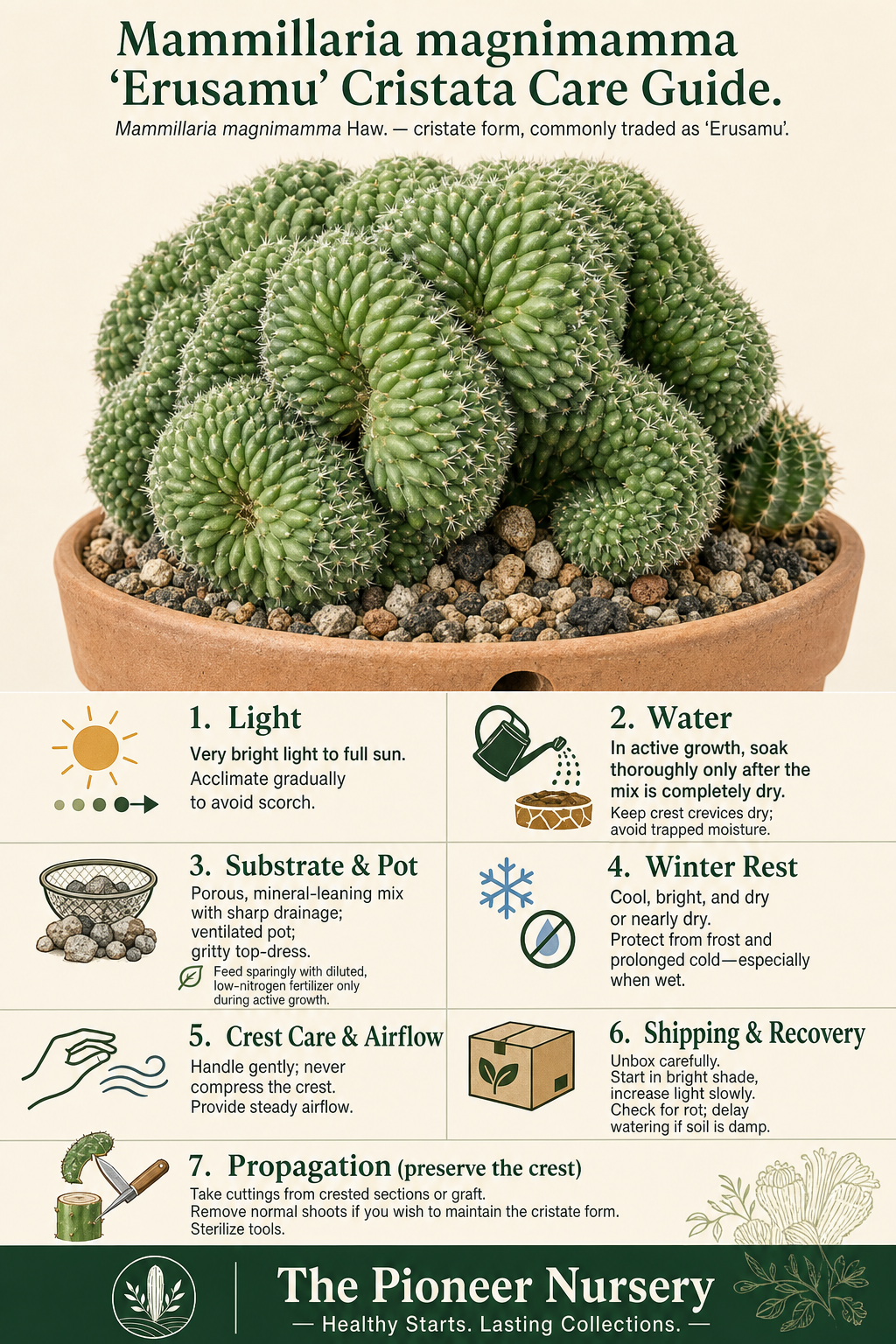
Mammillaria magnimamma is commonly known as the Mexican pincushion cactus. This specimen is a cristate, or crested, form commonly traded as ‘Erusamu’; the underlying species is also encountered under the synonym Mammillaria bucareliensis. Its irregular crest is more vulnerable to bruising, trapped moisture, and decay than a typical rounded stem, so excellent drainage, airflow, careful handling, and gradual light acclimation are especially important.
Quick Care Summary
- Provide very bright light to full sun with gradual acclimation.
- Use a porous, sharply draining substrate with substantial mineral content.
- Water thoroughly only after the substrate has dried completely during active growth.
- Keep the plant dry or nearly dry during a cool winter rest.
- Protect from frost and prolonged cold, especially when wet.
- Handle the crest carefully and provide good airflow.
- Use diluted, low-nitrogen fertilizer only during active growth.
About the plant
The cristate growth form develops an irregular, often flattened or convoluted crest rather than a single symmetrical stem. It may occasionally produce normal, non-crested growth; this does not automatically indicate a separate taxon. ‘Erusamu’ is retained here as a horticultural or trade designation, not as a confirmed formally registered cultivar.
Light
Provide very bright light to full sun during active growth. Acclimate gradually after shipping or after moving the plant from lower light to prevent sunburn. In very hot climates, protect it from intense afternoon heat if scorching or overheating appears. Good airflow is beneficial.
Watering
During active growth, water thoroughly only after the substrate has dried completely, then allow excess water to drain freely. Never leave the pot standing in water. Reduce watering as growth slows in autumn and keep the plant dry or nearly dry during a cool winter rest. Cold, wet conditions create a major rot risk. Do not water by calendar alone; drying time depends on light, temperature, pot size, substrate, airflow, and season.
Soil and substrate
Use a porous, sharply draining cactus mix with substantial mineral material such as pumice, coarse perlite, lava rock, grit, or coarse sand, combined with a limited amount of cactus compost. Avoid dense, moisture-retentive mixes that remain wet around the roots or in the irregular crest.
Potting and roots
Choose a modestly sized pot with an unobstructed drainage hole. Excessive pot size can slow drying. Repot approximately every 2 to 3 years, or sooner if the mix has degraded or the roots have filled the container. Handle the crest gently because its irregular surface can be damaged easily. After major root disturbance, allow damaged roots to dry and callus before watering.
Temperature and winter rest
Protect the plant from frost and prolonged cold, especially when the substrate is wet. A practical minimum is approximately 5 °C / 41 °F. A cool, dry winter period around 7–13 °C / 45–55 °F supports dormancy and flowering. Resume watering gradually in spring only when conditions are warmer and renewed growth is evident.
Fertilizer
During active spring and summer growth, apply a diluted, low-nitrogen cactus fertilizer only when the plant is already adequately hydrated. Avoid routine fertilizing during winter dormancy.
Flowering
Mature plants may produce small pink, cream, or reddish-striped flowers in a ring near the apex, generally in spring or during the warmer growing season. Strong light and a cool, dry winter rest can support flowering.
Propagation
The species may be propagated from seed or offsets when available. To preserve the cristate form, vegetative propagation of crest tissue is generally more appropriate because seed-grown offspring will not reliably retain crested growth. Grafting or rooted cuttings may be used by experienced growers, but the exact propagation behavior of the ‘Erusamu’ clone has not been authoritatively documented.
Shipping and arrival care
Inspect the plant on arrival and protect the crest from compression, bruising, and breakage. After bare-root shipping or significant root disturbance, do not water immediately; allow damaged roots to dry and callus, then acclimate the plant gradually. Begin with bright indirect or filtered light and move toward stronger sun over time. Keep the plant as dry as practical during cool-weather shipping and recovery.
Common Problems
- Root or basal rot can result from dense soil, poor drainage, frequent watering, or cold wet conditions.
- Sunburn may follow abrupt exposure to strong direct sun after shipment or greenhouse cultivation.
- Mealybugs may hide around areoles, crevices, and the base of the crest.
- Glasshouse red spider mites and occasional whiteflies may occur.
- Trapped moisture, rough handling, or poor airflow can cause crest damage, scarring, or localized decay.
Frequently Asked Questions
How often should I water Mammillaria magnimamma ‘Erusamu’?
Water thoroughly during active growth only after the substrate has dried completely. Drying speed varies with light, temperature, pot size, substrate, airflow, and season, so avoid a fixed calendar. Keep it dry or nearly dry during a cool winter rest.
Can this crested cactus take full sun?
Yes, very bright light to full sun is appropriate during active growth, but acclimate gradually after shipping or lower-light conditions. In very hot climates, protect it from intense afternoon heat if scorching or overheating occurs.
Why is a cool, dry winter rest important?
A cool, bright, dry winter period supports dormancy and can support flowering. Cold conditions combined with wet soil substantially increase the risk of rot.
How do I preserve the crested form?
Vegetative propagation of crest tissue is generally more appropriate than seed because seedlings will not reliably retain the crested growth. The exact behavior of the ‘Erusamu’ clone has not been authoritatively documented.
Should I water immediately after the plant arrives?
Not after bare-root shipping or significant root disturbance. Allow damaged roots to dry and callus, begin gradual light acclimation, and water only once the plant has recovered sufficiently under suitable conditions.
This crested Mammillaria magnimamma is best approached as a bright-light, fast-drying cactus with extra attention to handling and airflow. Let the substrate dry fully between active-season waterings, keep it cold and dry in winter, and protect the irregular crest from moisture and damage.