Echinopsis subdenudata — Variegated Care Guide
Learn how to grow this variegated Echinopsis with bright acclimated light, porous soil, careful watering, and a cool, dry winter rest.
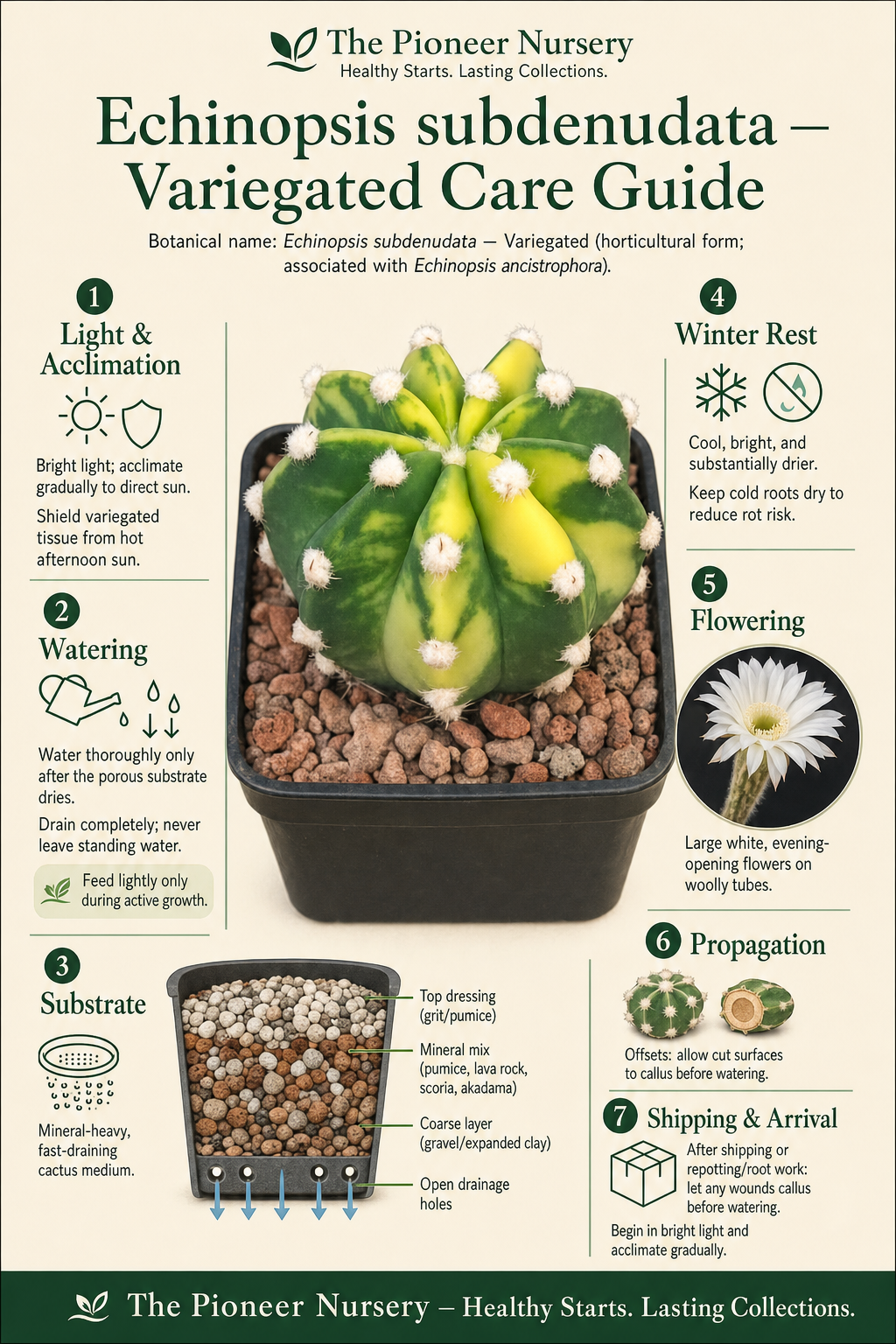
Echinopsis subdenudata — Variegated is a horticultural variegated form associated with the species currently treated as Echinopsis ancistrophora. Its reduced green tissue can mean slower, more sensitive growth than a fully green plant, especially under intense sun or excessive moisture. Give it bright gradually acclimated light, a porous mineral-heavy substrate, thorough watering only after drying, and a cool, dry winter rest.
Quick Care Summary
- Bright light with gradual acclimation to direct sun.
- Protect variegated tissue from intense hot-afternoon sun.
- Water thoroughly only after the porous substrate dries.
- Keep the plant substantially drier during cool winter rest.
- Use a mineral-heavy, fast-draining cactus medium.
- Keep cold roots dry to reduce rot risk.
- Feed lightly only during active growth.
- Allow offsets or damaged roots to callus before watering.
About the plant
This small globular cactus is commonly sold as the Domino cactus, Easter lily cactus, or night-blooming hedgehog cactus. The submitted name Echinopsis subdenudata is treated by Kew as a synonym of Echinopsis ancistrophora. “Variegated” describes its horticultural chlorophyll patterning rather than a verified formal botanical variety or cultivar. Care remains broadly consistent with the species, but reduced green tissue may lower vigor and increase sensitivity to abrupt changes, intense sunlight, and overwatering.
Light
Provide bright light with several hours of direct sun or strong filtered light. Acclimate gradually after shipping or moving the plant indoors. Protect it from intense hot-afternoon sun, watching for bleaching or tan patches; variegated areas can scorch more readily. Insufficient light may cause elongated, weak growth.
Watering
Water thoroughly only when the substrate has dried completely or is nearly completely dry, then let excess water drain away. During active growth, adjust watering to light, temperature, pot size, substrate, and airflow rather than following a fixed calendar. Reduce watering sharply in cool, low-light conditions and keep the plant dry during a cool winter rest whenever possible. Cold, wet roots create a serious rot risk.
Soil and substrate
Use a very porous, fast-draining cactus medium with substantial mineral material such as pumice, perlite, coarse grit, or fine gravel, plus only a modest organic fraction. The mix should remain aerated and should not hold moisture around the crown. A gravel layer inside the pot does not replace a freely draining substrate and drainage hole.
Potting and roots
Choose a pot with an unobstructed drainage hole and only slightly more room than the root system needs. A moderately shallow pot is generally suitable for this small globular cactus. Repot during active growth and handle roots gently. If roots are disturbed or broken, allow them to dry and callus before potting into dry porous medium and resuming cautious watering.
Temperature and winter rest
Keep the plant frost-free. A cool, bright winter rest is beneficial; RHS guidance lists cool frost-free culture with an approximate minimum range of 2–7 °C for the species as treated horticulturally. Keep the substrate dry during cold conditions, since low temperatures combined with moisture greatly increase rot risk. Protect variegated specimens from freezing and prolonged cold dampness.
Seasonal growth and dormancy
Growth generally slows during the cool, low-light season. Maintain strong light, good ventilation, and little to no water during a cool winter rest. If the plant is kept unusually warm, prevent severe shriveling without keeping the substrate continuously wet. As spring light and temperatures increase, resume watering gradually.
Fertilizer
Feed only during active growth with a balanced or cactus fertilizer diluted to approximately half strength. Apply to an already-moistened or actively growing plant. Avoid high-nitrogen feeding and do not fertilize during dormancy, after root disturbance, or while the plant is stressed.
Flowering
Mature plants can produce large, funnel-shaped, usually white flowers on elongated woolly tubes. Flowers typically open in the evening or at night and are short-lived, with flowering reported in spring or early summer. Bright growing conditions, mature growth, and a cool dry rest improve flowering potential.
Propagation
Offsets can be detached once they are large enough to root independently. Allow detached offsets to callus before planting. Seed propagation is possible for the underlying species, but seedlings are not guaranteed to retain variegation; selected variegated plants are more reliably maintained vegetatively.
Common problems
Root or basal rot usually results from water-retentive soil, poor drainage, or watering while the plant is cold. Sunburn and bleaching can follow abrupt exposure to intense sun, particularly in variegated tissue. Inadequate light may cause weak, elongated growth. Monitor for mealybugs around areoles, roots, or crowded offsets. Yellowing or pale growth can indicate an imbalance among watering, fertilizer, heat, and light. Flowering may fail when the plant stays warm and wet in low winter light or misses a cool, dry rest.
Shipping and arrival care
Keep shipments warm enough to avoid chilling, especially during cold or wet weather. On arrival, inspect for rot or mechanical damage. If roots were disturbed or broken, allow them to dry, pot the plant in dry porous medium, and avoid immediate watering. Acclimate gradually to stronger light, and do not water while the plant is cold or recovering from major root disturbance.
Frequently Asked Questions
How often should I water Echinopsis subdenudata — Variegated?
Do not use a fixed calendar. Water thoroughly after the substrate has dried completely or is nearly dry, adjusting for light, temperature, pot size, substrate, and airflow. Water much less in cool, low-light conditions.
Does the variegated form need different light?
It needs bright light, but acclimate gradually and protect it from intense hot-afternoon sun. Variegated areas contain less chlorophyll and may scorch or bleach more readily.
Should it stay dry in winter?
Yes. During a cool, bright winter rest, use little to no water whenever possible. Cold, wet roots are a major rot risk.
Will seedlings keep the variegation?
Not necessarily. Seed propagation is possible, but selected variegated plants are more reliably maintained from suitable offsets.
Why has my plant not flowered?
Flowering may be reduced if the plant lacks mature growth, adequate light, or a cool dry rest. Warm, wet conditions in low winter light can also interfere with flowering.
How should I care for it after shipping?
Inspect it, keep it dry if cold, allow disturbed roots to dry and callus, pot into dry porous medium, and acclimate gradually to stronger light. Avoid immediate watering after major root disturbance.
With bright acclimated light, rapid drainage, careful dry-downs, and a cool dry rest, this variegated Echinopsis can grow well while retaining its distinctive patterning. Watch the plant and its substrate closely, especially after shipping and during seasonal changes.