Gymnocalycium ochoterenae — Variegated Care Guide
Learn how to grow variegated Gymnocalycium ochoterenae with bright acclimated light, porous soil, careful watering, and a cool, dry winter rest.
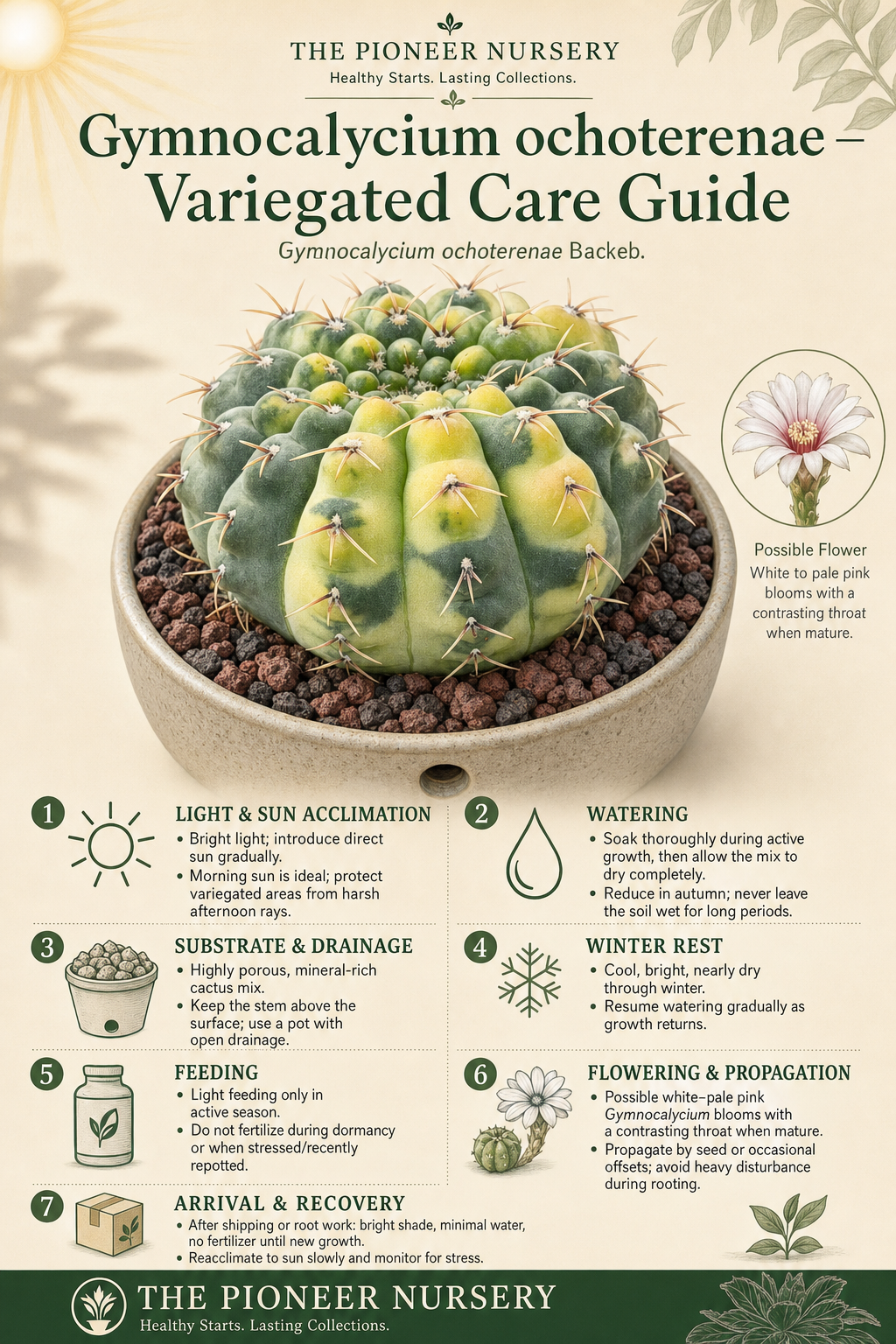
Gymnocalycium ochoterenae — Variegated is a horticultural variegated form of the accepted species Gymnocalycium ochoterenae Backeb., commonly called a chin cactus. Its patterned tissue can be more sensitive to intense sun and may grow more slowly when it contains less chlorophyll. The main priorities are gradual light acclimation, fast-draining soil, complete drying between active-season waterings, and a cool, bright, mostly dry winter rest.
Quick Care Summary
- Bright light with gradual acclimation to direct sun.
- Use a highly porous, mineral-rich cactus substrate.
- Water thoroughly during active growth, then allow the medium to dry completely.
- Reduce watering in autumn and keep nearly dry during a cool winter rest.
- Protect variegated areas from intense afternoon sun and sudden exposure.
- Keep the stem above the substrate surface and use a pot with open drainage.
- Do not fertilize during dormancy or while the plant is stressed or recently repotted.
About the Plant
Gymnocalycium ochoterenae is an accepted species native to Argentina, including Córdoba and San Luis. “Variegated” describes a chlorophyll-patterned horticultural phenotype rather than a formal botanical variety, cultivar, or hybrid. The exact stability and propagation history of an individual plant cannot be determined from the name alone. Care should therefore follow the species while allowing extra caution for the variegated tissue.
Light
Provide bright light with some direct sun, but acclimate gradually over several days to weeks. Morning sun or filtered light with afternoon protection is appropriate during intense summer heat. Variegated areas are more prone to sunburn, especially after shipping or indoor cultivation. Avoid moving the plant directly into strong, unfiltered sun.
Watering
During active growth, water thoroughly until excess drains from the pot, then allow the substrate to dry completely before watering again. Frequency depends on temperature, light, pot size, and how quickly the medium dries. Reduce watering substantially in autumn and keep the plant nearly dry during a cool winter rest. Wet soil in cold conditions increases the risk of rot.
Soil and Substrate
Use a very porous, rapidly draining cactus medium with substantial mineral content, such as pumice, perlite, coarse grit, or another stable aggregate, combined with a smaller portion of organic material. The substrate may hold some moisture briefly but should never remain saturated or become compacted.
Potting and Roots
Choose a container with an unobstructed drainage hole and avoid oversized pots that stay wet too long. Repot during active growth when practical, keeping the stem above the substrate surface. After repotting or significant root disturbance, keep the plant dry for approximately one to two weeks, or longer if roots were damaged, before resuming cautious watering.
Temperature and Dormancy
Warm conditions support active growth. Protect the plant from frost and from prolonged cold combined with moisture. A cool, bright, dry winter rest is suitable: stop or nearly stop watering as temperatures and light levels decline, then resume gradually when warmer conditions and new growth return. Keep the plant above freezing, using better safety margins for heavily variegated specimens. Do not fertilize during dormancy.
Fertilizer
Feed only during active growth with a dilute, low-nitrogen cactus fertilizer or a dilute balanced fertilizer. One or two light applications, or occasional weak feeding during the growing season, is generally sufficient. Do not fertilize dry, dormant, recently repotted, or visibly stressed plants.
Flowering
Mature plants may produce typical Gymnocalycium flowers in spring or summer, often in white to pale pink ranges with a contrasting throat. Flower color and form can vary among populations and cultivated lines. Bright light, a cool dry rest, and healthy active-season growth support flowering.
Propagation
Seed is the standard species-level propagation method, but seedlings will not necessarily reproduce the variegated pattern. Offsets may be rooted if the plant produces them. Strongly variegated or low-chlorophyll sections may grow slowly and, when insufficient green tissue is present, may require grafting to remain vigorous. This is not automatically true of every variegated specimen.
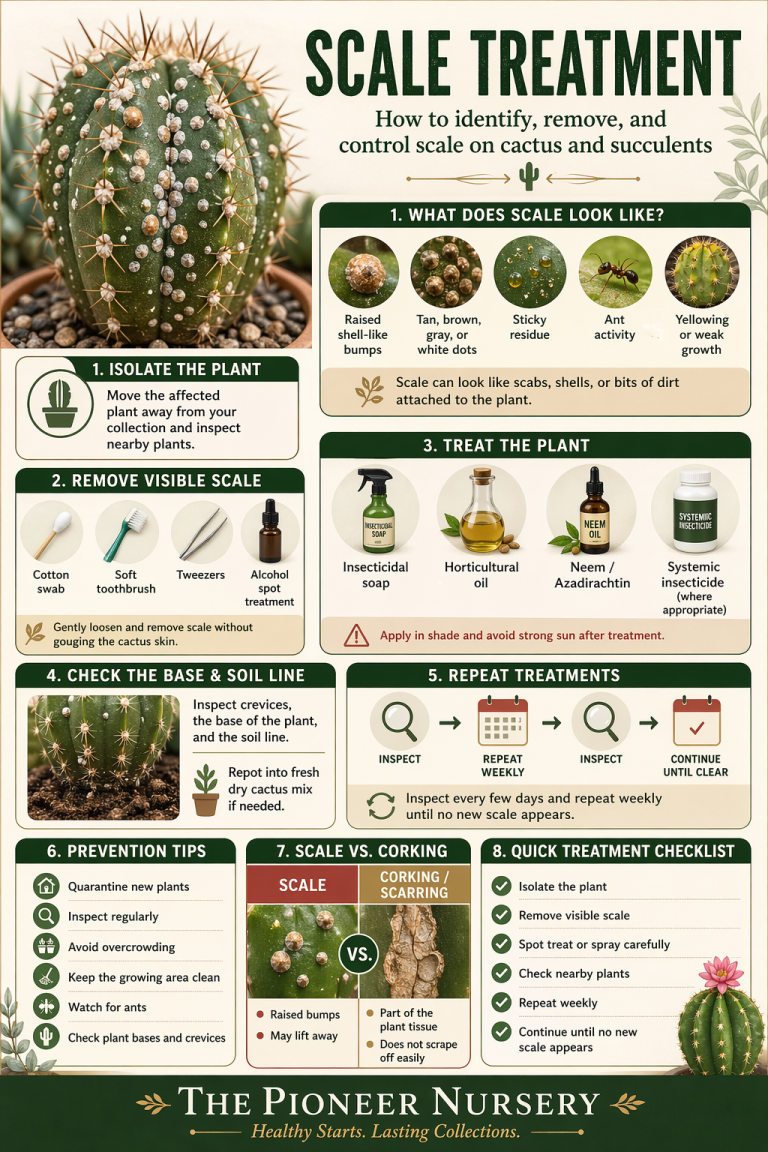
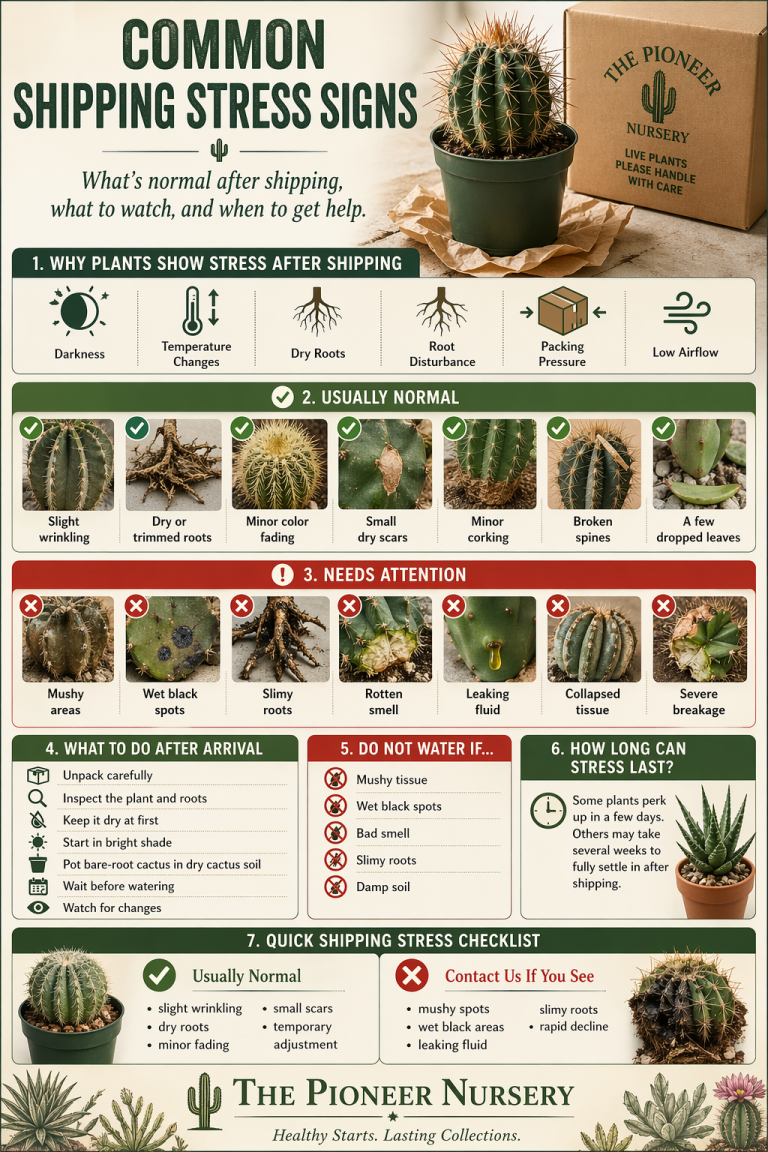
Shipping and Arrival Care
Inspect the plant after arrival for damage, moisture, and root disturbance. Provide bright but initially filtered light and gradually acclimate it to stronger sun. If the plant arrived bare-root or with disturbed roots, allow damaged roots to dry and callus before watering. Avoid immediate heavy watering after root disturbance, and protect the plant from freezing temperatures, prolonged damp packing, and crushing.
Common Problems
- Root or basal rot: usually associated with poor drainage, excess watering, or cool wet conditions.
- Sunburn: can follow abrupt exposure to intense direct light, with greater risk in variegated areas.
- Etiolation: weak, stretched growth indicates inadequate light.
- Pests: monitor for mealybugs, scale, and other common cactus pests.
- Slow growth or tissue loss: heavily variegated sections may have limited chlorophyll.
- Cold damage: freezing temperatures or wet winter conditions can injure the plant.
Frequently Asked Questions
How often should I water variegated Gymnocalycium ochoterenae?
During active growth, water thoroughly and then wait until the substrate has dried completely. Adjust timing for temperature, light, pot size, and drying speed rather than following a fixed calendar. Keep it nearly dry during a cool winter rest.
Can this cactus take full sun?
It can receive some direct sun, but acclimate gradually. Morning sun or filtered light with afternoon protection is safer during intense summer heat because variegated tissue is more prone to sunburn.
Does it need a winter dormancy?
Gymnocalycium generally benefits from a cool, bright, dry winter rest. Reduce or nearly stop watering as conditions cool and darken, then resume gradually when warmer conditions and new growth return.
Will seedlings keep the variegated pattern?
Not necessarily. Seed propagation is suitable for the species, but seedlings may not reproduce the parent plant’s variegation.
Can heavily variegated plants be grafted?
Some strongly variegated or low-chlorophyll sections may require grafting to remain vigorous, but this should not be assumed for every variegated specimen.
When should I water after shipping or repotting?
If roots were disturbed or damaged, allow them to dry and callus before watering. The research supports approximately one to two weeks of dryness after significant root disturbance, or longer when roots were damaged.
Give this variegated chin cactus bright but carefully acclimated light, a porous substrate, and a clear dry period between waterings. Its variegated tissue may grow more slowly and burn more easily than fully green growth, so gradual changes and dry winter conditions are especially important.