Gymnocalycium horstii — Variegated Care Guide
Learn how to grow variegated Gymnocalycium horstii with bright moderated light, porous soil, condition-based watering, and a cool, dry winter rest.
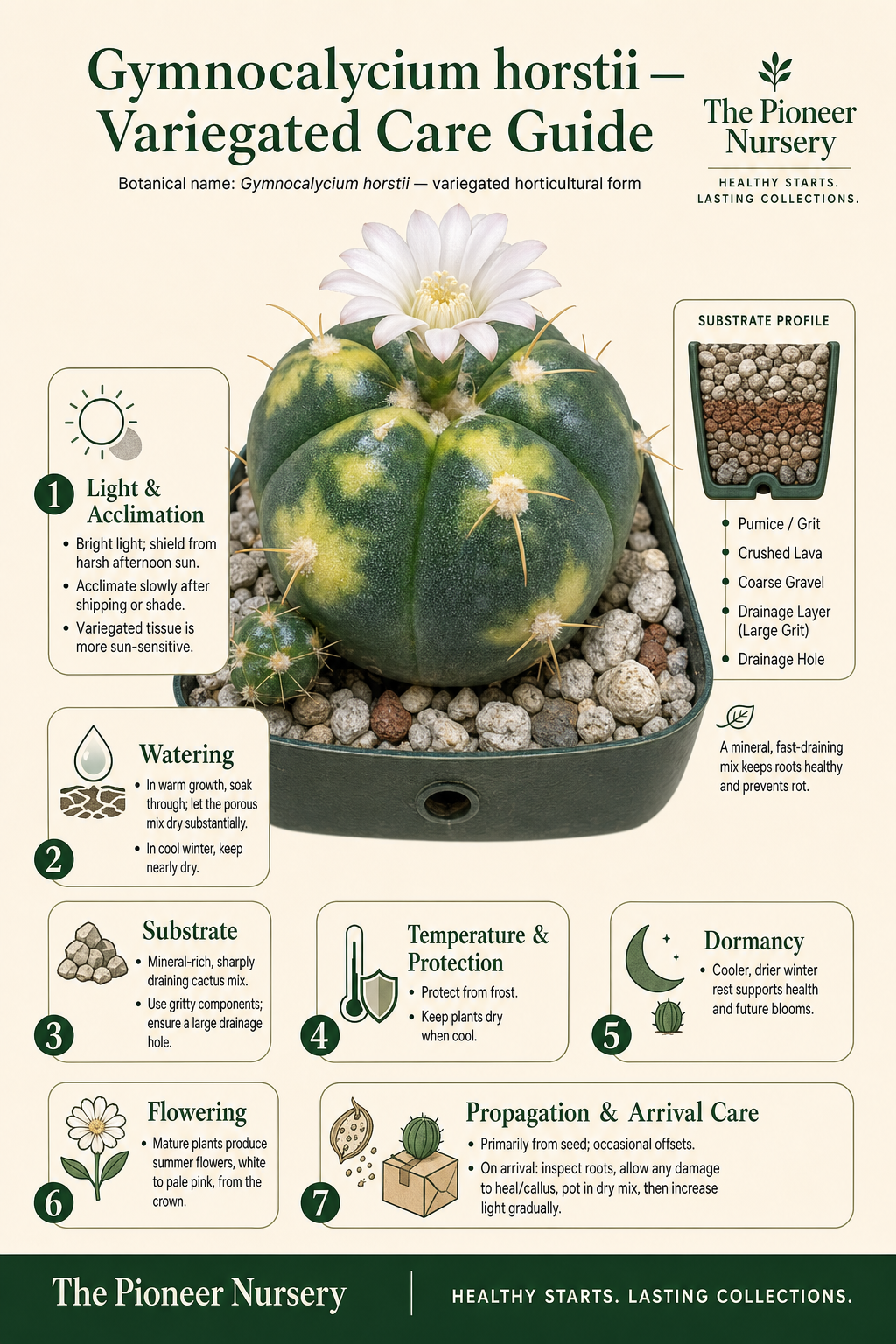
Gymnocalycium horstii — Variegated is a horticultural form of the accepted species Gymnocalycium horstii Buining, commonly called spider cactus or chin cactus. Its irregularly variegated tissue contains less chlorophyll, so growth may be slower and the plant can be more sensitive to intense sun. The main care priorities are bright but moderated light, a porous mineral-rich substrate, thorough watering during warm active growth, and a cool, dry winter rest.
Quick Care Summary
- Bright light with protection from intense afternoon sun.
- Acclimate gradually to direct sun after shipping or shade.
- Water thoroughly during warm active growth after the porous mix dries substantially.
- Keep nearly dry during cool winter rest.
- Use a mineral-rich, sharply draining cactus substrate.
- Protect from frost and keep the plant dry in cool conditions.
- Variegated areas may burn more easily and grow more slowly.
About the Plant
Gymnocalycium horstii is native to rocky grassland in Rio Grande do Sul, Brazil, where it is associated with strong light that may be partially moderated rather than unrestricted all-day desert sun. “Variegated” describes irregular chlorophyll reduction or color patterning; it is not established here as a formally published cultivar, botanical variety, or hybrid.
Light
Provide bright light with partial protection from intense afternoon sun, particularly in hot climates or behind glass. A few hours of gentle direct morning or late-afternoon sun can support compact growth and flowering. Acclimate gradually after shipping or a move from shade. Variegated areas may scorch more readily.
Watering
During warm-season growth, water thoroughly once the porous substrate has dried substantially, then let excess water drain completely. Do not keep the plant constantly moist. In cool winter conditions, reduce watering sharply and keep the plant nearly dry when growth has stopped. Adjust watering for temperature, light, pot size, substrate drying, and root condition rather than following a fixed calendar.
Soil and Substrate
Use a very porous, sharply draining cactus mix with a substantial mineral component such as pumice, coarse grit, or lava rock. A modest organic fraction is acceptable if the mix remains airy and dries reliably. Avoid dense, peat-heavy soil that stays wet around the roots.
Potting and Roots
Choose a container with a drainage hole and avoid oversized pots. Repot during active growth or in spring, handling the roots carefully and removing damaged or rotten material. After repotting or significant root disturbance, keep the plant dry long enough for damaged roots to heal before resuming cautious watering. The supplied research does not document a need for an unusually deep pot.
Temperature
Provide warm growing conditions in spring and summer. Protect the plant from frost and freezing temperatures. Cool overwintering is appropriate only when the plant is kept dry; a conservative protected minimum around 5 °C is suitable for nursery guidance. Lower temperatures carry greater risk, especially when moisture is present.
Seasonal Growth and Dormancy
Gymnocalycium horstii is primarily a warm-season grower with a cooler, drier winter rest. Cool temperatures, reduced light, and wet soil together substantially increase the risk of rot. As spring temperatures and light increase, resume watering gradually.
Fertilizer
During active growth, use a diluted cactus fertilizer or weak, low-nitrogen fertilizer approximately monthly or at wider intervals according to growth and substrate fertility. Avoid heavy feeding, high-nitrogen programs, and fertilizing dry or dormant plants.
Flowering
Mature plants can produce large, funnel-shaped flowers in summer, generally white to pale pink according to the form and reference. Strong light, adequate warm-season growth, and a cool, dry winter rest can encourage flowering.
Propagation
Propagation is primarily by seed. Older plants may slowly produce offsets or form clumps, although offset production is not consistently abundant. Retain variegated offsets only when their variegation appears stable. Severely chlorophyll-deficient growth may require grafting, while ordinary partially variegated plants can remain own-rooted.
Shipping and Arrival Care
Inspect the plant after arrival and remove loose packing material. For bare-root plants, check the roots and allow damaged or cut roots to dry and heal before potting. Delay watering after shipping or repotting until the root system has recovered, then reintroduce water cautiously. Place the plant in bright filtered light initially and acclimate gradually to stronger sun. Variegated tissue is especially vulnerable to sudden high light and temperature extremes.
Common Problems
Root rot usually results from dense substrate, poor drainage, or watering while the plant is cool. Sunburn can follow abrupt exposure to unfiltered sun, with variegated areas often more sensitive. Watch for mealybugs, scale insects, and spider mites. Weak, stretched growth indicates insufficient light. Freezing temperatures or cold, wet conditions can cause cold injury, while strongly variegated portions may recover slowly or show reduced vigor because of limited chlorophyll. Nursery-propagated material is preferred because the species is conservation-sensitive in habitat.
Frequently Asked Questions
How often should I water variegated Gymnocalycium horstii?
There is no fixed schedule. Water thoroughly during warm active growth after the porous substrate has dried substantially, then drain completely. Water much less during cool winter rest and keep the plant nearly dry when growth has stopped.
Can this cactus take full sun?
Bright light is beneficial, but partial protection from intense afternoon sun is safest. Gentle morning or late-afternoon sun can work well. Acclimate gradually, since variegated tissue may scorch more readily.
Does Gymnocalycium horstii need a deep pot?
The supplied research does not document an unusually deep taproot requirement. Use a pot with drainage and avoid an oversized container.
Why is my variegated plant growing slowly?
Variegated tissue contains less chlorophyll, so strongly variegated portions may naturally grow more slowly or recover less vigorously.
When can I water after shipping or repotting?
Wait until damaged or disturbed roots have had time to dry and heal and the root system has recovered. Then reintroduce water cautiously rather than immediately saturating a recently disturbed plant.
Can it flower?
Mature plants can produce large white to pale pink funnel-shaped flowers in summer. Strong light, warm-season growth, and a cool, dry winter rest can encourage flowering.
With bright moderated light, fast drainage, careful warm-season watering, and a genuinely dry winter rest, Gymnocalycium horstii — Variegated can remain a distinctive and rewarding collector cactus. Pay particular attention to sun acclimation and cold, wet conditions.