Gymnocalycium mihanovichii Cristata Care Guide
Learn how to grow Gymnocalycium mihanovichii Cristata, including light, watering, soil, seasonal care, grafted versus own-root plants, and shipping recovery.
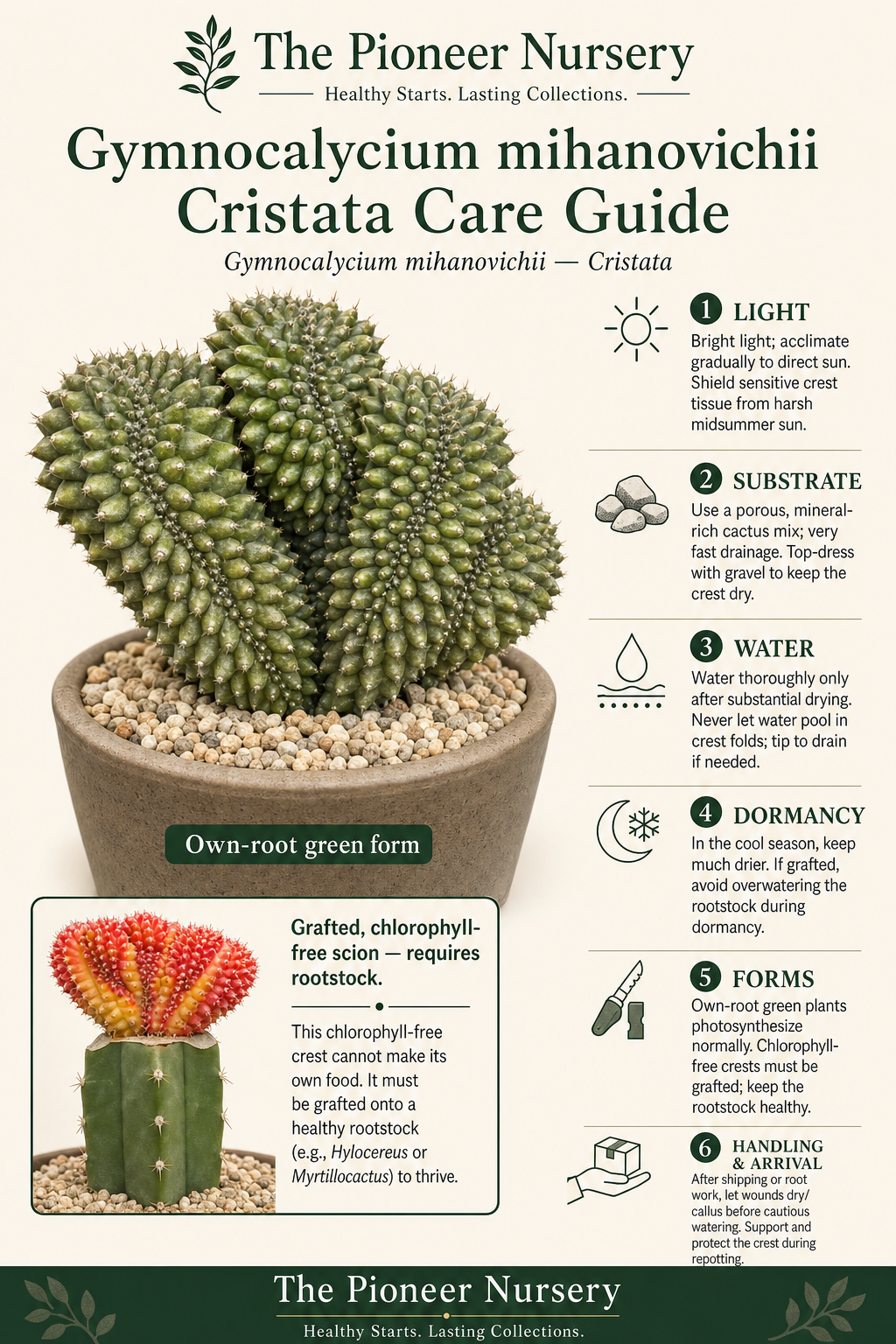
Gymnocalycium mihanovichii Cristata is the crested growth form of the Chin cactus, producing irregular, fasciated growth. Its most important care distinction is whether the plant is a green, own-root specimen or a chlorophyll-free grafted form. Provide bright, gradually acclimated light, a porous substrate, thorough watering only after substantial drying, and much drier conditions during cool winter rest. Grafted plants also require attention to the rootstock’s needs.
Quick Care Summary
- Bright light with gradual acclimation to direct sun.
- Use a porous, mineral-rich cactus substrate.
- Water thoroughly after substantial substrate drying.
- Keep the plant much drier during cool winter dormancy.
- Protect cristate tissue from harsh summer sun and trapped water in crevices.
- Distinguish own-root green plants from chlorophyll-free grafted forms.
- After shipping or root damage, let wounds dry before cautious watering.
About the plant
“Cristata” describes a fasciated or crested growth form, not a separate species. Gymnocalycium mihanovichii is native to Paraguay and northeastern Argentina, including the Chaco and Formosa regions. Green cristate plants may grow on their own roots. Bright red, yellow, orange, or white chlorophyll-free forms depend on a photosynthetic rootstock and are commonly grafted. Grafting is a legitimate horticultural technique, especially for maintaining chlorophyll-free selections.
Light
Provide bright light with several hours of gentle direct sun or strong filtered light. Acclimate gradually after shipping or a move from protected conditions. Cristate tissue can scorch more readily than normal stems, so provide light afternoon shade in very hot climates. Chlorophyll-free grafted scions should generally be protected from prolonged, harsh direct sun. Insufficient light can cause stretching and weak growth.
Watering
Water thoroughly only after the substrate has dried substantially, allowing excess water to drain completely. During warm spring and summer growth, watering may be more regular, but frequency depends on temperature, light, pot size, and drying speed. Keep the plant much drier during cool winter dormancy. Cold, wet conditions substantially increase rot risk. On grafted plants, consider that the rootstock may have different water and temperature requirements from the Gymnocalycium scion.
Soil and substrate
Use a very porous, fast-draining cactus medium with substantial mineral content, such as pumice, perlite, coarse sand, or another durable aggregate combined with a smaller proportion of organic material. The substrate should retain enough moisture for active growth while providing rapid drainage and root aeration.
Potting and roots
Choose a pot with drainage holes only modestly larger than the root system. Avoid burying the stem or allowing water to remain in the folds and crevices of the crest. Handle the irregular growth carefully because compression can scar it. After repotting or major root disturbance, keep the plant dry until damaged roots and cuts have callused, then resume watering cautiously.
Temperature and seasonal growth
Give warm growing conditions during spring and summer. Protect the plant from frost and prolonged cold, particularly when the substrate is wet. Growth commonly slows during cool, low-light winter conditions. An own-root plant can be kept nearly or completely dry during this period with good ventilation. Grafted plants must be managed according to their rootstock: tropical or subtropical rootstocks may require warmer winter conditions and may not tolerate prolonged cold or complete winter dryness.
Fertilizer
Feed only during active growth, using a dilute, balanced cactus fertilizer or one relatively modest in nitrogen. Apply fertilizer to an already-moistened, actively growing plant. Do not fertilize during cold dormancy or while roots are damaged.
Flowering
Mature plants may produce small, funnel-shaped flowers in spring or early summer. Flowers are generally pale green, yellowish, brownish-yellow, or similarly subdued colors and open during the day. Strong light, healthy roots, porous soil, and an appropriate seasonal dry rest support flowering. Crested growth may flower irregularly compared with normal stems.
Propagation
Seed propagation is possible for normal green plants, but cristate growth is not reliably reproduced from seed. Cristate offsets may sometimes be removed and rooted after callusing, although success depends on viable green tissue and the individual clone. Grafting is commonly used for chlorophyll-free forms and can also preserve or accelerate selected cristate material. Fully red, yellow, orange, or white scions should not be assumed capable of surviving independently without a photosynthetic rootstock.
Shipping and arrival care
Receive and ship the plant dry whenever practical, protecting the crest from compression and abrasion. After arrival, inspect the graft union or root collar for damage and keep the plant protected from intense sun while it acclimates. Do not water immediately after bare-root shipping, recent grafting, or significant root damage; allow wounds to dry, then reintroduce water cautiously. Protect the plant from cold during transit, especially when the rootstock is a warm-growing Hylocereus-type cactus.
Common problems
Root or basal rot is associated with dense substrate, poor drainage, or watering while cold. Sunburn can follow abrupt exposure to strong light, particularly on colored or chlorophyll-free grafts. Grafted specimens may experience graft-union failure, rootstock decline, or incompatibility. Low light can cause stretching and weak growth. Monitor greenhouse or indoor plants for mealybugs, scale, and other sap-feeding pests. Water trapped in dense crest folds may contribute to localized tissue damage, and severe or poorly timed root disturbance can delay recovery.
Frequently Asked Questions
How often should I water Gymnocalycium mihanovichii Cristata?
Water thoroughly after the substrate has dried substantially, then drain completely. Adjust frequency for temperature, light, pot size, and drying speed, and keep the plant much drier during cool winter dormancy.
Can a colorful cristate moon cactus grow on its own roots?
Do not assume so. Fully chlorophyll-free red, yellow, orange, or white forms depend on a photosynthetic rootstock. Green or partially green cristate plants may be capable of own-root growth.
Does cristate growth mean the plant needs different watering?
Not automatically. Cristata describes the growth form. The main watering differences come from season, conditions, root health, and whether the plant is own-rooted or grafted.
Why should I protect the crest from water?
Irregular folds and crevices can collect water. This may contribute to localized tissue damage, so allow water to drain and avoid leaving moisture trapped in the crest.
Can cristate plants be grown from seed?
Seeds can produce normal green plants, but cristate growth is not reliably reproduced from seed. Offsets may sometimes be rooted after callusing, and grafting is commonly used for chlorophyll-free forms.
When should I water after shipping or repotting?
Do not water immediately after bare-root shipping, recent grafting, or significant root damage. Let wounds dry and callus, then resume watering cautiously.
With bright but carefully acclimated light, fast drainage, thoughtful seasonal watering, and attention to the plant’s rootstock, Gymnocalycium mihanovichii Cristata can be a rewarding collector plant. The most important step is identifying whether you are growing a green own-root plant or a chlorophyll-free grafted scion.