Rust Treatment
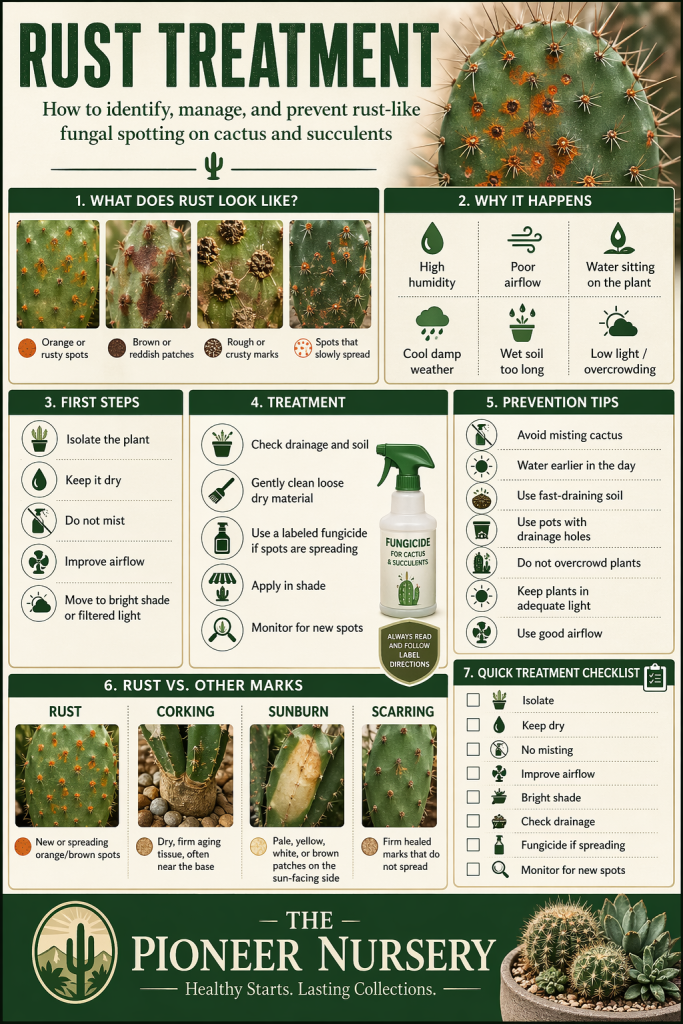
Rust is a common cactus and succulent issue that usually appears as orange, brown, reddish, or rusty-looking spots on the plant surface….
Rust is a common cactus and succulent issue that usually appears as orange, brown, reddish, or rusty-looking spots on the plant surface. It can be concerning when it shows up suddenly, especially on a favorite cactus, but not every spot means the plant is dying. Some marks are cosmetic, while others may spread if the conditions stay too damp or stagnant.
The key is to identify the problem early, improve airflow, keep the plant dry, and treat carefully if the issue continues.
What Does Rust Look Like?
Rust often appears as small orange, brown, reddish, or tan spots on the cactus skin. The spots may look powdery, rough, crusty, or slightly raised. In some cases, they may spread into larger patches.
Rust can sometimes be confused with corking, sunburn, pest damage, scarring, or normal aging. The main concern is whether the spots are new, spreading, soft, wet, or increasing quickly.
Common signs include:
- Orange or rusty-colored spots
- Brown or reddish patches
- Rough or crusty surface marks
- Spots that slowly spread
- Discoloration near the base or between ribs
- Marks that appear after cool, damp, or low-airflow conditions
If the area is dry, firm, and not spreading, it may be mostly cosmetic. If it is wet, soft, black, or expanding quickly, treat it as a more serious issue.
Why Rust Happens
Rust and rust-like fungal problems are often encouraged by moisture and poor airflow. Cactus are more likely to develop surface fungal issues when they stay damp too long or sit in humid, stagnant conditions.
Common causes include:
- High humidity
- Poor airflow
- Water sitting on the plant body
- Cool damp weather
- Overcrowded plants
- Low light
- Soil staying wet too long
- Watering late in the day
- Plants staying wet overnight
Cactus do best when moisture is followed by drying. If the plant surface or soil stays damp for too long, fungal issues are more likely.
Isolate the Plant
If you suspect rust or another fungal issue, move the affected plant away from your main collection. This helps you monitor it more closely and reduces the risk of spreading spores or pests if the issue turns out to be something else.
Keep the plant in bright shade or filtered light with strong airflow while you evaluate it.
Keep the Plant Dry
Avoid watering while the issue is active or spreading. Also avoid misting the plant. Cactus generally do not need misting, and extra moisture on the plant surface can make fungal issues worse.
If the soil is already wet, move the plant to a warmer, brighter, well-ventilated location so it can dry more quickly. Make sure the pot has drainage holes and that the soil is not staying wet deep in the pot.
Improve Airflow and Light
Improving growing conditions is one of the most important parts of rust treatment.
Move the plant to a location with:
- Better airflow
- Bright shade or filtered light
- Good spacing from other plants
- Dry conditions
- A potting mix that drains well
- A pot with drainage holes
Do not immediately move a stressed cactus into harsh sun. Strong light can help plants stay healthy, but sudden intense sun can cause sunburn. Bright filtered light is usually safer while the plant is recovering.
Remove or Avoid Spreading Spores
If the affected area is dry and small, you may not need to cut anything. Many cactus keep old surface marks permanently, even after the issue stops spreading.
For loose surface material, gently clean the area with a dry soft brush. Avoid scraping deeply into healthy tissue.
If a section is severely damaged, soft, wet, or spreading, the problem may be deeper than surface rust and may require cutting away affected tissue. Use clean, sterilized tools and allow the wound to dry and callus fully before exposing it to moisture.
Treat With a Fungicide if Needed
If rust spots are spreading, or if you have had repeated fungal issues, a labeled fungicide may be helpful.
Common options used by plant growers include copper-based fungicides, sulfur-based products, or other fungicides labeled for ornamental plants and fungal leaf spots. Always follow the product label carefully.
Do not overapply fungicides. Stronger or more frequent use is not always better and can damage plants.
When applying treatment:
- Apply in shade
- Avoid hot direct sun
- Use according to the label
- Keep the plant dry afterward
- Improve airflow at the same time
- Monitor for new spots
Treatment works best when paired with better growing conditions.
Be Careful With Sensitive Plants
Variegated, colorful, thin-skinned, grafted, or stressed cactus may be more sensitive to sprays and environmental changes. Test carefully and avoid applying products during heat, intense sun, or when the plant is already dehydrated.
Some products can leave residue or marks on cactus skin, so use caution with show plants or rare collector cactus.
Watch for Spread
Old rust marks may remain even after the issue is controlled. The important thing is whether new spots continue appearing or existing spots keep spreading.
Over the next few weeks, watch for:
- New orange or brown spots
- Spreading patches
- Soft or wet areas
- Black discoloration
- Plant tissue collapsing
- A sour or rotten smell
If the marks stop spreading and the plant stays firm, the issue is likely under control.
Prevention Tips
Rust prevention is mostly about keeping plants dry, airy, and properly spaced.
Helpful prevention habits include:
- Avoid misting cactus
- Water earlier in the day
- Avoid letting water sit on the plant overnight
- Improve airflow
- Do not overcrowd plants
- Use fast-draining cactus soil
- Use pots with drainage holes
- Keep plants in adequate light
- Avoid long periods of damp soil
- Remove dead flowers and debris
- Quarantine and inspect new plants
For greenhouse collections, fans and spacing can make a major difference.
Rust vs. Corking, Sunburn, or Scarring
Not all brown or orange marks are rust.
Corking is usually dry, firm, and often appears near the base as the cactus ages. Sunburn may appear as pale, yellow, white, brown, or crispy patches on the sun-facing side of the plant. Scars are usually firm and do not continue spreading.
Rust-like fungal spots are more concerning when they are new, increasing, appearing in damp conditions, or spreading across the plant surface.
If you are unsure, take clear photos and monitor whether the area changes over several days.
When to Contact Us
Please reach out if your plant arrives with serious spotting, soft tissue, black wet areas, or a rapidly spreading issue.
Helpful photos include:
- The full plant
- Close-ups of the affected area
- Photos from multiple angles
- A photo of the soil and pot
- A note about recent watering, light, and temperature conditions
This helps us determine whether the issue looks like shipping stress, cosmetic scarring, fungal spotting, rot, or another problem.
Quick Rust Treatment Checklist
- Isolate the plant.
- Keep it dry.
- Do not mist.
- Improve airflow.
- Move to bright shade or filtered light.
- Check that the soil and pot drain well.
- Gently clean loose dry material if needed.
- Use a labeled fungicide if spots are spreading.
- Keep treated plants out of strong sun.
- Monitor for new or spreading spots.
Final Thoughts
Rust and rust-like spots can be frustrating, but many cases can be controlled by improving the plant’s environment. Dry conditions, good airflow, proper light, and careful watering are the foundation of prevention and treatment.
If the marks are dry, firm, and no longer spreading, the plant may continue growing normally even if old spots remain. If the area is soft, wet, black, or spreading quickly, pause watering, isolate the plant, and evaluate it more closely before the issue gets worse.