Hydrotherapy for Struggling Cacti
Hydrotherapy is a temporary recovery method some cactus growers use to encourage dehydrated, stressed, or poorly rooted cactus to rehydrate and begin…
Hydrotherapy is a temporary recovery method some cactus growers use to encourage dehydrated, stressed, or poorly rooted cactus to rehydrate and begin producing new roots. It is most often used when a cactus has been bare root for a while, has lost roots, or is struggling to take up water through normal potting methods.
Hydrotherapy should be used carefully. It is not a replacement for good soil, proper watering, or healthy growing conditions. It is a short-term technique meant to help a cactus recover enough to return to normal care.
What Is Hydrotherapy?
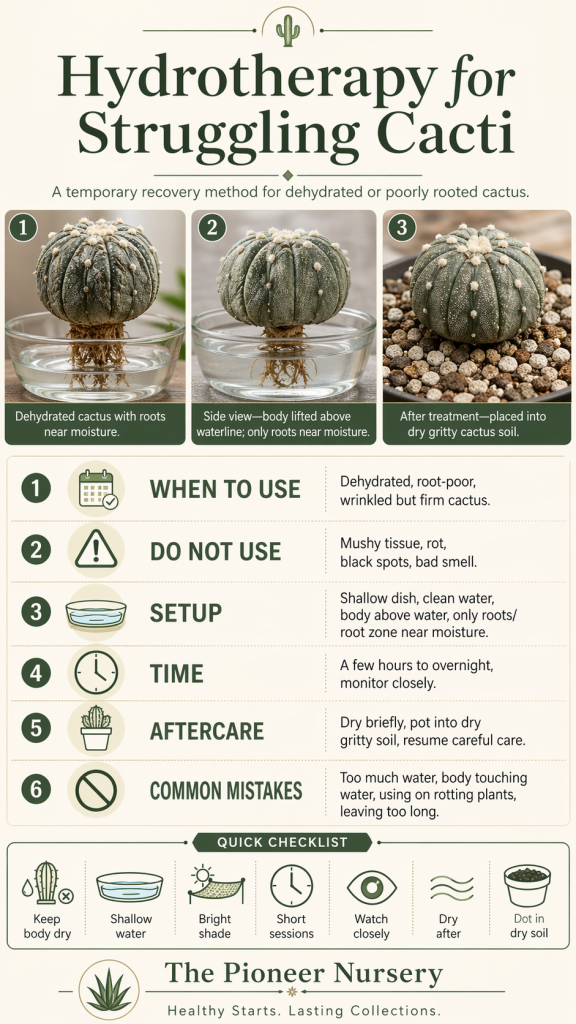
Hydrotherapy usually means placing the roots or lower root area of a cactus near water so the plant can rehydrate and begin root activity. The plant body should not be submerged, and the cactus should not sit in deep water.
The goal is to give dry or struggling roots access to moisture while keeping the cactus body safe from rot.
A safe hydrotherapy setup keeps:
- The plant body above the water
- Only the roots or root zone near moisture
- The container shallow
- The plant stable and upright
- The process temporary
- The cactus in bright shade, not harsh sun
When Hydrotherapy May Help
Hydrotherapy may be useful for cactus that are struggling because they cannot take up water through normal potting.
It may help with:
- Severe dehydration
- Long-term bare-root stress
- Poor rooting after shipping
- A cactus that stays wrinkled after careful watering
- A plant with very few healthy roots
- A cactus that has been dry for an extended period
- Some Gymnocalycium, Astrophytum, or similar cactus that need help restarting roots
Hydrotherapy is not necessary for every cactus. Many plants recover better by simply being potted into dry, well-draining soil and watered normally after a safe waiting period.
When Not to Use Hydrotherapy
Do not use hydrotherapy if the cactus shows signs of rot or active infection. Water can make rot spread faster.
Avoid hydrotherapy if the plant has:
- Mushy tissue
- Black wet spots
- A rotten smell
- Leaking fluid
- Fresh open wounds
- Slimy roots
- Active fungal spread
- Cold temperatures
- A soft collapsing body
If the cactus has rot, the first step is to keep it dry, remove affected tissue if needed, and allow wounds to callus before any moisture is introduced.
Inspect the Cactus First
Before starting hydrotherapy, inspect the plant carefully. Check the body, base, and roots.
The cactus should be firm enough to handle treatment. Wrinkling is okay, but mushiness is not.
If old dead roots are present, remove loose, dead, or slimy material. Healthy roots should be dry, firm, or at least not rotten. If roots were freshly trimmed, let them dry and callus before placing them near water.
How to Set Up Hydrotherapy
Use a clean shallow dish, cup, or container. Add a small amount of clean water. The water level should be low enough that the cactus body does not touch the water.
The roots can touch the water, or the bottom of the root zone can sit just above the water depending on the plant and setup. The cactus should be supported so it does not fall in.
A simple setup:
- Use a shallow container.
- Add a small amount of clean water.
- Position the cactus so the body stays dry.
- Allow only roots or the lowest root area to reach moisture.
- Keep the plant upright and stable.
- Place it in bright shade with airflow.
You can use a collar, mesh, small stones, chopsticks, or a support ring to hold the cactus above the water.
Keep the Body Out of the Water
This is the most important safety rule. The cactus body should not sit in water.
If the lower body or crown is submerged, the risk of rot increases. For round cactus like Gymnocalycium and Astrophytum, keep the body lifted above the waterline. Only the root area should be exposed to moisture.
If the plant has almost no roots, keep the base close to moisture but avoid soaking the body.
How Long Should Hydrotherapy Last?
Hydrotherapy should be temporary. Depending on the plant, a short session may last a few hours to a day. Some growers use longer periods, but the longer a cactus sits around moisture, the more carefully it needs to be watched.
For cautious care, start short:
- A few hours for sensitive plants
- Overnight for moderately dehydrated plants
- Up to 24 hours for tougher, very dry plants
Check the plant often. If the cactus looks worse, becomes soft, develops discoloration, or the water becomes dirty, stop the process.
After Hydrotherapy
After hydrotherapy, remove the cactus from the setup and let the roots dry briefly in a shaded, well-ventilated area.
Then pot the cactus into dry, gritty, well-draining cactus soil. Do not immediately soak the pot.
Let the plant settle for a few days before resuming careful watering. If the plant produced new root tips, handle it gently so they are not damaged.
Light During Recovery
Keep the cactus in bright shade or filtered light while it recovers. Avoid harsh direct sun during hydrotherapy and immediately afterward.
A dehydrated or stressed cactus may sunburn more easily. Once the plant is stable and potted again, gradually increase light if needed.
Water Quality
Use clean water. Room-temperature water is usually best. Avoid very cold water, especially for warm-growing cactus.
Some growers use filtered, distilled, or rainwater, but clean tap water is usually fine if it is safe for plants in your area.
Do not add fertilizer to hydrotherapy water unless you have a specific reason and understand the risks. Fertilizer can irritate weak roots and is usually unnecessary during recovery.
Which Cacti Respond Well?
Hydrotherapy is often discussed for cactus such as Gymnocalycium, Astrophytum, and some other small to medium collector cactus that arrive dry or root-poor.
However, response varies by plant. Some cactus root better in dry mineral soil with careful watering. Others may benefit from short moisture exposure to encourage roots.
Slow-growing, taprooted, or highly rot-sensitive cactus should be treated very cautiously.
Common Mistakes
The most common mistake is placing too much of the cactus in water. The body should stay dry.
Other common mistakes include:
- Using dirty containers
- Leaving the cactus in water too long
- Trying hydrotherapy on a rotting plant
- Using cold water
- Putting the plant in direct sun
- Skipping the drying period afterward
- Potting into wet soil immediately after treatment
- Handling new roots too roughly
Hydrotherapy should reduce stress, not create a new rot risk.
When to Stop
Stop hydrotherapy if you notice:
- Softness
- Black spots
- A bad smell
- Cloudy or dirty water
- Slimy roots
- Leaking fluid
- Sudden discoloration
- The plant becoming weaker instead of firmer
If any of these appear, remove the plant, keep it dry, and inspect it carefully.
Quick Hydrotherapy Checklist
- Use hydrotherapy only for dehydrated or root-struggling cactus.
- Do not use it on mushy, rotten, or infected plants.
- Inspect the cactus first.
- Use a clean shallow container.
- Keep the cactus body above the water.
- Let only roots or the root zone reach moisture.
- Keep the plant in bright shade with airflow.
- Start with short treatment times.
- Watch closely for softness or discoloration.
- Dry the roots briefly afterward.
- Pot into dry, gritty cactus soil.
- Return slowly to normal care.
Final Thoughts
Hydrotherapy can be helpful for some struggling cactus, but it should be used with caution. It is best for firm, dehydrated plants that are having trouble taking up water or restarting roots. It is not safe for cactus with rot, mushy tissue, or active infection.
The safest approach is simple: keep the cactus body dry, use clean shallow water, watch closely, and return the plant to dry, well-draining soil afterward. With patience and careful handling, hydrotherapy may help a stressed cactus recover and begin growing again.