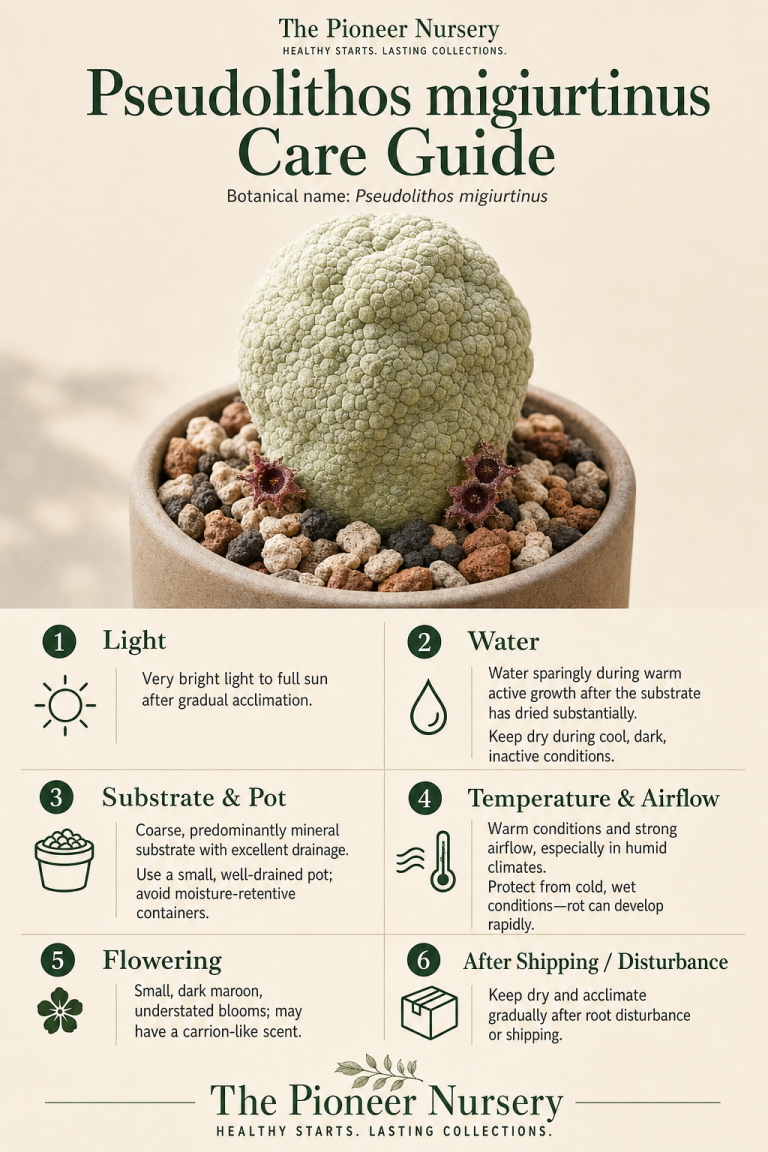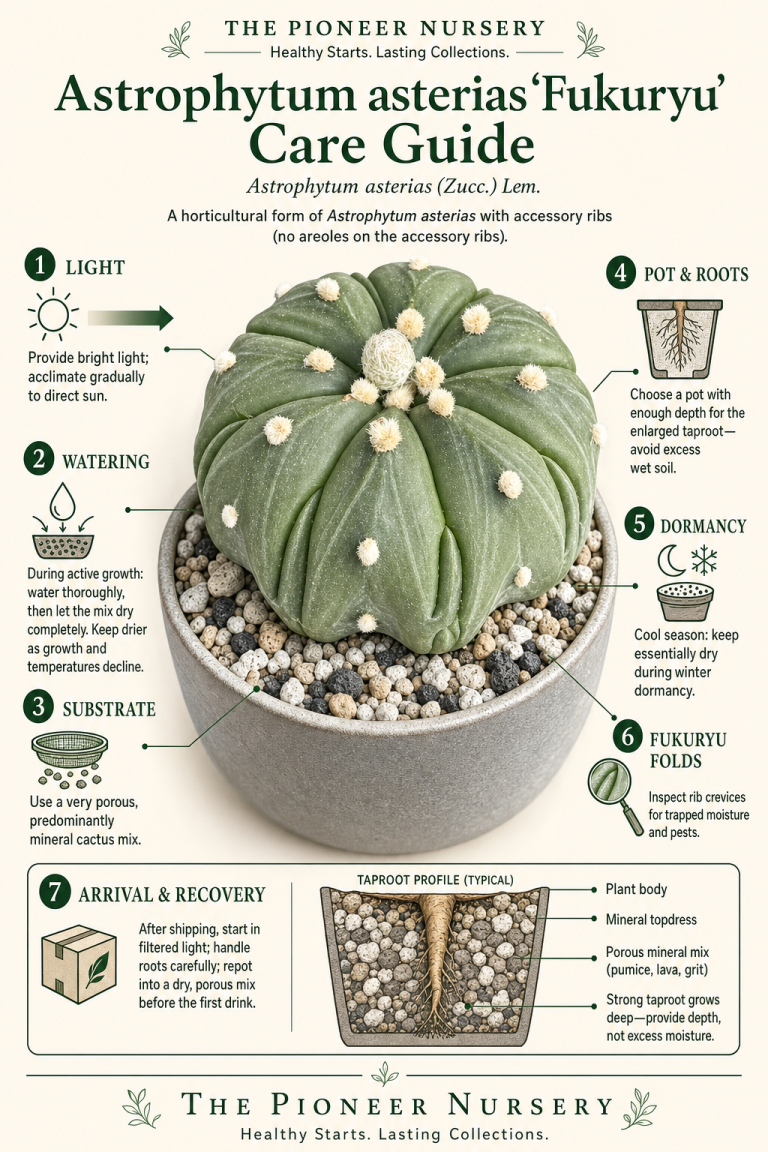
Cactus Soil Mix
The right soil mix is one of the most important parts of cactus care. Cactus roots need moisture when it is time…
The right soil mix is one of the most important parts of cactus care. Cactus roots need moisture when it is time to water, but they also need the soil to dry out quickly afterward. A good cactus soil mix supports the plant, allows airflow around the roots, and helps reduce the risk of rot.
Many cactus problems begin when the soil stays wet for too long. Heavy potting soil, oversized pots, poor drainage, and frequent watering can all create conditions that cactus roots do not like. The goal is not to keep cactus dry forever. The goal is to give them a healthy wet-to-dry cycle.
What Makes a Good Cactus Soil Mix?
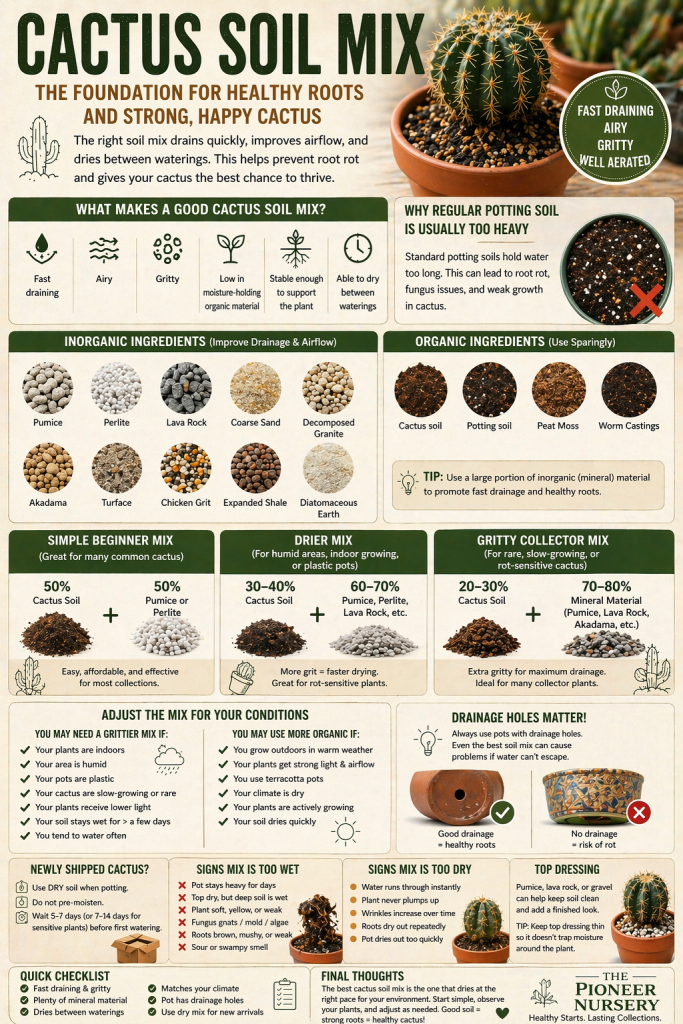
A good cactus soil mix should be:
- Fast draining
- Airy
- Gritty
- Low in moisture-holding organic material
- Stable enough to support the plant
- Able to dry between waterings
Cactus roots need oxygen. If the soil stays compacted or wet for too long, roots may struggle, weaken, or rot. A gritty mix helps water move through the pot while leaving small air spaces around the roots.
Why Regular Potting Soil Is Usually Too Heavy
Most standard potting soils are designed for leafy houseplants that need more consistent moisture. They often contain peat, compost, bark, or other organic materials that can hold water for a long time.
That does not mean all organic material is bad, but too much can be risky for cactus, especially for plants shipped bare root, rare collector cactus, or plants grown indoors.
If a cactus is planted in heavy soil, it may stay wet deep inside the pot even when the surface looks dry. This can lead to root rot, fungus issues, and weak growth.
Common Ingredients in Cactus Soil
Different growers use different mixes, but many good cactus blends include a combination of mineral and organic ingredients.
Common mineral ingredients include:
- Pumice
- Perlite
- Lava rock
- Coarse sand
- Decomposed granite
- Akadama
- Turface
- Chicken grit
- Expanded shale
- Diatomaceous Earth
Common organic ingredients include:
- Cactus soil
- Potting soil
- Peat Moss
- Worm Castings
For many cactus, mineral material should make up a large part of the mix. This helps the soil drain faster and improves airflow.
A Simple Beginner-Friendly Cactus Mix
For many common cactus, a simple starting mix is:
50% cactus soil
50% pumice or perlite
This is easy to make, affordable, and works well for many beginner and intermediate cactus collections.
If your environment is very humid, your pots are plastic, or your plants are indoors, you may want to increase the mineral portion.
A drier version would be:
30–40% cactus soil
60–70% pumice, perlite, lava rock, or other mineral material
A Grittier Collector Cactus Mix
For many rare, slow-growing, or rot-sensitive cactus, a grittier mix may be safer.
A collector-style mix may look like:
20–30% organic cactus soil
70–80% mineral material
Mineral material can include pumice, lava rock, perlite, decomposed granite, akadama, or similar gritty ingredients.
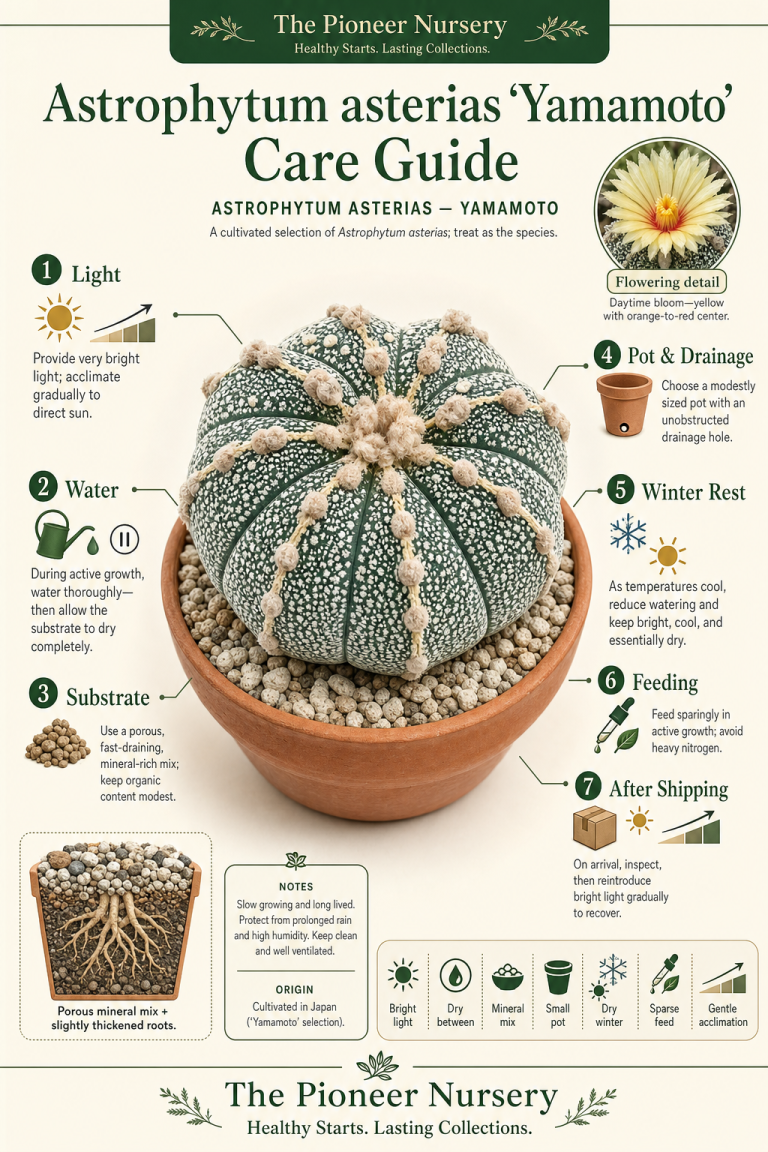
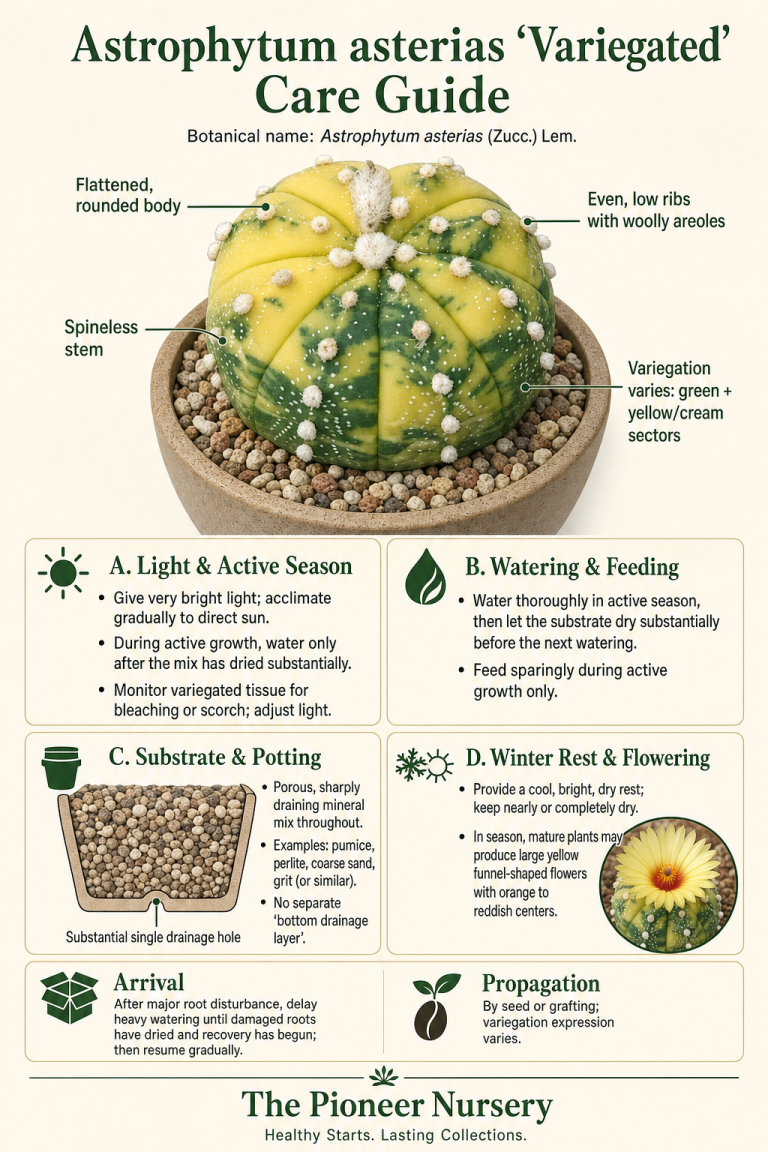
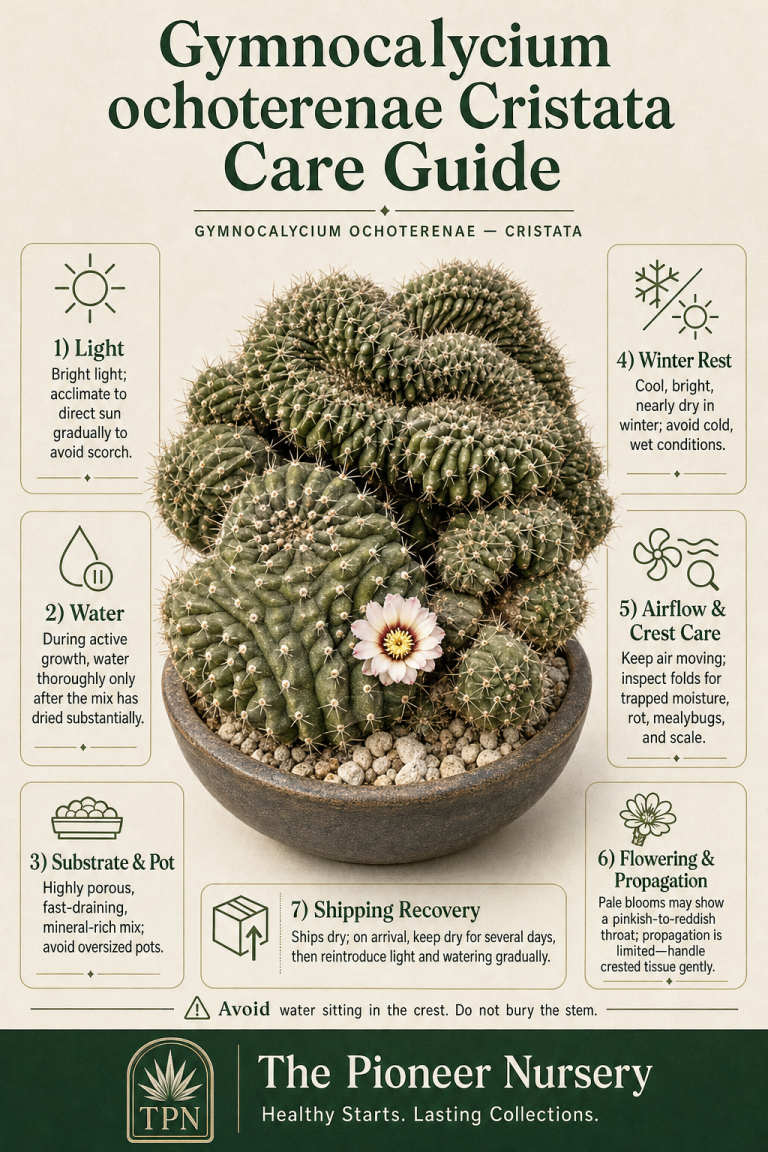
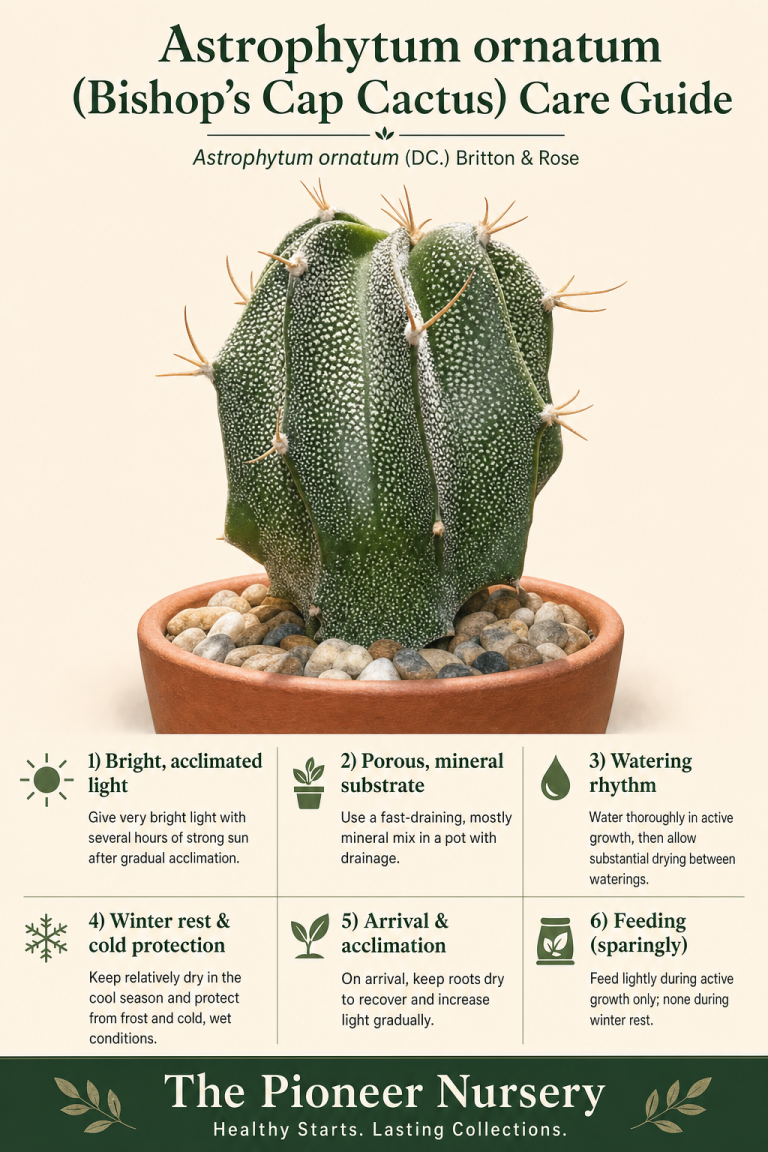
This type of mix is especially useful for plants such as Ariocarpus, Astrophytum, some Gymnocalycium, Copiapoa, Turbinicarpus, Lophophora, and other slower-growing cactus that may dislike staying wet.
Adjust the Mix for Your Growing Conditions
There is no single perfect cactus mix for every home, greenhouse, or climate. The best mix depends on how quickly the soil dries where you grow.
You may need a grittier mix if:
- Your plants are indoors
- Your area is humid
- Your pots are plastic
- Your cactus are slow-growing or rare
- Your plants receive lower light
- Your soil stays wet for more than a few days
- You tend to water often
You may be able to use slightly more organic material if:
- You grow outdoors in warm weather
- Your plants get strong light and airflow
- You use terracotta pots
- Your climate is dry
- Your plants are actively growing
- Your soil dries quickly
The best soil mix is the one that dries at the right pace for your conditions.
Drainage Holes Matter
Even the best cactus soil mix can cause problems if the pot does not have drainage. Cactus should be planted in pots with drainage holes so excess water can escape.
Decorative pots without drainage can trap water at the bottom, even if the top of the soil looks dry. If you use a decorative outer pot, keep the cactus in a nursery pot inside it and remove the inner pot when watering.
Soil Mix for Newly Shipped Cactus
For newly shipped or bare-root cactus, use dry cactus soil when potting. Do not pre-moisten the mix.
A new arrival may have dry roots, trimmed roots, or small root wounds from shipping. Planting into damp soil right away can increase the risk of rot.
After potting, wait before watering. For many cactus, waiting 5–7 days is a good starting point. Sensitive or freshly trimmed plants may need 7–14 days before the first watering.
How to Tell If Your Soil Mix Is Too Wet
Your cactus soil may be too moisture-retentive if:
- The pot feels heavy for many days after watering
- The top is dry but the deeper soil is still wet
- The plant becomes soft or yellow
- Fungus gnats appear often
- Roots look brown, mushy, or weak
- The soil smells sour or swampy
- Algae or mold grows on the surface
If this happens, consider repotting into a grittier mix and watering less often.
How to Tell If Your Mix Is Too Dry
A very gritty mix can also dry too fast for some plants, especially in hot weather or small pots.
Your mix may be too dry if:
- Water runs through instantly and the plant never plumps up
- The plant wrinkles more over time despite proper watering
- Fine roots dry out repeatedly
- The cactus is actively growing but looks dehydrated
- The pot becomes bone dry very quickly in warm weather
If this happens, you may need a small amount of additional organic material, slightly more frequent watering, or a different pot type.
Top Dressing
Many collectors add a top dressing of small rocks, pumice, lava rock, or decorative gravel. Top dressing can make the pot look finished and help keep soil from splashing onto the plant.
However, top dressing can also make it harder to see whether the soil is dry. If you use top dressing, check moisture by pot weight, a wooden skewer, or by learning how quickly your mix dries.
Avoid thick layers of dense decorative stone if they trap moisture around the plant base.
Should You Sterilize Cactus Soil?
Sterilizing soil is sometimes helpful, especially for seed starting, pest issues, or reused soil. For regular cactus potting, fresh clean ingredients are usually enough.
If you reuse soil, remove old roots and debris first. Avoid reusing soil from plants that had rot, pests, fungus problems, or unknown disease issues.
For seed starting, a cleaner mix can reduce mold, algae, and fungus problems.
Quick Cactus Soil Mix Checklist
A good cactus soil mix should:
- Drain quickly
- Contain plenty of gritty mineral material
- Allow airflow around the roots
- Dry between waterings
- Avoid staying wet deep in the pot
- Match your climate and growing conditions
- Be used with a pot that has drainage holes
- Stay dry at first when potting newly shipped cactus
Final Thoughts
Cactus soil does not need to be complicated, but it does need to drain well. The best mix gives your plant enough moisture to grow while drying quickly enough to protect the roots.
Start with a simple cactus soil and pumice or perlite mix, then adjust based on your growing conditions. If your soil stays wet too long, make it grittier. If it dries too quickly and your plant struggles, adjust slightly.
Good cactus care begins below the surface. A healthy, fast-draining soil mix gives your cactus the foundation it needs to grow, root, and thrive.