Common Shipping Stress Signs
Shipping can be stressful for cactus and succulents, even when they are healthy and carefully packed. Your plant may spend several days…
Shipping can be stressful for cactus and succulents, even when they are healthy and carefully packed. Your plant may spend several days in a dark box without airflow, sunlight, or normal temperature changes. If it was shipped bare root, it may also have had soil removed and roots lightly trimmed before shipping.
Because of this, a newly arrived plant may not look exactly the same as it did in a product photo. Some changes are normal and temporary. Others may need closer attention.
This guide will help you understand common shipping stress signs, what is usually normal, and when to reach out for help.
Why Plants Show Stress After Shipping
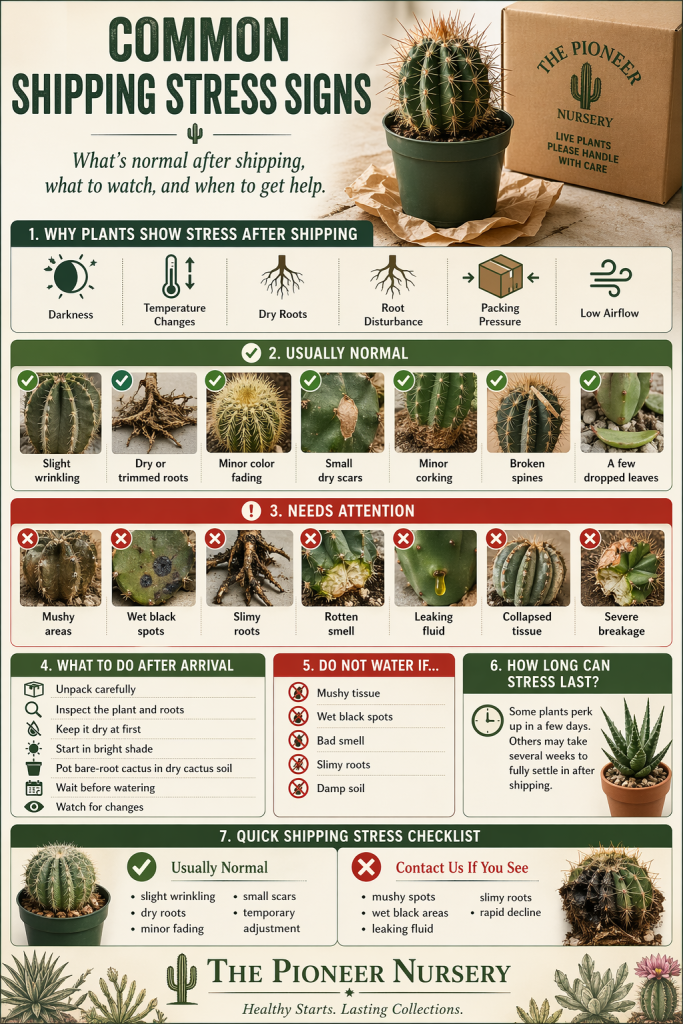
During shipping, plants are removed from their normal environment. They may experience:
- Darkness
- Reduced airflow
- Temperature changes
- Dry roots
- Root disturbance
- Time without watering
- Packing pressure
- Changes in humidity
Cactus and succulents are tough, but they are still living plants. A short adjustment period after arrival is normal.
Normal Shipping Stress Signs
Many minor changes are not a cause for panic. These signs often improve with time, proper potting, bright shade, and careful watering.
Common normal stress signs include:
- Slight wrinkling
- Minor color fading
- Dry roots
- Light soil dust
- Small healed scars
- Minor corking
- A few lost leaves on leafy succulents
- Slight leaning from packing
- Loose or disturbed roots
- Small broken spines
- Temporary softness from dehydration, as long as the plant is not mushy
These issues are usually part of the shipping and adjustment process.
Wrinkling or Slight Shriveling
Wrinkling is one of the most common signs after shipping. This usually happens because the plant has used some stored moisture during transit.
For cactus, slight wrinkling does not always mean the plant needs immediate water. If the plant is firm and the roots are dry, give it time to settle before watering.
After potting and completing a safe first watering cycle, many cactus slowly plump back up.
Dry or Trimmed Roots
Bare-root cactus often arrive with dry, trimmed, or shortened roots. This is normal. Soil is removed before shipping to reduce rot risk, moisture, mess, and damage.
Dry roots are not usually a problem. Freshly cut or damaged roots should be allowed to dry and callus before watering.
If roots look black, wet, slimy, or smell bad, that is not normal and should be evaluated before potting or watering.
Minor Color Changes
A cactus may appear slightly lighter, duller, or less vibrant after shipping. This can happen because the plant has been in darkness and under stress.
Most mild color changes stabilize after the plant is placed in bright shade or filtered light.
However, sudden black, wet, spreading, or mushy discoloration is more serious and should not be ignored.
Small Scars, Corking, or Blemishes
Cactus often have minor scars, corking, or cosmetic marks. Corking is a natural hardening or aging of plant tissue, often near the base. Small dry scars may also happen from handling, growth, or previous minor damage.
Dry, firm, healed marks are usually cosmetic.
Wet, soft, black, or spreading marks are different and may indicate rot or fresh damage.
Broken Spines or Minor Packing Marks
Shipping can sometimes cause small broken spines, minor dents, or surface marks. This is especially common with spiny cactus or plants packed tightly for protection.
These are usually cosmetic and do not affect the plant’s long-term health.
If the plant body is deeply crushed, split, mushy, or leaking fluid, contact us with photos.
Leaf Drop on Succulents
Some leafy succulents may drop a few leaves during shipping. This can happen from darkness, handling, temperature changes, or being boxed.
A few dropped leaves are usually not serious.
If many leaves are mushy, translucent, blackened, or falling off rapidly, the plant may have been too wet, too cold, too hot, or otherwise stressed.
When Not to Water
Do not water immediately just because the plant looks stressed. Watering too soon can make some problems worse.
Avoid watering if the plant has:
- Mushy tissue
- Wet black spots
- Slimy roots
- A bad smell
- Leaking fluid
- Fresh open wounds
- Soil that is already damp
If any of these signs are present, keep the plant dry and separate while you evaluate it.
Warning Signs That Need Attention
Some signs are more serious and may require immediate care or a message to us.
Reach out if you notice:
- Large mushy areas
- Black, wet, or spreading spots
- Rotten smell
- Leaking fluid
- Severe cold damage
- Severe heat damage
- Collapsed plant body
- Wet, slimy, or rotting roots
- Major breakage from shipping
- A plant that is rapidly declining after arrival
Photos are the best way for us to help evaluate the situation.
What to Do After Arrival
When your plant arrives, take a calm, simple approach.
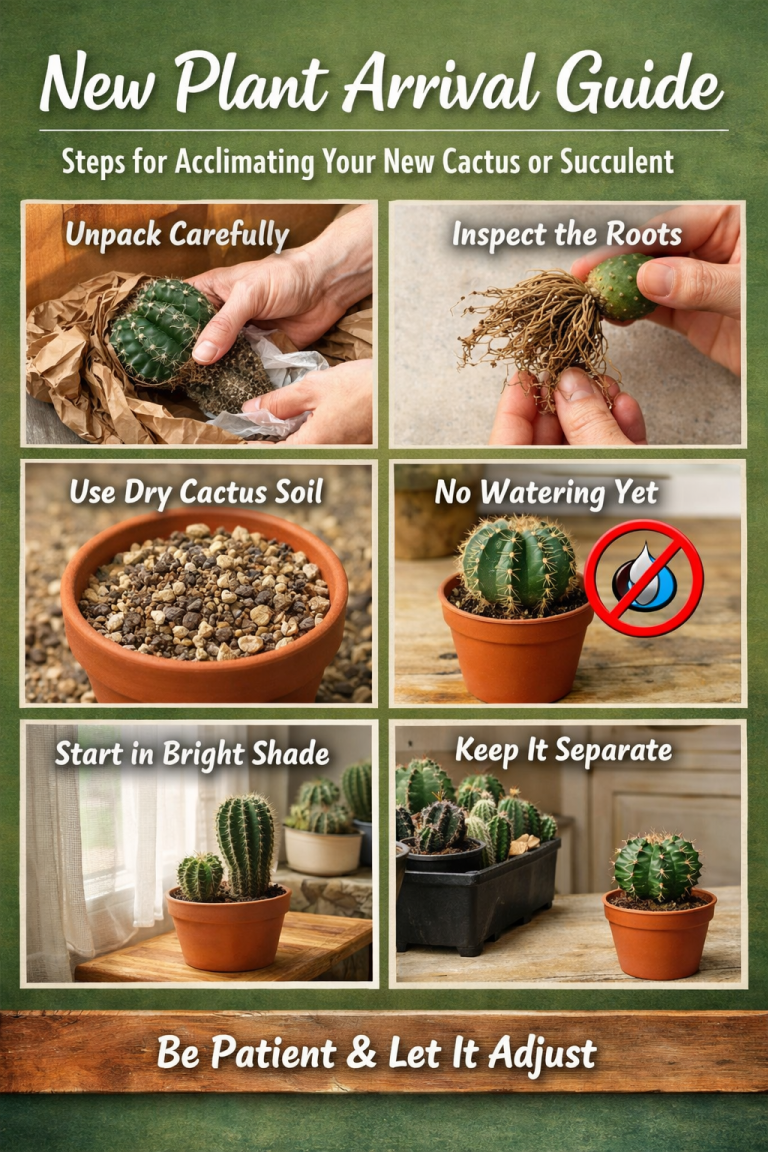
- Unpack it carefully.
- Inspect the plant and roots.
- Keep it dry at first.
- Start it in bright shade or filtered light.
- Pot bare-root cactus into dry, well-draining soil.
- Wait before watering.
- Keep new plants separate from your main collection at first.
- Watch for changes over the next several days.
Most shipping stress improves with patience and stable conditions.
How Long Does Shipping Stress Last?
Some plants look better within a few days. Others may take several weeks to fully settle in, especially if they were shipped bare root.
A plant may need time to:
- Callus small root wounds
- Begin producing new roots
- Adjust to light again
- Recover from darkness
- Rehydrate slowly
- Resume growth
Do not expect immediate new growth. Stability is the first goal.
What Photos Help If You Contact Us?
If you are concerned about your plant, clear photos help us respond more accurately.
Helpful photos include:
- A full photo of the plant
- Close-ups of the area of concern
- Photos of the roots, if visible
- A photo of the soil or pot, if already planted
- Photos of the box and packaging if there was shipping damage
Try to take photos in natural light or bright indoor light so the color and texture are clear.
Quick Shipping Stress Checklist
Usually normal:
- Slight wrinkling
- Dry roots
- Minor color fading
- Small dry scars
- Minor corking
- A few broken spines
- A few dropped leaves
- Temporary adjustment period
Needs attention:
- Mushy areas
- Wet black spots
- Slimy roots
- Rotten smell
- Leaking fluid
- Collapsed tissue
- Severe breakage
- Rapid decline
Final Thoughts
Shipping stress can look concerning at first, but many signs are normal and temporary. Cactus and succulents often need time to adjust after being packed, shipped, unpacked, and placed into a new environment.
The safest first steps are dry soil, bright shade, good airflow, delayed watering, and patience. If something looks wet, mushy, black, or rapidly spreading, pause before watering and reach out with photos.
A little stress after shipping is common. With the right care, most plants settle in and continue growing well in their new home.