Spider Mite Treatment
Spider mites are tiny pests that can cause serious damage to cactus and succulents if they are not caught early. They are…
Spider mites are tiny pests that can cause serious damage to cactus and succulents if they are not caught early. They are especially frustrating because they can be difficult to see at first, and the damage often becomes noticeable before the pests themselves do.
Spider mites feed by piercing plant tissue and removing sap. Over time, this can lead to scarring, discoloration, weakened growth, and a rough, unhealthy appearance. The good news is that spider mites can be managed with early detection, isolation, cleaning, and repeated treatment.
What Do Spider Mites Look Like?
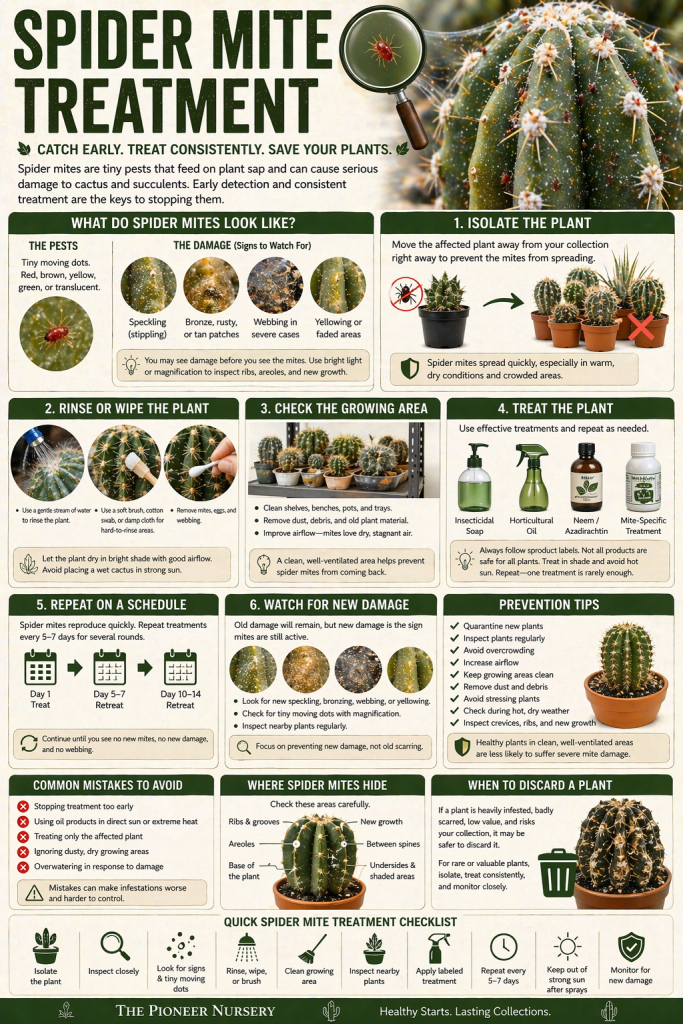
Spider mites are very small, often appearing as tiny moving dots. They may be red, brown, yellowish, greenish, or nearly translucent depending on the species and life stage.
Because they are so small, you may need a magnifying glass, phone zoom, or bright light to spot them. On cactus, they often hide in grooves, around ribs, near new growth, close to areoles, and along protected areas of the plant.
You may notice the damage before you see the mites.
Common signs include:
- Fine speckling or stippling
- Rusty, bronze, tan, or gray patches
- Rough-looking skin
- Webbing in severe infestations
- Yellowing or faded areas
- Damage near new growth
- Tiny moving dots on the plant surface
Spider mite damage can look similar to sun stress, corking, or fungal issues, so close inspection is important.
Isolate the Plant
As soon as you suspect spider mites, move the affected plant away from your main collection.
Spider mites can spread quickly, especially in warm, dry conditions and crowded growing areas. Isolating the plant gives you a better chance of controlling the problem before it reaches nearby cactus or succulents.
Also inspect any plants that were touching or close to the affected plant.
Rinse or Wipe the Plant
For many cactus, a gentle rinse can help knock mites, eggs, and webbing off the surface. Use a gentle stream of water and avoid blasting the plant hard enough to damage spines, roots, or delicate tissue.
For plants that cannot be easily rinsed, use a soft brush, cotton swab, or damp cloth to clean affected areas.
After rinsing or wiping, allow the plant to dry in bright shade with good airflow. Avoid placing a wet cactus directly into strong sun.
Check the Growing Area
Spider mites often spread because the growing area gives them ideal conditions. They tend to thrive in dry, dusty, warm, stagnant environments.
Clean the shelf, bench, windowsill, tray, or greenhouse area where the plant was sitting. Remove old leaves, dried flowers, dust, and debris. If several plants were close together, inspect them carefully.
Good airflow and regular inspection can make a big difference.
Treat the Plant
Spider mites usually require repeated treatment. One cleaning or spray is rarely enough because eggs and hidden mites may survive.
Common treatment options include:
- Insecticidal soap
- Horticultural oil, used carefully
- Neem or azadirachtin-based products
- Mite-specific treatments labeled for spider mites
- Repeated rinsing and cleaning
- Predatory mites in some greenhouse situations
Always follow the product label. Not every product is safe for every plant, and some sprays can damage cactus if used too strongly or applied in poor conditions.
Be Careful With Oils and Strong Light
Oil-based products can help control mites, but they can also increase the risk of sunburn or surface damage if used incorrectly.
If you use horticultural oil, neem oil, or similar sprays, apply them in shade, avoid hot parts of the day, and keep the plant out of strong sun afterward. Do not spray a plant that is already hot, dehydrated, or sun-stressed.
Variegated, colorful, grafted, or thin-skinned cactus may need extra caution. Test a small area first if you are unsure.
Repeat Treatment on a Schedule
Spider mites reproduce quickly, so follow-up treatments are important.
Inspect the plant every few days. Depending on the product and severity of the infestation, treatment may need to be repeated every 5–7 days for several rounds.
Continue treatment until you see no new mites, no fresh damage, and no webbing. Because old spider mite damage does not disappear, focus on whether the damage is spreading.
Watch for New Damage
Old spider mite damage may remain as scarring or discoloration. The goal of treatment is to stop new damage from forming.
After treatment, watch for:
- New speckling
- Fresh bronze or rusty patches
- New webbing
- More yellowing
- Tiny moving dots
- Damage spreading to nearby plants
- If new damage appears, continue treatment and inspect surrounding plants again.
Prevention Tips
Spider mites are easier to prevent than eliminate from a large collection.
Helpful prevention habits include:
- Quarantine new plants
- Inspect plants regularly
- Avoid overcrowding
- Increase airflow
- Keep growing areas clean
- Remove dust and debris
- Avoid letting plants become severely stressed
- Check undersides, crevices, ribs, and new growth
- Inspect more often during hot, dry weather
A healthy plant in a clean, well-ventilated area is usually less likely to suffer severe mite damage.
Common Mistakes to Avoid
Avoid assuming the problem is solved after one spray. Spider mites often require repeated treatment.
Avoid spraying oil-based products in direct sun or extreme heat. Avoid treating only the visibly damaged plant if nearby plants may already be affected. Avoid ignoring dusty, dry shelves or trays where mites can continue to spread.
Also avoid overwatering as a reaction to spider mite damage. Mite damage is not fixed by watering more, and overwatering can create a second problem.
When to Discard a Plant
Most spider mite problems can be treated, but if a plant is severely infested, badly scarred, low value, and close to other valuable plants, discarding it may be the safest option.
For rare or important plants, isolate the plant, clean it thoroughly, treat consistently, and monitor it closely until the infestation is under control.
Quick Spider Mite Treatment Checklist
- Isolate the affected plant.
- Inspect closely with bright light or magnification.
- Look for speckling, bronzing, webbing, and tiny moving dots.
- Rinse, wipe, or brush the plant gently if safe to do so.
- Clean the growing area.
- Inspect nearby plants.
- Apply a labeled spider mite treatment if needed.
- Keep treated plants out of strong sun after sprays.
- Repeat treatment every few days or weekly as directed.
- Watch for new damage, not just old scarring.
Final Thoughts
Spider mites can be frustrating, but they can be controlled with patience and consistency. The most important steps are isolation, close inspection, cleaning, repeated treatment, and monitoring nearby plants.
Old damage may remain, but new damage should stop once the mites are under control. Catching spider mites early gives your cactus or succulent the best chance of recovering and continuing to grow well.