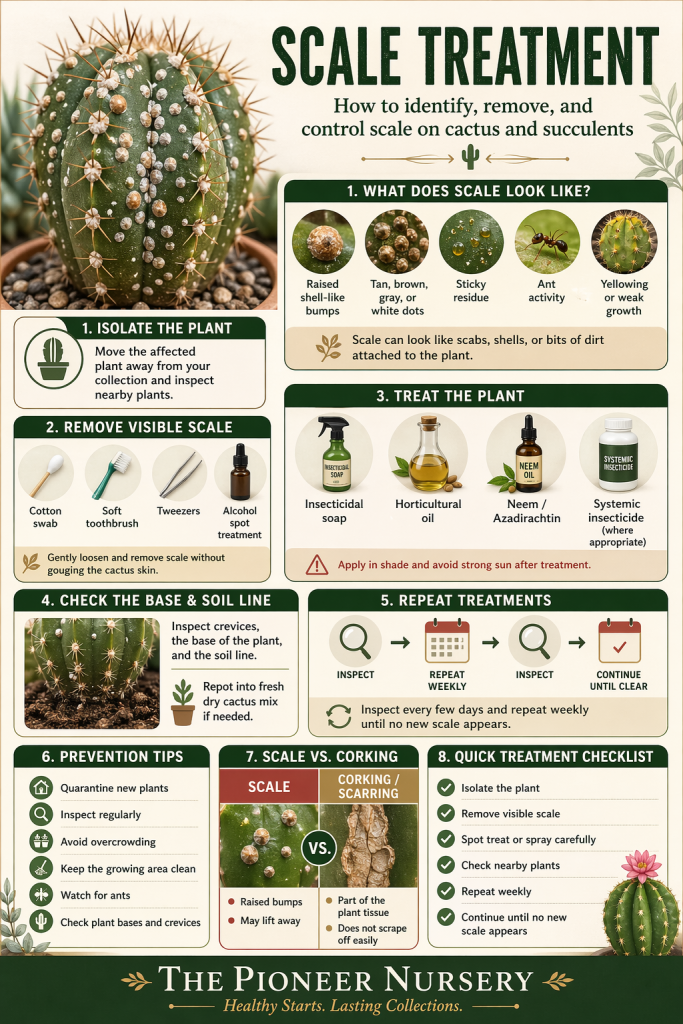
Scale Treatment
Scale insects are stubborn cactus and succulent pests that can be easy to miss at first. Unlike pests that move around visibly,…
Scale insects are stubborn cactus and succulent pests that can be easy to miss at first. Unlike pests that move around visibly, scale often appears as small bumps, shells, or crusty patches attached to the plant. These insects feed by piercing plant tissue and sucking sap, which can weaken the plant over time.
Scale can be frustrating, but early detection, isolation, manual removal, and repeated treatment can help protect your cactus collection.
What Does Scale Look Like?
Scale insects often look like small raised dots or bumps on the plant surface. They may be tan, brown, gray, white, yellowish, or dark depending on the type and age of the insect. Some look like tiny shells, scabs, or bits of dirt stuck to the plant.
On cactus, scale may appear around:
- Areoles
- Ribs
- Spine bases
- Offsets
- New growth
- The base of the plant
- Hard-to-see crevices
Scale can be mistaken for corking, scarring, dirt, or natural texture. A key difference is that scale can often be gently lifted or scraped away, while true corking or healed scarring is part of the plant tissue.
Why Scale Is a Problem
Scale insects feed on plant sap. A small infestation may not seem serious at first, but scale can multiply and slowly weaken the plant.
Over time, scale may cause:
- Yellowing
- Faded color
- Weak growth
- Surface damage
- Sticky residue
- Ant activity
- Decline in plant health
- Spread to nearby plants
Because scale can attach firmly to the plant, it often takes more than one treatment to fully remove.
Isolate the Affected Plant
As soon as you notice scale, move the plant away from your main collection. Scale can spread to nearby plants, especially when plants are crowded or touching.
Keep the plant isolated while you treat it and continue checking nearby plants. If one plant has scale, others in the same area may already have early signs.
Remove Visible Scale Manually
Manual removal is one of the most important steps in treating scale. The protective shell can make sprays less effective, so removing as much visible scale as possible helps treatment work better.
You can use:
- A cotton swab
- A soft toothbrush
- A toothpick used carefully
- Tweezers
- A soft cloth
- A cotton swab dipped in isopropyl alcohol
Gently loosen and remove the scale from the plant surface. Be careful not to gouge or damage the cactus skin. For spiny cactus, work slowly around the areoles and ribs.
After removal, keep the plant in bright shade with good airflow so treated areas can dry.
Spot Treat With Alcohol
For small infestations, isopropyl alcohol can be used as a spot treatment. Dip a cotton swab in alcohol and apply it directly to visible scale insects. This can help break down the pest’s protective coating.
Avoid soaking the entire plant unless you know the species can tolerate it. Some cactus, especially sensitive, thin-skinned, variegated, or stressed plants, may react poorly to heavy alcohol use.
Always keep treated plants out of direct sun until they are dry.
Treat the Plant
For heavier infestations, manual removal may need to be combined with a labeled pest treatment.
Common options include:
- Insecticidal soap
- Horticultural oil, used carefully
- Neem or azadirachtin-based products
- Systemic insecticides where appropriate and legally allowed
- Repeated manual removal
- Repotting if pests are hiding near the soil line or roots
Always follow the product label. Not every treatment is safe for every plant, and stronger does not always mean better.
Be Careful With Oils and Sun
Oil-based products can help smother scale, but they can also increase the risk of sunburn or plant damage if used incorrectly.
If using horticultural oil, neem oil, or similar products:
- Apply in shade
- Avoid hot parts of the day
- Do not spray a plant in direct sun
- Let the plant dry before returning it to brighter light
- Test sensitive plants first
- Avoid heavy applications on stressed plants
Cactus skin can be damaged by oils when combined with heat or strong light.
Check the Soil Line and Roots
Scale is usually found on the visible parts of the plant, but protected areas near the base and soil line should also be checked carefully.
If the plant has pests around the base, old dead growth, or debris in the pot, consider removing the plant and checking more closely. Discard contaminated soil if needed and repot into fresh, dry, well-draining cactus mix.
This is especially helpful if scale keeps returning after surface cleaning.
Repeat Treatment and Inspection
Scale treatment requires patience. Even if the plant looks clean after the first treatment, small insects may remain hidden or new crawlers may appear later.
Inspect the plant every few days at first. Remove any new scale you see. Depending on the treatment method, you may need to repeat treatment weekly for several weeks.
Continue isolation until you are confident the infestation has stopped.
Treat Nearby Plants and Clean the Area
Scale can spread through close contact and through tiny immature crawlers that are easy to miss. Inspect nearby plants carefully, especially those that were touching or sitting close to the affected plant.
Clean shelves, trays, benches, and pots. Remove dried flowers, dead leaves, and debris where pests can hide. If ants are present, inspect even more carefully, because ants may be attracted to sticky residue from sap-feeding pests.
Prevention Tips
Scale is easier to manage when caught early.
Helpful prevention habits include:
- Quarantine new plants
- Inspect plants regularly
- Avoid overcrowding
- Keep the growing area clean
- Remove dead flowers and debris
- Check plant bases and crevices
- Look closely before bringing plants into your main collection
- Watch for ants and sticky residue
- Keep plants healthy with proper light, soil, and watering
A quick inspection every week or two can help catch scale before it becomes a large infestation.
Scale vs. Corking or Scarring
It is easy to confuse scale with natural cactus markings. Corking is usually part of the cactus tissue and often appears near the base as a dry, firm, tan or brown area. Scars are also part of the plant surface and do not lift away easily.
Scale usually appears as individual raised bumps or patches that may come off when gently scraped. If you are unsure, inspect with magnification and compare multiple areas of the plant.
Do not aggressively scrape natural corking or healed scars.
When to Discard a Plant
Most scale infestations can be treated, especially when caught early. However, if a plant is severely infested, weak, low value, and close to valuable plants, discarding it may be safer than risking spread.
For rare or sentimental plants, isolate, clean, treat, and monitor carefully until the infestation is controlled.
Quick Scale Treatment Checklist
- Isolate the affected plant.
- Inspect the body, ribs, areoles, base, and soil line.
- Manually remove visible scale.
- Use alcohol spot treatment for small infestations.
- Apply labeled pest treatments if needed.
- Keep treated plants out of strong sun.
- Check nearby plants for early signs.
- Clean shelves, trays, and pots.
- Repeat inspection and treatment weekly.
- Continue isolation until no new scale appears.
Final Thoughts
Scale can be stubborn because the insects attach firmly and protect themselves with a shell-like covering. The key is consistency. Remove visible pests, treat carefully, inspect often, and repeat the process until no new scale appears.
With early action and steady follow-up, many cactus and succulents recover well from scale and continue growing normally.