Phyllanthus mirabilis Care Guide
Learn how to grow Phyllanthus mirabilis, a warm-growing caudex plant with a succulent water-storing stem, strong-light needs, and distinctive leaves that fold at night.
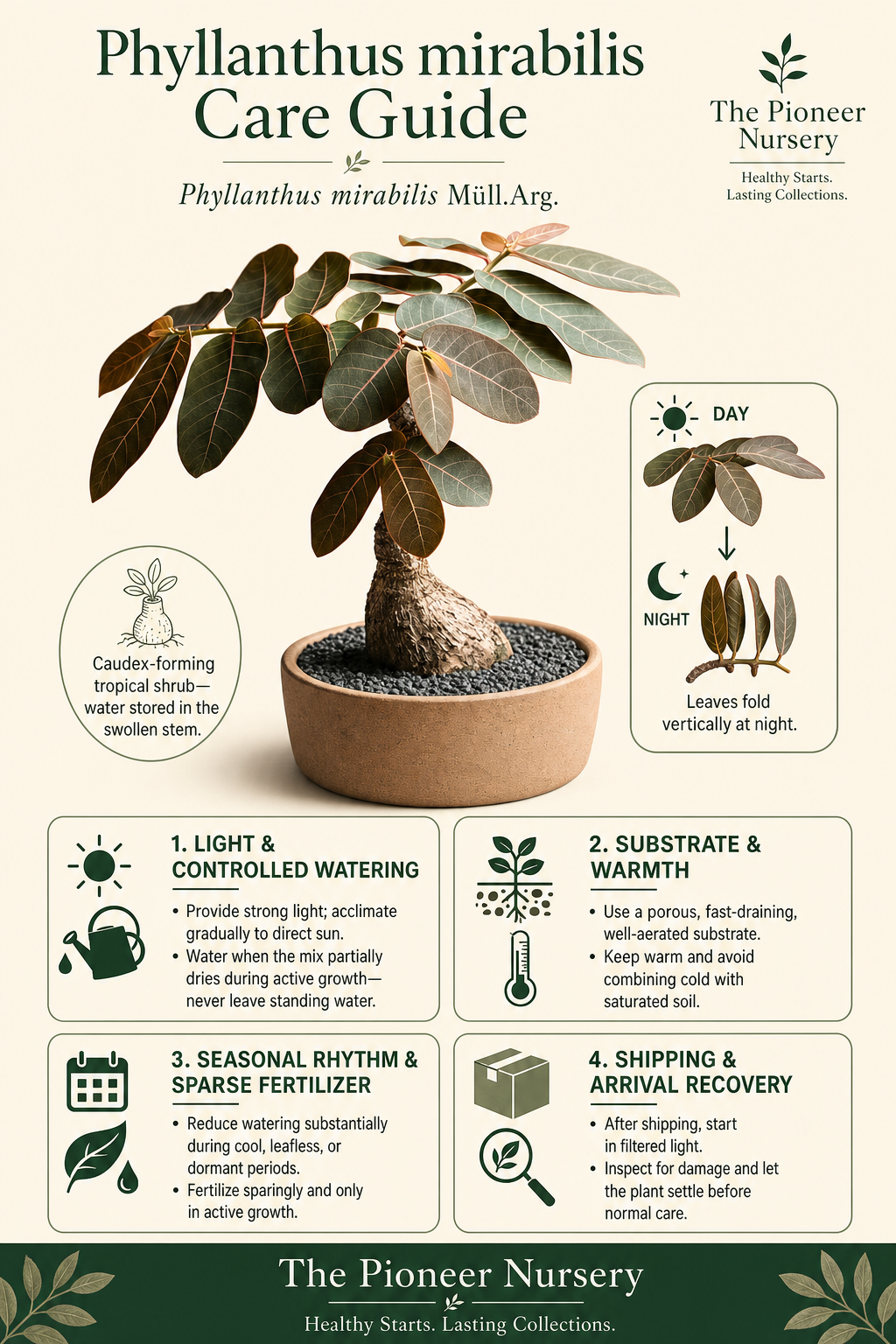
Phyllanthus mirabilis is a warm-growing caudex-forming shrub or small tree from Laos, Myanmar, and Thailand. Its swollen succulent stem stores water, while its leaves fold vertically at night as part of normal nyctinastic movement. Successful cultivation depends on strong but carefully acclimated light, porous drainage, controlled watering, and protection from cold, wet conditions. Kew currently accepts Phyllanthus mirabilis Müll.Arg.; some authorities use Glochidion mirabile, which is treated as a synonym in the current Kew treatment.
Quick Care Summary
- Provide strong light, with gradual acclimation to direct sun.
- Use a porous, fast-draining, well-aerated substrate.
- Allow the mix to partially dry between active-growth waterings.
- Reduce watering substantially during cool, leafless, or dormant periods.
- Keep the plant warm and never combine cold conditions with saturated soil.
- After shipping, begin with filtered light and inspect for damage before resuming normal care.
About the Plant
Phyllanthus mirabilis is associated with limestone mountain and rocky habitats and is recognized by its succulent stem, or caudex. The caudex stores water, but this species should not automatically be treated like an extremely drought-adapted desert cactus because its native range also includes humid environments. Its leaves may fold vertically at night; this is normal nyctinastic movement, not touch sensitivity or necessarily a sign of wilting.
Light
Provide strong light. Full sun can be suitable once the plant is acclimated, while semi-shade is also recorded. After shipping or a period indoors, begin with bright filtered light and gradually increase exposure to stronger sun to reduce scorch risk.
Watering
Water moderately but in a controlled way during active growth. Let excess water drain freely and allow the substrate to partially dry between waterings. Do not keep the caudex or roots constantly wet. During cool, leafless, or otherwise dormant periods, reduce watering substantially. Cold conditions combined with saturated soil increase the risk of rot.
Soil and Potting
Use a porous, fast-draining, well-aerated substrate and a stable container with effective drainage and room for the swollen caudex. Avoid unnecessary repotting and standing water. If roots are disturbed, allow affected areas to dry and heal before returning to normal watering.
Temperature and Seasonal Growth
Treat Phyllanthus mirabilis as a warm-growing tropical caudex plant. Protect it from frost, prolonged low temperatures, and cold wet soil. Plants may become deciduous, and cultivation commonly includes a drier, slower winter period. During leaf loss or cool conditions, reduce watering sharply while maintaining warmth. No exact cold limit or standardized dormancy schedule was established in the available research.
Fertilizer
Fertilize sparingly during active growth. Overly generous fertilization is not recommended because excessively favorable growing conditions may reduce the plant's caudiciform character.
Propagation
Propagation from seed is documented and is the best-supported method in the available research. Reliable institutional confirmation of routine cutting propagation was not located.
Shipping and Arrival Care
Inspect the plant after arrival for impact damage or signs of rot, taking particular care with the swollen caudex and roots. Provide bright but initially filtered light, then acclimate gradually to stronger sun. If the plant arrives bare-root or with disturbed roots, avoid immediate heavy watering and allow disturbed areas to dry and heal before returning to normal watering. Protect shipments from freezing temperatures and prolonged moisture.
Common Problems
- Stem or root rot: Usually associated with saturated substrate, especially in low temperatures; keep cold conditions dry.
- Sun scorch: Can follow abrupt exposure to intense light; acclimate gradually.
- Weak, elongated growth: Associated with insufficient light; provide stronger light as tolerated.
- Reduced caudiciform character: Excessively wet, heavily fed, or consistently very favorable conditions may reduce the swollen-stem appearance.
- Pest pressure: May increase where airflow is poor, although a species-specific pest profile was not documented.
Frequently Asked Questions
How much light does Phyllanthus mirabilis need?
Provide strong light. Full sun may be suitable after acclimation, while semi-shade is also recorded. Increase exposure gradually after shipping or indoor growth to reduce scorch risk.
How should I water Phyllanthus mirabilis?
During active growth, water in a controlled way and let the substrate partially dry between waterings. Reduce watering substantially during cool, leafless, or dormant periods, and avoid saturated soil in cold conditions.
Why do the leaves fold at night?
Nightly vertical leaf folding is normal nyctinastic movement for this species. It should not be mistaken for touch sensitivity or automatically treated as wilting.
Does Phyllanthus mirabilis need a dry desert-style treatment?
No. Its caudex stores water, but the species also comes from humid environments. Use controlled watering and fast drainage rather than assuming it needs extreme drought.
Can Phyllanthus mirabilis be propagated from cuttings?
Seed propagation is documented and is the best-supported method in the available research. Reliable institutional confirmation of routine cutting propagation was not located.
How should I care for a shipped plant?
Inspect it for damage or rot and start it in bright filtered light. If roots were disturbed or the plant arrived bare-root, delay heavy watering while affected areas dry and heal.
Phyllanthus mirabilis combines a distinctive water-storing caudex with practical needs that are easy to overlook: strong light, excellent drainage, controlled watering, and warmth. Keep cold conditions dry, acclimate gradually after shipping, and remember that nighttime leaf folding is normal.