Rebutia pulvinosa Care Guide
Learn how to grow Rebutia pulvinosa, a compact, prolific clumping cactus with bright basal flowers and a preference for bright light, excellent drainage, and a cool, nearly dry winter rest.
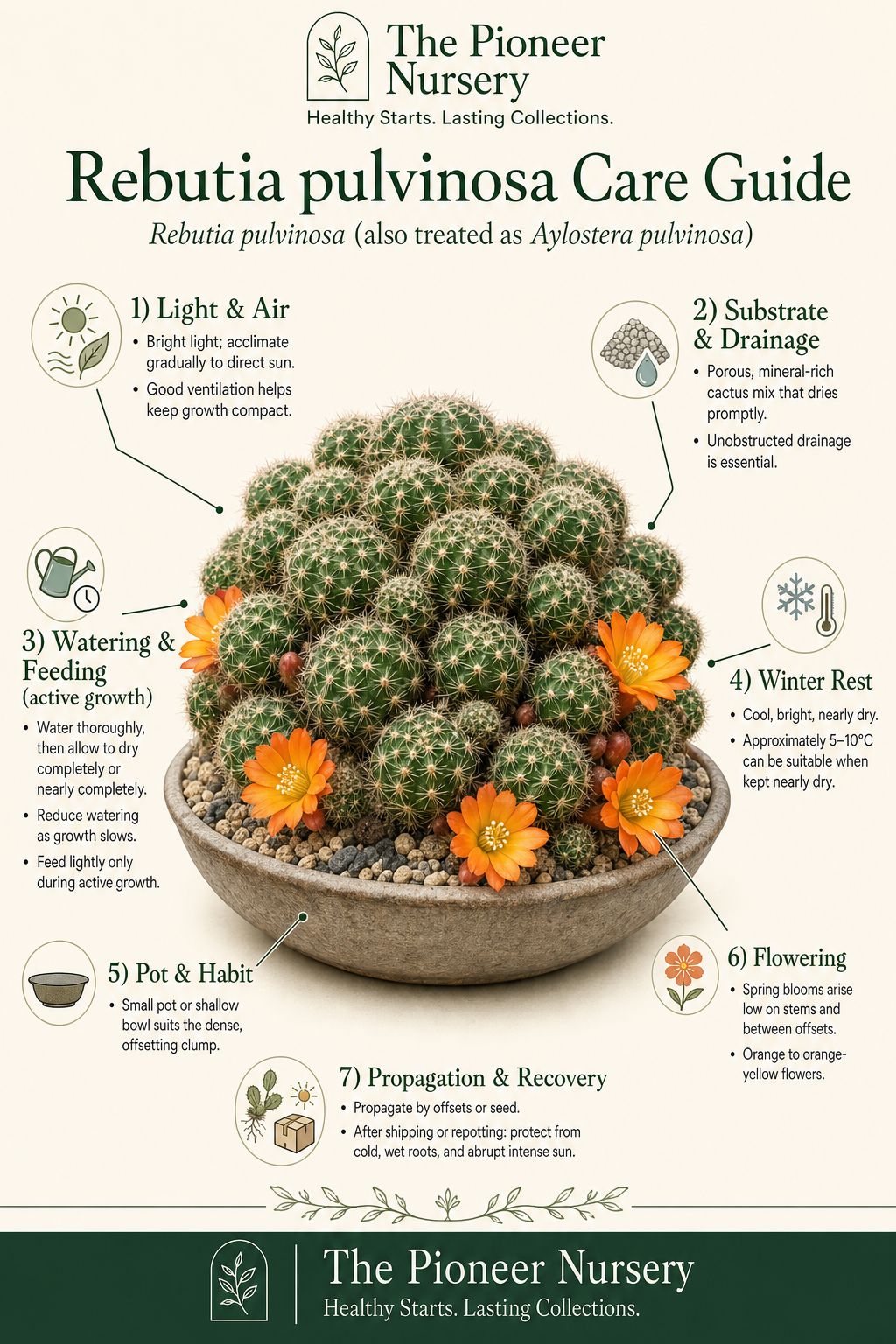
Rebutia pulvinosa is a small, strongly clustering cactus from Tarija, Bolivia. Its compact stems form dense clumps, with bright orange to orange-yellow flowers appearing low on the stems, often between the parent plant and offsets. The main care priorities are strong light with gradual acclimation, a porous mineral-rich substrate, thorough watering only during active growth, and a cool, nearly dry winter rest. The name Aylostera pulvinosa is currently accepted by Plants of the World Online, while Rebutia pulvinosa remains a documented botanical synonym and widely used horticultural name.
Quick Care Summary
- Bright light with good ventilation and gradual acclimation to direct sun.
- Use a porous, mineral-rich cactus substrate that dries promptly.
- Water thoroughly during active growth, then allow the substrate to dry completely or nearly completely.
- Reduce watering substantially as growth slows.
- Provide a cool, bright, nearly dry winter rest; approximately 5–10°C can be suitable when kept nearly dry.
- Use a small pot or shallow bowl with an unobstructed drainage hole.
- Feed lightly only during active growth.
- Protect shipped or recently repotted plants from cold, wet roots and abrupt intense sun.
About the Plant
Rebutia pulvinosa is a compact, prolific clumper rather than a cactus with a specialized caudex or enlarged taproot. Its clustered growth habit makes it well suited to a relatively small pot or shallow bowl, provided the container drains freely and the medium dries promptly. Flowers are produced abundantly from the lower sides or base of the stems and are typically orange to orange-yellow.
Light
Provide bright light and good ventilation. Once acclimated, the plant can receive several hours of direct sun. In hot climates or behind glass, use light shade or filtered afternoon sun to reduce scorch risk. Increase light gradually after shipping, moving outdoors, or changing the plant’s position. Insufficient light can lead to weak, elongated growth and reduced flowering.
Watering
During active growth, water thoroughly until excess drains from the pot, then allow the substrate to dry completely or nearly completely before watering again. Avoid frequent shallow watering and never leave the container standing in water. Reduce watering substantially as growth slows. During the cool or low-light season, keep the plant almost completely dry, providing only minimal moisture if severe shriveling develops and conditions are otherwise safe.
Soil and Substrate
Use a porous, fast-draining cactus substrate with substantial mineral content. Pumice, perlite, coarse grit, or coarse sand can be combined with a limited amount of organic cactus mix. The goal is root aeration and rapid drying after watering, especially during cool conditions.
Potting and Roots
Choose a container with an unobstructed drainage hole. A relatively small pot or shallow bowl suits this compact clumping cactus; unusually deep potting is not required. Repot near the end of winter or before active growth. After repotting, keep the plant dry for approximately one to two weeks, or longer if roots were substantially damaged, before resuming cautious watering. Watering before root wounds heal can increase the risk of rot.
Temperature and Winter Rest
Grow Rebutia pulvinosa warm during the active season and provide a cool, bright winter rest. Approximately 5–10°C can be suitable during winter when the plant is kept nearly dry. Protect it from frost, prolonged cold, and especially cold, wet substrate. Exact cold tolerance is not sufficiently dependable for general nursery guidance. A cool, dry rest also helps support spring flowering.
Fertilizer
Feed only during active growth, using a dilute cactus fertilizer or specialist liquid cacti feed. Monthly feeding at reduced strength is adequate when the plant is growing strongly. Do not fertilize during the winter rest or when the substrate is dry and the plant is inactive.
Flowering
Rebutia pulvinosa usually flowers in spring after a winter rest. Its bright orange to orange-yellow flowers arise from the lower sides or base of the clustered stems, often appearing between the parent and offset growth. Flowers may remain open for several days.
Propagation
Propagation is possible from offsets or seed. Separate offsets carefully, then allow detached offsets or other wounded tissue to callus in a dry, shaded, ventilated place before planting. Seeds should be sown in a clean, porous medium under warm, bright conditions while avoiding stagnant wetness.
Shipping and Arrival Care
Inspect the plant after arrival for shipping damage. Provide bright but initially filtered light, then acclimate gradually to stronger sun. Protect plants from freezing temperatures and prolonged cold during transit and recovery. For bare-root or recently disturbed plants, allow damaged roots to dry and heal before watering. Cold, wet roots during recovery present a significant rot risk.
Common Problems
The most important risks are root or stem rot from poorly draining substrate, overwatering, or cold wet conditions; sun scorch after abrupt exposure to intense direct sun; and rot after repotting if damaged roots are watered too soon. Dense clumps can harbor mealybugs, particularly around stem bases. Weak, elongated growth and reduced flowering generally indicate insufficient light.
Frequently Asked Questions
How often should I water Rebutia pulvinosa?
Do not follow a fixed calendar. During active growth, water thoroughly and wait until the substrate is completely or nearly completely dry before watering again. Water much less as growth slows and keep the plant almost completely dry during its cool winter rest.
Does Rebutia pulvinosa need direct sun?
It benefits from bright light and several hours of direct sun once acclimated. Use light shade or filtered afternoon sun in hot climates or behind glass, and increase exposure gradually after shipping or a move outdoors.
Why are the flowers appearing at the base of the stems?
Basal or low-side flowering is characteristic of this compact clumping cactus. Flowers often appear between the parent stem and offset growth.
What type of pot is best?
Use a relatively small pot or shallow bowl with an unobstructed drainage hole. The plant does not require an unusually deep container, but the medium must dry promptly.
When should I repot?
Repot near the end of winter or before active growth. Keep the plant dry for approximately one to two weeks afterward, or longer when roots were substantially damaged, before watering cautiously.
Can I propagate it from offsets?
Yes. Separate offsets and allow wounded tissue to callus in a dry, shaded, ventilated place before planting. It can also be propagated by seed.
With bright, gradually acclimated light, excellent drainage, careful active-season watering, and a cool, nearly dry winter rest, Rebutia pulvinosa can form dense clumps and produce abundant spring flowers. Keep the roots especially cautious around cold or recent disturbance.