Acanthocalycium Care Guide
Learn how to grow Acanthocalycium with bright light, fast-draining soil, careful watering, and a drier winter rest. Species vary in flowering, dormancy, and cold tolerance.
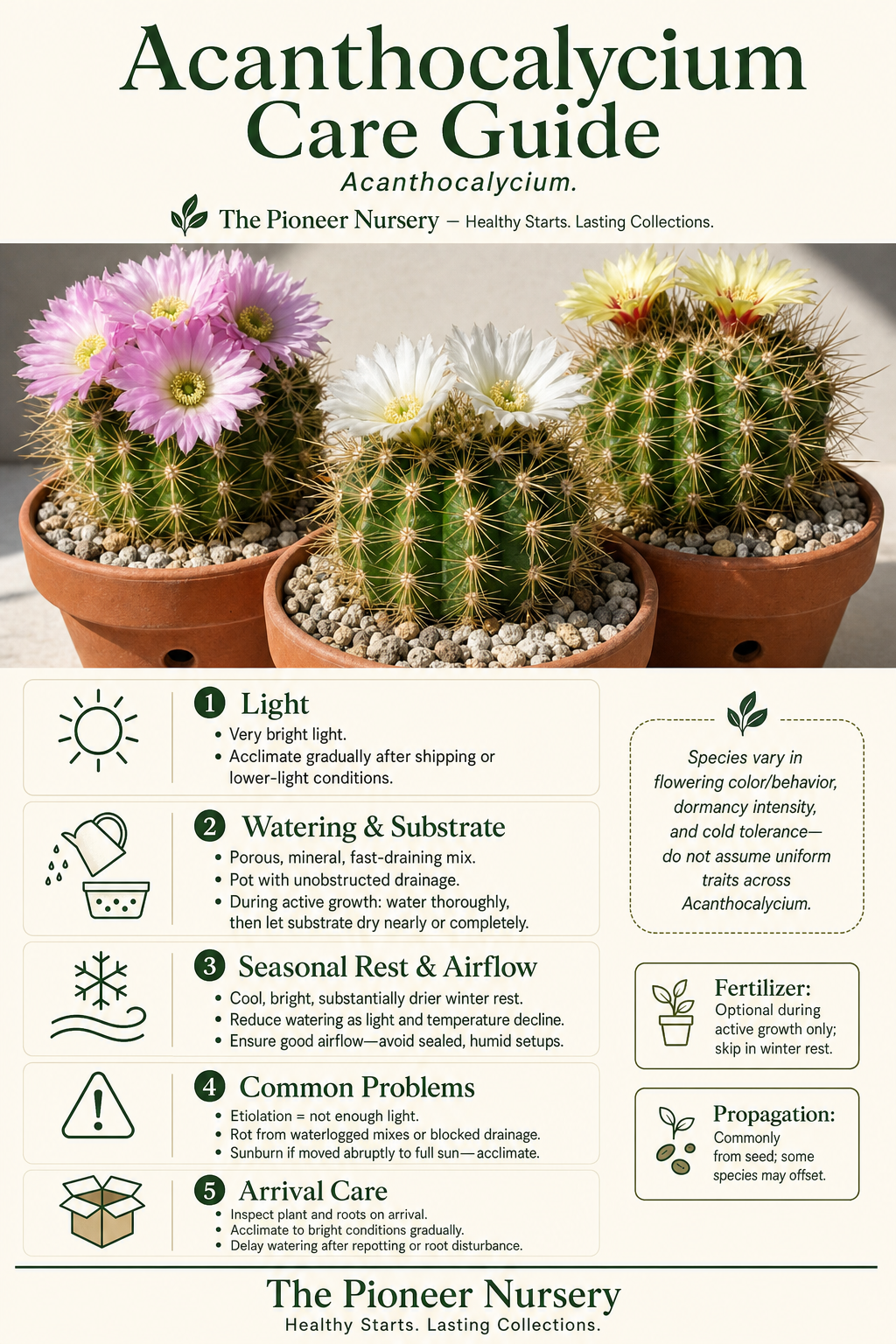
Acanthocalycium is an accepted cactus genus in the family Cactaceae, with species extending from Bolivia and western-central Brazil through Paraguay, Uruguay, and northern Argentina. Because flowering, seasonal rhythms, and cold tolerance vary, this guide focuses on shared cultivation patterns: very bright light, porous soil, thorough watering during active growth followed by drying, and a much drier rest when conditions are cool or light is reduced. Some plants historically associated with Acanthocalycium have also been treated under Echinopsis or related genera; this reflects nomenclatural variation rather than an unresolved genus identity.
Quick Care Summary
- Provide very bright light, with gradual acclimation after shipping or lower-light conditions.
- Use porous, mineral, fast-draining soil and a pot with unobstructed drainage.
- Water thoroughly during active growth, then allow the substrate to dry nearly or completely.
- Keep plants substantially drier as light and temperature decline, especially during a cool winter rest.
- Expect species-level variation in flowering, dormancy intensity, and cold tolerance.
About Acanthocalycium
Acanthocalycium includes variation among species and populations. Adjust care when the particular species, provenance, rootstock, greenhouse conditions, or local seasonal climate is known. Published hardiness claims for individual species should not automatically be applied to the genus.
Light
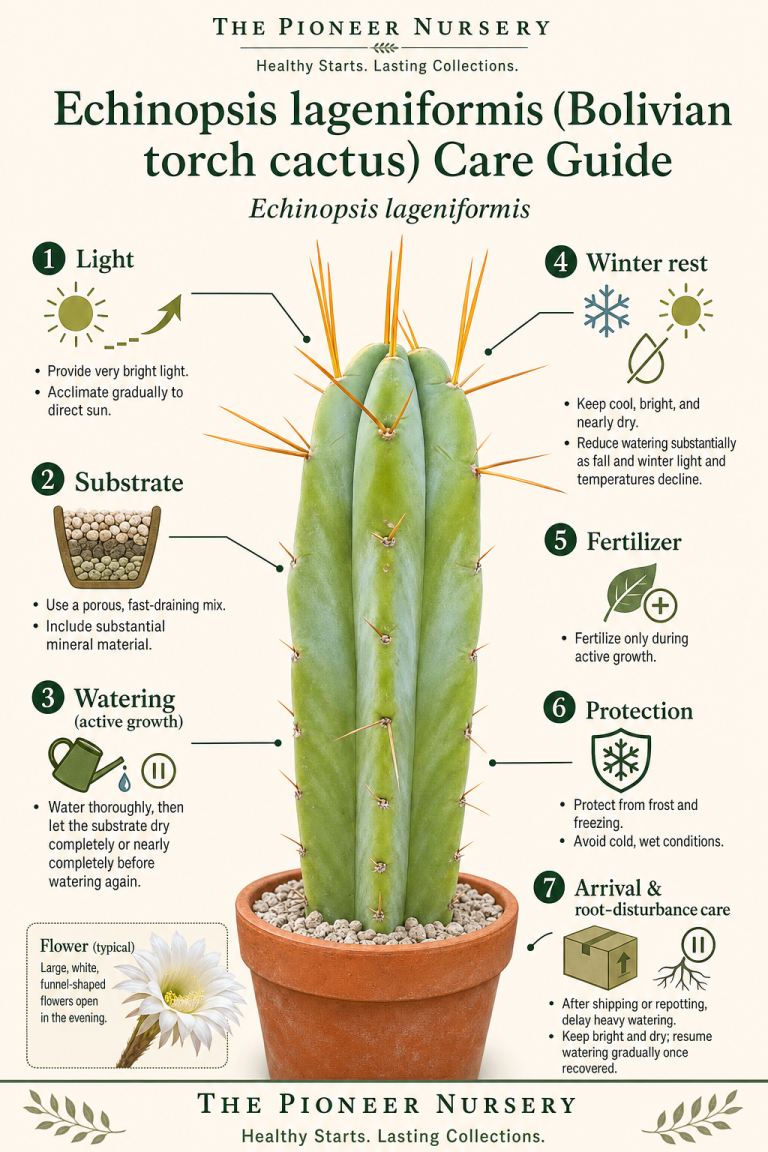
Provide very bright light with substantial direct sun. Established plants generally perform best in full sun or a bright, well-ventilated greenhouse. Acclimate gradually after shipping or a move from lower light. Seedlings and recently shipped plants may need temporary protection from strong sun to prevent sunburn.
Watering and soil
Use a porous, fast-draining cactus substrate with a substantial mineral component, such as pumice, expanded mineral aggregate, grit, or coarse sand. Water thoroughly during active growth, then allow the substrate to dry nearly or completely before watering again. Reduce watering as temperatures and light decline, and keep plants much drier in cool, poorly ventilated, or low-light conditions. Avoid dense soil and continuously wet roots; never combine cold conditions with wet substrate. Exact frequency depends on species, pot size, substrate, airflow, and climate.
Potting and roots
Choose a container with an unobstructed drainage hole and use the smallest practical pot for the root system. Repot when the substrate has degraded, roots have filled the container, or drainage has declined. Handle roots carefully; allow damaged roots to dry and seal, and delay watering after major root disturbance until recovery has begun.
Temperature, airflow, and winter rest
Warm conditions support active growth, but temperature tolerance varies among species and populations. Protect plants from prolonged freezing, especially when wet. Some high-elevation or cold-adapted examples may tolerate brief dry cold, while other material should be overwintered above freezing. Provide good air movement during hot weather and avoid sealed, humid conditions. In temperate climates, plants commonly benefit from a cooler, brighter, substantially drier winter rest. Resume watering gradually in spring only when temperatures, light, and root activity are adequate.
Fertilizer
During active growth, use a diluted cactus fertilizer or apply a balanced fertilizer conservatively. Avoid excessive nitrogen, which can produce soft growth and increase rot risk. Do not fertilize dry, dormant, recently repotted, or root-damaged plants.
Flowering
Many Acanthocalycium produce showy daytime flowers that may be funnel- or trumpet-shaped. Reported colors include white, pink, purple, yellow, and related shades, depending on the species and form. Flowering is generally associated with maturity, strong light, adequate summer growth, and often a preceding dry winter rest. Flowering season and color are not uniform across the genus.
Propagation
Seed propagation is the most broadly applicable genus-level method. Sow in a clean, well-drained medium with warmth, light, and controlled moisture, then gradually increase ventilation as seedlings establish. Grafting can accelerate difficult or slow seedlings but is not required. Offsets or cuttings apply only to species or specimens that produce suitable offsets or segments.
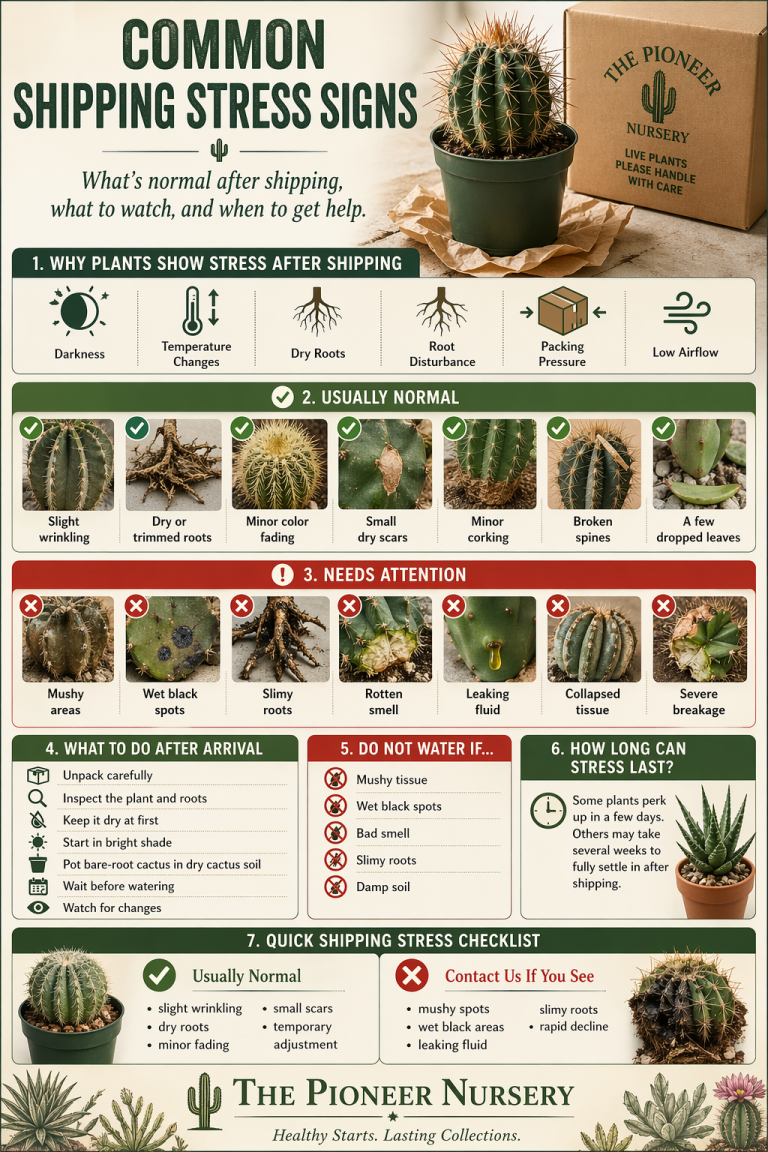
Shipping and arrival care
Whenever practical, ship and receive plants in dry or nearly dry substrate. After arrival, inspect for rot, crushing, and spine damage. Reintroduce direct sun gradually, and allow bare-root or damaged roots to recover before watering. Do not water while the plant is cold, dark, poorly ventilated, or severely root-damaged.
Common problems
Root and stem rot is associated with waterlogged substrate, poor drainage, or watering during cold, low-light conditions. Sunburn can follow abrupt exposure to strong direct sun, while insufficient light causes etiolation and weak growth. Mealybugs, scale, spider mites, and opportunistic fungal problems may affect stressed or poorly ventilated plants. Flowering may fail with immaturity, inadequate light, excessive winter moisture, or insufficient seasonal growth.
Frequently Asked Questions
How often should I water Acanthocalycium?
There is no single genus-wide schedule. Water thoroughly during active growth, then wait until the substrate is nearly or completely dry. Water less as light and temperature decline.
Does Acanthocalycium need full sun?
Established plants generally perform best in full sun or very bright greenhouse light. Acclimate gradually after shipping or lower-light conditions; seedlings and recently shipped plants may need temporary protection.
Should Acanthocalycium have a winter dormancy?
Plants commonly benefit from a cooler, brighter, substantially drier winter rest in temperate climates. Timing and intensity vary by species and growing conditions.
What soil should I use?
Use a porous, fast-draining cactus substrate with substantial mineral material such as pumice, grit, expanded mineral aggregate, or coarse sand. Avoid dense, water-retentive soil.
Why is my Acanthocalycium not flowering?
Possible factors include immaturity, inadequate light, excessive winter moisture, or insufficient seasonal growth. Flowering color and timing vary among species and forms.
Can Acanthocalycium be grown from seed?
Yes. Seed propagation is the most broadly applicable genus-level method. Use a clean, well-drained medium with warmth, light, and controlled moisture, increasing ventilation as seedlings establish.
Acanthocalycium is best approached as a variable genus rather than a single uniform plant. Start with bright light, mineral, fast-draining soil, careful drying between active-growth waterings, and a drier cool-season rest. Then adjust the routine for the species, provenance, and growing conditions when those details are available.