Echeveria Care Guide
Learn how to grow Echeveria with strong light, fast drainage, careful watering, and winter protection. This genus-level guide also explains variation among species, hybrids, and cultivars.
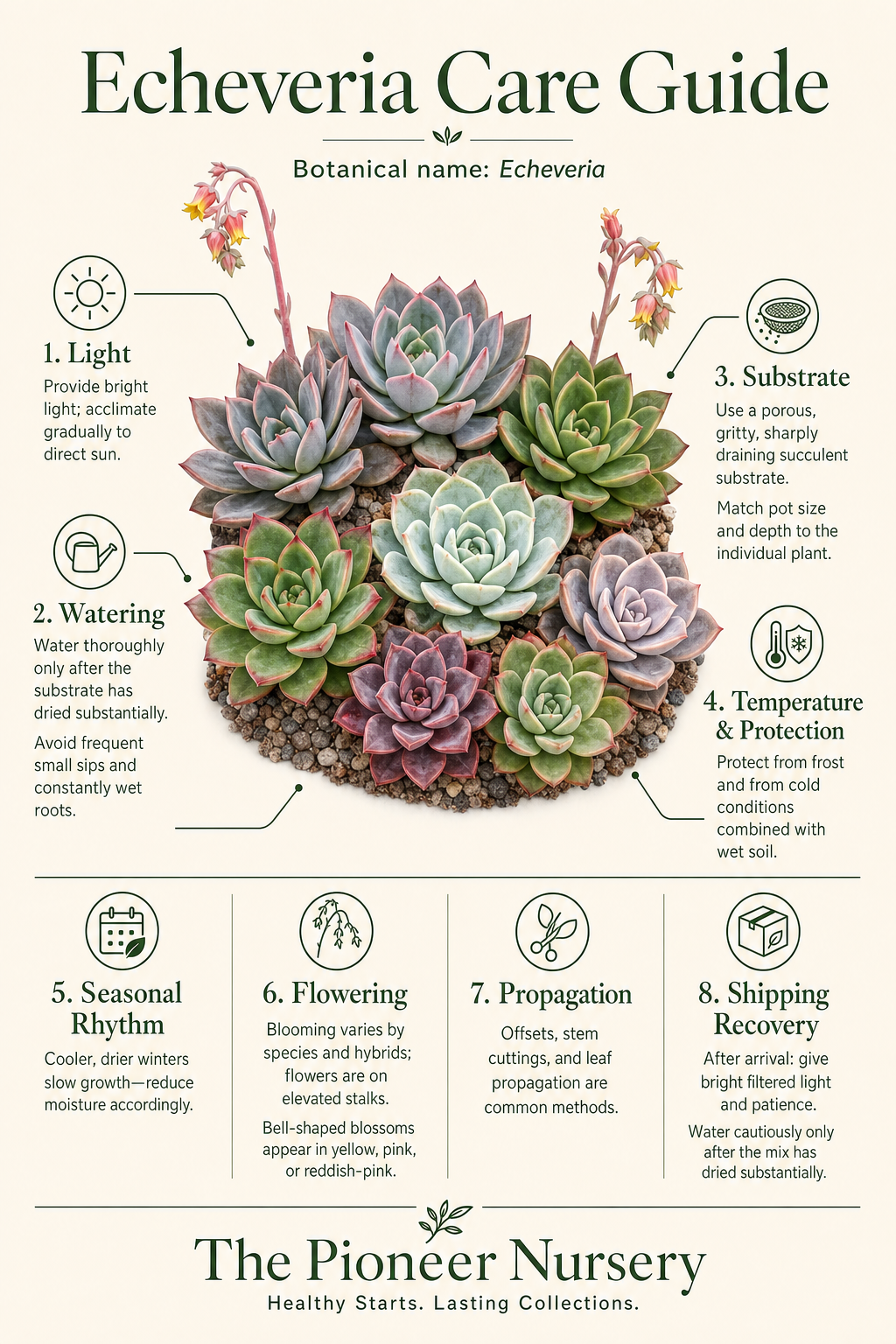
Echeveria is an accepted genus in the Crassulaceae family, known primarily for its attractive rosettes and elevated bell-shaped flower stalks. Because the genus includes many species, hybrids, and cultivars, mature size, coloration, flowering, cold tolerance, and seasonal growth can vary. Across commonly cultivated Echeveria, the most important priorities are strong light, a porous substrate, thorough watering only after substantial drying, and protection from cold, wet conditions.
Quick Care Summary
- Provide bright light, with gradual acclimation to direct sun.
- Use a porous, gritty, sharply draining succulent substrate.
- Water thoroughly only after the substrate has dried substantially.
- Avoid frequent small waterings and constantly wet roots.
- Reduce moisture during cool, darker winter conditions.
- Protect plants from frost and cold conditions combined with wet soil.
- Expect meaningful variation among species, hybrids, and cultivars.
- Match pot size and depth to the individual plant rather than the genus alone.
About Echeveria
Echeveria is a diverse genus ranging from southern Texas through Mexico and Central America to northwestern Argentina. Many nursery plants are hybrids or cultivars rather than wild species. Commonly cultivated rosette-forming plants share a preference for strong light, excellent drainage, and careful watering, but unusual species, hairy forms, larger stem-forming plants, and specialized selections may require adjusted care.
Light
Provide bright light, generally including several hours of direct sun after gradual acclimation. Strong light usually supports compact rosettes and better coloration. Newly shipped, greenhouse-grown, or shade-grown plants should begin in bright filtered light and move toward stronger sun gradually to reduce the risk of scorch. Some species and hybrids perform better with morning sun and afternoon protection during very hot conditions.
Watering
Water thoroughly only after the substrate has dried substantially, then let excess water drain completely. Avoid frequent small sips and never keep the root zone constantly wet. Reduce watering during cool, darker winter conditions. Exact frequency depends on the species or hybrid, pot size, substrate, temperature, airflow, and light. Cold or low-light conditions combined with wet soil increase the risk of rot and fungal problems.
Soil and Substrate
Use a porous, gritty, sharply draining succulent substrate with limited moisture-retentive organic material. The mix should drain quickly while keeping air around the roots. Heavy or compacted soil is unsuitable for general Echeveria cultivation and can remain wet too long.
Potting and Roots
Choose a container with drainage holes and avoid oversized pots that stay wet for extended periods. Repot when the substrate has degraded, the plant has outgrown its container, or drainage has declined. Container width and depth should match the individual plant because mature size and stem development vary across the genus. Handle rosettes and roots carefully. After major root disturbance, let damaged roots or cut surfaces dry and callus before resuming cautious watering.
Temperature and Winter Protection
Protect Echeveria from frost and from prolonged cold combined with wet soil. Many commonly cultivated forms are best kept above approximately 10°C/50°F in winter, although tolerance varies among species and hybrids, and some hybrids need additional protection. Outdoor summer cultivation suits frost-free or seasonally warm climates when drainage and rain exposure are managed.
Seasonal Growth and Dormancy
In temperate indoor conditions, many Echeveria grow less during cool, darker winter weather and benefit from a cooler, drier rest. This is not a universal strict dormancy schedule: species, hybrids, greenhouse temperatures, and day length can produce different growth patterns. Keep the substrate predominantly dry and water only as needed to limit severe shriveling.
Fertilizer
Feed sparingly during active growth with a dilute, balanced or succulent-appropriate fertilizer. Avoid heavy feeding, particularly in rich soil or during low-light periods. Lean, well-drained conditions help support compact growth and reduce rot risk.
Flowering
Mature rosettes commonly produce raised flower stalks with bell-shaped flowers. Colors may include yellow, pink, reddish-pink, or combinations of these, but flowering season and color vary substantially among species and hybrids. Summer flowering is common in general cultivation but is not universal. Flowers may attract bees, bumble bees, hummingbirds, and other pollinators.
Propagation
Echeveria can be propagated from offsets, stem or crown cuttings, and leaves. Allow offsets and cuttings to callus before planting them in very well-drained substrate. For leaf propagation, use a complete, healthy leaf and keep it dry until roots and a small rosette develop. Vegetative propagation may be preferred for hybrids and cultivars when preserving selected traits is important.
Shipping and Arrival Care
Inspect the plant after arrival and protect it from freezing temperatures, prolonged darkness, and wet conditions. Begin with bright but filtered light, then acclimate gradually to stronger sun. If the plant arrived bare-root or experienced substantial root disturbance, allow damaged roots and cut surfaces to dry before potting. Delay watering until the plant has had time to recover; the appropriate recovery period depends on root condition, temperature, and airflow.
Common Problems
- Root or stem rot: usually associated with wet, poorly aerated substrate, especially in cool or low-light conditions.
- Winter fungal problems: excessive moisture during winter can increase risk.
- Weak, elongated growth: often linked to insufficient light or warm, regularly watered winter conditions.
- Leaf scorch: abrupt movement from shade or greenhouse conditions into intense sun can damage leaves.
- Open rosettes or reduced coloration: inadequate light can affect form and color, although natural variation is also substantial.
Frequently Asked Questions
How often should I water Echeveria?
Water thoroughly only after the substrate has dried substantially, then drain excess water completely. Frequency varies with the plant, pot, substrate, temperature, airflow, and light, so avoid using a fixed calendar.
Does Echeveria need direct sun?
Many Echeveria perform well with several hours of direct sun after gradual acclimation. Newly shipped or shade-grown plants should start in bright filtered light, and some species or hybrids prefer morning sun with afternoon protection in very hot conditions.
Should Echeveria be kept dry in winter?
Many plants grow less in cool, darker winter conditions and benefit from a cooler, drier rest. Keep the substrate predominantly dry and water only as needed to limit severe shriveling, while recognizing that growth patterns vary.
Why is my Echeveria becoming stretched or losing color?
Insufficient light can produce weak, elongated growth, a more open rosette, or reduced coloration. Move the plant toward brighter conditions gradually to avoid scorch.
Can Echeveria be propagated from leaves?
Yes. Leaf propagation is most successful with a complete, healthy leaf. Keep it dry until roots and a small rosette develop, then use a very well-drained substrate.
How should I care for an Echeveria after shipping?
Inspect it on arrival, begin with bright filtered light, and acclimate gradually to stronger sun. Bare-root plants or those with damaged roots should dry and recover before cautious watering; the recovery period depends on the plant's condition and environment.
Echeveria care is built around balance: strong light, fast drainage, thorough watering after substantial drying, and less moisture during cool or dim conditions. Since the genus includes many species, hybrids, and cultivars, observe the individual plant and adjust light, potting, and seasonal care accordingly.