Astrophytum asterias ‘Hanazono’ Care Guide
Learn how to grow Astrophytum asterias ‘Hanazono’, a collector form known for its additional woolly areoles. Bright light, mineral soil, careful watering, and a dry winter rest are key.
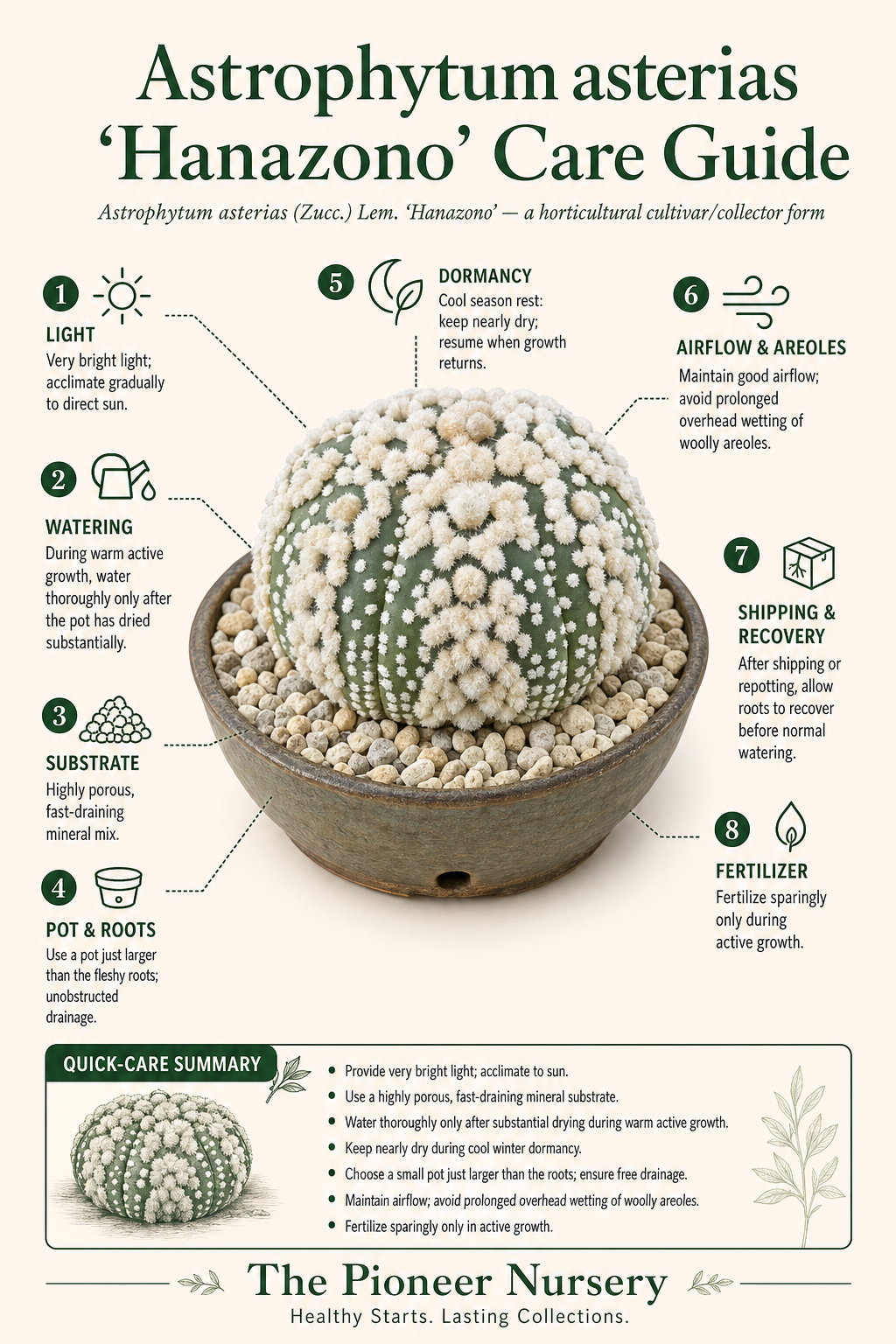
Astrophytum asterias ‘Hanazono’ is a Japanese horticultural cultivar or collector form of the accepted species Astrophytum asterias, commonly called star cactus or sand dollar cactus. Its distinctive additional woolly areoles can retain moisture and debris, so good airflow and careful overhead watering matter. Grow it in bright light, a very porous mineral substrate, and warm active-season conditions, then keep it nearly dry during cool winter rest.
Quick Care Summary
- Provide very bright light with gradual acclimation to direct sun.
- Use a highly porous, fast-draining mineral substrate.
- Water thoroughly during warm active growth only after the pot has dried substantially.
- Keep nearly dry during cool winter dormancy.
- Use a pot only slightly larger than the fleshy root system.
- Maintain good airflow and avoid prolonged overhead wetting of woolly areoles.
- Fertilize sparingly only during active growth.
About the plant
Astrophytum asterias is a slow-growing cactus with a fleshy, turnip-like underground root and finer feeder roots. ‘Hanazono’ is not a separate species or botanical variety; the name describes a horticultural cultivar or collector form with additional woolly areoles or woolly areole fields on the ribs. Species-level care is appropriate.
Light
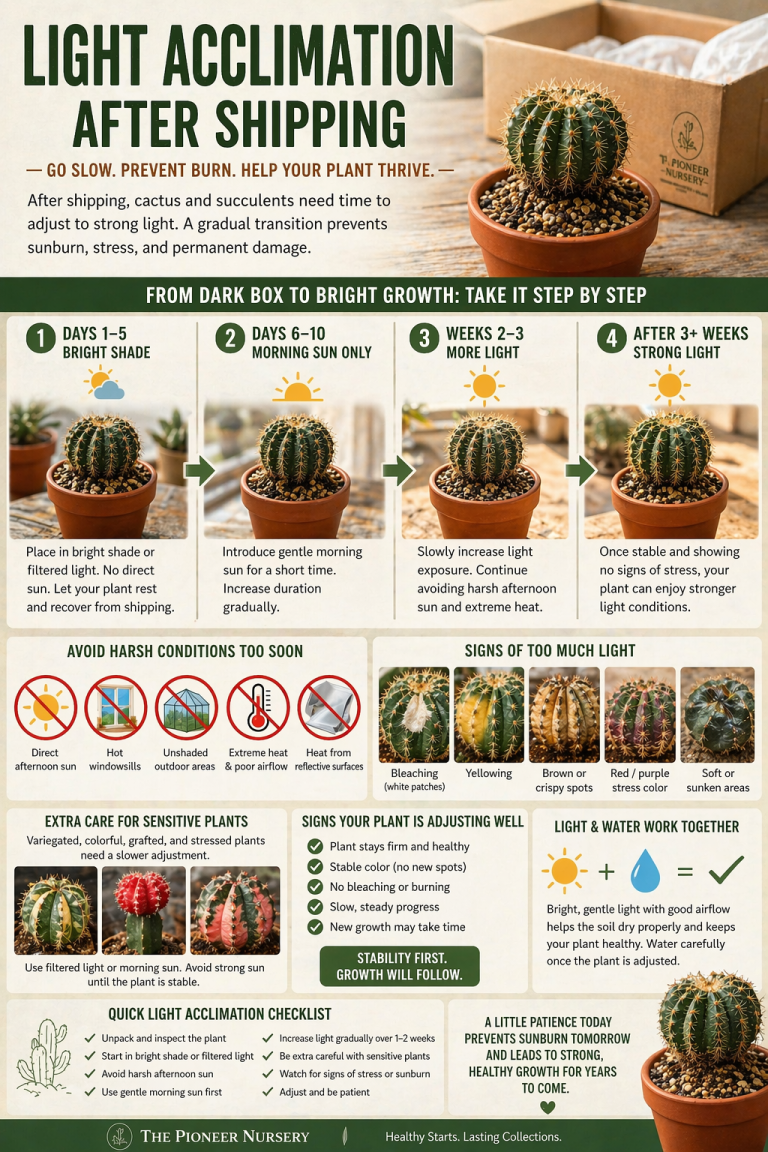
Provide very bright light with several hours of direct sun and good airflow. Acclimate gradually after shipping or when moving the plant from greenhouse shade into stronger sun. In very intense climates, light afternoon shade can help reduce heat stress and sunscald.
Watering
During active growth, water thoroughly only after the substrate has dried substantially throughout the pot. Let excess water drain completely, and avoid repeated small sips or leaving the roots wet. Reduce watering as light and temperatures decline, keeping the plant nearly dry during cool winter conditions. Avoid prolonged overhead wetting because the extra woolly areoles can hold moisture and debris.
Soil and substrate
Use a very porous, fast-draining mineral cactus mix with high air space and little organic matter. Pumice, scoria, coarse gravel, and similar mineral components are suitable; established plants may tolerate a small amount of stable organic material. Avoid dense, water-retentive soil, which increases rot risk and can contribute to body splitting after rapid moisture uptake.
Potting and roots
Choose a pot only slightly larger than the root system with an unobstructed drainage hole. Excessive pot volume can keep the root zone wet for too long. Repot during warm active growth, disturbing roots as little as practical. Damaged or cut roots should dry and callus before watering resumes.
Temperature and airflow
Keep the plant warm during active growth. Protect it from frost and prolonged cold, especially when the substrate is wet. Cool, dry winter conditions are generally preferable to warm, dim, wet conditions. Provide ventilation in hot weather and avoid sealed, stagnant enclosures.
Seasonal growth and dormancy
Growth slows markedly in cool or low-light winter conditions. Maintain a dry or almost dry winter rest. Only provide exceptional moisture if the plant is severely dehydrated and temperatures are safely warm enough for the pot to dry rapidly.
Fertilizer
Feed sparingly during active growth with a dilute, low-nitrogen cactus fertilizer or a balanced fertilizer at reduced strength. Do not fertilize dormant, recently repotted, dehydrated, or root-damaged plants.
Flowering
Mature plants generally flower from spring into summer, producing short-lived, diurnal yellow flowers often marked orange to red at the throat. Strong light, a dry winter rest, warm active-season temperatures, and appropriate—not excessive—watering support flowering. ‘Hanazono’ plants may produce flowers from unusual or additional woolly areole positions, part of the cultivar character.
Propagation
Astrophytum asterias is primarily propagated by seed. Seedlings are relatively straightforward to raise under warm, bright, clean conditions, but named ‘Hanazono’ characteristics may not reliably reproduce from seed. Clonal propagation or grafting may be used to preserve selected traits. Grafted plants should be watered according to the rootstock, while own-root plants need the species’ more conservative moisture management.
Shipping and arrival care
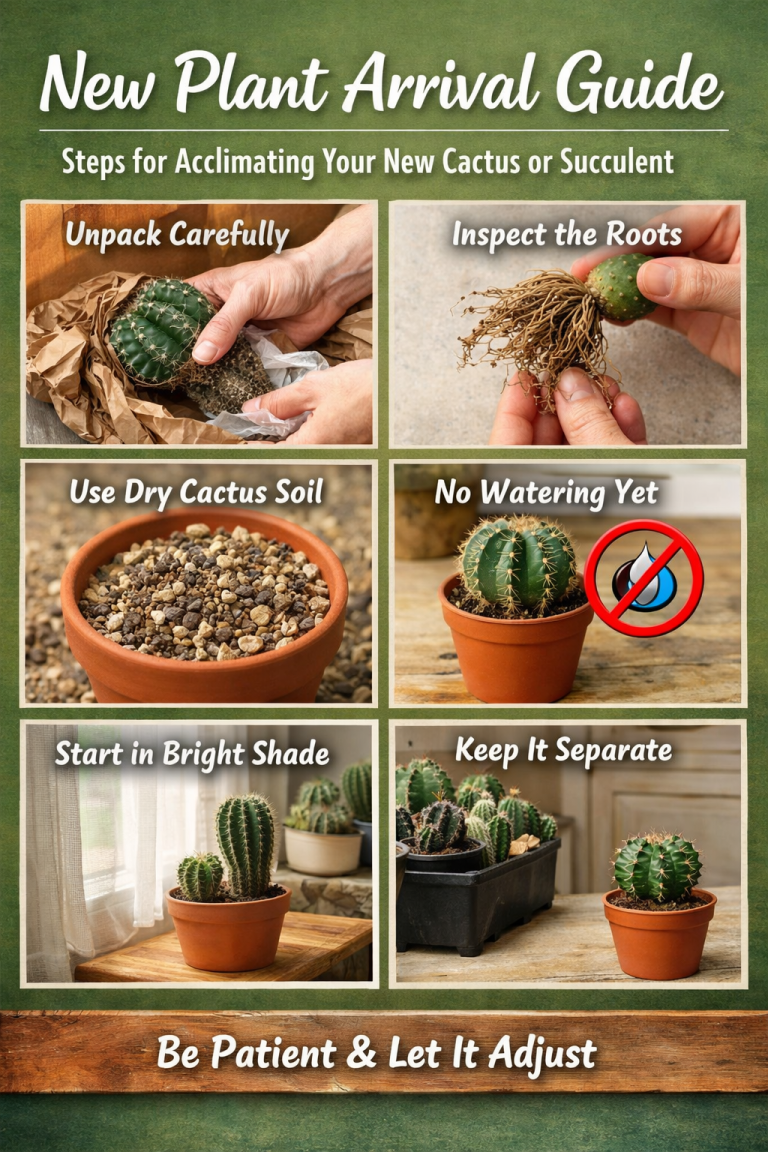
Receive and ship the plant as dry as practical, especially during cool weather. Inspect the roots and body for damage or rot, protect the plant from cold and excess moisture, and acclimate it gradually to strong light. After bare-root shipping or significant root disturbance, allow wounds to dry before potting and delay substantial watering until roots have recovered and the plant is in warm, bright growing conditions.
Common Problems
- Root rot: Usually associated with dense substrate, poor drainage, or watering during cool conditions.
- Body splitting or epidermal cracking: Can follow sudden heavy watering after prolonged drought.
- Sunscald: May occur after abrupt exposure to intense direct light, especially after shipping.
- Mealybugs, scale, and fungal problems: More likely with poor airflow or prolonged dampness.
- Weak, elongated growth: Often linked to insufficient light or excessive moisture and fertilizer.
Frequently Asked Questions
How often should I water Astrophytum asterias ‘Hanazono’?
Do not follow a fixed calendar. During active growth, water thoroughly after the substrate has dried substantially throughout the pot. Reduce watering as light and temperatures decline, and keep the plant nearly dry in cool winter conditions.
Does ‘Hanazono’ need special light?
It needs very bright light with several hours of direct sun, introduced gradually. In very intense climates, light afternoon shade can reduce heat stress and sunscald.
Why should I avoid a large pot?
The plant has a fleshy, turnip-like underground root, and excess pot volume can prolong drying. A pot only slightly larger than the root system is preferable.
Can ‘Hanazono’ be grown from seed?
The species is primarily propagated by seed, but named ‘Hanazono’ characteristics may not reliably reproduce from seed. Clonal propagation or grafting may preserve selected traits.
What should I do after bare-root shipping?
Inspect the roots and body, allow damaged roots to dry and callus, then pot into a porous substrate. Delay substantial watering until the plant has recovered in warm, bright growing conditions.
With bright light, fast drainage, conservative watering, and a dry cool-season rest, Astrophytum asterias ‘Hanazono’ can be grown successfully while preserving the distinctive woolly areole character that makes this cultivar form appealing to collectors. Use nursery-propagated material and maintain accurate provenance records because wild populations are conservation-sensitive.