Pachypodium gracilius Care Guide
Learn how to grow Pachypodium gracilius, a caudiciform succulent from Madagascar that needs strong light, excellent drainage, warm active growth, and a cool, dry rest.
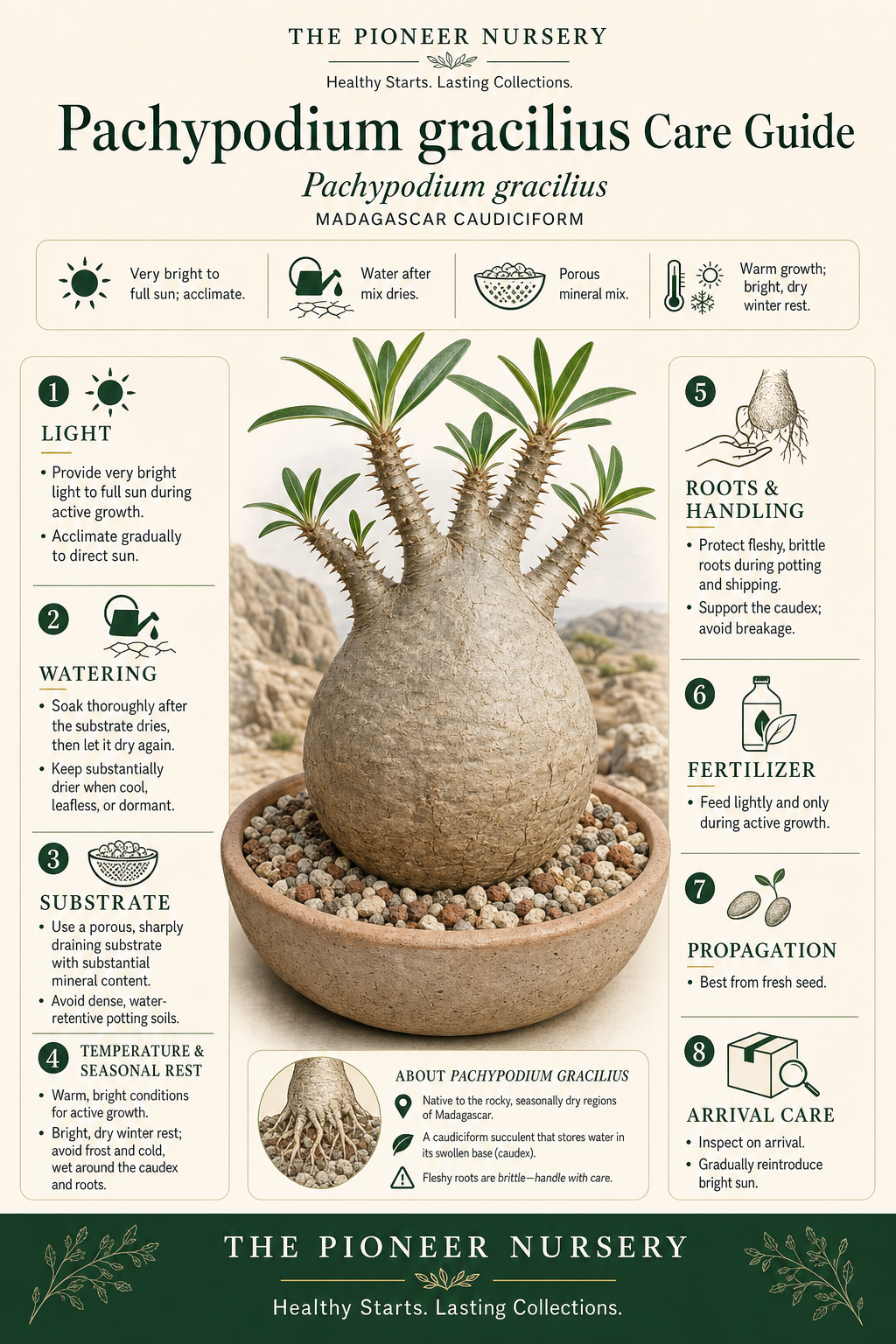
Pachypodium gracilius is a caudiciform succulent from rocky areas of Madagascar, recognized for its swollen caudex and seasonal growth cycle. It is commonly grown under this species-level name, while Pachypodium rosulatum subsp. gracilius is the current accepted treatment used by Kew. Successful care depends on strong light, a sharply draining mineral-rich substrate, careful watering, and protection from cold, wet conditions.
Quick Care Summary
- Provide very bright light to full sun during active growth, with gradual acclimation.
- Use a porous, sharply draining substrate with substantial mineral content.
- Water thoroughly after the substrate dries during active growth, then let it dry again.
- Keep the plant substantially drier while cool, leafless, or dormant.
- Protect fleshy, brittle roots during potting and shipping.
- Avoid frost and cold, wet conditions around the caudex and roots.
- Feed lightly and only during active growth.
About the Plant
This Pachypodium develops a prominent swollen caudex and fleshy roots suited to rocky, seasonally dry habitats. It typically grows actively in warm, bright conditions and rests during a cooler, drier period. The caudex and roots should be protected from prolonged moisture and rough handling. Pachypodium sap is toxic, so wear gloves and keep the plant away from pets.
Light
Provide very bright light to full sun during active growth, with strong ventilation. Acclimate gradually when moving a shipped or previously shaded plant into direct sun. Sudden intense exposure can cause sunburn. Insufficient light may produce weak, elongated growth and reduce flowering.
Watering
During active growth, water thoroughly once the porous substrate has dried, then allow it to dry again. Reduce watering substantially during cool or leafless dormancy. Avoid prolonged moisture around the caudex and roots, especially when temperatures are low, because cold, wet conditions can lead to rot. Adjust watering to the plant’s temperature, light, airflow, substrate, and root condition.
Soil and Substrate
Use a very porous, sharply draining, well-aerated substrate with a substantial mineral component. A loose sandy medium is consistent with the specialized cultivation reference. Avoid dense, water-retentive potting soil, which can keep the fleshy roots and caudex wet for too long.
Potting and Roots
Choose a container that accommodates the swollen caudex and fleshy root system without surrounding the plant with an unnecessarily large volume of wet substrate. Handle the roots carefully because they are fleshy and brittle. After major root damage or repotting, allow wounds to dry and heal before resuming cautious watering.
Temperature and Seasonal Rest
Warm conditions are preferred during active growth, with daytime temperatures around 25°C or higher and nights around 15°C or higher. Provide a bright, dry winter rest, with approximately 5°C nighttime minimum where possible. Protect the plant from frost and cold, wet conditions. Leaf loss may occur during dormancy and does not necessarily indicate a problem when the plant is cool and inactive.
Fertilizer
Feed only during active growth. Use a dilute, balanced fertilizer or a conservative controlled-release formulation. Avoid heavy feeding when light or temperatures are inadequate, since the plant should not be pushed to grow under unsuitable conditions.
Flowering
The specialized cultivation reference reports flowering in early spring. Strong light, adequate warmth during active growth, and a distinct seasonal rest support flowering. Plants kept in insufficient light may produce weaker growth and reduced flowering.
Propagation
Fresh seed is the primary propagation method. Seeds lose viability relatively quickly, so sow them without prolonged storage in a sterile, sandy, well-drained medium. Keep the medium warm and evenly moist during germination. Specialist growers may use grafting for difficult or slow plants, but species-specific grafting information for this taxon is limited.
Shipping and Arrival Care
Inspect the plant after arrival for damaged roots, caudex tissue, or other wounds. The caudex and fleshy roots are vulnerable to cold, moisture, and impact. For bare-root or recently disturbed plants, keep the plant warm, dry, stable, and protected from mechanical damage. Allow wounds to heal and delay heavy watering until recovery and active rooting are evident. Gradually acclimate the plant to direct sun after transit.
Common Problems
- Root or caudex rot: Often associated with cold, wet conditions or poorly aerated substrate.
- Sunburn: Abrupt exposure to intense direct sun can scorch a shaded or recently shipped plant.
- Root damage: The fleshy roots are brittle and can be injured during repotting.
- Weak growth or reduced flowering: Insufficient light may cause elongated growth and fewer flowers.
- Leaf loss: Seasonal dormancy or environmental stress can cause leaves to drop.
- Poor germination: Fresh seed loses viability relatively quickly if stored too long.
Frequently Asked Questions
How often should I water Pachypodium gracilius?
Do not use a fixed calendar. During active growth, water thoroughly after the porous substrate has dried, then allow it to dry again. Water much less during cool or leafless dormancy, particularly when conditions are cold.
Does Pachypodium gracilius need full sun?
It prefers very bright light to full sun during active growth. Acclimate gradually after shipping or indoor shade to reduce sunburn risk, and provide strong ventilation.
Why is my Pachypodium gracilius losing leaves?
Leaf loss may occur during its seasonal dormancy. It can also follow environmental stress. Keep a cool, inactive plant bright and comparatively dry, while avoiding cold, wet roots.
What soil should I use?
Use a loose, sharply draining, well-aerated substrate with a substantial mineral component. Avoid dense, water-retentive soil.
How is Pachypodium gracilius propagated?
Fresh seed is the primary method. Sow it in a sterile, sandy, well-drained medium and keep it warm and evenly moist during germination. Specialist grafting may be used, but species-specific information is limited.
Is Pachypodium gracilius safe to handle?
Pachypodium sap is toxic. Wear gloves, avoid contact with the eyes and mouth, and keep the plant away from pets.
Pachypodium gracilius rewards growers who match its seasonal rhythm: strong light and careful watering during warm growth, followed by a bright, drier rest. Keep its porous substrate, brittle roots, and sensitivity to cold moisture in mind, especially after shipping or repotting.