Ariocarpus retusus Care Guide
Learn how to grow Ariocarpus retusus, the taprooted living rock cactus, with bright light, mineral soil, careful watering, and a reliably dry winter rest.
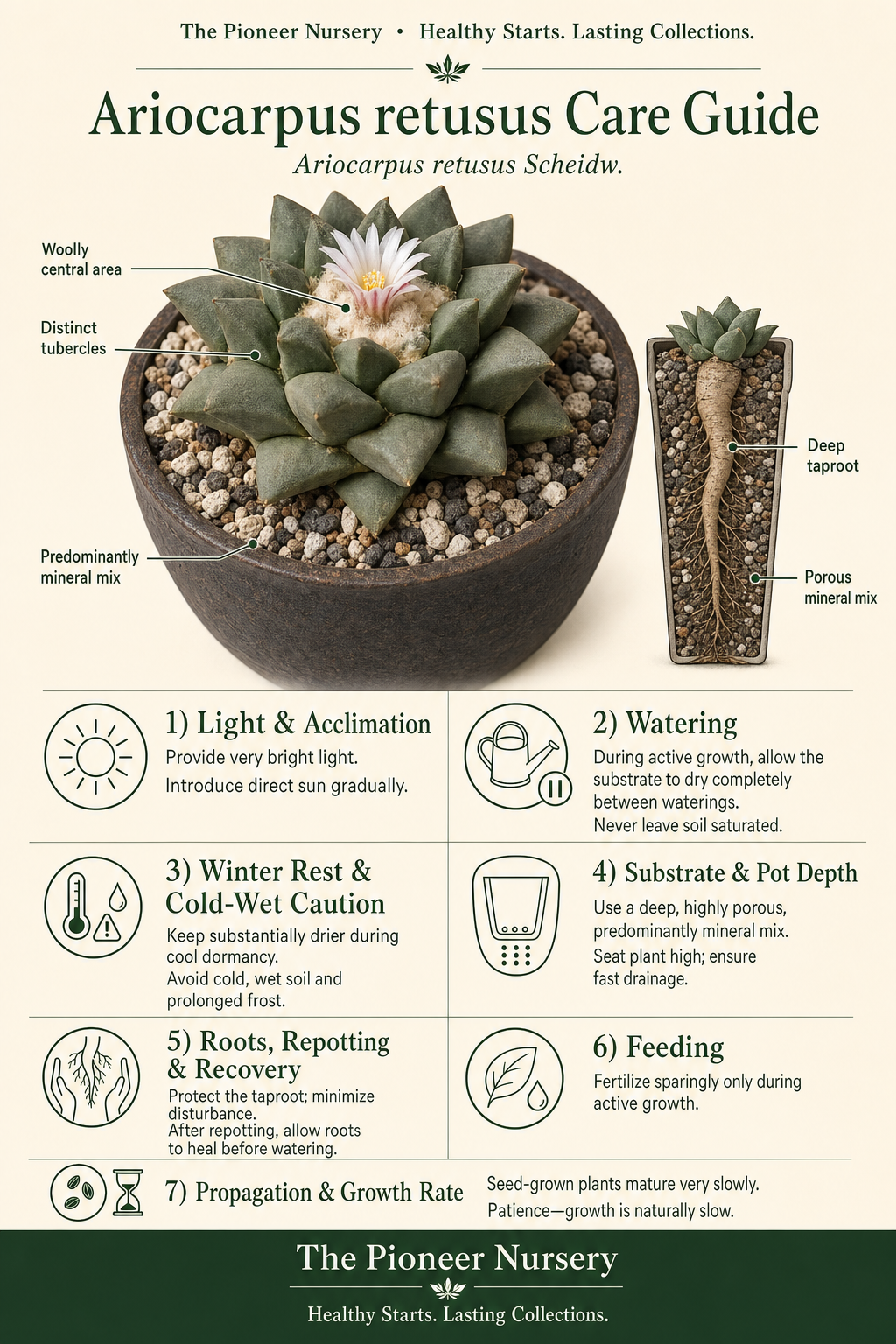
Ariocarpus retusus, commonly called living rock cactus or seven stars, is a slow-growing geophytic cactus with succulent tubercles and a substantial taproot adapted to drought. Successful cultivation depends on excellent drainage, careful root handling, gradual acclimation to strong light, and avoiding cold, wet conditions. Mature plants may produce flowers from the woolly center, commonly in autumn to early winter.
Quick Care Summary
- Provide very bright light with gradual acclimation to direct sun.
- Use a deep, highly porous, predominantly mineral substrate.
- Allow the substrate to dry completely between active-season waterings.
- Keep substantially drier during cool winter dormancy.
- Protect the taproot and minimize root disturbance during repotting.
- Avoid cold, wet soil, prolonged frost, and saturated conditions.
- Fertilize sparingly only during active growth.
- Expect very slow growth, especially from seed-grown plants.
About Ariocarpus retusus
This species is adapted to drought and may sit partly recessed into the soil. Its substantial taproot is vulnerable to damage and rot, so pot depth, airy mineral soil, and restrained watering are especially important.
Light
Provide very bright light and substantial direct sun once the plant is established. Acclimate gradually after shipping, repotting, greenhouse production, or extended shade; sudden intense light can scorch the plant. In hot greenhouse conditions, good airflow and protection from extreme summer heat may be beneficial.
Watering
During warm active growth, water according to the condition of the substrate and roots, then allow the mix to dry completely. Reduce watering sharply in cool, dark, humid, or dormant conditions and generally keep the plant dry through winter. Cold, wet soil is a major rot risk. After shipping or root disturbance, wait until the plant is warm, settled, and appropriately dry before watering.
Soil and substrate
Use a very fast-draining, porous, predominantly mineral mix with little organic matter and minimal moisture retention. A limestone or calcium-containing component is reasonable because the species is associated with limestone habitats, but rapid drainage and root aeration are the priorities.
Potting and roots
Use a pot with excellent drainage and enough depth for the substantial tuberous taproot. Avoid oversized containers that stay wet for long periods. Keep the crown and upper root zone above persistently damp substrate, and do not compact the mix around the plant. Minimize root disturbance, because damaged roots are especially vulnerable to rot.
Temperature and winter care
Grow warm during active growth and provide a conservative, frost-free winter regime. Short periods below freezing have been reported for established plants, but freezing combined with moisture is hazardous. Protect the plant from prolonged frost, cold rain, and saturated soil.
Seasonal growth and dormancy
Provide a pronounced cool-season dry rest, especially in winter. Growth may occur in seasonal pulses during warmer months, while flowering is commonly reported from autumn into early winter. Resume watering only when temperatures, light, and root activity support active growth.
Fertilizer
Fertilize sparingly during active growth with a very dilute, low-strength cactus fertilizer. One or two light applications may be sufficient. Do not fertilize dormant, freshly shipped, freshly repotted, dehydrated, or root-damaged plants. A calcium-containing formulation may be appropriate, but excessive feeding can cause weak growth and salt accumulation.
Flowering
Mature plants produce flowers from the woolly central area. Flowers are commonly white and may be marked or shaded with pink, depending on the plant. Maturity, strong light, seasonal rest, and avoiding excessive watering support flowering; autumn to early winter flowering is reported for the typical form.
Propagation
Propagation is primarily by seed. Seeds can germinate under suitable conditions, but Ariocarpus retusus is exceptionally slow-growing, so reaching flowering or specimen size requires patience. Tissue-culture research has been reported, but this is not a standard home propagation method.
Common problems
Root or crown rot usually indicates overwatering, poor drainage, or cold, wet conditions. Sunburn can follow abrupt movement from shade or greenhouse conditions into intense sun. Stagnant air, prolonged humidity, or wet plant tissue can encourage fungal problems. Check woolly or protected areas near the center for mealybugs. Rough shipping, repotting, or excessive root disturbance may cause dehydration or root loss. Slow growth is normal for this species and is not automatically a care failure.
Shipping and arrival care
Inspect the plant on arrival and handle the taproot carefully. Keep it protected from prolonged cold and avoid immediate watering if it is stressed, cold, or has experienced root disturbance. Allow gradual acclimation to stronger light, and water only after the plant is warm, settled, and in an appropriate fast-draining substrate.
Frequently Asked Questions
How often should I water Ariocarpus retusus?
Do not use a fixed calendar. During warm active growth, water according to substrate and root condition, then let the mix dry completely. Reduce watering sharply in cool or dormant conditions and generally keep the plant dry through winter.
Does Ariocarpus retusus need direct sun?
It benefits from very bright light and substantial direct sun once established. Acclimate gradually after shipping, repotting, greenhouse production, or shade to reduce the risk of scorching.
What kind of pot does this cactus need?
Use a well-drained pot with sufficient depth for its substantial taproot. Avoid oversized containers that stay wet, and keep the crown and upper root zone above persistently damp substrate.
Why is my Ariocarpus retusus growing so slowly?
Very slow growth is normal for this species, particularly in seed-grown plants. Slow growth alone does not necessarily indicate a care problem.
When can I water after shipping or repotting?
Wait until the plant is warm and settled, especially if it is stressed or has root disturbance. Water only when the substrate and root condition are appropriate, and acclimate gradually to stronger light.
How is Ariocarpus retusus propagated?
Propagation is primarily by seed. Germination can occur under suitable conditions, but plants grow exceptionally slowly and require patience before flowering or reaching specimen size.
Ariocarpus retusus rewards patience and restraint. Give its taproot room in a deep, porous mineral mix, provide strong light gradually, and keep the plant notably drier when conditions are cool or dormant. The combination of excellent drainage and careful seasonal watering is the foundation of long-term success.