Ariocarpus Care
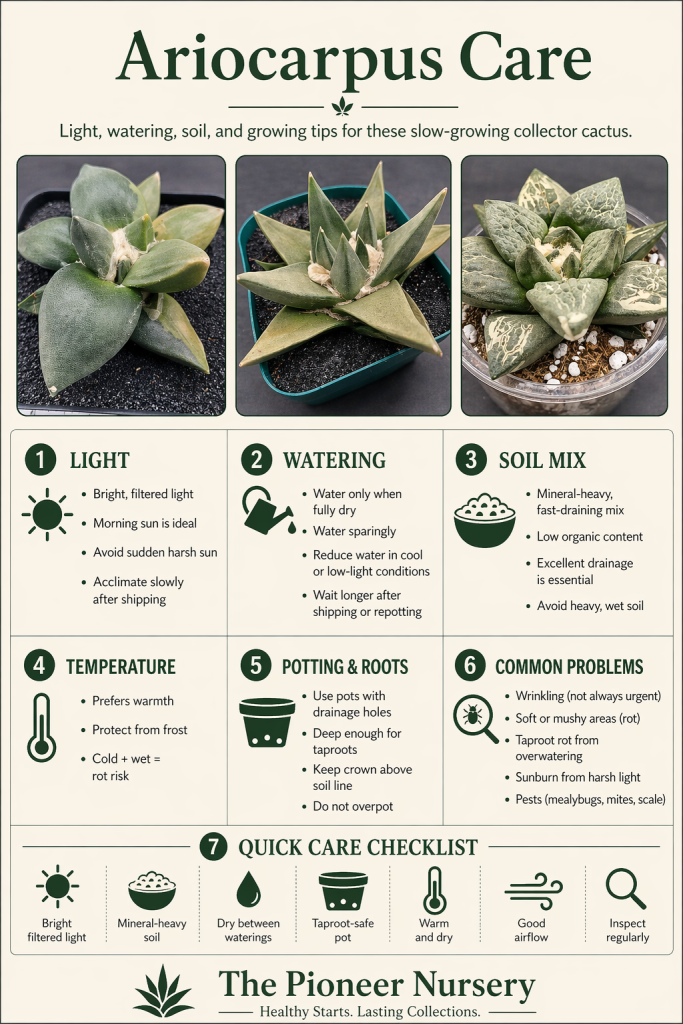
Ariocarpus are slow-growing, highly collectible cactus known for their unusual sculptural bodies, thick triangular tubercles, woolly centers, and beautiful fall flowers. They…
Ariocarpus are slow-growing, highly collectible cactus known for their unusual sculptural bodies, thick triangular tubercles, woolly centers, and beautiful fall flowers. They are often called “living rocks” because many species grow low to the soil and blend into their surroundings.
These cactus are prized by collectors, but they require patience and careful growing. Ariocarpus do not like heavy soil, frequent watering, or cold wet conditions. The key to success is a gritty mineral-heavy soil mix, strong drainage, bright filtered light, warmth, and long dry periods between watering.
Light Requirements
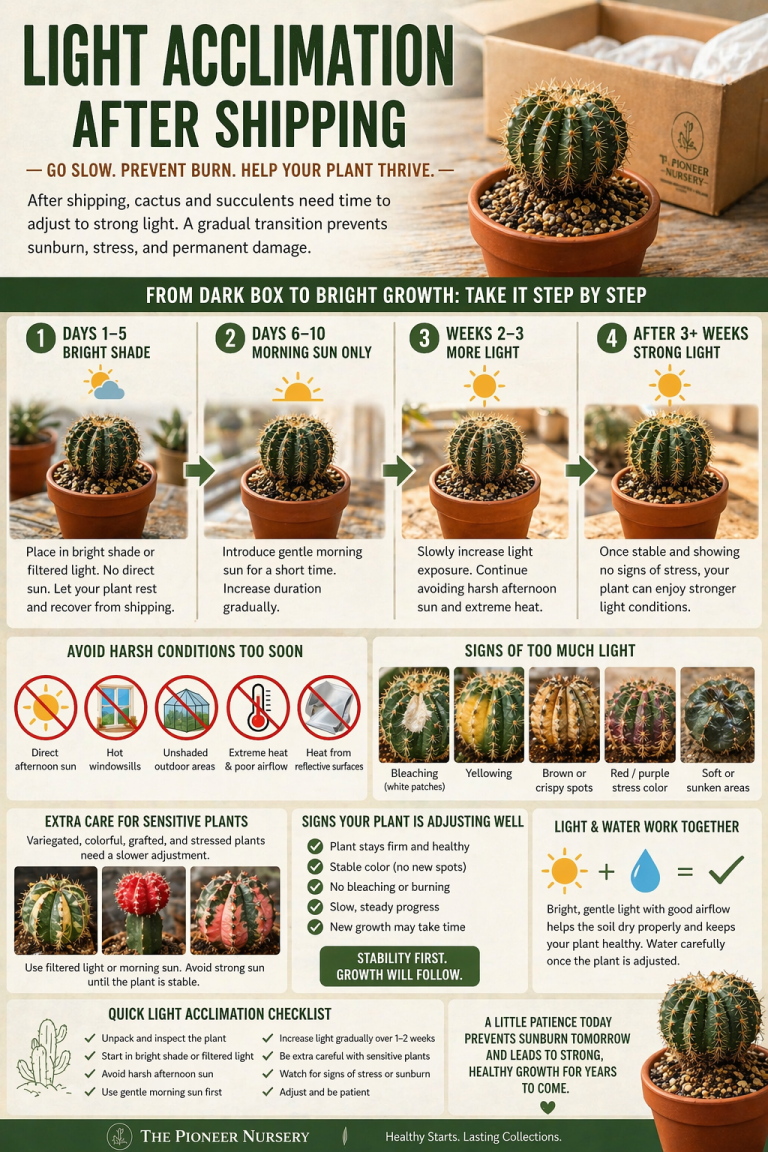
Ariocarpus prefer bright light, but they should be acclimated slowly, especially after shipping or repotting. Many plants do well with bright filtered light, morning sun, or strong greenhouse light with some protection from harsh afternoon heat.
Good light options include:
- Bright filtered light
- Morning sun
- Light shade during the hottest part of the day
- A bright greenhouse bench
- A grow light placed at a safe distance
Avoid moving a newly arrived Ariocarpus directly into strong afternoon sun. These plants can sunburn if they are suddenly exposed to intense light, especially after spending time in a shipping box.
Watering
Watering is one of the most important parts of Ariocarpus care. These cactus are adapted to long dry periods and can rot if watered too often.
Water only when the soil is completely dry and the plant is in warm, active growing conditions. When you water, water thoroughly, then allow the soil to dry completely before watering again.
A safe watering approach:
- Water during warm active growth.
- Let the soil dry completely between waterings.
- Water less than you would for many common cactus.
- Avoid watering in cool, damp, or low-light conditions.
- Do not water immediately after shipping or repotting.
Ariocarpus often prefer being slightly underwatered rather than overwatered. If you are unsure, wait longer.
Soil Mix
Ariocarpus need an extremely well-draining, mineral-heavy cactus mix. Heavy organic soil can hold too much moisture around the roots and increase the risk of rot.
A good Ariocarpus mix may be:
10–20% cactus soil or organic material
80–90% mineral material
Mineral ingredients may include pumice, lava rock, perlite, coarse sand, decomposed granite, akadama, turface, chicken grit, expanded shale, or diatomaceous earth.
The goal is a mix that drains quickly, allows airflow around the roots, and dries fast enough to protect the plant. Many growers use very gritty mixes for Ariocarpus because these plants are slow-growing and sensitive to wet soil.
Potting and Root Care
Ariocarpus often have large taproots. Choose a pot that gives the root enough room without holding excessive wet soil. A deeper pot may be helpful for plants with a strong taproot, but the pot must have drainage holes.
When potting, avoid burying the crown of the plant too deeply. Keep the upper body and growing point above the soil line. Moist soil packed around the crown can cause rot.
Handle roots gently. If roots are trimmed, damaged, or freshly disturbed, keep the plant dry for several days before watering.
For newly shipped bare-root Ariocarpus, waiting 10–14 days before the first watering is often safer than watering quickly.
Repotting
Ariocarpus do not need frequent repotting. Because they grow slowly, they can often stay in the same pot longer than faster-growing cactus.
Repot when:
- The soil has broken down
- The pot no longer drains well
- The plant has outgrown the pot
- You need to inspect roots
- The plant was shipped bare root
- There are signs of pests or root problems
After repotting, keep the plant dry and in bright shade or filtered light while it settles. Avoid fertilizing right away.
Temperature
Ariocarpus prefer warm growing conditions and should be protected from frost. Cold and wet soil together are especially dangerous.
During cool weather, reduce or stop watering depending on your growing setup. If the plant is dormant, in low light, or kept in cooler temperatures, it may need a long dry rest.
Avoid freezing temperatures, cold drafts, and damp winter soil.
Humidity and Airflow
Good airflow helps the soil dry properly and reduces the risk of fungal problems. This is especially important in humid climates, greenhouses, and indoor setups.
If your growing area has high humidity, use a very gritty soil mix, avoid overcrowding, and make sure the plants have plenty of airflow.
Fertilizer
Ariocarpus are slow growers and do not need heavy fertilizer. During active growth, you can feed lightly with a diluted cactus fertilizer.
Avoid fertilizing newly shipped, freshly repotted, stressed, dormant, or struggling plants. Too much fertilizer can encourage weak growth and may be risky if the plant is not actively growing.
Flowering
Many Ariocarpus produce beautiful flowers from the woolly center of the plant, often in shades of pink, white, purple, or yellow depending on the species or form.
Flowering is more likely when the plant is mature, healthy, and receiving proper seasonal care. Patience is important. Ariocarpus grow slowly and may take years to reach flowering size.
Special Care for Collector Ariocarpus
Rare and collector Ariocarpus should be treated conservatively. These plants are often more valuable, slower to recover from mistakes, and more sensitive to overwatering.
For collector plants, focus on:
- Very gritty soil
- Careful watering
- Warm conditions
- Bright filtered light
- Good airflow
- Dry rest after shipping or repotting
- Avoiding unnecessary repotting
- Regular pest checks
When in doubt, keep them dry longer.
Common Problems
Wrinkling
Some wrinkling can happen during dry periods, shipping, or dormancy. Ariocarpus can tolerate dryness well. If the plant is firm and not collapsing, do not rush to water unless conditions are warm and the soil is fully dry.
Soft or Mushy Areas
Soft, wet, black, or mushy areas may indicate rot. Stop watering immediately, isolate the plant, and inspect it closely.
Taproot Rot
Taproot rot is a major concern with Ariocarpus. It can happen when the soil stays wet too long, especially in cool conditions. A plant may look fine above the soil while the root is failing below.
Sunburn
Sunburn may appear as pale, yellow, tan, brown, or dry damaged areas. It usually happens when the plant is moved into strong sun too quickly.
Pests
Ariocarpus can be affected by mealybugs, root mealybugs, spider mites, and scale. Inspect the woolly center, tubercles, base, soil line, and roots during repotting.
Fungal Spots
Fungal or rust-like spots can appear in damp, low-airflow conditions. Improve airflow, avoid misting, and keep the plant dry while evaluating the issue.
After Shipping Care
When your Ariocarpus arrives, unpack it carefully and inspect the plant and roots. If it was shipped bare root, dry roots are normal.
Start with:
- Dry, mineral-heavy cactus soil
- A pot with drainage holes
- Bright shade or filtered light
- No immediate watering
- Good airflow
- A short quarantine period
Because Ariocarpus are slow-growing and rot-sensitive, give them extra time before watering. For bare-root plants, waiting 10–14 days is often safer.
Quick Care Checklist
- Use bright filtered light or gentle morning sun.
- Avoid sudden harsh afternoon sun.
- Use a mineral-heavy, fast-draining soil mix.
- Plant in a pot with drainage holes.
- Give taproots enough room without overpotting.
- Keep the crown above the soil line.
- Let the soil dry completely between waterings.
- Water sparingly and only in warm active conditions.
- Keep dry after shipping or repotting.
- Protect from frost and cold wet soil.
- Provide good airflow.
- Fertilize lightly only during active growth.
- Inspect regularly for pests and rot.
Final Thoughts
Ariocarpus are some of the most rewarding collector cactus to grow, but they require patience and restraint. They grow slowly, prefer dry conditions, and do best when their roots are protected from excess moisture.
Give them bright filtered light, a very gritty soil mix, strong drainage, warmth, airflow, and careful watering. Avoid rushing water after shipping or repotting, and do not treat them like fast-growing cactus. With the right conditions and a little patience, Ariocarpus can become long-lasting centerpiece plants in a serious cactus collection.