Gymnocalycium horstii Care Guide
Learn how to grow Gymnocalycium horstii with bright light, sharply draining soil, seasonal watering, and a cool, dry winter rest.
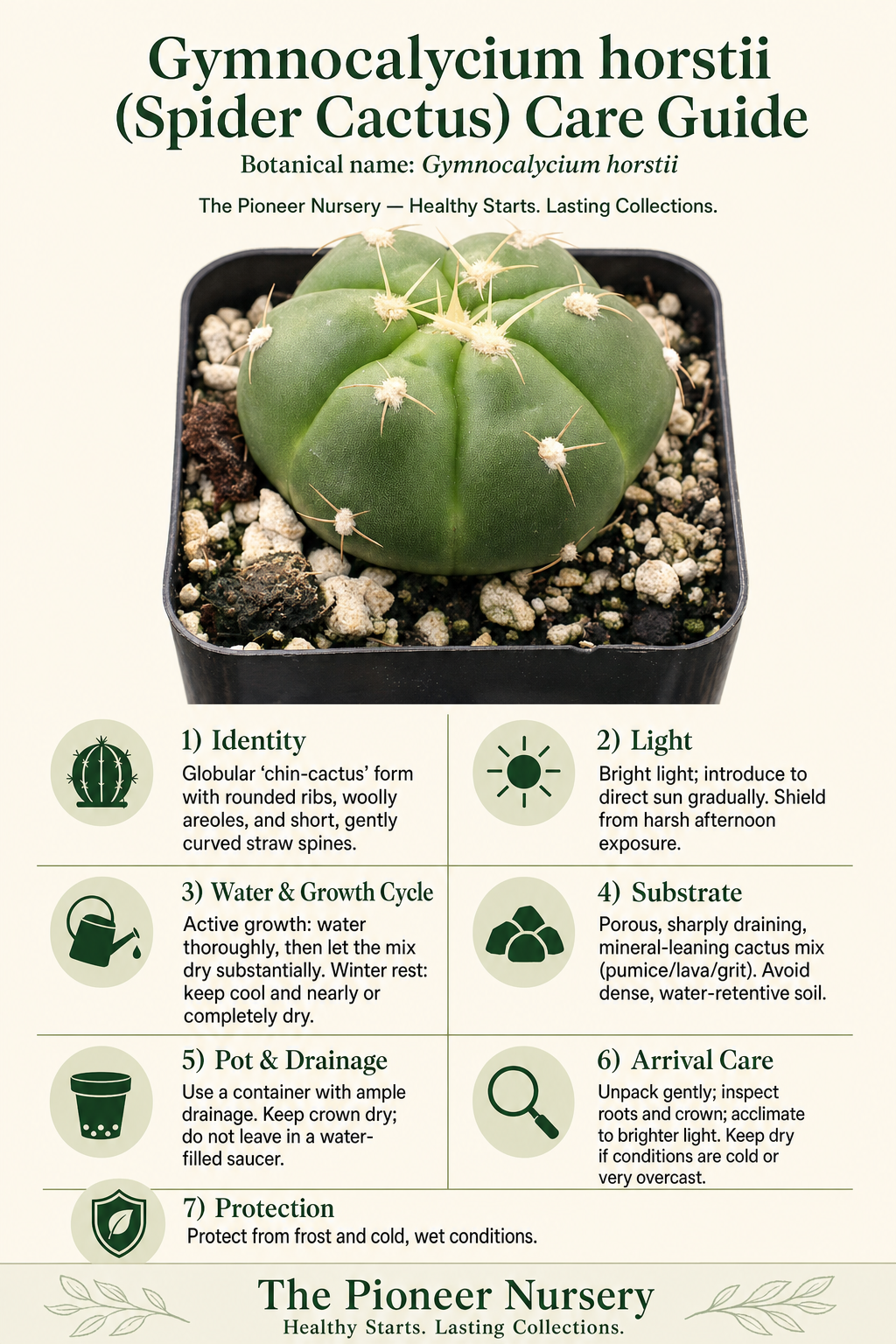
Gymnocalycium horstii, commonly called spider cactus or chin cactus, is a globular cactus native to Rio Grande do Sul, Brazil. It grows best with bright light and some direct sun, protection from harsh afternoon exposure, porous substrate, thorough watering during active growth, and a cool-season rest with little moisture.
Quick Care Summary
- Provide bright light with protection from harsh afternoon exposure.
- Water thoroughly during active growth, then let the substrate dry substantially.
- Keep the plant nearly or completely dry during its cool winter rest.
- Use a porous, sharply draining, mineral-leaning cactus substrate.
- Protect the plant from frost and cold, wet conditions.
About the Plant
Gymnocalycium horstii is a globular chin cactus from the subtropical region of Rio Grande do Sul, Brazil. Its care should not be based solely on an extremely arid-desert cactus model. Like other Gymnocalycium, it benefits from bright light, excellent drainage, and a clear seasonal shift toward drier winter conditions. Nursery-propagated and documented cultivated plants are preferable to wild-collected material. Identification note: Gymnocalycium horstii subsp. buenekeri is a separate infraspecific name and should not automatically be applied to plants sold simply as G. horstii.
Light
Provide bright light with some direct sun. Protect the plant from intense afternoon sun, particularly after winter, indoor growing, or shipping. Gradually acclimate it to stronger unfiltered sunlight to reduce sunburn. Adequate direct light also supports flowering.
Watering
During active growth, water thoroughly and then allow the substrate to dry substantially before watering again. Reduce watering sharply during the cool winter rest, keeping the plant dry or nearly dry when temperatures are low. Constantly wet conditions can lead to root rot, especially when the plant is cool or the container retains moisture.
Soil and Substrate
Use a porous, sharply draining, mineral-leaning cactus mix with strong root aeration. A blend based on pumice, coarse grit, sand, and a modest amount of organic material is suitable. Avoid dense, water-retentive potting soil.
Potting and Roots
Choose a container with drainage holes and avoid oversized pots, which can stay wet for too long. Repot when the substrate has degraded or the roots have filled the container. Handle roots carefully. If roots are damaged, allow the wounds to dry and callus before potting, and delay watering after substantial root disturbance until recovery has begun.
Temperature and Winter Rest
Grow Gymnocalycium horstii warm during its active season. Protect it from frost and prolonged cold, especially when the substrate is wet. A cool, dry winter rest is generally suitable. Keep the plant nearly or completely dry during dormancy, adjusting the duration to the temperature, light, and greenhouse conditions. Avoid combining low temperatures with moisture.
Fertilizer
During active growth, apply a dilute, balanced fertilizer occasionally when the plant is growing in a well-drained substrate. Avoid heavy feeding, and do not fertilize during dormancy or while the plant is being kept dry for winter. Excessive nitrogen can contribute to weak growth and poor flowering.
Flowering
Flowers are produced during the warm growing season. Bright light, mature growth, a proper winter rest, and adequate active-season nutrition can support flowering. Flowers may fail to open fully if warmth or light is insufficient.
Propagation
Propagation is primarily by seed. Older plants may produce offsets or clumps. These can be separated, allowed to dry briefly so wounds seal, and rooted in a dry, porous medium before cautious watering. Seedlings need more consistent moisture than established plants, but good aeration remains important.
Common Problems
Root rot usually results from poorly drained substrate, oversized containers, or watering during cool conditions. Sunburn can follow abrupt exposure to intense direct light. Monitor for mealybugs, scale insects, and spider mites. Weak growth or poor flowering may reflect inadequate light, insufficient seasonal rest, or excessive nitrogen. Stem scarring or corking can be associated with age, environmental stress, or prolonged moisture.
Shipping and Arrival Care
Inspect the plant and roots after arrival. Begin in bright, filtered light and acclimate gradually to stronger sun. If the plant arrives bare-root or has damaged roots, allow wounds to dry before potting and postpone heavy watering until recovery has begun. Take particular care during cold or wet shipping conditions.
Frequently Asked Questions
How often should I water Gymnocalycium horstii?
Water thoroughly during active growth, then wait until the substrate has dried substantially before watering again. During the cool winter rest, keep it dry or nearly dry when temperatures are low.
Does Gymnocalycium horstii need full sun?
It benefits from bright light and some direct sun, but intense afternoon sun can cause damage. Acclimate gradually and provide protection from the harshest afternoon exposure.
What soil is best for this cactus?
Use a porous, sharply draining, mineral-leaning mix based on materials such as pumice, coarse grit, and sand, with only a modest amount of organic material.
How should I care for it after shipping?
Inspect the plant and roots, begin in bright filtered light, and acclimate gradually to stronger sun. If it arrives bare-root or with damaged roots, let wounds dry before potting and postpone heavy watering until recovery has begun.
Why is my Gymnocalycium not flowering?
Inadequate light, lack of a proper winter rest, insufficient warmth, or excessive nitrogen can contribute to weak growth or poor flowering. Flowers may also fail to open fully when warmth or light is insufficient.
Can Gymnocalycium horstii be propagated from offsets?
Propagation is primarily by seed, but older plants may form offsets or clumps. Separate offsets, allow wounds to dry briefly, and root them in a dry, porous medium before cautious watering.
Gymnocalycium horstii responds well to a simple seasonal rhythm: bright but thoughtfully managed light, thorough watering while actively growing, excellent drainage, and a cool, dry rest. The greatest risks are abrupt sun exposure and moisture around the roots during cool conditions.