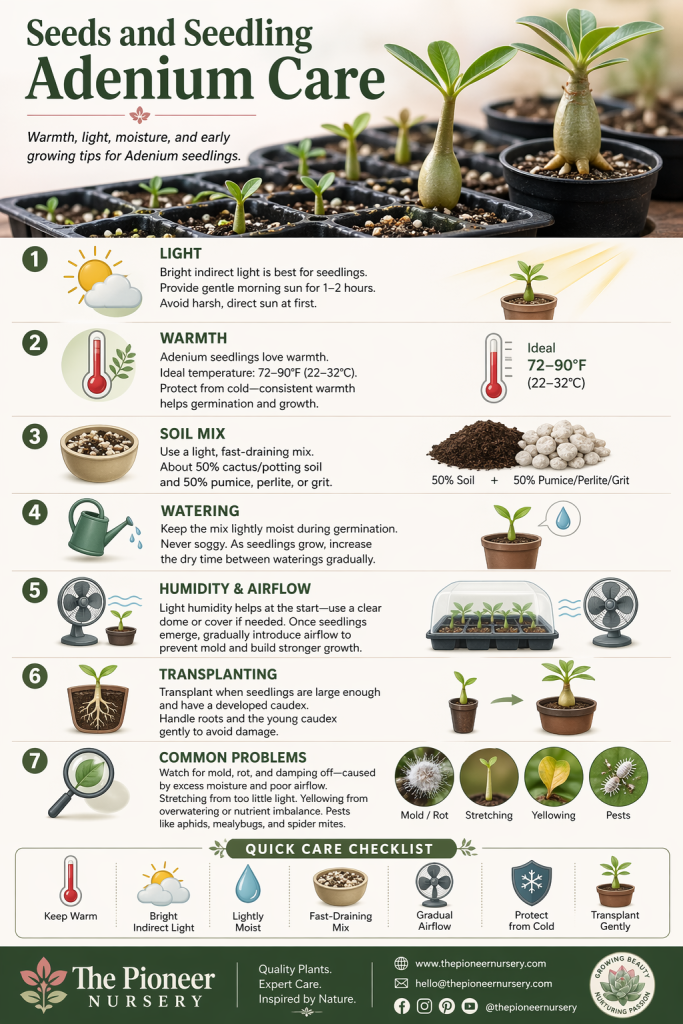
Seeds and Seedling Adenium Care
Growing Adenium from seed is one of the best ways to raise unique Desert Rose plants with strong caudex development, interesting shapes,…
Growing Adenium from seed is one of the best ways to raise unique Desert Rose plants with strong caudex development, interesting shapes, and natural variation. Seed-grown Adeniums can develop thick bases, unusual branching, and a wide range of leaf and flower traits as they mature.
Adenium seedlings are different from mature plants. They need warmth, gentle light, consistent moisture, and protection while they establish. As they grow, they can slowly transition into brighter light, stronger airflow, and a more mature wet-to-dry watering cycle.
Why Grow Adenium From Seed?
Seed-grown Adeniums are popular because every plant can be a little different. Even seeds from the same parent plant may produce seedlings with different growth habits, caudex shapes, leaf forms, and flower potential.
Growing from seed can also help create a naturally strong root system and caudex. While grafted Adeniums are often used to preserve special flower types, seed-grown Adeniums are valued for their individuality and strong plant structure.
How Adenium Seedlings Are Different
Young Adenium seedlings are soft, small, and actively developing their roots and caudex. They cannot handle the same dry conditions as mature Adeniums right away.
Seedlings usually need:
- Warm temperatures
- Bright but gentle light
- Light, consistent moisture
- Fast-draining seedling soil
- Clean containers
- Gradual airflow
- Protection from cold and rot
The goal is steady growth, not stress. Mature Adeniums can dry between waterings, but very young seedlings should not be allowed to stay bone dry for long periods.
Choosing a Container
Adenium seeds can be started in small pots, seed trays, plug trays, or covered propagation containers. The container should allow the seedlings to stay warm and lightly moist while giving their roots room to begin developing.
A good seed starting container should be:
- Clean
- Easy to label
- Deep enough for early roots
- Able to drain or manage moisture properly
- Easy to cover lightly if humidity is needed
Adenium seedlings can develop a strong root system early, so avoid containers that are too shallow if you plan to keep them there for a while.
Soil Mix for Adenium Seeds
Adenium seedling soil should be light, airy, and fast-draining, but it should hold enough moisture for germination and early growth.
A simple Adenium seedling mix can include:
- Cactus soil
- Potting soil
- Pumice or perlite
- Coarse sand
- Fine lava rock or mineral grit
- Coco coir, used sparingly
A good starting mix is:
50% cactus soil or light potting soil
50% pumice, perlite, coarse sand, or fine mineral material
The mix should be damp before sowing, but not muddy or waterlogged.
Cleanliness Matters
Warm, moist seedling conditions are great for germination, but they can also encourage fungus, algae, or mold if the setup is dirty or too wet.
Before sowing:
- Use clean containers.
- Use fresh soil mix.
- Remove large bark or debris.
- Label the container with seed type and date.
- Use clean hands or clean tools.
If you have had mold problems before, you can use a cleaner, more mineral-heavy mix or sterilize your seed-starting medium.
How to Sow Adenium Seeds
Adenium seeds are usually larger than many cactus seeds and are easier to handle. Lay the seeds flat on the surface or press them gently into the soil. Cover them lightly with a thin layer of fine soil, grit, or seedling mix.
The seeds should be covered enough to stay in contact with moisture, but not buried deeply.
After sowing:
- Moisten the soil gently.
- Cover lightly if humidity is needed.
- Place in bright indirect light.
- Keep warm.
- Avoid harsh direct sun.
- Keep the mix lightly moist.
Do not let the seed tray dry out completely during germination.
Germination Conditions
Adenium seeds usually germinate best in warm conditions. Consistent warmth helps improve germination speed and seedling strength.
Helpful germination conditions:
- Warm location
- Bright indirect light
- Light, steady moisture
- Good but gentle airflow
- Protection from cold drafts
- No harsh direct sun under a lid
If using a humidity dome or cover, check regularly. Too much trapped moisture without airflow can lead to mold or rot.
Light for Adenium Seedlings
Adenium seedlings need bright light, but not harsh direct sun at first. Strong sun can burn small seedlings, especially if they were started in a covered container.
Good light options include:
- Bright indirect light
- Morning light
- Filtered greenhouse light
- Grow lights placed at a safe distance
As seedlings grow stronger, they can gradually be introduced to brighter light. Strong light helps build compact growth and a thicker caudex, but the transition should be slow.
If seedlings stretch, lean, or become weak, they may need more light. If they turn pale, red, brown, or scorched, the light may be too intense.
Watering Adenium Seedlings
Adenium seedlings need more consistent moisture than mature Adeniums. Keep the soil lightly moist during germination and early growth, but never soggy.
Water gently so the seedlings are not knocked over. A spray bottle, bottom watering, or careful watering around the edges of the container can work well.
As seedlings grow, slowly begin allowing the soil to dry slightly more between waterings. Do not suddenly switch tiny seedlings to a fully mature dry cycle.
A safe seedling watering approach:
- Keep lightly moist during germination.
- Avoid soggy soil.
- Water gently.
- Increase dry time gradually as seedlings grow.
- Reduce watering in cool or low-light conditions.
Airflow and Humidity
Humidity can help during germination, but Adenium seedlings should not stay sealed in a humid container for too long without airflow. Once seedlings are established, gradually increase ventilation.
A simple transition:
- Crack the lid slightly.
- Open the container briefly each day.
- Increase open time over several days.
- Remove the cover once seedlings are strong enough.
This helps prevent mold, rot, and weak growth.
Temperature
Adenium seedlings love warmth. They should be protected from cold at every stage.
Avoid cold windowsills, cold drafts, and cool damp soil. If temperatures are low, seedlings may stop growing or become more vulnerable to rot.
A warm seedling area, greenhouse shelf, or gentle heat mat can be helpful, but avoid overheating covered containers.
Fertilizer for Adenium Seedlings
Adenium seedlings do not need heavy fertilizer right away. Once they are established and actively growing, you can use a very diluted fertilizer occasionally.
Avoid fertilizing freshly sprouted seedlings, stressed seedlings, or seedlings growing in poor light.
Gentle, steady feeding during active growth is better than pushing young plants too hard.
When to Transplant Adenium Seedlings
Adenium seedlings can usually be transplanted once they are large enough to handle safely and have developed a stronger root system.
Transplant when:
- Seedlings are crowded
- Roots are filling the container
- The soil is breaking down
- Growth has slowed from lack of space
- You want to move them into individual pots
Handle seedlings carefully and avoid damaging the young caudex or roots. After transplanting, place them in bright filtered light and avoid heavy watering for a short period while they settle.
Encouraging a Strong Caudex
Adeniums are loved for their thick caudex. Seed-grown plants can develop excellent caudex shape with time, warmth, and good care.
To support caudex development:
- Provide strong but acclimated light.
- Avoid overwatering.
- Use fast-draining soil.
- Do not keep seedlings too dark.
- Allow gradual dry periods as they mature.
- Repot carefully as roots develop.
Do not rush caudex shaping on very young seedlings. Let them build strength first.
Common Seedling Problems
Mold
Mold usually appears when conditions are too wet, stagnant, or full of organic debris. Improve airflow, reduce excess moisture, and remove debris if needed.
Rot
Rot can happen if seedlings are too wet, too cold, or kept in poor-draining soil. Use warmth, drainage, and careful watering.
Stretching
Seedlings that grow tall, thin, or weak are usually asking for more light. Increase light gradually.
Leaf Yellowing
Yellowing can happen from overwatering, low light, cold conditions, nutrient issues, or normal adjustment. Check the soil and temperature first.
Slow Growth
Slow growth may be caused by cool temperatures, weak light, old seed, poor soil, or lack of root space.
Pests
Young Adeniums can attract fungus gnats, aphids, mealybugs, and spider mites. Inspect regularly and keep the growing area clean.
Transitioning to Mature Adenium Care
As seedlings get larger, slowly transition them toward mature Adenium care.
This means:
- Brighter light
- More airflow
- Less constant humidity
- A stronger wet-to-dry cycle
- Individual pots
- Light feeding during active growth
- Protection from cold
Mature Adeniums can handle more sun and more drying between waterings, but young seedlings need a gradual transition.
Quick Adenium Seedling Checklist
- Use clean containers.
- Use light, fast-draining seedling mix.
- Label seeds with type and date.
- Keep seeds warm.
- Use bright indirect light.
- Keep soil lightly moist during germination.
- Avoid soggy soil.
- Add airflow gradually.
- Protect seedlings from cold.
- Water gently.
- Do not fertilize too early.
- Transplant when large enough to handle.
- Transition slowly into brighter light and mature care.
Final Thoughts
Growing Adenium from seed is a patient but rewarding process. Seedlings may start small, but with warmth, gentle light, careful moisture, and time, they can grow into strong Desert Rose plants with unique caudex shapes and beautiful flowering potential.
The key is to protect them while they are young, then gradually introduce stronger light, more airflow, and drier conditions as they mature. With steady care, Adenium seedlings can become some of the most interesting and personal plants in your collection.