Pseudolithos cubiformis Care Guide: Growing the Cube-Shaped False Stone
Learn how to grow Pseudolithos cubiformis, a cube-shaped collector succulent that needs warmth, bright light, mineral soil, airflow, and careful watering.
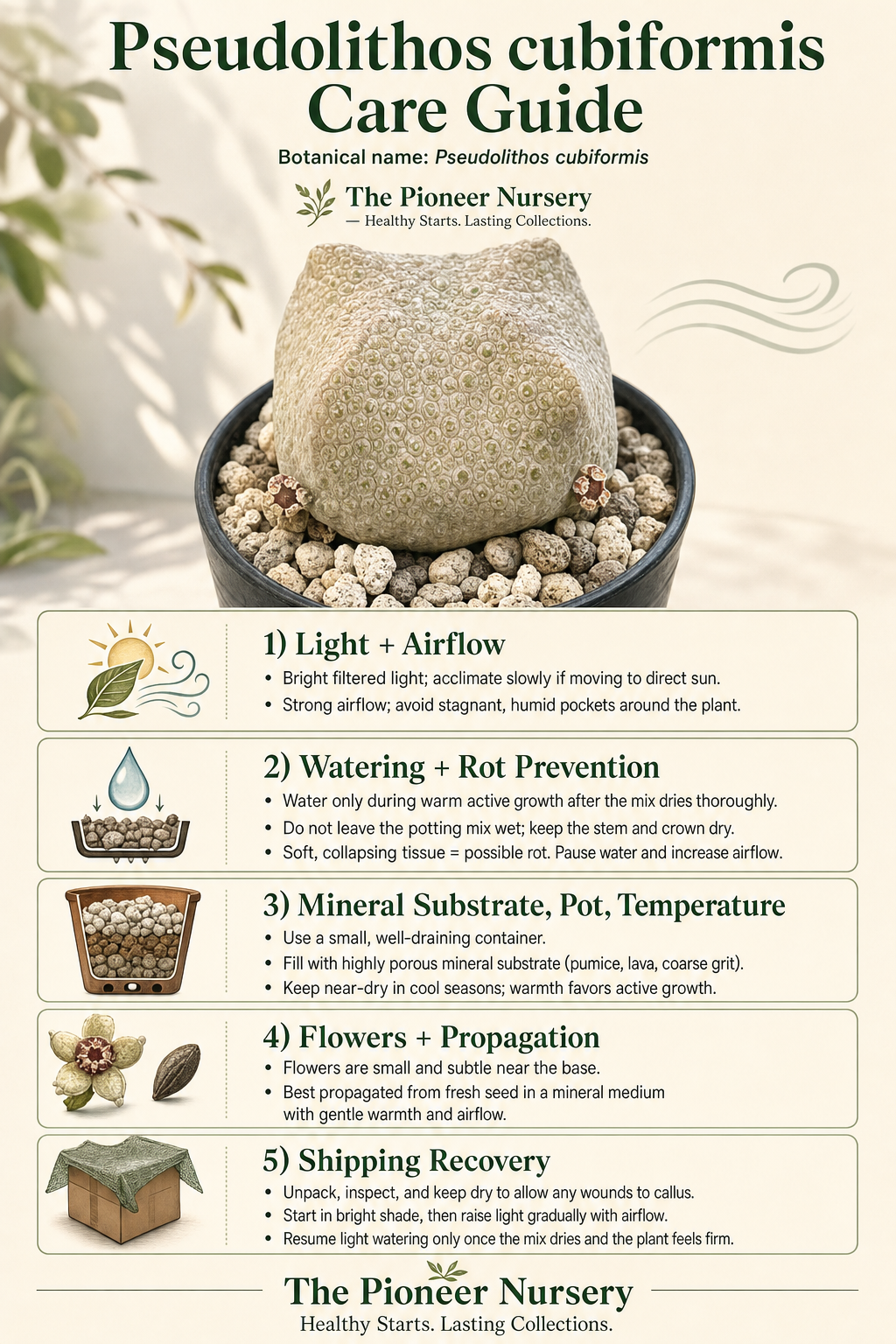
Pseudolithos cubiformis, also called cube-shaped pseudolithos or false stone, is a solitary succulent from Somalia with a distinctive angular, cubiform stem. Its unusual form and stapeliad flowers make it a rewarding collector plant, but its care requires precision. Prioritize warmth, ventilation, porous mineral substrate, and thorough drying between waterings. Cool, wet conditions are the main threat because this species can develop rapid stem or root rot.
Quick Care Summary
- Use bright filtered light or gradually acclimated direct light with strong airflow.
- Plant in a small, well-draining container with highly porous mineral substrate.
- Water only during warm active growth after the substrate dries thoroughly.
- Keep essentially dry during cool winter conditions.
- Treat soft, collapsing tissue as a possible rot warning.
About Pseudolithos cubiformis
Pseudolithos cubiformis is an accepted species in the family Apocynaceae, native to Somalia. Its solitary stem is approximately cube-shaped, helping distinguish it from more rounded Pseudolithos species. It is an advanced collector succulent because the margin between adequate hydration and rot can be narrow.
Light and airflow
Provide very bright filtered light or gradually acclimated direct light, together with strong airflow. Recently shipped plants should begin in bright indirect or filtered light and move toward stronger exposure gradually. Protect the plant from abrupt intense summer midday sun, which can cause scorch or bleaching.
Watering
Water only when the plant is actively growing, warm, and the mineral substrate has dried thoroughly. Moisten the substrate completely, then allow excess water to drain rapidly. Avoid frequent light sprinkles. A slight loss of firmness may indicate thirst; soft, collapsing tissue is more consistent with rot. Do not combine moisture with cool temperatures, low light, or stagnant air.
Soil and substrate
Use a very fast-draining, highly mineral substrate with little or no organic material. Pumice, lava or other porous mineral aggregate, and coarse grit are appropriate components. Pure pumice has also been used successfully. The mix should dry thoroughly rather than hold moisture around the stem base.
Potting and roots
Choose a small or under-pot-sized container with excellent drainage. Avoid a large volume of moisture-retentive substrate. Keep the stem base at or just above the substrate surface and provide strong ventilation. Repot only when necessary; inspect the roots and stem base, then allow substantial drying after root disturbance before resuming conservative watering.
Temperature and seasonal growth
Keep growing conditions warm, approximately 16–27°C (60–80°F), with growth and watering concentrated in the warmer part of the year. During cool or dim periods, activity is reduced, so keep the plant essentially dry. Brief colder conditions may be tolerated only when completely dry; cultivation reports describe survival near 4°C (40°F) under those dry conditions.
Fertilizer
During warm active growth, apply a dilute, low-strength liquid fertilizer occasionally. Avoid heavy feeding and slow-drying organic amendments. Do not fertilize a recently shipped, root-disturbed, dormant, or stressed plant.
Flowers and seed
Small stapeliad flowers are commonly associated with a carrion-like odor and fly pollination. Successful pollination can produce paired follicles containing light, tufted seeds dispersed by wind. Contain developing pods because mature seeds may disperse rapidly.
Propagation
Fresh seed is the primary and most dependable propagation method, but viability may decline quickly. Emergency cuttings may sometimes root after all rotted tissue is removed, although this is less reliable. Grafting onto compatible stapeliad or Ceropegia- or Caralluma-related rootstocks may be used to rescue plants or reduce losses from root rot.
Shipping and arrival care
Inspect the stem base and roots promptly after arrival. Pot into a dry, porous mineral substrate and provide bright indirect light with airflow while the plant acclimates. After bare-root handling or major root disturbance, do not water automatically; wait until the plant is warm, stable, and showing signs of active recovery. Increase light gradually to reduce scorch risk.
Common Problems
- Rapid stem or root rot: Review drainage, drying, temperature, and airflow before watering again.
- Stem collapse: Excess organic matter or repeated watering before drying can contribute.
- Dehydration or distortion: Keeping the plant dry too long during warm active growth can cause temporary loss of firmness or shape.
- Sun scorch or bleaching: Acclimate gradually before increasing direct light.
- Seed failure or damping-off: Old seed, excess moisture, and insufficient ventilation can reduce success.
- Lost seed pods: Mature follicles may release light, wind-dispersed seeds quickly.
Frequently Asked Questions
How can I tell thirst from rot?
Slight loss of firmness may indicate thirst, while soft, collapsing tissue is more consistent with rot. Check whether the substrate has dried and whether cool, wet, poorly ventilated conditions are present.
When should I increase light after shipping?
Begin with bright indirect or filtered light, then increase exposure gradually to reduce scorch risk.
What should I do if the substrate stays wet?
Review the mineral content, container size, drainage, and airflow. The plant should be watered only after the substrate has dried thoroughly.
Can Pseudolithos cubiformis be grown from seed?
Yes. Fresh seed is the most dependable method, but viability may decline quickly; excess moisture and insufficient ventilation can cause failure or damping-off.
Should I water immediately after arrival?
No. Inspect and pot the plant first, then wait until it is warm, stable, and showing active recovery before watering.
Pseudolithos cubiformis rewards observation rather than routine watering. Prioritize bright light, warmth, mineral soil, airflow, and thorough drying; in cool conditions, keeping the plant dry is safest.