Pseudolithos dodsonianus Care Guide
Learn how to grow Pseudolithos dodsonianus, a specialized stapeliad succulent requiring bright light, mineral soil, warmth, airflow, and careful watering.
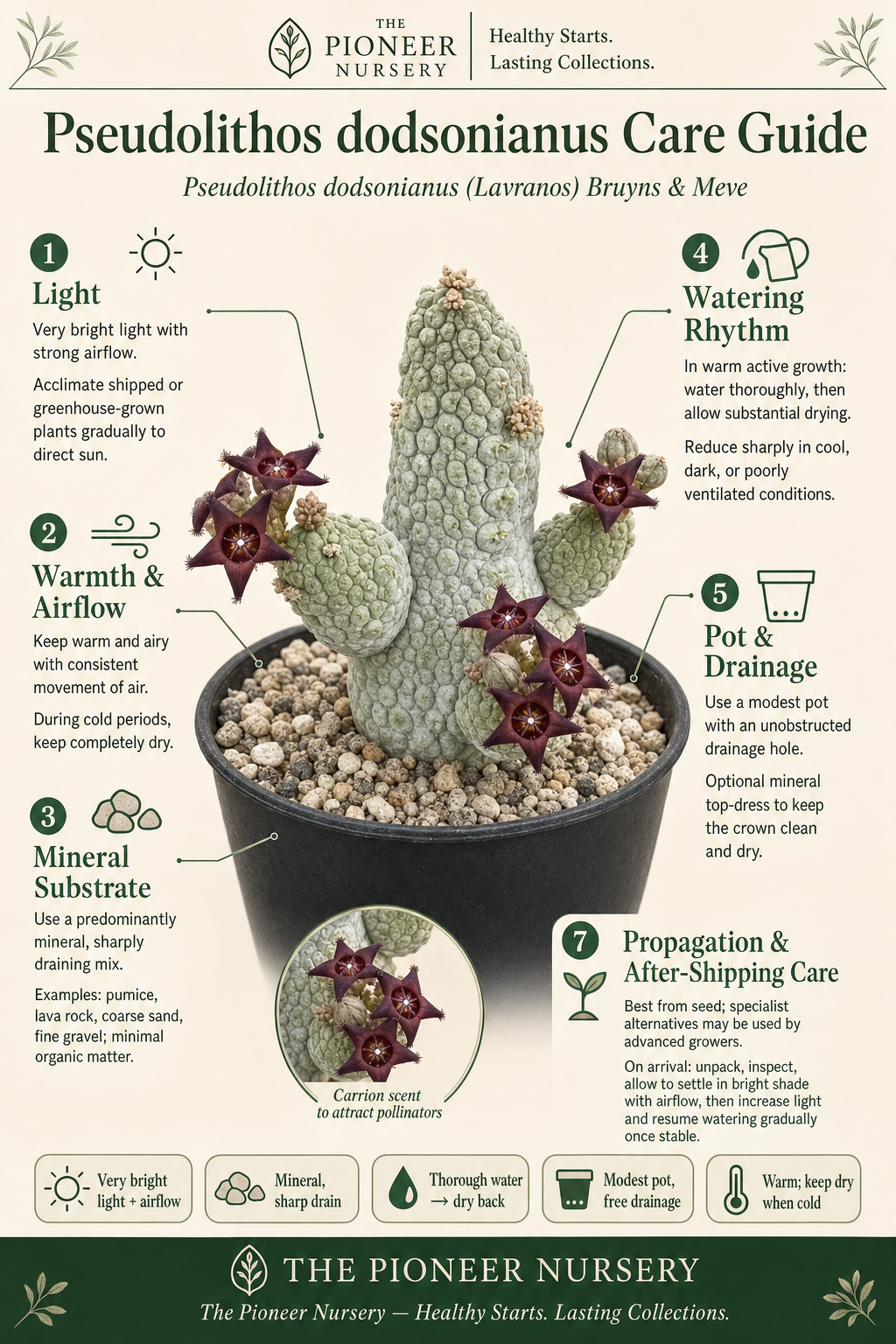
Pseudolithos dodsonianus, also known as Dodson's pseudolithos or false stone succulent, is a specialized stapeliad succulent from northern Somalia and Yemen. Its compact growth and unusual dark, carrion-scented flowers make it appealing to collectors, but it is notably sensitive to wet, stagnant conditions. The main priorities are very bright light, a fast-drying mineral substrate, warm temperatures, excellent airflow, and watering that follows active growth rather than a fixed calendar. The name Pseudolithos dodsoniana is also encountered in horticulture and is connected with earlier Caralluma and Anomalluma treatments; the currently accepted name is Pseudolithos dodsonianus.
Quick Care Summary
- Provide very bright light with strong airflow.
- Acclimate shipped or greenhouse-grown plants gradually to direct sun.
- Use a predominantly mineral, sharply draining substrate.
- Water thoroughly during warm active growth, then allow substantial drying.
- Reduce watering sharply in cool, dark, or poorly ventilated conditions.
- Keep the plant warm and completely dry during cold periods.
- Use a modest pot with an unobstructed drainage hole.
- Fertilize sparingly only when the plant is warm, actively growing, and rooted.
About the Plant
Pseudolithos dodsonianus is a dry-climate stapeliad succulent associated with desert and dry shrubland environments. Despite its natural aridity, an actively growing plant should not be kept permanently bone-dry. It needs a careful balance: enough water during warm growth to avoid severe dehydration, followed by substantial drying before the next irrigation.
Light
Provide very bright light with strong air movement. Filtered high light or carefully acclimated direct sun is appropriate. Newly shipped or greenhouse-grown plants should be moved into stronger sunlight gradually to reduce sunscald. Persistently dim conditions can produce weak or distorted growth and make watering mistakes more hazardous.
Watering
During warm active growth, water thoroughly and then allow the substrate to dry substantially before watering again. Adjust watering for temperature, light, airflow, and visible growth rather than following a fixed schedule. Reduce watering sharply in cool, dull, or poorly ventilated conditions, and keep the plant dry when temperatures are low. Continuously wet roots can cause rot, while prolonged severe dryness during warm active growth can lead to dehydration and collapse.
Soil and Substrate
Use a predominantly mineral, sharply draining mix with little organic matter. Pumice, lava, granite grit, coarse perlite, or similar porous aggregates can provide drainage and air around the roots. A small low-nutrient organic fraction is acceptable, but the finished mix should dry quickly.
Potting and Roots
Choose a container with an unobstructed drainage hole and avoid oversized pots that hold moisture around the relatively small root system. Slight underpotting is acceptable. Repot only when necessary and handle the roots gently. Damaged or disturbed roots should dry and recover before cautious watering resumes.
Temperature and Airflow
Keep the plant warm during active growth with excellent ventilation. Protect it from freezing temperatures and from cold, damp conditions. Short, occasional cool periods may be tolerated only when the plant is completely dry. Cold combined with moisture is a major rot hazard.
Seasonal Growth and Dormancy
A pronounced, reliably defined dormancy is not well documented. Growth and water use are expected to decline during cool, dull, or short-day conditions. Treat winter as a reduced-water period unless the plant remains warm, bright, and actively growing.
Fertilizer
Fertilize sparingly during warm active growth with a dilute, balanced or low-nitrogen succulent fertilizer. Do not fertilize a stressed, recently repotted, dormant, cold, or rootless plant. Because a mineral substrate contributes little nutrition, occasional dilute feeding may be useful during suitable growth conditions.
Flowering
The plant produces small, dark maroon to purple, carrion-scented stapeliad-type flowers. Strong light, warmth, healthy roots, and appropriate seasonal watering support flowering. The scent may attract flies and can be objectionable indoors. Successful pollination can produce paired seed follicles containing numerous wind-dispersed seeds.
Propagation
Seed is the principal and most dependable propagation method. Seedlings can establish under warm, bright, ventilated conditions. Stem cuttings may sometimes root after all rotted tissue is removed, but this is less certain and is best treated as an emergency or specialist technique. Grafting onto compatible stapeliad or Ceropegia stocks is also reported in specialist cultivation.
Shipping and Arrival Care
Inspect the plant after arrival for soft tissue or signs of rot. Provide bright but initially filtered light and acclimate gradually. Ship and receive it as dry as practical, protected from cold, prolonged moisture, crushing, and stagnant packaging. If roots were disturbed or the plant arrived bare-root, avoid immediate heavy watering; allow recovery in a warm, ventilated environment before beginning cautious irrigation.
Common Problems
- Basal or stem rot: Usually associated with overwatering, poor drainage, cold moisture, or inadequate airflow.
- Sunscald: Can follow an abrupt move from shade or shipping darkness into intense direct sun.
- Dehydration and collapse: May occur when the plant remains excessively dry during warm active growth.
- Root loss: Rough repotting, wet handling, or planting damaged roots into moist substrate can compromise recovery.
- Weak or distorted growth: Often associated with insufficient light.
- Objectionable flower scent: Carrion-scented flowers may attract flies and be unpleasant indoors.
Frequently Asked Questions
How often should I water Pseudolithos dodsonianus?
Do not use a fixed schedule. During warm active growth, water thoroughly and let the fast-draining substrate dry substantially before watering again. In cool, dull, or poorly ventilated conditions, reduce watering sharply and keep the plant dry when temperatures are low.
Can Pseudolithos dodsonianus grow in direct sun?
Yes, carefully acclimated direct sun can be appropriate. Begin with filtered high light, especially after shipping or when moving a greenhouse-grown plant, and increase exposure gradually to reduce sunscald.
What soil is best for this plant?
Use a predominantly mineral, sharply draining mix made with porous materials such as pumice, lava, granite grit, or coarse perlite. Keep organic matter limited and low in nutrients.
Does this species need a winter dormancy?
A pronounced, reliably defined dormancy is not well documented. Growth and water use generally decline in cool, dull, or short-day conditions, so winter should be treated as a reduced-water period unless the plant stays warm, bright, and actively growing.
How can I propagate it?
Seed is the principal and most dependable method. Stem cuttings may sometimes root but are less certain, while grafting is reported as a specialist option.
Why does my plant smell when it flowers?
Its small dark maroon to purple flowers are carrion-scented and may attract flies. The odor can be objectionable indoors.
Pseudolithos dodsonianus rewards a careful, observant routine rather than a watering calendar. Keep it bright, warm, airy, and fast draining, and make the largest seasonal adjustment when conditions turn cool or dim: use much less water and avoid cold moisture around the roots.