Astrophytum onzuka Care Guide
Learn how to grow Astrophytum onzuka, the distinctive Onzuka selection of Astrophytum myriostigma, with guidance on light, watering, mineral soil, winter dormancy, and flowering.
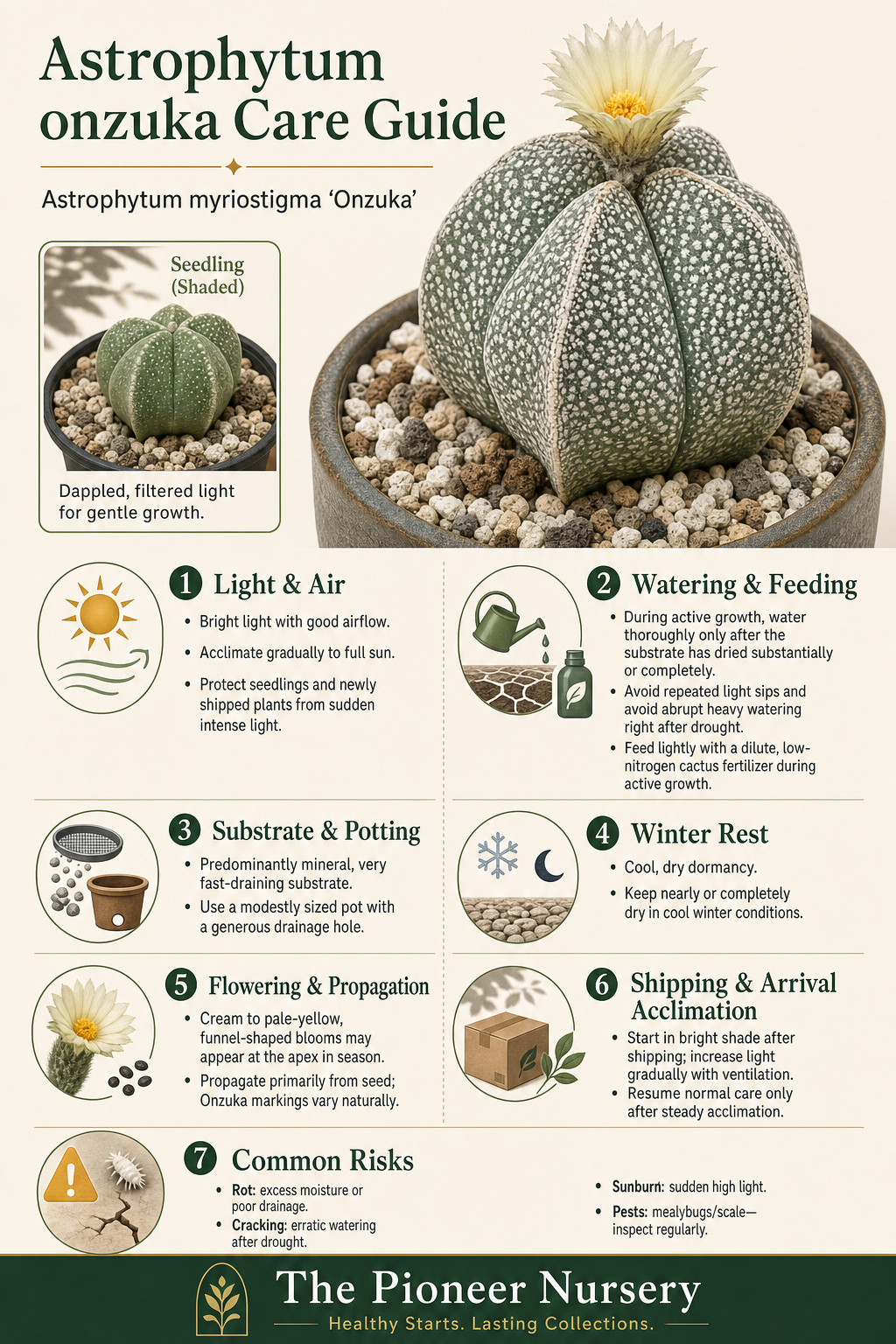
Astrophytum onzuka is the horticultural name commonly used for Astrophytum myriostigma 'Onzuka', a Japanese-selected form known for unusually dense white markings across its firm, ribbed surface. It is an arid, rocky-soil cactus that grows best with strong light, excellent airflow, and a predominantly mineral substrate. The main watering priorities are thorough irrigation during active growth, substantial drying between waterings, and near-complete dryness during cool winter rest. Onzuka may be grown on its own roots or grafted; neither method is inherently superior in every situation.
Quick Care Summary
- Bright light with good ventilation; acclimate gradually to full sun.
- Use a predominantly mineral, very fast-draining substrate.
- Water thoroughly during active growth only after the substrate has dried substantially or completely.
- Avoid repeated light sips and abrupt heavy watering after drought.
- Keep nearly or completely dry during cool winter dormancy.
- Use a modestly sized pot with a generous drainage hole.
- Feed lightly with a dilute, low-nitrogen cactus fertilizer during active growth.
- Protect seedlings and newly shipped plants from sudden intense light.
About Astrophytum onzuka
Astrophytum onzuka is not a separate botanical species. Reliable horticultural references use the name for Astrophytum myriostigma 'Onzuka', a Japanese nursery selection or horticultural form. Its dense white epidermal markings are its defining feature, although rib number and marking patterns can vary. It should not be confused with Astrophytum asterias. The plant is suited to dry, rocky conditions rather than continuously humid soil.
Light and ventilation
Provide bright light with good ventilation. Mature plants can take full sun after gradual acclimation, but protect them from sudden exposure and intense afternoon sun, especially after shipping or after moving from greenhouse shade. Young seedlings need more shade than established plants. Strong airflow helps the plant dry quickly after watering, particularly indoors or in humid greenhouse conditions.
Watering
During active growth, use a soak-and-dry approach: water thoroughly, then wait until the mineral substrate has dried substantially or completely before watering again. Avoid repeated light sips that leave the root zone damp. Reduce watering as temperatures and light decline, and keep the plant nearly or completely dry during cool winter dormancy. Onzuka's firm epidermis may crack or split when watering is excessive or when a very dry plant takes up water abruptly, so avoid heavy watering after prolonged drought.
Soil and substrate
Use a very fast-draining, porous substrate made predominantly from mineral materials with limited organic matter. Pumice, lava, gravel, coarse sand, or similar aerating components are appropriate. A mildly alkaline or calcareous component may suit the species' rocky Mexican habitat. The finished mix should release excess water quickly and dry reliably between waterings.
Potting and roots
Choose a container with an ample drainage hole and only moderately more space than the root system requires. Standard cactus containers are suitable; oversized pots can hold moisture for too long. Repot during active growth when possible and disturb the roots minimally. If roots are damaged or freshly disturbed, allow them to dry before cautiously resuming watering. Onzuka can be grown on its own roots or grafted, depending on the plant and grower's aims.
Temperature and winter rest
Warm conditions are suitable during spring and summer growth. For winter rest, maintain a cool, dry environment around 5–15 °C (41–59 °F). Established, completely dry plants may tolerate brief temperatures near freezing, but frost and cold combined with moisture greatly increase rot risk. Protected, frost-free cultivation is preferred. As autumn temperatures and light levels fall, reduce watering and keep the plant nearly or completely dry. Resume watering gradually only when warmth and light support active growth.
Fertilizer
Feed only during active growth. Use a dilute, low-nitrogen cactus fertilizer occasionally, such as monthly applications at reduced strength. Avoid heavy nitrogen feeding, which can encourage soft or elongated growth and may increase splitting risk when followed by rapid water uptake.
Flowers
Mature Astrophytum myriostigma commonly produces funnel-shaped, fragrant cream to pale-yellow flowers, generally in spring or summer under favorable cultivation. Onzuka retains the flowering characteristics of the underlying species, although maturity and overall plant condition affect whether it flowers.
Propagation
Propagation is possible from seed, and grafting is also used for valuable or slow-growing selections. Seed-grown Onzuka material may vary and should not automatically be expected to reproduce a perfectly uniform cultivar. Seedlings need more consistent moisture than dormant adult plants, but they should be protected from intense light and stagnant conditions.
Shipping and arrival care
Inspect the plant after arrival and protect it from cold, prolonged dampness, and abrupt changes in light. If it was shipped bare-root, keep the roots dry and well ventilated during transit and allow recovery from root disturbance before watering. Gradually acclimate the plant to stronger light rather than placing it immediately in full sun. Avoid immediate heavy watering, especially when roots were damaged or the plant is entering cool conditions.
Common problems
Root rot usually results from poorly draining substrate, prolonged moisture, or watering while the plant is cool and inactive. Epidermal cracking or splitting can follow rapid water uptake, particularly in a slow-draining mix or after drought followed by heavy watering. Sudden full-sun exposure can cause sunburn. Mealybugs and scale may be difficult to notice among the woolly surface markings. Insufficient light or excessive nitrogen can produce etiolated, weak growth. Seedlings are especially vulnerable to intense light, desiccation, poor ventilation, and overwatering.
Frequently Asked Questions
How often should I water Astrophytum onzuka?
Do not follow a fixed calendar. During active growth, water thoroughly after the mineral substrate has dried substantially or completely. Reduce watering as light and temperature decline, and keep the plant nearly or completely dry during cool winter rest.
Can Astrophytum onzuka take full sun?
Mature plants can take full sun after gradual acclimation. Protect plants from sudden exposure and intense afternoon sun, especially after shipping or greenhouse cultivation. Young seedlings need more shade.
Why is my Onzuka splitting or cracking?
Its firm epidermis can crack after excessive moisture or rapid water uptake, especially when a dry plant is heavily watered or the substrate drains slowly. Use a porous mineral mix and avoid abrupt changes in soil moisture.
Does Astrophytum onzuka need a cold winter?
It benefits from a cool, dry winter rest, with the research supporting approximately 5–15 °C (41–59 °F). Keep it protected from frost, and avoid combining cold conditions with moisture.
Will seed-grown Onzuka stay identical to the parent plant?
Not necessarily. Seed-grown Onzuka material may show variation and should not automatically be expected to reproduce a perfectly uniform cultivar. Grafting is also used for selected or slow-growing plants.
What should I do after receiving a shipped plant?
Inspect it, protect it from cold and prolonged dampness, and gradually acclimate it to stronger light. If it arrived bare-root or with disturbed roots, allow root recovery before cautious watering, avoiding immediate heavy irrigation.
Astrophytum onzuka rewards a restrained approach: bright, gradually acclimated light; rapid drainage; thorough watering only during active growth; and a cool, dry winter rest. Keeping the roots airy and avoiding abrupt moisture changes will help preserve both the plant's health and its distinctive white-marked appearance.