Ariocarpus trifinger Care Guide
Learn how to grow Ariocarpus trifinger, a cultivated Ariocarpus retusus selection valued for its distinctive three-pointed tubercles, substantial taproot, and woolly crown.
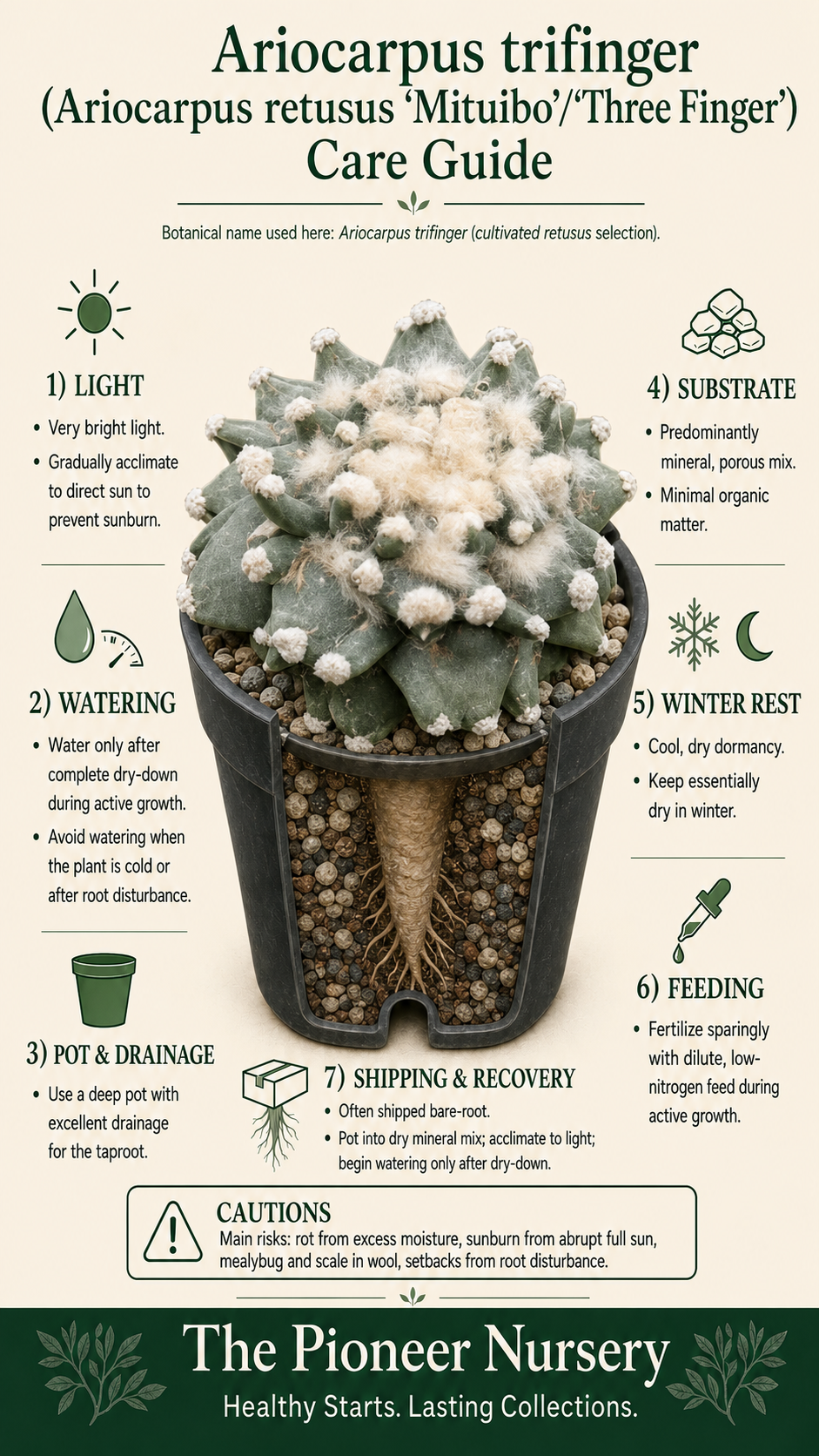
Ariocarpus trifinger is the horticultural name most commonly associated with the Ariocarpus retusus selection ‘Mituibo’, also called ‘Three Finger’ or ‘Trifinger’. Its tubercle tips divide into three points, giving the plant its distinctive collector appeal. Treat it primarily as Ariocarpus retusus: provide very bright light, a deep pot, sharply draining mineral substrate, restrained watering, and a cool, dry winter rest. The substantial taproot is especially vulnerable to rot when conditions stay cold and wet.
Quick Care Summary
- Provide very bright light with gradual acclimation to direct sun.
- Use a deep pot with excellent drainage for the substantial taproot.
- Grow in a predominantly mineral, porous substrate with minimal organic matter.
- Water only after the substrate is completely dry during active growth.
- Keep the plant essentially dry during cool winter dormancy.
- Avoid watering when the plant is cold or after significant root disturbance.
- Fertilize sparingly with dilute, low-nitrogen fertilizer during active growth.
About the plant
“Ariocarpus trifinger” is not an accepted botanical species name. In specialist horticultural use, it most commonly refers to the cultivated Ariocarpus retusus selection ‘Mituibo’ (‘Three Finger’/‘Trifinger’). The name is used inconsistently, and a similarly named A. fissuratus selection is also mentioned in some references, but this residual ambiguity does not materially change the conservative Ariocarpus care described here. The three-pointed tubercle character should be regarded as a cultivated selection trait rather than a formal botanical rank.
Light
Provide very bright light with several hours of direct sun, ideally in a greenhouse or another bright, well-ventilated location. Acclimate gradually after shipping or a period in shade. Abrupt exposure to intense sun can cause sunburn, while strong light supports compact growth and flowering.
Watering
Water only when the mineral substrate is completely dry. During active growth, provide a modest but thorough watering, then allow excess water to drain rapidly. Do not keep the plant constantly moist. Reduce watering as growth slows and keep it essentially dry during cool winter dormancy. Cold, wet conditions are a major root-rot risk.
Soil and substrate
Use a very fast-draining, highly porous substrate made predominantly from mineral materials. Suitable components include pumice, lava rock, coarse grit, decomposed granite, and a small amount of limestone or another calcium-bearing mineral. Avoid moisture-retentive potting soil and organic-heavy mixes.
Potting and roots
Choose a deep container that accommodates the substantial taproot, while avoiding an excessively oversized pot that stays wet for too long. Keep the crown above the substrate and do not pack damp material against the body. Repot only when necessary because disturbing the taproot can slow recovery.
Temperature and winter rest
Keep the plant warm during active growth with strong ventilation. Provide a cool, dry winter rest, protecting it from freezing conditions and especially from cold combined with wet soil. Exact cold tolerance for the ‘Trifinger’ selection is not sufficiently documented, so conservative frost protection is appropriate. Resume watering cautiously in spring as temperatures, light, and growth activity increase.
Fertilizer
Fertilize sparingly during active growth only, using a dilute, low-nitrogen cactus fertilizer. A calcium-containing fertilizer may be appropriate, but feeding should remain infrequent because Ariocarpus is slow-growing and adapted to nutrient-poor, calcareous soils.
Flowering
Mature plants can produce relatively large flowers from the woolly crown, generally toward late summer or autumn under suitable conditions. Strong light, a proper dry winter rest, and mature age support more reliable flowering.
Propagation
Propagation is primarily by seed and is slow. Specialist growers may graft seedlings to accelerate establishment, but grafted and own-root plants should not be considered inherently superior to one another. Seed may not reproduce the named ‘Trifinger’ character consistently; maintaining that selection may require clonal propagation or controlled breeding.
Shipping and arrival care
Inspect the plant after arrival and protect it from prolonged cold and moisture. If shipped bare-root, keep the roots dry, handle the taproot carefully, and pot into a dry, sharply draining medium. If roots were damaged, delay watering until they have callused and the plant is warm and stable. Acclimate gradually to strong light and avoid immediate heavy watering.
Common problems
Root or crown rot usually follows organic, poorly drained, or persistently wet substrate. Watering while the plant is cold or after major root disturbance increases risk. Sunburn can occur after abrupt movement from shade or shipping conditions into intense direct sun. Rough repotting may cause root loss or delayed recovery. Check the woolly crown and roots for concealed mealybugs or scale.
Frequently Asked Questions
How often should Ariocarpus trifinger be watered?
Do not use a fixed calendar. Water only when the mineral substrate is completely dry, and reduce watering as growth slows. Keep the plant essentially dry during cool winter dormancy.
Does Ariocarpus trifinger need direct sun?
It needs very bright light with several hours of direct sun when possible. Acclimate gradually after shipping or shade to reduce sunburn risk.
What type of pot does it need?
Use a deep container with excellent drainage to accommodate its substantial taproot. Avoid an oversized pot that stays wet for extended periods.
Why is winter dryness important?
The plant’s taproot is vulnerable to rot when conditions are cold and wet. A cool, dry winter rest helps reduce this risk.
Can the Three Finger form be grown from seed?
Propagation is primarily by slow-growing seed, but the named three-pointed character may not reproduce consistently. Maintaining the selection may require clonal propagation or controlled breeding.
What should I do if my plant arrives bare-root?
Handle the taproot carefully, pot into dry mineral substrate, and delay watering if roots were damaged until they have callused and the plant is warm and stable. Acclimate gradually to strong light.
Ariocarpus trifinger rewards patience and restraint. Bright light, mineral soil, excellent drainage, careful taproot handling, and a genuinely dry winter rest are the foundation of long-term success. Remember that the distinctive Three Finger character is a cultivated selection associated with Ariocarpus retusus, not a separate accepted species.