Adenium arabicum Care Guide
Adenium arabicum is a striking caudex-forming plant prized for its heavy swollen base, broad branching habit, thick leaves, and bold sculptural appearance….
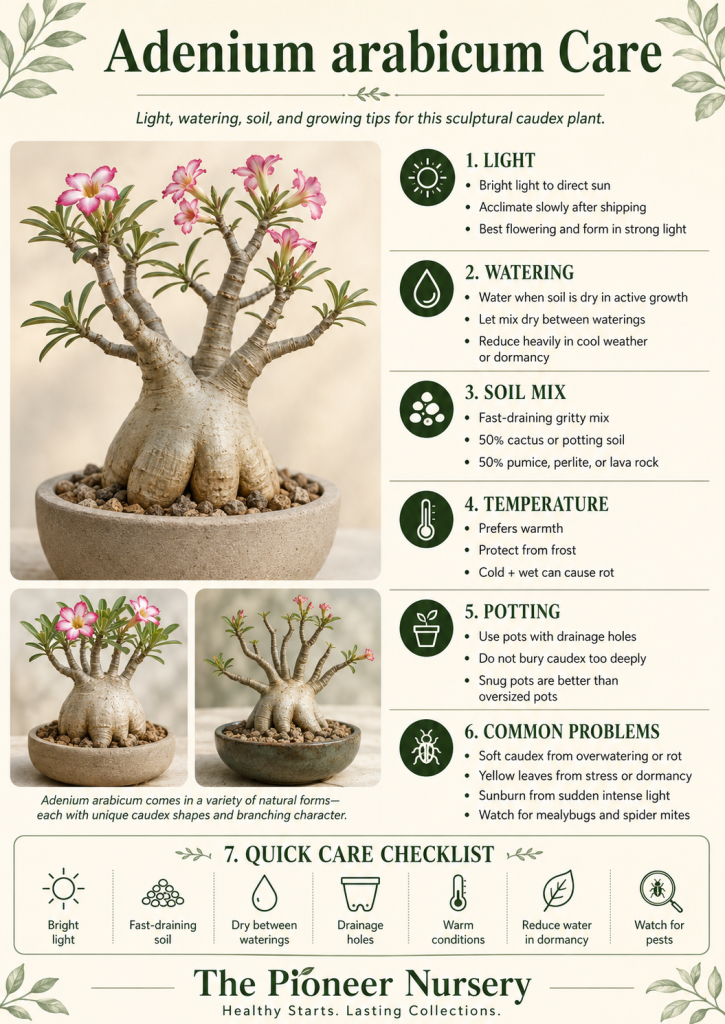
Adenium arabicum is a striking caudex-forming plant prized for its heavy swollen base, broad branching habit, thick leaves, and bold sculptural appearance. Compared with many forms of Adenium obesum, Adenium arabicum often develops a wider, heavier body and a more dramatic bonsai-like structure over time.
It is grown as much for its shape as for its flowers. Like other Adeniums, it thrives with strong light, warmth, fast drainage, and careful watering. The biggest risks are usually cold weather, wet soil, and overwatering during dormancy.
Light
Adenium arabicum prefers bright light to direct sun. Strong light helps it maintain compact growth, stronger branching, and a fuller caudex form.
Best light conditions include:
- Bright direct sun
- Gentle morning sun
- A sunny patio or greenhouse
- A very bright window
- A strong grow light setup
If the plant was recently shipped or has been growing in lower light, acclimate it gradually before moving it into harsh afternoon sun.
If leaves begin to bleach or scorch, reduce the intensity slightly and allow the plant to adjust.
Watering
Adenium arabicum likes a wet-to-dry cycle during active growth. Water thoroughly when the soil is dry, then let the pot drain and dry again before watering.
Compared with some softer leafy plants, Adenium arabicum is much more tolerant of drying out than staying wet too long.
Helpful watering guidelines:
- Water when the soil is dry during active growth
- Do not keep the soil constantly wet
- Reduce watering heavily in cool weather
- Water much less when the plant is leafless or dormant
- Do not water immediately after shipping or repotting
Its swollen caudex stores water, so it is usually safer to underwater slightly than to keep the roots wet.
Soil
Adenium arabicum needs a fast-draining soil mix. It can tolerate a little organic material, but the mix should still dry quickly and stay airy around the roots.
A simple starting mix:
- 50% cactus soil or light potting soil
- 50% pumice, perlite, lava rock, coarse sand, or gritty mineral material
In humid climates, indoors, or during cooler seasons, a grittier mix is often safer.
Useful ingredients may include:
- Cactus soil
- Potting soil
- Pumice
- Perlite
- Lava rock
- Coarse sand
- Fine mineral grit
Avoid heavy garden soil or dense potting mixes that stay wet too long.
Potting
Use a pot with drainage holes. Adenium arabicum does best when excess water can leave the pot quickly.
Best potting practices:
- Use a pot with drainage holes
- Choose a snug pot rather than an oversized one
- Keep the soil airy and fast-draining
- Do not bury the caudex too deeply
- Raise the caudex gradually over time if desired for display
Because arabicum forms are often grown for their dramatic base, many growers slowly expose more of the caudex as the plant matures.
After Repotting
After repotting, allow the plant to stay dry for several days before watering. This gives disturbed roots time to heal and reduces the chance of rot.
If roots were cut, damaged, or heavily disturbed, waiting a little longer is often safer.
Temperature
Adenium arabicum prefers warm to hot conditions and should be protected from cold.
The biggest danger is cold plus wet soil. That combination can quickly lead to root or caudex problems.
During cooler periods:
- Reduce watering heavily
- Protect from frost
- Avoid cold drafts
- Keep the plant dry if temperatures are low
- Do not let it sit in cold wet soil
If your climate cools seasonally, it is normal for the plant to slow down or rest.
Dormancy and Leaf Drop
Adenium arabicum may drop leaves during cool weather, after shipping, or during dormancy. This is often normal.
If the caudex remains firm and the plant is otherwise stable, leaf drop usually means the plant is resting rather than failing.
During dormancy:
- Reduce watering heavily
- Keep it warm if possible
- Do not try to force growth with heavy watering
- Wait for strong light and warmth before resuming fuller watering
A dormant or leafless plant needs much less water than one actively growing in warm conditions.
Fertilizer
During active growth, Adenium arabicum can benefit from light feeding. Use a diluted fertilizer during warm growing weather.
Avoid fertilizing:
- Freshly shipped plants
- Freshly repotted plants
- Dormant plants
- Leafless plants
- Stressed plants
Too much fertilizer can cause weak growth or salt buildup. Light feeding during active growth is usually enough.
Pruning and Shaping
Adenium arabicum responds well to pruning and shaping, especially when grown as a specimen caudex plant.
Helpful pruning tips:
- Use clean tools
- Prune during warm active growth
- Avoid pruning during cold dormancy
- Allow cuts to dry properly
- Keep water off fresh cuts
This species is often shaped for branching structure and caudex presentation rather than only for flowers.
Flowers
Adenium arabicum may flower beautifully, but many growers especially value it for its heavy body and sculptural form. Flowering depends on maturity, light, warmth, and overall plant health.
Flowering is encouraged by:
- Strong light
- Warm temperatures
- A healthy root system
- Proper watering
- Time and maturity
Even when not in bloom, Adenium arabicum is highly valued as a display plant.
Common Problems
Soft Caudex
A slightly softer caudex can sometimes mean thirst, but a mushy or collapsing caudex may indicate rot. Check recent watering, soil condition, and temperature.
Yellow Leaves
Yellowing can happen from overwatering, dormancy, shipping stress, or environmental change.
Root Rot
Root rot is usually caused by wet soil, poor drainage, or watering too often during cool weather.
Sunburn
Adenium arabicum likes strong light, but sudden exposure after shipping or low-light growth can cause burn.
Pests
Watch for mealybugs, spider mites, scale, aphids, and root pests. Inspect leaves, stems, caudex, and roots regularly.
After Shipping
When your Adenium arabicum arrives:
- Unpack it carefully
- Inspect the plant and roots
- Pot it into fast-draining soil if needed
- Keep it in bright shade or filtered light at first
- Do not water immediately if roots were disturbed
- Give it airflow and time to settle
Some temporary stress after shipping is normal. Focus on stability first.
Quick Care Checklist
- Bright light to direct sun
- Fast-draining soil
- Pot with drainage holes
- Water when dry during active growth
- Reduce watering in cool weather or dormancy
- Protect from frost
- Do not keep roots wet in cold conditions
- Fertilize lightly during active growth
- Prune during warm active growth
- Inspect regularly for pests and soft spots
Final Thoughts
Adenium arabicum is a bold, sculptural plant that stands out for its thick caudex, strong form, and impressive presence. It is rewarding to grow when given bright light, warmth, drainage, and a careful watering routine.
The key is to match watering to the season: more water when warm and actively growing, much less when cool, dormant, or leafless. With patience, Adenium arabicum can become one of the most dramatic specimens in a caudex collection.