Astrophytum asterias Yamamoto Care Guide
Learn how to grow Astrophytum asterias ‘Yamamoto’, including light, watering, mineral soil, winter dormancy, flowering, propagation, and arrival care.
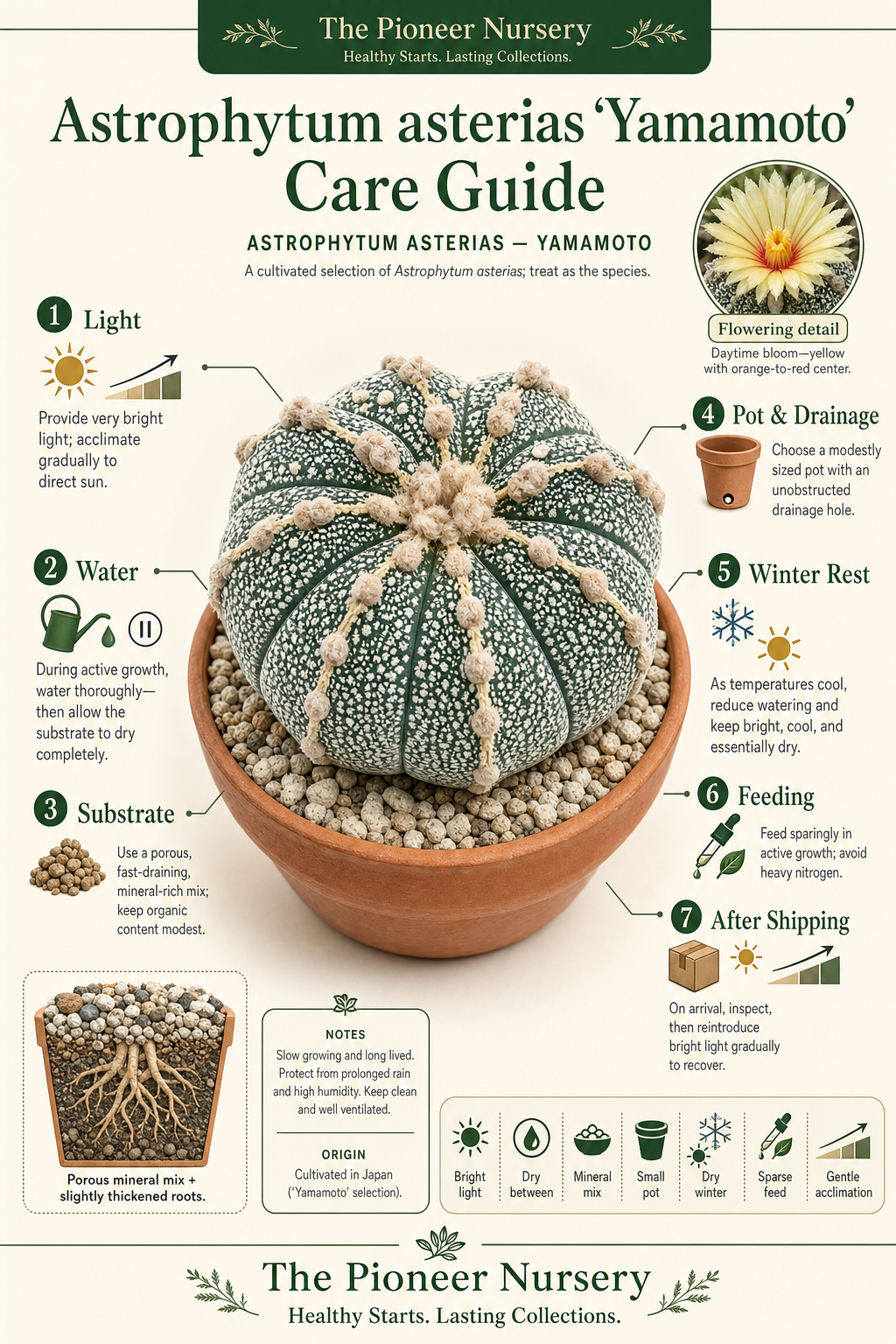
Astrophytum asterias, commonly called star cactus or sand dollar cactus, is a compact species valued for its symmetrical body and distinctive surface patterning. “Yamamoto” is a collector and nursery designation for selected cultivated forms, not a separate species or formally verified botanical variety. Provide very bright light, use a porous mineral-rich substrate, let the soil dry completely between active-season waterings, and keep the plant cool and dry during winter rest.
Quick Care Summary
- Provide very bright light with gradual acclimation to direct sun.
- Use a porous, fast-draining substrate with substantial mineral content.
- Water thoroughly during active growth, then allow the substrate to dry completely.
- Reduce watering as temperatures cool and keep the plant essentially dry in winter.
- Use a modestly sized pot with an unobstructed drainage hole.
- Feed sparingly during active growth and avoid heavy nitrogen.
- Acclimate newly shipped plants gradually to intense light.
- Treat “Yamamoto” as a cultivated selection of Astrophytum asterias, not a separate species.
About the plant
The accepted species name is Astrophytum asterias (Zucc.) Lem. The Yamamoto designation is used for selected cultivated forms that may differ in body shape, symmetry, or white trichome patterning. These differences do not require a separate species-level care routine. The species has a somewhat thickened or slightly tuberous root system, so careful potting and watering are important.
Light
Provide very bright light, including several hours of direct sun after gradual acclimation. Plants arriving from shipping or greenhouse conditions should be introduced to intense light over several days to weeks. In hot climates or behind greenhouse glazing, light afternoon shading and strong ventilation can reduce heat stress and epidermal scorching.
Watering
During active growth, water thoroughly, then allow the substrate to dry completely before watering again. Adjust frequency to temperature, light, pot size, substrate, and root activity rather than following a fixed calendar. Reduce watering as temperatures cool, and keep the plant essentially dry during winter dormancy. Wet roots in cool conditions create a significant rot risk.
Soil and substrate
Use a very porous, fast-draining cactus mix with substantial mineral content, such as pumice, scoria, coarse sand, or decomposed granite, combined with a limited amount of organic material. A mildly acidic, sandy mineral mix is suitable. The substrate should drain rapidly while retaining enough moisture for the roots to rehydrate without staying wet.
Potting and roots
Choose a pot with an unobstructed drainage hole and only modest extra volume around the roots. Some additional depth is useful for the somewhat thickened root system, but an oversized pot can leave unused substrate wet for too long. Repot during active growth when possible. After significant root disturbance, allow damaged roots to dry and recover before cautiously resuming watering.
Temperature and seasonal growth
Keep the plant warm during active growth with good air movement; a practical summer range is approximately 21–35 °C (70–95 °F). Growth slows during the cool, low-light season. Provide a cool, bright, dry winter rest at approximately 4–21 °C (40–70 °F), avoiding prolonged freezing and especially cold, wet substrate. Resume watering gradually when spring temperatures, light, and visible growth activity increase.
Fertilizer
Feed sparingly during active growth with a dilute, balanced or cactus fertilizer. Avoid heavy nitrogen feeding, which can produce soft, swollen growth and increase vulnerability to rot. Do not fertilize during winter dormancy or while roots are recovering from repotting or shipping.
Flowering
Mature plants produce daytime, funnel-shaped yellow flowers, commonly with orange to reddish centers, generally during the warm growing season. Strong light, a dry winter rest, healthy roots, and gradual spring reactivation support flowering.
Propagation
Seed propagation is the standard method for maintaining species-level plants and is generally effective when fresh seed, warmth, light, and a sterile, well-drained medium are provided. Selected Yamamoto plants may not reproduce uniformly from seed. Grafting is used in the trade for speed, difficult specimens, or preservation of selected traits, but it is not required for ordinary cultivation.
Common problems
Root or basal rot is associated with poor drainage, overwatering, or wet conditions during cool weather. Sunscorch and epidermal damage can follow sudden exposure to intense light, especially after shipping or greenhouse production. Monitor for mealybugs, scale, and spider mites. Weak, elongated growth may indicate insufficient light or excessive feeding. Recovery after repotting or root damage can be slow if watering resumes too aggressively.
Shipping and arrival care
Inspect the plant and root collar after arrival. Protect it from prolonged cold, wet packaging, and crushing. Provide bright but initially filtered light, then acclimate gradually to stronger sun. If it arrived bare-root or has suffered root disturbance, avoid immediate heavy watering; damaged roots need time to dry and recover. Use cultivated, documented nursery material and observe applicable trade requirements, as this species is conservation-sensitive and protected in international trade.
Frequently Asked Questions
How often should I water Astrophytum asterias ‘Yamamoto’?
There is no reliable fixed schedule. During active growth, water thoroughly when the substrate is completely dry, adjusting for temperature, light, pot size, substrate, and root activity. Keep it essentially dry during winter rest.
Does Astrophytum asterias ‘Yamamoto’ need direct sun?
It needs very bright light and can receive several hours of direct sun after gradual acclimation. Use light afternoon shading and strong ventilation in hot climates or behind greenhouse glazing.
Why should this cactus be kept drier in winter?
Growth slows during the cool, low-light season, and wet roots in cool conditions create a significant rot risk. Resume watering gradually as spring warmth, light, and growth activity return.
Does ‘Yamamoto’ represent a separate cactus species?
No. It is a collector and nursery designation for selected cultivated forms of Astrophytum asterias. It should not be treated as a separate species, subspecies, or botanical variety.
Can Astrophytum asterias ‘Yamamoto’ be grown from seed?
Yes. Seed propagation is the standard method for species-level plants, but selected Yamamoto traits may not reproduce uniformly from seed. Grafting is also used for selected horticultural purposes.
How should I care for one after shipping?
Inspect the plant and root collar, begin with bright but filtered light, and acclimate gradually. If it arrived bare-root or with damaged roots, avoid immediate heavy watering until the roots have dried and recovered.
Astrophytum asterias ‘Yamamoto’ rewards careful attention to light, drainage, and seasonal moisture. Keep the plant bright and airy, water according to active growth rather than a calendar, and maintain a cool, dry winter rest to help protect its roots.