Setiechinopsis mirabilis Care Guide: Growing the Night-Blooming Cactus
Learn how to grow Setiechinopsis mirabilis, a small Argentine cactus with fragrant white flowers that open after dark. Bright light, fast drainage, and a dry winter rest support healthy growth.
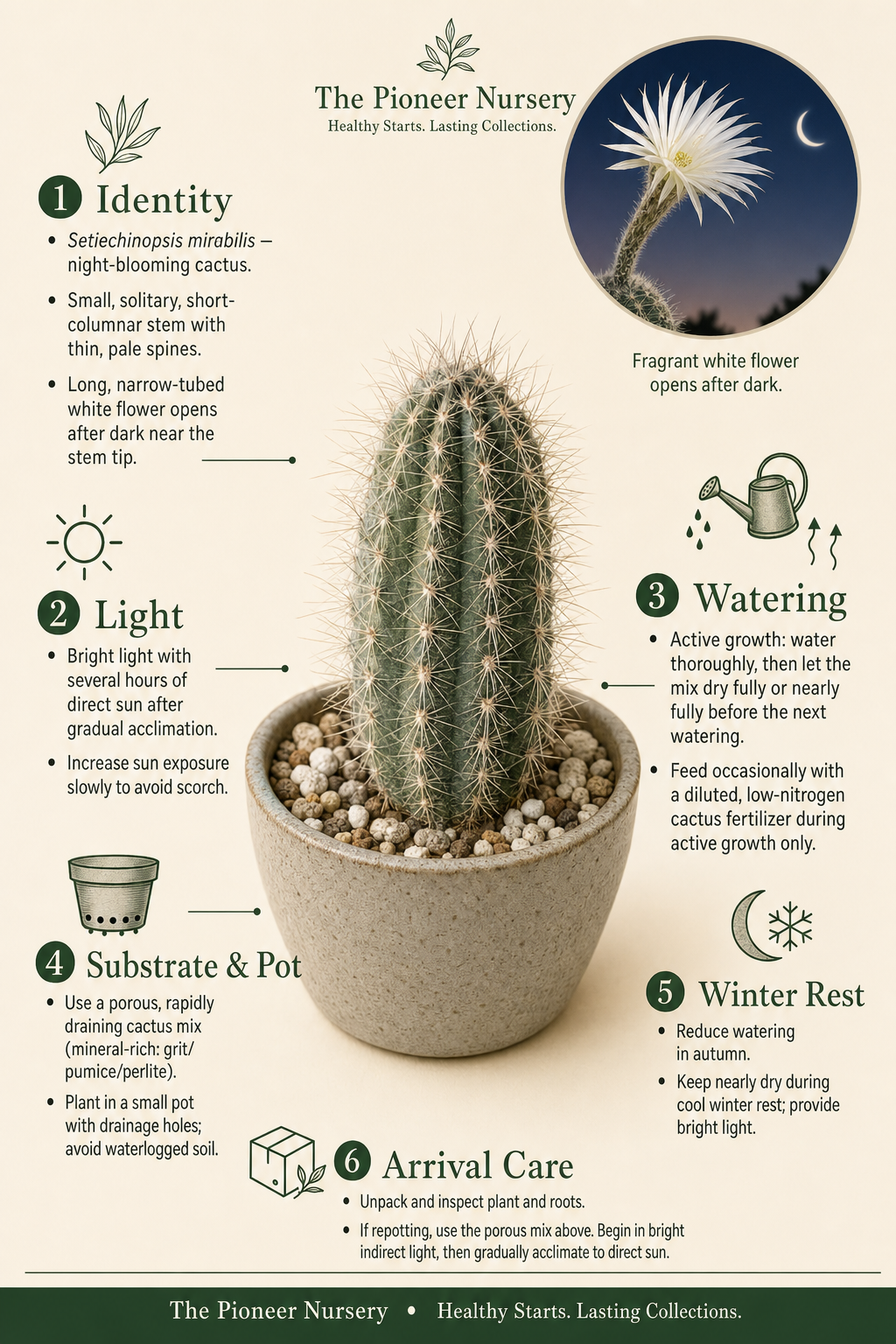
Setiechinopsis mirabilis is a small, solitary, short-columnar cactus from dry regions of Argentina. Often called the night-blooming cactus, it produces narrow, fragrant white flowers near the stem tips that open after dark and usually last until morning. The basic routine is simple: provide bright light, use a fast-draining cactus mix, water during active growth only after the substrate dries, and keep the plant nearly dry during its cool winter rest.
Quick Care Summary
- Bright light with several hours of direct sun after gradual acclimation.
- Use a porous, rapidly draining cactus mix in a small pot with drainage holes.
- Water thoroughly during active growth, then let the substrate dry fully or nearly fully.
- Reduce watering in autumn and keep the plant nearly dry during cool winter rest.
- Feed occasionally with diluted, low-nitrogen cactus fertilizer during active growth only.
About Setiechinopsis mirabilis
Setiechinopsis mirabilis is the accepted botanical name used for this species. Some taxonomic treatments have placed it in Echinopsis, and Echinopsis mirabilis is a documented synonym, but that relationship does not materially change its practical care. The plant remains small, solitary, and short-columnar rather than a taproot-specialist or caudiciform. Its color may range from green-brown or dark brown to purplish, particularly during stress or cool seasonal conditions; color change alone does not necessarily indicate disease.
Light
Provide bright light with several hours of direct sun once the plant is acclimated. Newly shipped plants and specimens grown under protected conditions should be introduced to strong sunlight progressively. In very hot climates, filtered afternoon light or light shade can help reduce sunburn. Inadequate light may cause stretching and weak growth.
Watering
During active growth, water thoroughly and then allow the substrate to dry fully or nearly fully before watering again. As autumn approaches, reduce irrigation substantially. During the cool winter rest, keep the plant nearly dry, providing little or no water unless it shows significant dehydration. After bare-root shipping, repotting, or root disturbance, do not resume heavy watering immediately.
Soil and substrate
Use a porous, rapidly draining cactus substrate with substantial mineral content and good root aeration. The mix should dry efficiently rather than remain wet for extended periods. Dense or moisture-retentive substrates increase the risk of root and stem rot.
Potting and roots
A small container with drainage holes is suitable. Avoid oversized pots that hold excess moisture. Repot only when necessary and handle the roots carefully. If roots are damaged or disturbed, allow them to callus and dry before returning to normal watering.
Temperature and winter rest
Keep the plant warm during active growth and protect it from frost. Growth commonly slows during the cooler, darker season, when a cool, dry winter rest is preferable. The key precaution is to avoid low temperatures together with wet soil.
Seasonal growth and fertilizer
During active growth, use a diluted, low-nitrogen cactus fertilizer occasionally. Do not fertilize during winter rest or while the plant is recovering from shipping, repotting, or root disturbance.
Flowering
The species produces narrow, long-tubed white flowers near the stem tips. They open after dark, are fragrant, and generally last only until morning. Flowering occurs mainly during the warm growing season. Setiechinopsis mirabilis is reported to be self-fertile, so a single healthy plant may produce seed when flowering and fruiting conditions are favorable.
Propagation
Propagation is primarily by seed. Seeds are reported to germinate readily, and plants may flower at a young age under favorable conditions. Allow fruits to mature and dry before collecting seed. Maintaining seed-grown replacements can also be practical because some plants may decline after several years in cultivation, although lifespan varies with conditions.
Shipping and arrival care
Inspect the plant after arrival for mechanical or root damage. Provide bright but indirect or filtered light initially, particularly if it has been shipped bare-root or grown under protection, then acclimate it gradually to direct sun. Avoid immediate heavy watering if roots were disturbed; allow damaged roots to callus and dry first.
Common Problems
- Root or stem rot: Usually associated with poor drainage, frequent irrigation, or cool, wet conditions.
- Sunburn: May occur after abrupt transfer into intense direct sun; acclimate gradually.
- Stretching and weak growth: Often indicates inadequate light.
- Pests: Monitor for mealybugs, scale, and other common cactus pests.
- Decline with age: Some plants may decline after several years in cultivation; maintaining seed-grown replacements is a practical precaution.
- Seasonal color change: Dark brown, green-brown, or purplish coloration can occur under stress or cool conditions and does not automatically indicate disease.
Frequently Asked Questions
How often should I water Setiechinopsis mirabilis?
Water thoroughly during active growth, then wait until the substrate is fully or nearly fully dry before watering again. Reduce watering in autumn and keep the plant nearly dry during cool winter rest.
Does this cactus need direct sun?
It grows well in bright light with several hours of direct sun after gradual acclimation. In very hot climates, filtered afternoon light or light shade may reduce sunburn risk.
How can I tell whether a color change is a problem?
The plant may become dark brown, green-brown, or purplish under stress or cool seasonal conditions. Color change alone does not necessarily indicate disease.
When do the flowers open?
The narrow, fragrant white flowers generally open after dark and last only until morning. Flowering occurs mainly during the warm growing season.
Can one plant produce seed?
The species is reported to be self-fertile. Allow fruits to mature and dry before collecting seed.
How should I care for a shipped plant?
Inspect it for damage, begin with bright but indirect or filtered light, and acclimate it gradually to direct sun. If roots were disturbed, allow them to callus and dry before normal watering resumes.
Setiechinopsis mirabilis rewards a simple routine: strong light, fast drainage, thorough watering during active growth, and a dry cool-season rest. With gradual acclimation after shipping, it can remain a compact, distinctive cactus and may produce fragrant flowers after dark.