Tephrocactus molinensis Care Guide
Learn how to grow Tephrocactus molinensis, a small segmented cactus with fragile joints and irritating glochids. Discover its light, watering, soil, dormancy, potting, and propagation needs.
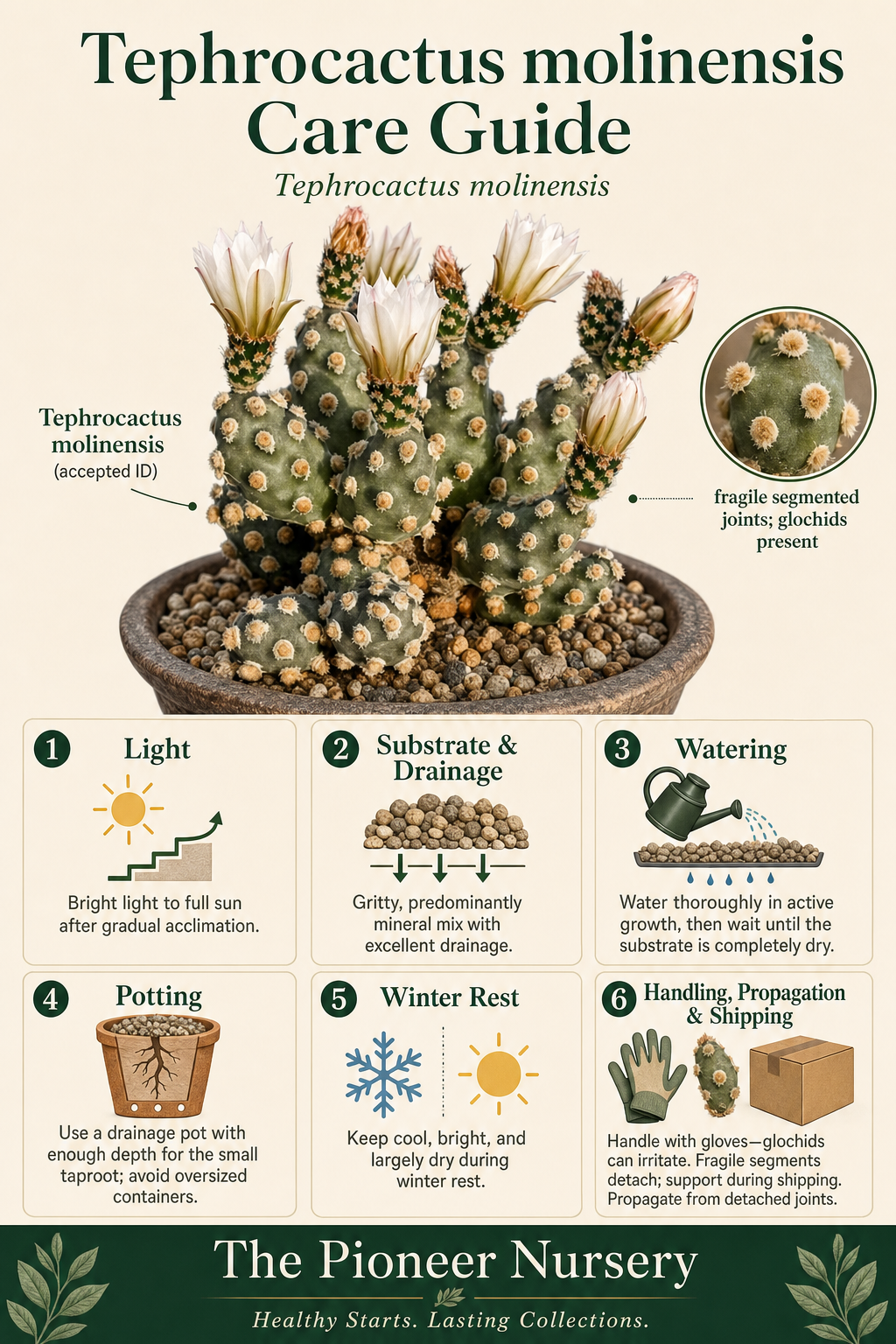
Tephrocactus molinensis is a small, mound-forming opuntioid cactus native to Salta, Argentina. Its globose to ovoid joints may form short upright chains, while prominent glochid tufts give the plant a distinctive appearance and can irritate skin. Successful cultivation depends on strong light, a gritty mineral substrate, careful handling, and a cool, largely dry winter rest. Tephrocactus molinensis is the accepted botanical name; Opuntia molinensis and Maihueniopsis molinensis are documented synonyms.
Quick Care Summary
- Bright light to full sun after gradual acclimation.
- Use a gritty, predominantly mineral substrate with excellent drainage.
- Water thoroughly during active growth, then wait until the substrate is completely dry.
- Keep the plant cool, bright, and largely dry during winter rest.
- Use a drainage pot with enough depth for the small taproot, but avoid oversized containers.
- Handle with gloves because the prominent glochids can be irritating.
About the Plant
Tephrocactus molinensis is a generally spineless, segmented cactus with fragile joints and prominent glochids. In cultivation it can form a low mound or short upright chain of joints. In dry habitat, the plant may remain low and partially retracted. It has a small taproot, so pot depth and careful watering are important.
Light
Provide bright light to full sun once the plant is acclimated. Strong direct light during active growth helps maintain compact, sturdy segments. After shipping or a period in lower light, increase exposure gradually to reduce the risk of sunburn.
Watering
During active growth, water thoroughly so the substrate is fully moistened, then allow excess water to drain completely. Wait until the substrate is completely dry before watering again. Avoid repeated shallow watering and never keep the roots constantly wet. Reduce watering as growth slows, and be especially conservative after repotting or root damage.
Soil and Substrate
Use a very free-draining, gritty cactus mix with good aeration and predominantly mineral ingredients. A sandy, pumice- and grit-based substrate is appropriate. Avoid heavy or moisture-retentive soil, which can keep the small taproot wet for too long.
Potting and Roots
Repot in spring or at the beginning of active growth in a container with drainage holes. Choose enough depth for the small taproot, but avoid oversized pots with large volumes of unused soil, since they dry slowly and increase rot risk. Handle the plant with gloves because its glochids can be irritating, and repot carefully to avoid breaking the fragile joints.
Seasonal Temperature and Dormancy
Give the plant warm growing conditions with strong light during active growth. Growth is strongest in spring and may continue intermittently during warmer seasons. A cool, bright, largely dry winter rest is beneficial; the plant may retract and become noticeably dehydrated during this period. Protect it from freezing temperatures, prolonged cold, and wet soil. If severe collapse develops, water only enough to prevent that condition. Outdoor cultivation requires excellent drainage and protection from prolonged winter rain and freezing conditions.
Fertilizer
Fertilizer is not essential when the plant is grown in a properly prepared substrate. If used, apply a dilute, low-strength cactus or balanced fertilizer once or twice during active spring or summer growth. Do not fertilize during winter dormancy, while the plant is stressed, or soon after repotting.
Flowering
The flowers are reported to be white, sometimes with a greenish throat, and are generally associated with spring or active-season growth. Strong light, mature growth, and a cool, dry winter rest may improve flowering potential.
Propagation
Propagation can be done from detached stem segments or offsets. Allow a detached joint to dry and callus before placing it on or shallowly into a dry, gritty rooting medium. Begin restrained watering only after rooting activity is evident. Seed propagation is also possible, but it is generally slower and less predictable than segment propagation.
Shipping and Arrival Care
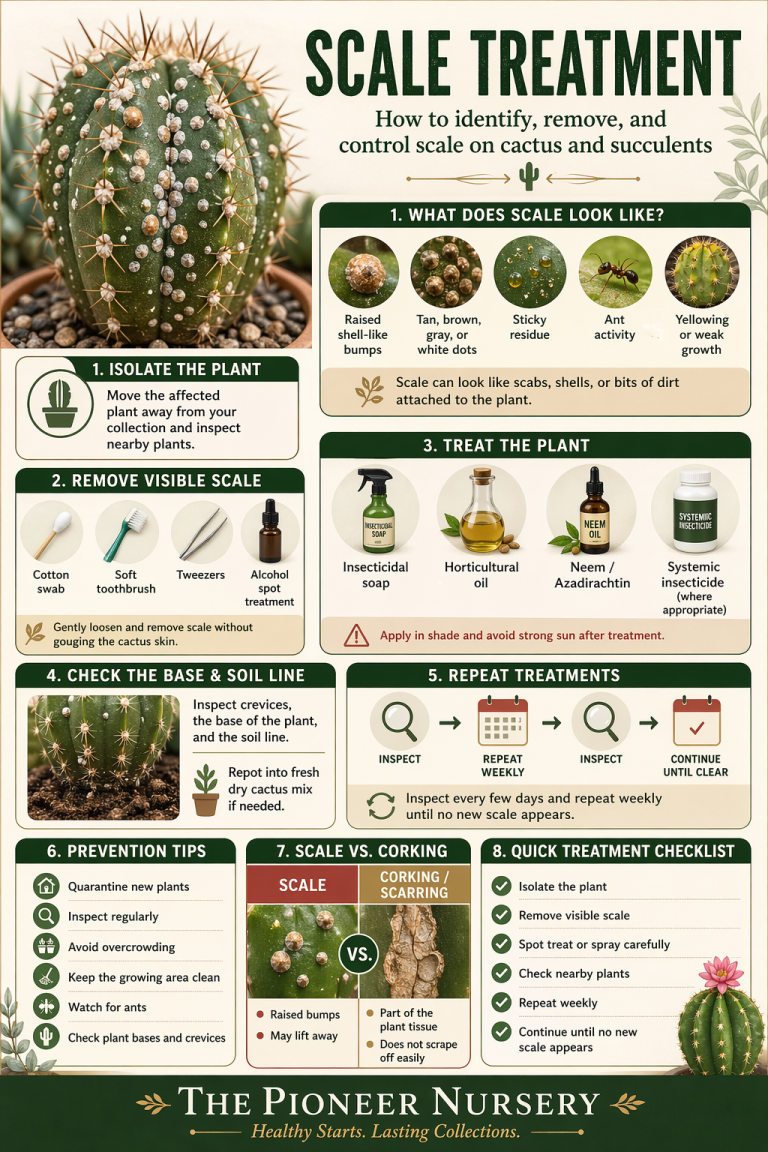
The joints can detach readily during transit. Unpack with gloves, inspect for breaks and root damage, and keep the plant dry while it recovers from handling. Gradually acclimate it to stronger light. Avoid watering immediately after substantial root damage or major bare-root disturbance.
Common Problems
Root or basal rot usually results from moisture-retentive soil, poor drainage, or cold, wet conditions. Sunburn can follow abrupt exposure to intense direct light, while insufficient light may cause etiolation and weak, elongated segments. Joints may detach through handling, shipping, or natural articulation. Mealybugs, scale, and secondary fungal or bacterial problems may occur when cultural conditions are poor.
Frequently Asked Questions
Why are the joints falling off?
The fragile joints can detach from handling, shipping, or natural articulation. A healthy detached joint can be allowed to callus for propagation.
What should I do when it arrives?
Unpack with gloves, check for breaks and root damage, keep the plant dry while it recovers, and acclimate it gradually to stronger light. See the Shipping and Arrival Care section for the full guidance.
How do I propagate it from a joint?
Let a detached joint dry and callus, then place it on or shallowly into dry, gritty rooting medium. Begin restrained watering only after rooting activity is evident.
Does it need a winter dormancy?
A cool, bright, largely dry winter rest is beneficial. Protect the plant from freezing conditions and prolonged winter wet; water only if severe collapse develops.
Tephrocactus molinensis has a compact segmented form and distinctive glochids. Give it strong light, fast-draining mineral soil, thorough wet-dry active-season watering, and a cool, dry winter rest. Careful handling and conservative watering after shipping or repotting are especially important for this small-taprooted cactus.