Astrophytum myriostigma Kikko Care Guide
Learn how to grow Astrophytum myriostigma Kikko with bright light, fast-draining mineral soil, careful watering, and a dry winter rest.
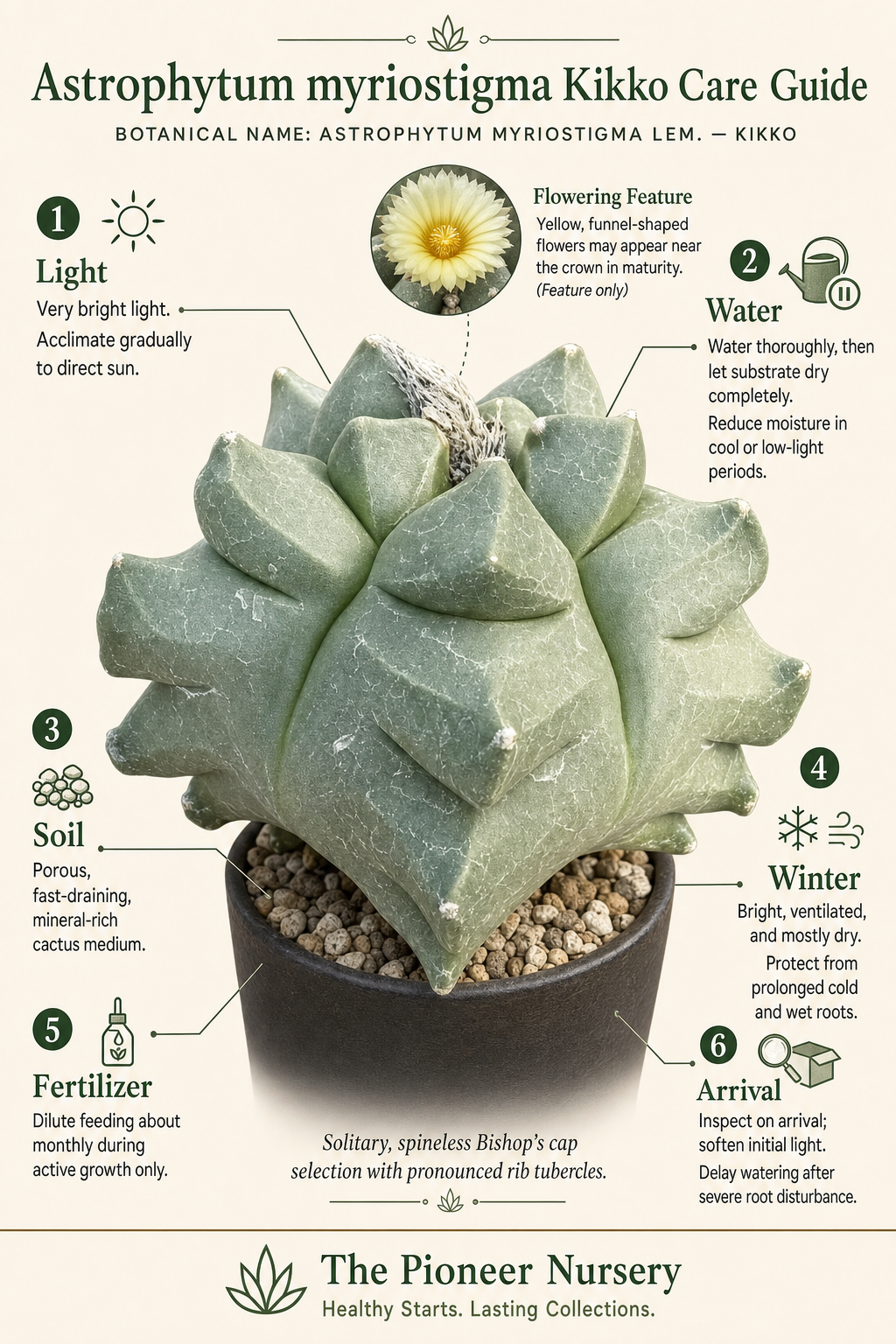
Astrophytum myriostigma Kikko is a spineless Bishop’s cap cactus associated with pronounced, pointed rib tubercles and a tortoise-shell or saw-toothed appearance. Kikko is used as a horticultural selection or cultivar form associated with Astrophytum myriostigma, not a separate species, and the exact clone, lineage, or registration status cannot be determined from the name alone. Successful care centers on very bright light, rapid drainage, thorough drying between waterings, and substantially reduced moisture during cool winter conditions.
Quick Care Summary
- Provide very bright light with gradual acclimation to direct sun.
- Use a porous, fast-draining substrate with substantial mineral content.
- Water thoroughly only after the substrate has dried completely.
- Reduce watering substantially during cool or low-light conditions.
- Protect the plant from prolonged cold and wet roots.
- Use dilute fertilizer approximately monthly during active growth only.
- Keep the plant bright and mostly dry during cool winter dormancy.
About Astrophytum myriostigma Kikko
Astrophytum myriostigma is a usually five-ribbed, solitary cactus from northeastern and central Mexico. It is generally spineless, although rib number and form can vary. Kikko selections emphasize irregular or pointed rib tubercles, creating their distinctive textured appearance. Use the species-level care described here while remembering that Kikko does not by itself confirm a particular clone, hybrid parentage, or additional cultivar trait.
Light
Provide very bright light with several hours of direct sun, or strong filtered greenhouse light. Established plants can tolerate full sun, while light shade during the hottest periods may help in intensely bright climates. If the plant has been grown in lower light or arrives boxed or shaded, increase direct exposure gradually to reduce the risk of sunscald.
Watering
During active growth, water thoroughly only after the substrate has dried completely, and allow excess water to drain freely. Do not use a fixed calendar: watering frequency depends on temperature, light, pot size, substrate, and airflow. Reduce watering substantially in cool or low-light conditions, and avoid keeping the root zone continuously moist. Cold, wet conditions increase the risk of root rot and other damage.
Soil and substrate
Use a porous, fast-draining cactus substrate with substantial mineral content. Pumice, lava, coarse sand, or grit can be combined with a modest amount of organic material. A mineral, aerated medium suits this cactus’s association with rocky, calcareous soils and generally neutral to alkaline conditions.
Potting and roots
Choose a container with an unobstructed drainage hole and only slightly more space than the root system requires. Standard cactus pot depth is suitable; this plant is not treated as a specialized taproot or caudex plant. Repot during active growth or before the main growing season, handle the roots carefully, and keep the plant dry for a short recovery period after major root disturbance before resuming cautious watering.
Temperature and winter rest
Protect Astrophytum myriostigma Kikko from frost and prolonged cold, wet conditions. During the cooler, darker part of the year, growth commonly slows. Keep the plant in bright light with good ventilation and a mostly dry substrate. Resume more regular watering only when temperatures and light support active growth. Although short-term cold tolerance has been reported in suitable dry conditions, container plants and wet roots should be protected more cautiously.
Fertilizer
Feed only during active growth. Use a dilute, balanced or cactus-formulated fertilizer approximately monthly while the plant is growing. Avoid routine fertilization during cool winter dormancy.
Flowering
Mature plants produce large, funnel-shaped yellow to pale-yellow flowers, generally during the warmer growing season. Strong light, a pronounced dry winter rest, and sufficient maturity support flowering.
Propagation
Propagation is primarily by seed. Astrophytum myriostigma is normally solitary and does not reliably produce offsets. Seed-grown plants may vary considerably. Named Kikko selections are ordinarily maintained through controlled seed lines or specialist propagation, but the exact method depends on the particular nursery line.
Common problems
Root rot can result from waterlogged substrate, poor drainage, or watering during cool conditions. Sunscald commonly follows an abrupt move from shade, indoor conditions, or shipping into strong direct sun. Mealybugs, scale, and spider mites may affect stressed or poorly ventilated plants. Persistent moisture, physical injury, or cold-and-wet conditions can also lead to fungal or bacterial damage. Because Kikko is used for selections in other Astrophytum species as well, verify the species before making more specific cultivar claims.
Shipping and arrival care
Inspect the plant after arrival for mechanical damage, pests, and root problems. Provide bright but initially softened light, then increase exposure gradually. Keep the plant dry after severe root damage, repotting, or prolonged cold shipping. Resume watering only after the plant has stabilized and the substrate can dry rapidly; shipped plants do not all require identical recovery.
Frequently Asked Questions
How often should I water Astrophytum myriostigma Kikko?
During active growth, water thoroughly after the substrate has dried completely, then let excess water drain. Adjust frequency to light, temperature, pot size, substrate, and airflow rather than following a fixed schedule.
Can Astrophytum myriostigma Kikko grow in full sun?
Established plants can tolerate full sun, but plants moving from lower light should be acclimated gradually. Strong filtered light or several hours of direct sun are suitable conditions.
Should I water it during winter?
Growth commonly slows in the cooler, darker part of the year. Keep the plant bright, ventilated, and mostly dry, and resume more regular watering only when conditions support active growth.
What makes Kikko different from regular Astrophytum myriostigma?
Kikko is a horticultural selection characterized by pronounced, pointed rib tubercles and a tortoise-shell or saw-toothed appearance. It is not a separate species, and the name alone does not establish a specific clone or hybrid background.
How is this cactus propagated?
Propagation is primarily by seed. The species is normally solitary and does not reliably produce offsets, while seed-grown plants can show considerable variation.
How should I care for it after shipping?
Inspect it for damage, pests, and root problems. Start it in bright but softened light and acclimate gradually. Delay watering after severe root damage, repotting, or prolonged cold shipping until the plant has stabilized.
Astrophytum myriostigma Kikko rewards a simple, controlled routine: strong light, a mineral and fast-draining substrate, complete drying between waterings, and a bright, mostly dry winter rest. Pay particular attention to gradual light acclimation and to avoiding cold, wet roots.