Euphorbia pachypodioides Care Guide
Learn how to grow Euphorbia pachypodioides, a slow-growing, frost-tender Madagascan succulent with a swollen stem and seasonal dormancy.
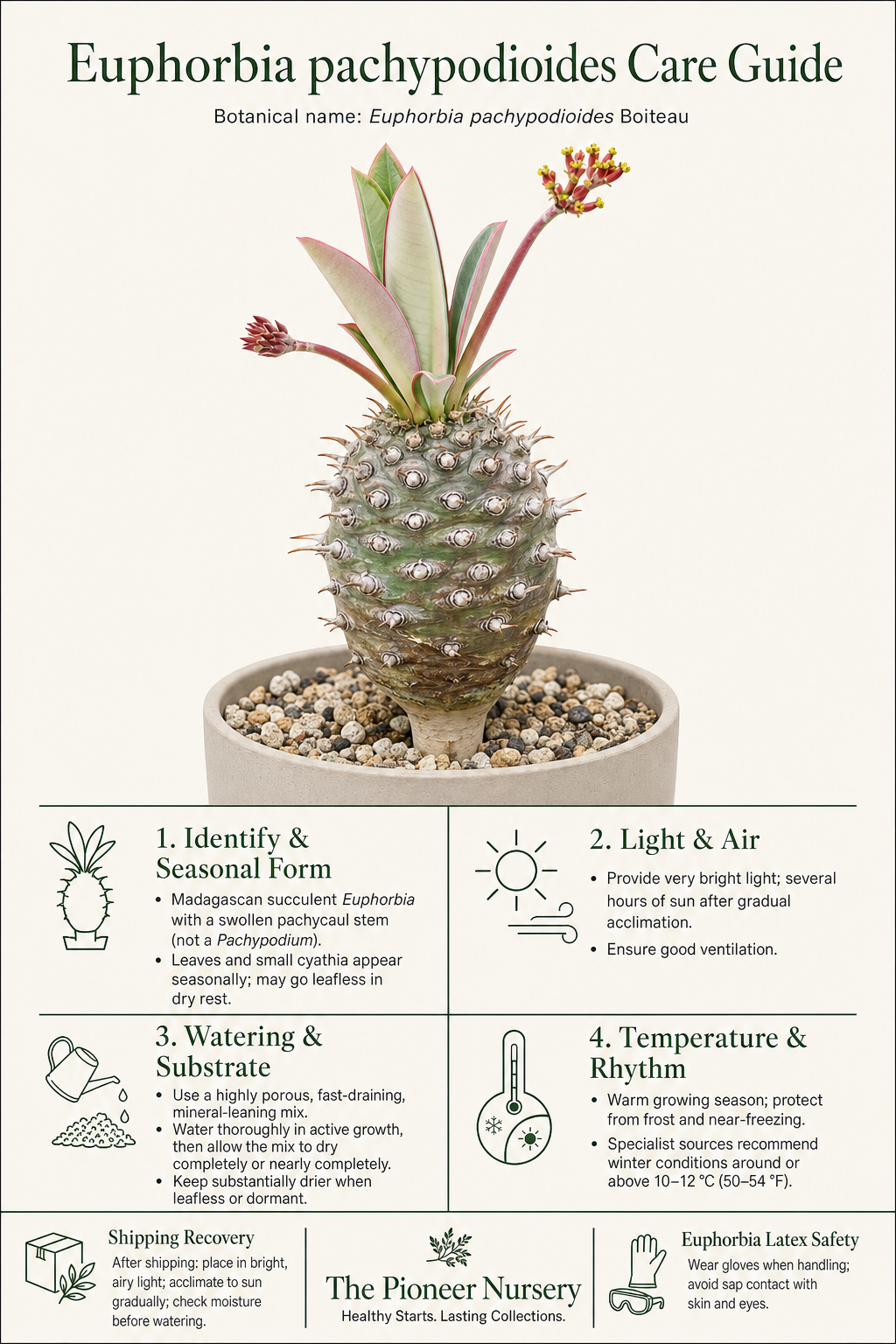
Euphorbia pachypodioides is a rare Madagascan succulent subshrub with a swollen, Pachypodium-like stem and a seasonal growth cycle. It is slow growing and frost tender, so successful cultivation depends on very bright light, excellent drainage, warm active growth, and a substantially drier rest period when the plant is leafless. The name refers only to its superficial resemblance to Pachypodium; this plant is an Euphorbia.
Quick Care Summary
- Provide very bright light with good ventilation.
- Use a highly porous, fast-draining, mineral-leaning substrate.
- Water thoroughly during active growth, then allow the substrate to dry completely or nearly completely.
- Keep the plant substantially drier when leafless or dormant.
- Protect it from frost and temperatures near freezing; specialist sources recommend winter conditions around or above 10–12 °C (50–54 °F).
- Wear gloves when handling the plant.
About the Plant
This species is endemic to northwestern Madagascar, particularly the Tsingy de l'Ankarana region. It is highly succulent and seasonally deciduous, so it may lose its leaves during the dry or cool season. Small reddish cyathia develop in clusters near the apex or upper stem during the active seasonal cycle. Choose plants from documented cultivated propagation where possible.
Light
Provide very bright light with good ventilation. Established plants can tolerate full sun, but acclimate gradually after shipping or time in shade to reduce scorch risk. In very intense summer conditions, light midday or afternoon shading may be useful.
Watering
During active growth, water thoroughly and allow the substrate to dry completely or nearly completely before watering again. Reduce watering substantially when the plant is leafless or dormant. Avoid wet soil during cool conditions, because crown and root rot are significant risks. Adjust watering to warmth, light, ventilation, substrate drying, and active growth.
Soil and Substrate
Use a very open, fast-draining, mineral-leaning substrate with excellent aeration. Pumice, coarse sand, grit, or other porous mineral components should form the main portion, with a smaller organic fraction. The goal is dependable drying rather than moisture retention.
Potting and Roots
Choose a container with ample drainage and avoid oversized pots that stay wet for extended periods. Repot during active growth or in spring when possible. Because this species grows slowly, frequent repotting is usually unnecessary. Use a standard well-draining container rather than choosing an unusually deep pot for an unconfirmed root structure.
Temperature and Dormancy
Treat Euphorbia pachypodioides as frost tender. Keep it warm during active growth and protect it from temperatures near freezing. Specialist cultivation guidance recommends winter conditions around or above 10–12 °C (50–54 °F), with drier conditions. Warmer conditions are safer when watering. Leaf drop during the dry or cool season can indicate seasonal dormancy. Resume more regular watering when warm conditions and renewed growth are evident.
Fertilizer
Keep feeding conservative and prioritize bright light, warmth, drainage, and seasonal watering. The available guidance does not support a specific fertilizer formula or schedule.
Flowering
The plant produces small reddish cyathia in clusters near the apex or upper portion of the stem. Flowering is associated with the active seasonal cycle and may occur around the transition from dormancy into growth.
Propagation
Propagation is primarily by seed. Specialist references also report stem cuttings, grafting, and leaf cuttings for some Madagascan Euphorbia. These methods may not preserve the characteristic single-stem form. For cuttings, allow the cut surfaces to dry and callus before planting. Keep newly set cuttings restrained from excess moisture. Seed is preferable when maintaining typical species form and supporting conservation-oriented production.
Common Problems and Safety
Wet soil during cool, dormant, or poorly ventilated conditions can cause crown or root rot. Abrupt movement into strong direct sun can cause scorch. Seasonal leaf drop is normal for this deciduous species, while slow growth may indicate insufficient warmth or light. Milky Euphorbia latex can irritate the skin and eyes and presents a poisoning hazard. Wear gloves and avoid contact.
Shipping and Arrival Care
Protect the plant from cold transit and prolonged moisture. After bare-root shipping or significant root disturbance, pot it into a dry, highly porous medium and provide bright but initially filtered light. Delay heavy watering until acclimation and renewed root or shoot activity are evident.
Frequently Asked Questions
How often should I water Euphorbia pachypodioides?
During active growth, water thoroughly and wait until the substrate is completely or nearly completely dry. Water much less when the plant is leafless or dormant, especially in cool conditions.
Does Euphorbia pachypodioides need full sun?
Very bright light is important, and established plants can tolerate full sun. Acclimate gradually after shade or shipping.
Why has my plant lost its leaves?
This species is typically deciduous or seasonally dormant. Leaf drop can occur during the dry or cool season and does not automatically mean the plant has died. Keep it much drier until warm conditions and renewed growth appear.
What soil should I use?
Use a very open, fast-draining, mineral-leaning mix based on porous components such as pumice, coarse sand, or grit, with only a smaller organic fraction.
Can Euphorbia pachypodioides be propagated from cuttings?
Specialist references report stem cuttings and grafting, with leaf cuttings reported for some Madagascan Euphorbia. These methods may not preserve the typical single-stem form; seed is preferred for characteristic species form.
Is Euphorbia pachypodioides safe to handle?
Its milky latex can irritate the skin and eyes and presents a poisoning hazard. Wear gloves and avoid contact when handling or cutting the plant.
Euphorbia pachypodioides rewards patient growers who can provide bright light, warmth, sharp drainage, and a genuinely dry dormant period. Watch the plant's seasonal signals rather than following a rigid watering calendar, and handle its latex with appropriate care.