Euphorbia ‘Sotetsu Kirin’ Care Guide
Learn how to grow Euphorbia ‘Sotetsu Kirin’ with practical guidance on bright light, sharp drainage, careful watering, warmth, seasonal dormancy, and safe handling.
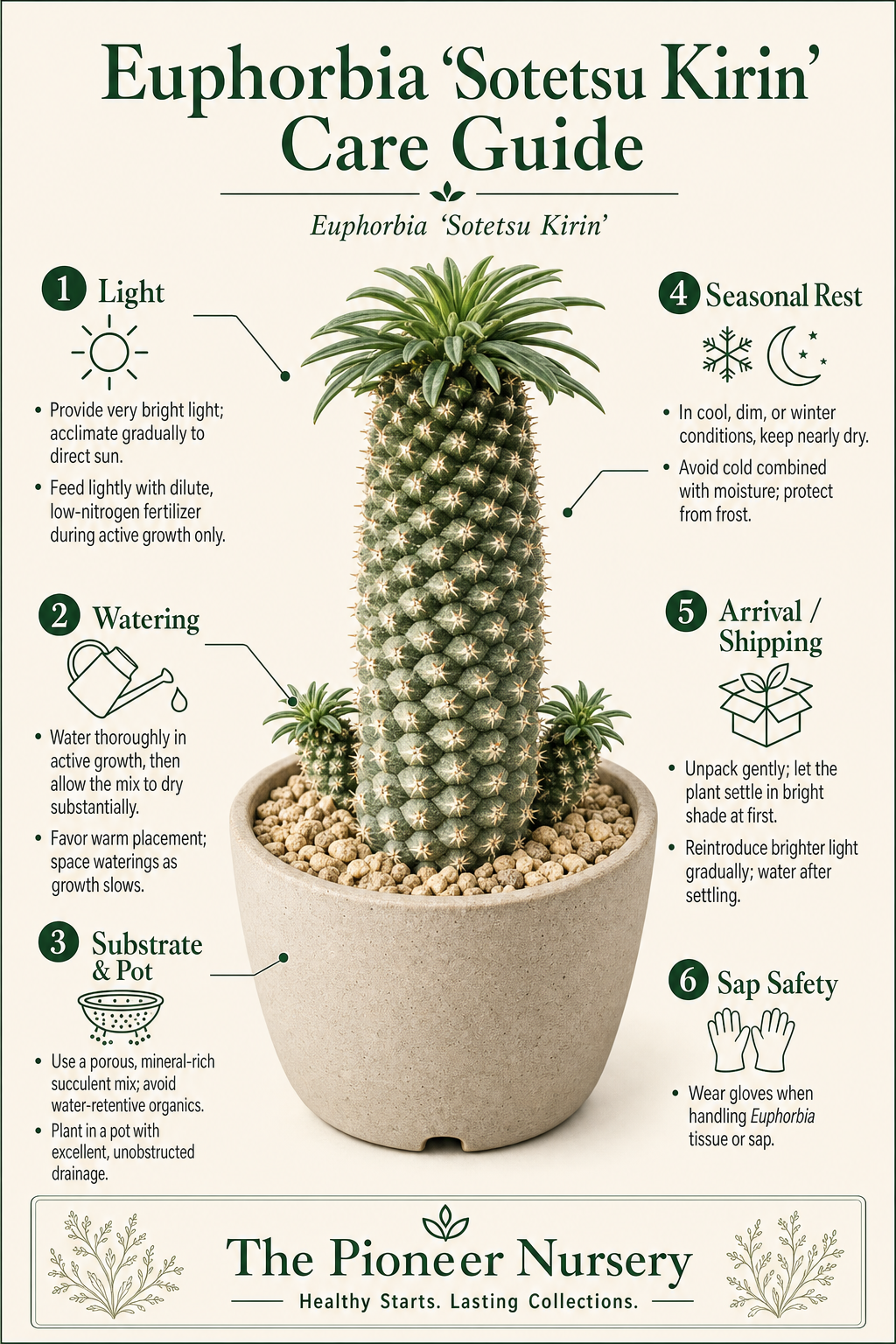
Euphorbia ‘Sotetsu Kirin’ is a horticultural Euphorbia hybrid or selected form associated with E. bupleurifolia and E. mammillaris. Because its exact parentage and formal cultivar status remain unconfirmed, this guide uses documented E. bupleurifolia care and general succulent Euphorbia practice. Give it bright light, porous soil, warmth, and thorough drying between waterings, especially during cool or dormant periods.
Quick Care Summary
- Provide very bright light and acclimate gradually to direct sun.
- Use a porous, mineral-rich substrate and a pot with excellent drainage.
- Water thoroughly during active growth, then allow the substrate to dry substantially.
- Keep nearly dry during cool, dark, or dormant periods.
- Protect the plant from frost and cold, wet conditions.
- Feed lightly with dilute, low-nitrogen fertilizer during active growth only.
- Wear gloves when handling Euphorbia tissue or sap.
About Euphorbia ‘Sotetsu Kirin’
‘Sotetsu Kirin’ is a recognized horticultural or collector name for a cultivated Euphorbia hybrid or selection. It is not an accepted botanical species, and reported parentage has not been authoritatively confirmed. Care should therefore focus on its observed succulent form and conservative Euphorbia requirements.
Light
Provide very bright light with several hours of gentle direct sun after acclimation. Increase exposure gradually after shipping or indoor growing to reduce sunburn. In hot climates, use bright filtered light during intense reflected afternoon heat. Good light helps the plant maintain compact growth.
Watering
Water thoroughly during active growth, then allow the substrate to dry substantially before watering again. Reduce watering sharply during cool, dark, or dormant periods, keeping the plant nearly dry in cold conditions. Constantly wet soil, especially when cold, can lead to rot.
Soil and Substrate
Use a porous, sharply draining succulent mix with a substantial mineral portion such as pumice, scoria, coarse sand, or similar aggregate, plus a modest amount of organic potting material. The mix should retain some moisture during active growth without becoming compacted or waterlogged.
Potting and Roots
Use a container with an unobstructed drainage hole and only modestly more room than the root system needs. Avoid oversized pots that stay wet. Handle the swollen stem and roots carefully, avoid unnecessary disturbance, and do not bury the stem deeply. Choose a pot deep enough to support the plant and maintain stable drainage, although its exact root structure has not been independently documented.
Temperature and Ventilation
Keep the plant warm during active growth and protect it from frost, prolonged near-freezing temperatures, and cold wet conditions. In temperate climates, a bright, ventilated greenhouse, conservatory, or warm indoor position is appropriate. No reliable cultivar-specific minimum temperature has been established, so use a conservative frost-free approach.
Seasonal Growth and Dormancy
Growth may slow or pause during cool, short-day, or low-light conditions. Keep the plant bright and ventilated during dormancy, water only minimally, and avoid wet soil in cold conditions. Resume more regular watering when warmth and active growth return. Leaf loss may occur during dormancy or environmental transition.
Fertilizer
During active growth, apply a dilute, low-nitrogen cactus or succulent fertilizer occasionally, only to already-moist soil. Avoid heavy feeding, particularly with high-nitrogen products. Stop or greatly reduce fertilizer during dormancy.
Flowering
Mature plants may produce Euphorbia cyathia near the growing apex, but flowering age, timing, color, and fertility have not been verified specifically for ‘Sotetsu Kirin’. A named hybrid may flower without producing viable seed, and seedlings would not necessarily reproduce the selected form.
Propagation
If suitable offsets or branches develop, vegetative propagation is preferred for maintaining the named form. Use clean tools, allow wounds to callus fully, and root cuttings in a dry, porous medium with very restrained initial watering. Seed production may be limited by fertility, parent compatibility, or hybrid sterility, and seedlings may differ from the parent.
Shipping and Arrival Care
Receive and ship the plant warm and dry whenever possible. Protect it from freezing temperatures, prolonged rain, and sealed humid packaging. After arrival, inspect the stem and roots, provide bright but initially moderated light, and allow disturbed or damaged roots to dry before watering. After major root disturbance, wait to water until the plant has acclimated and the substrate can dry promptly.
Safety
All Euphorbia parts may be harmful if eaten, and the milky sap can irritate skin and eyes. Wear protective gloves when repotting, pruning, or handling damaged tissue, and avoid touching your eyes.
Common Problems
- Stem or root rot: usually associated with overwatering, poor drainage, or cold wet conditions; let the substrate dry substantially and review drainage.
- Sunburn: may follow an abrupt move into strong sun; increase exposure gradually.
- Weak, elongated growth: indicates insufficient light; provide a brighter position.
- Mealybugs or scale: inspect protected plants regularly and address infestations promptly.
- Leaf loss: may accompany dormancy or environmental transition; check that cold, wet soil or rot is not also present.
- Trade-name confusion: plants sold as ‘Sotetsu Kirin’ may vary because the horticultural identity is not formally standardized.
Frequently Asked Questions
How should I acclimate a newly shipped plant?
Inspect the stem and roots, place it in bright but initially moderated light, and protect it from cold, rain, and sealed humid packaging. If roots were disturbed or damaged, let them dry before watering and wait until the plant has acclimated.
How can I tell whether watering conditions are appropriate?
During active growth, water thoroughly and then wait for substantial drying. In cool, dark, or dormant conditions, water much less and keep the plant nearly dry. Cold, constantly wet soil is a warning sign for rot risk.
Why is my plant losing leaves?
Leaf loss may occur during dormancy or environmental transition. Also check for cold, wet soil or signs of rot, since those conditions require correction.
Can I preserve the named ‘Sotetsu Kirin’ form from seed?
Not reliably. Fertility, parent compatibility, or hybrid sterility may limit seed production, and seedlings may differ from the parent. Vegetative propagation is preferred when suitable offsets or branches are available.
Can this plant take direct sun?
Yes, after gradual acclimation it can receive several hours of gentle direct sun. Use bright filtered light during intense reflected afternoon heat.
Euphorbia ‘Sotetsu Kirin’ responds well to a conservative routine: bright light, fast drainage, warmth, and much less water when growth slows. Watch how quickly its substrate dries and adjust watering to its light and temperature conditions.