Pachyphytum Care Guide
Learn how to grow Pachyphytum with bright acclimated light, porous soil, careful watering, good airflow, and gentle handling of its delicate farina-covered leaves.
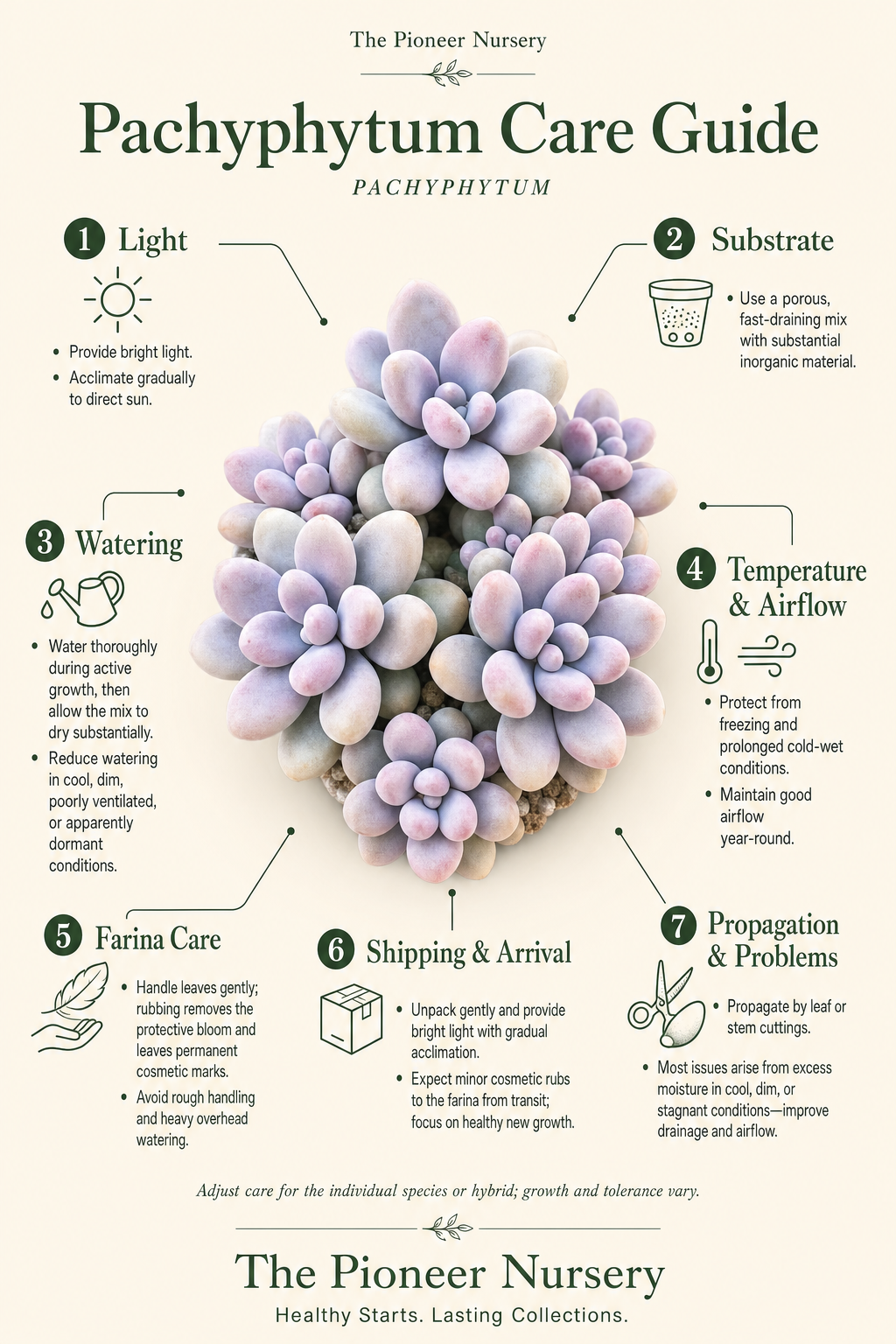
Pachyphytum is a genus of succulent plants in the Crassulaceae family, valued for highly succulent leaves that may carry a natural waxy coating called farina. Although shared care principles apply across the genus, species and hybrids differ in sun tolerance, growth timing, cold tolerance, root structure, and flowering behavior. The safest approach is bright but gradually acclimated light, fast-draining soil, thorough watering followed by substantial drying, and protection from freezing or prolonged cold, wet conditions.
Quick Care Summary
- Provide bright light with gradual acclimation to direct sun.
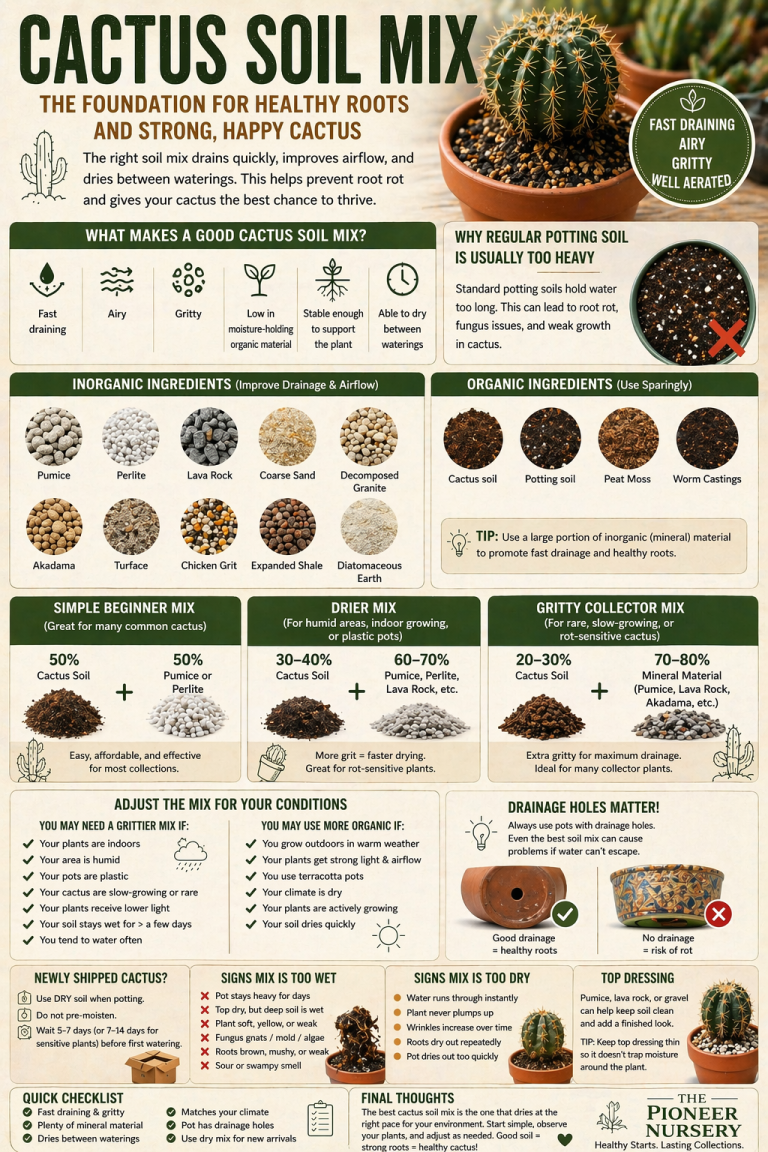
- Use porous, fast-draining substrate with substantial inorganic material.
- Water thoroughly during active growth, then allow the mix to dry substantially.
- Reduce watering in cool, dim, poorly ventilated, or apparently dormant conditions.
- Protect plants from freezing and prolonged cold, wet conditions.
- Handle farina-covered leaves gently because rubbing can cause permanent cosmetic scarring.
- Adjust care for the individual species or hybrid, since growth and tolerance vary.
About Pachyphytum
Pachyphytum is a valid botanical genus associated primarily with Mexico and includes plants from varied elevations and habitats. That diversity means no single species-level care schedule should be applied to every plant. Some plants sold under Pachyphytum names may be hybrids involving Echeveria or Graptopetalum, including Pachyveria and other intergeneric hybrids, so growth, flowering, and environmental tolerance may differ.
Light
Provide bright light with good air movement. Many Pachyphytum grow well with several hours of gentle direct sun, such as morning or late-afternoon exposure. Acclimate gradually after indoor growing or shipping, because sudden intense midday sun can cause bleaching or scorch. Indoors, use a bright south-, east-, or west-facing window or a suitable grow light. Exact sun tolerance varies by species, color, provenance, and acclimation.
Watering
Water thoroughly during active growth, then allow the substrate to dry substantially before watering again. Do not keep the roots continuously damp. Extend the drying period and use less water when conditions are cool, dim, or poorly ventilated. There is no reliable universal watering schedule; container size, substrate, temperature, light, airflow, and species all affect drying time.
Soil and substrate
Use a porous, fast-draining succulent substrate containing substantial inorganic material such as pumice, perlite, expanded shale, or coarse grit. The mix should allow roots to hydrate after watering without remaining wet. Avoid dense, poorly aerated potting soil, which increases the risk of root or stem rot.
Potting and roots
Choose a container with a drainage hole and size it to the root system rather than using a substantially oversized pot. Repot when the mix has degraded or the plant has outgrown its container. Pachyphytum is not universally characterized by an enlarged taproot or caudex, although individual species may differ in root structure and depth. Handle leaves carefully: farina rubs away easily, and damaged leaves may scar permanently.
Temperature and airflow
Protect Pachyphytum from freezing and prolonged cold, wet conditions. These plants are generally best treated as frost-tender or frost-sensitive in cultivation. Good ventilation is especially important when temperatures are cool or watering has recently occurred. Cold tolerance varies by species and provenance, so a brief cool period tolerated by one plant should not be treated as a universal hardiness limit.
Seasonal growth and dormancy
The genus does not have one uniform dormancy pattern. Growth may slow during cool, dark winter conditions or periods of extreme heat. Reduce watering whenever temperatures, light, or airflow are unfavorable, while avoiding prolonged wetness during apparent rest. Adjust care for the individual species, hybrid, climate, and growing environment.
Fertilizer
During active growth, use a dilute, balanced fertilizer or a low-nitrogen succulent fertilizer at modest intervals. Do not fertilize drought-stressed, recently repotted, dormant, or cold-stressed plants. Excess nitrogen can encourage weak, overly green growth and reduce compact form.
Flowering
Mature Pachyphytum commonly produce seasonal flower stalks, but stalk length, flower color, flowering period, and frequency vary considerably among species and cultivated hybrids. Strong light, adequate seasonal growth, and avoiding chronic overwatering support flowering, but there is no single genus-wide flowering schedule.
Propagation
Propagation may be possible from healthy leaves, stem cuttings, offsets when produced, and seed. Intact leaves can sometimes form roots and new rosettes, but success varies with species, leaf maturity, season, and hybrid parentage. Allow cut surfaces to dry and callus before placing cuttings in a lightly moist or initially dry, porous medium. Avoid keeping propagation material constantly wet.
Shipping and arrival care
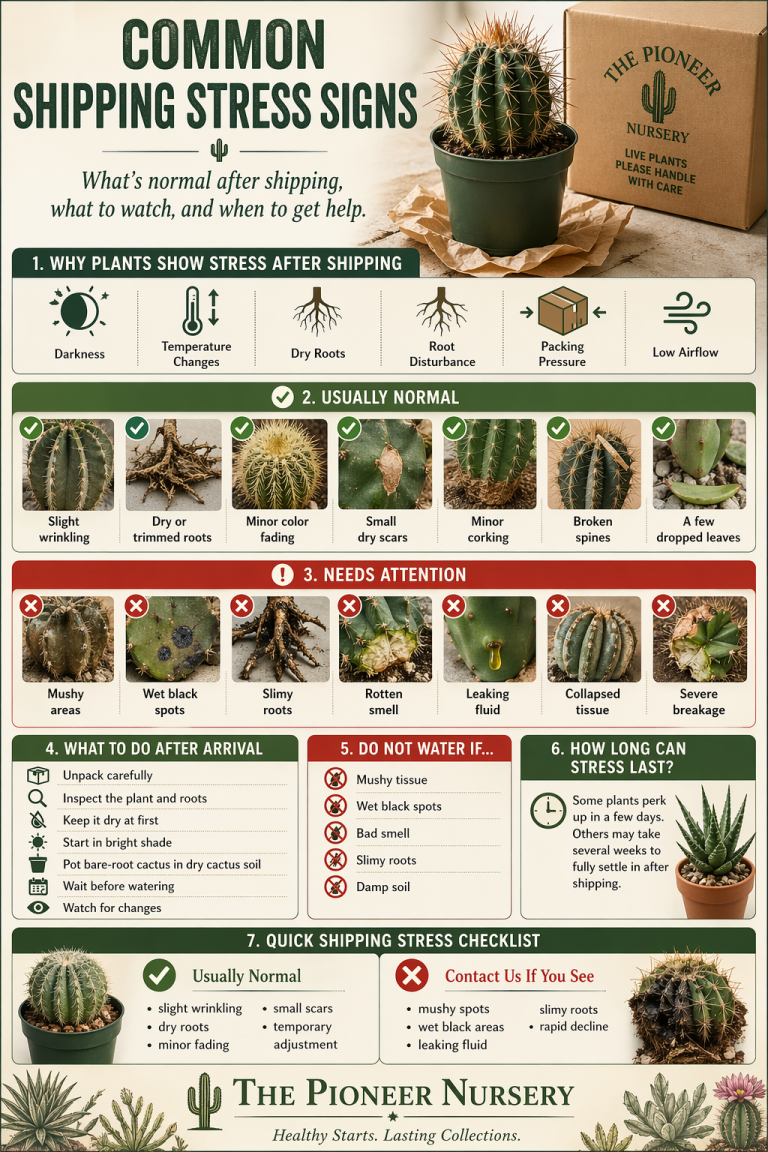
Leaves and stems can be brittle, and farina is easily rubbed away during handling. After arrival, inspect the plant for damage or rot. For bare-root or recently shipped plants, allow disturbed roots or broken surfaces to dry, then reintroduce water and strong light gradually. Avoid immediate heavy watering after substantial root disturbance, particularly when temperatures are cool or ventilation is poor.
Common Problems
- Root or stem rot: commonly associated with dense soil, poor drainage, insufficient drying, or cool wet conditions.
- Stretching and weak stems: usually linked to inadequate light.
- Sunburn or bleaching: can follow sudden exposure to intense direct sun.
- Mealybugs and other sap-feeding pests: monitor sheltered greenhouse or indoor plants.
- Farina loss and scarring: caused by touching, abrasion, overhead water, or rough shipping.
- Leaf drop or failed rooting: may follow damaged leaves, excessive moisture, or unsuitable propagation conditions.
Frequently Asked Questions
How often should I water Pachyphytum?
Do not use a fixed calendar. Water thoroughly during active growth, then wait until the substrate has dried substantially. Allow more drying and use less water in cool, dim, or poorly ventilated conditions.
Can Pachyphytum grow in full sun?
Many plants tolerate several hours of gentle direct sun, but acclimate gradually. Sudden intense midday sun can cause bleaching or scorch, and exact tolerance varies among species, hybrids, provenance, and prior growing conditions.
Does every Pachyphytum have the same dormancy period?
No. Growth may slow during cool, dark winter conditions or extreme heat, but the genus has no single uniform dormancy pattern. Keep plants drier whenever conditions are unfavorable.
Why has the powdery coating disappeared from the leaves?
The natural farina is easily removed by touching, abrasion, overhead water, or shipping. Lost farina may not return evenly, and damaged leaves can scar permanently.
Can Pachyphytum be grown from leaves?
Healthy leaves can sometimes produce roots and new rosettes, but success varies with species, leaf maturity, season, and hybrid parentage. Keep propagation material from remaining constantly wet and allow cut surfaces to callus.
What should I do when a Pachyphytum arrives by mail?
Inspect it for damage or rot, acclimate it gradually to stronger light, and allow disturbed roots or broken surfaces to dry. Avoid immediate heavy watering after substantial root disturbance, especially in cool or poorly ventilated conditions.
Pachyphytum rewards a measured approach: bright acclimated light, airy soil, thorough watering followed by substantial drying, and careful handling. Because species and hybrids vary, observe how your individual plant responds and adjust watering, light, and seasonal care to its conditions.