Haworthia truncata Care Guide
Learn how to grow Haworthia truncata, the window-leaved “horse’s teeth” haworthia, with practical guidance on light, watering, soil, winter rest, repotting, and propagation.
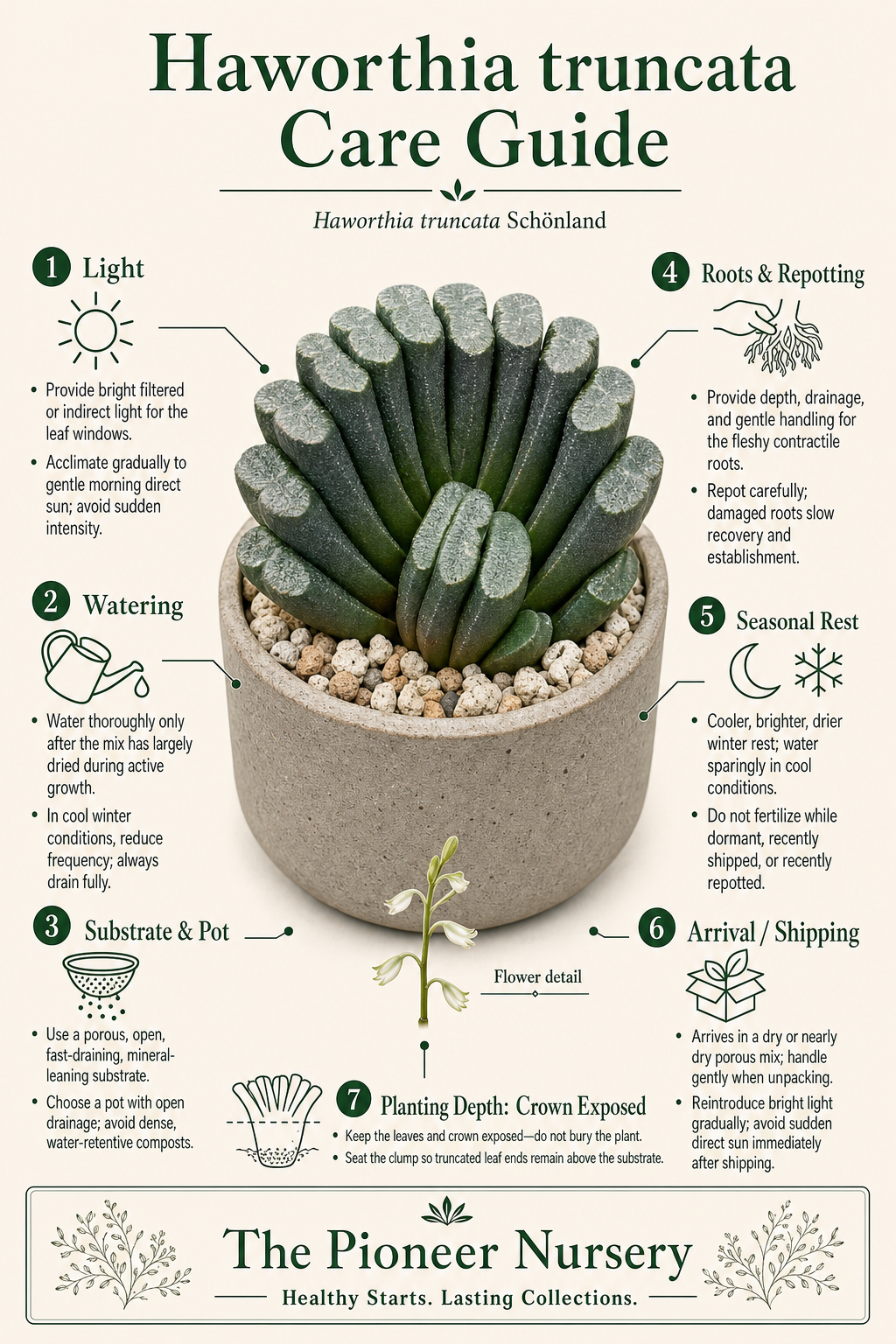
Haworthia truncata, commonly called horse's teeth or truncate haworthia, is a distinctive succulent that grows largely below ground in habitat. Its truncated leaf ends form translucent windows that admit light into the leaf interior. In cultivation, the main priorities are strong filtered light, a porous mineral-leaning substrate, careful watering after the mix has largely dried, and extra caution around cold, wet roots.
Quick Care Summary
- Bright filtered or indirect light; acclimate gradually to direct sun.
- Use a porous, fast-draining mineral-leaning substrate.
- Water thoroughly after the mix has largely dried, then drain fully.
- Keep substantially drier during cool winter conditions.
- Keep the leaves and crown exposed rather than burying the plant.
- Repot carefully because the fleshy contractile roots are vulnerable to damage.
- Do not fertilize while dormant, recently shipped, or recently repotted.
About Haworthia truncata
This accepted species has thick, water-storing leaves, fleshy contractile roots, and a naturally subterranean growth habit. Only the truncated leaf windows are typically exposed in habitat. Keep the crown and leaves above the substrate in cultivation, however, because burying them reduces aeration and increases the risk of rot.
Light
Provide bright filtered or bright indirect light indoors. Haworthia truncata can accept some direct sun when gradually acclimated, but sudden exposure or intense unfiltered sun through glass can scorch or bleach the leaves. Strong light helps maintain compact growth; avoid prolonged heat buildup around the plant.
Watering
During active growth, water thoroughly only after the substrate has largely dried, then let excess water drain completely. Do not keep the pot continuously damp. Reduce watering substantially during cool winter conditions, when cold, wet roots are especially vulnerable to rot. Adjust irrigation to temperature, light, drying speed, pot size, and root condition rather than following a fixed calendar.
Soil and substrate
Use a very open, fast-draining, mineral-leaning succulent mix containing substantial pumice, perlite, grit, or another porous aggregate. Dense compost and poorly aerated organic soil stay wet too long around the fleshy roots and can contribute to root or crown rot.
Potting and roots
Choose a container with drainage and enough depth for the species' substantial contractile roots. Although the plant is largely buried in habitat, keep the leaves and crown exposed in cultivation. Repot only when necessary and disturb the fleshy roots as little as practical. Root loss can follow rough repotting or prolonged wet shipping conditions.
Temperature and winter rest
Grow Haworthia truncata in mild conditions around 10–26°C (50–80°F) and protect it from frost. Maintain good ventilation and keep the plant dry during cold periods. Growth commonly slows in winter, so provide a cooler, brighter, drier rest with only occasional light watering, adjusted to the plant's conditions and root health.
Fertilizer
During active growth, apply a dilute balanced or low-nitrogen succulent fertilizer occasionally to already-moist substrate. Do not fertilize a dormant, recently shipped, or recently repotted plant until active root growth resumes.
Flowering
Haworthia truncata produces a slender inflorescence bearing small greenish-white tubular flowers. Producing seed generally requires pollination, usually with pollen from another compatible individual.
Propagation
Offsets or suckers are the most reliable practical method when available. Remove an offset with a clean tool and allow any wound to dry before potting. The species can also be grown from seed; manually pollinate flowers and sow fresh, mature seed promptly.
Shipping and arrival care
Inspect the plant on arrival, especially the fleshy roots and crown. Because the roots are vulnerable to breakage and prolonged moisture, handle them gently and pot into a dry or nearly dry porous mix. Protect the plant from temperature extremes and gradually reintroduce it to bright light. After shipping or major root disturbance, delay heavy watering until damaged roots have dried and the plant shows signs of recovery. These precautions are based on the species' root and rot sensitivities rather than a rigid shipping timetable.
Common problems
Root or crown rot usually follows dense substrate, poor drainage, or watering during cool conditions. Sunburn and bleached tissue can result from abrupt exposure to strong direct light. Stretching and weak growth indicate insufficient light or warm conditions without an appropriate winter rest. Fluoride-containing tap water has been associated with leaf injury in Haworthias; filtered or rainwater may be preferable where this occurs. Rough repotting and wet shipping can also cause root loss.
Frequently Asked Questions
How often should I water Haworthia truncata?
Do not use a fixed schedule. During active growth, water after the porous substrate has largely dried, then drain completely. Water much less in cool winter conditions and consider root health after shipping or repotting.
Can Haworthia truncata grow in direct sun?
It can accept some direct sun after gradual acclimation. Bright filtered or indirect light is safer indoors, while sudden intense sun—especially through glass—can scorch or bleach the leaves.
Should the plant be buried like it is in habitat?
No. Although it grows largely below ground in habitat, keep the leaves and crown exposed in cultivation to improve aeration and reduce rot risk.
What is the best way to propagate it?
Propagate from offsets or suckers when available, allowing wounds to dry before potting. Seed propagation is also possible and requires pollination, generally using pollen from another compatible individual.
How should I handle a shipped plant?
Handle the fleshy roots gently, pot into a dry or nearly dry porous mix, protect the plant from temperature extremes, and gradually restore bright light. Delay heavy watering if roots were damaged or disturbed.
Haworthia truncata rewards restraint: bright but moderated light, an airy substrate, careful drying between waterings, and a cooler, drier winter rest support healthy compact growth. Keep its unusual leaf windows visible, protect its specialized roots, and adjust care to the plant's actual conditions.