Mammillaria prolifera Cristata Care Guide
Learn how to grow the crested form of Mammillaria prolifera with guidance on light, watering, soil, dormancy, propagation, flowering, and shipping recovery.
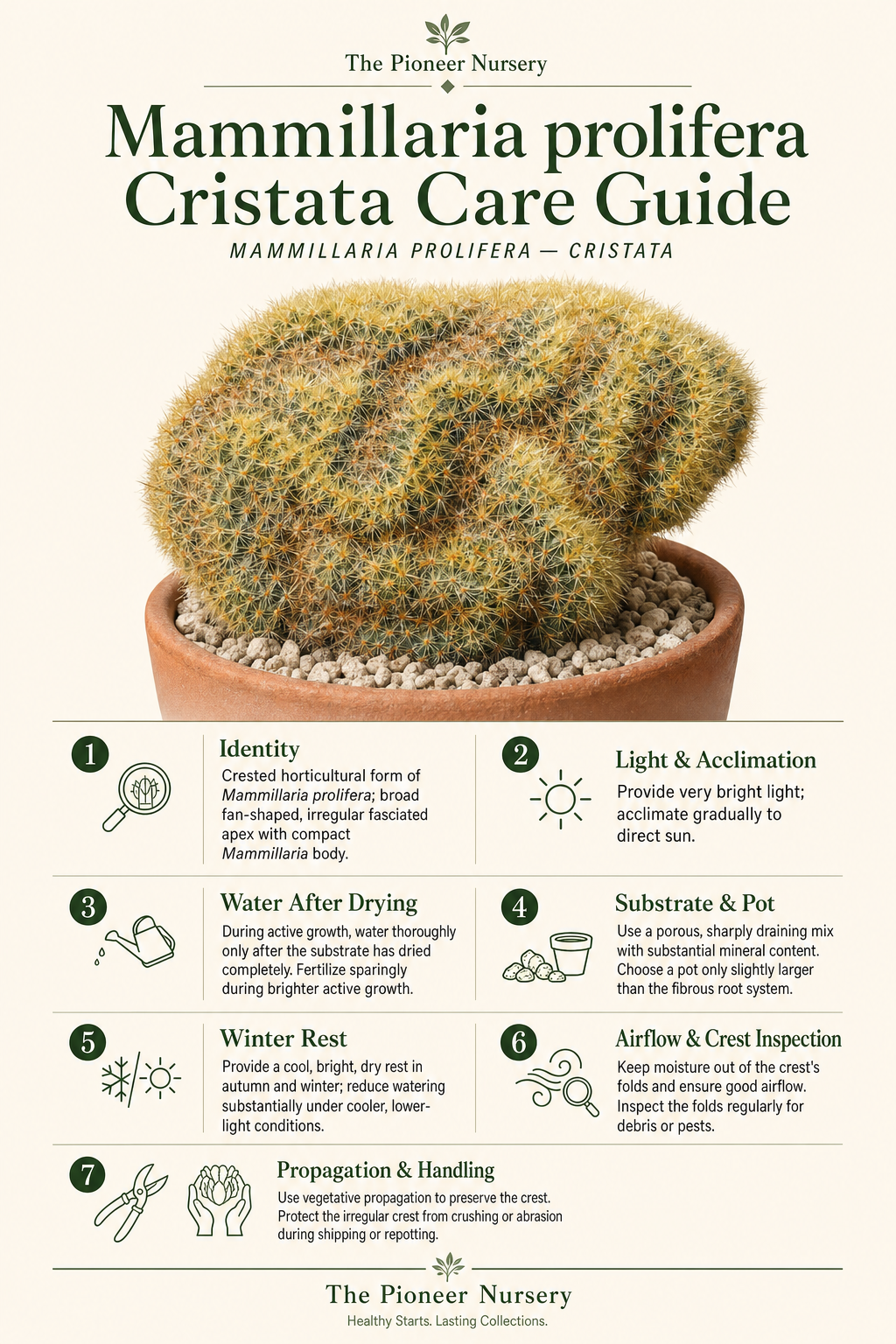
Mammillaria prolifera Cristata is the crested, or fasciated, horticultural form of the accepted species Mammillaria prolifera. Instead of forming a typical rounded stem, it develops a broadened, fan-shaped or convoluted growing apex that may occasionally produce normal reverted shoots. Its basic care follows Mammillaria cultivation: provide very bright light, use a sharply draining substrate, and let the soil dry completely between thorough waterings. The folded crest requires extra attention because it can conceal moisture, pests, or damage.
Quick Care Summary
- Provide very bright light with gradual acclimation to direct sun.
- Use a porous, sharply draining substrate with substantial mineral content.
- Water thoroughly during active growth only after the substrate has dried completely.
- Reduce watering substantially during cool, lower-light autumn and winter conditions.
- Keep moisture out of the crest’s folds when possible and provide good airflow.
- Use a pot only slightly larger than the fibrous root system.
- Fertilize sparingly during brighter active growth.
- Protect the irregular crest from crushing and abrasion during shipping or repotting.
About the Plant
Mammillaria prolifera (Mill.) Haw. is the accepted species name. “Cristata” describes its crested growth form rather than a separate species, botanical variety, cultivar, or hybrid. The crest may be broad, folded, and irregular, and some plants can partially revert to ordinary growth. Small funnel-shaped flowers are generally cream to pinkish-yellow and appear in a ring near the upper stem, with red club-shaped fruits possible after successful pollination.
Light
Provide very bright light with several hours of direct sun once the plant is acclimated. Increase exposure gradually after shipping or a move from shade to reduce sunburn, especially along the broad crest and its folds. Indoors, use a bright south- or southwest-facing window or supplemental grow lighting. Strong light supports compact growth and flowering.
Watering
During active growth, water thoroughly, then allow the substrate to dry completely before watering again. Drain excess water and never leave the pot standing in a saucer. Reduce watering in autumn and winter, particularly when the plant is cool or receiving less light. Avoid frequent light sprinkling, and keep water out of the crest’s folds when possible because trapped moisture can encourage localized rot or fungal problems.
Soil and Substrate
Use a porous, sharply draining cactus substrate with substantial mineral content and good root aeration. A predominantly mineral mix with a modest amount of organic potting material is suitable. Avoid heavy, fine, moisture-retentive soil.
Potting and Roots
Use a container with an unobstructed drainage hole and choose a pot only slightly larger than the root system. Mammillaria prolifera has fibrous roots, and excess pot volume can keep the substrate wet too long. Handle the irregular crest carefully during repotting. After major root disturbance, keep the plant dry until wounds have callused, then resume cautious watering.
Temperature and Airflow
Provide warm conditions during active growth and protect the plant from frost. A cool winter rest can be beneficial, but cold conditions must be paired with very dry soil. Avoid prolonged cold, wet substrate. Indoors, provide good air circulation and keep the plant away from cold drafts and damp, poorly ventilated locations.
Seasonal Growth and Dormancy
Reduce watering substantially in autumn and winter. A cool, bright, dry rest can support compact growth and later flowering. Water only sparingly if significant shriveling develops, and wait to resume regular watering until increasing light and temperature indicate active growth.
Fertilizer
Fertilize sparingly during active spring and summer growth with a balanced or relatively low-nitrogen cactus fertilizer at diluted strength. One or two applications during the brighter growing season are generally sufficient. Avoid heavy feeding when the plant is cool, dormant, recently repotted, or showing soft tissue.
Flowering
With strong light, mature growth, and a cool, dry winter rest, Mammillaria prolifera may produce small funnel-shaped flowers in a ring near the upper part of the stem. Flowers are generally cream to pinkish-yellow. Red, club-shaped fruits may follow successful pollination.
Propagation
The normal species can be propagated from seed and offsets, but seedlings should not be expected to retain the crested form reliably. To preserve the crest, use clean vegetative cuttings from healthy crested tissue when available. Let cut surfaces callus fully before placing them in dry, porous medium. Grafting can help establish or strengthen difficult cuttings, but it is not required for every specimen. Remove reverted normal shoots only when necessary to preserve the crest and after confirming that the growth is truly reversion.
Common Problems
Root or stem rot usually results from wet soil, poor drainage, or watering during cool conditions. Sudden strong sun can cause sunburn, particularly after indoor or shaded shipment. Mealybugs and root mealybugs may hide among spines or in the crest’s folds. Trapped water and poor ventilation can contribute to localized rot or fungal problems. Reverted shoots may eventually dominate the plant. Softening, splitting, or discoloration can indicate excessive watering or rapid changes in growing conditions.
Shipping and Arrival Care
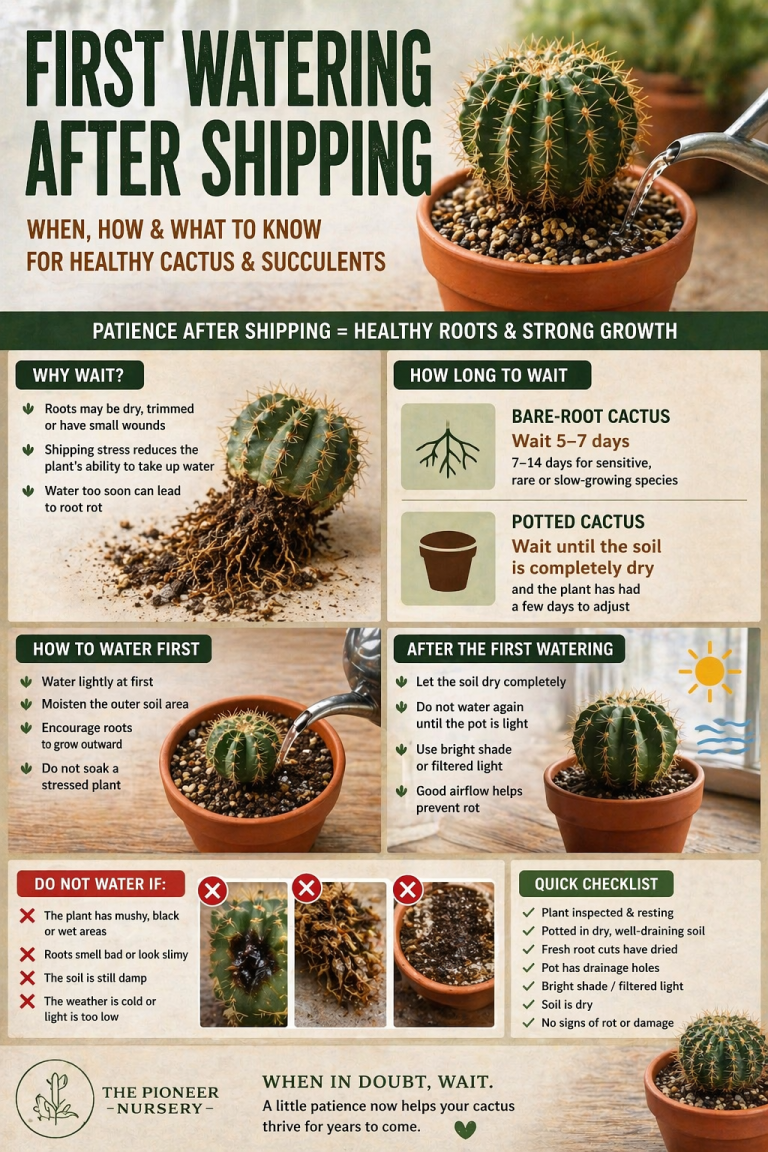
Receive and ship the plant as dry as practical, with protection around the irregular crest to prevent crushing or abrasion. After arrival, inspect the folds and base for hidden damage, pests, or soft tissue. Allow damaged or freshly cut areas to dry and callus before watering. Provide bright but initially filtered light, then acclimate gradually to direct sun. Avoid immediate heavy watering if the plant experienced root disturbance, cold exposure, or tissue damage.
Frequently Asked Questions
How often should I water Mammillaria prolifera Cristata?
Water thoroughly during active growth, but only after the substrate has dried completely. Use substantially less water in autumn and winter, especially when conditions are cool or light is reduced.
Does the crested form need different care from ordinary Mammillaria prolifera?
Its basic cultivation is the same, but the folded crest makes careful watering, airflow, and inspection especially important because moisture and pests can hide in concealed areas.
Can Mammillaria prolifera Cristata take direct sun?
Yes, when acclimated. Increase exposure gradually after shipping or shade to reduce sunburn, particularly on the broad crest and its folds.
Will seedlings remain crested?
Seedlings should not be expected to retain the crested form reliably. Clean vegetative cuttings from healthy crested tissue are generally used to preserve it.
How should I handle a shipped plant?
Inspect the crest and base for damage, pests, or soft tissue. Use initially filtered bright light and acclimate gradually to direct sun. Keep damaged areas dry until callused and avoid heavy watering after root or tissue disturbance.
Mammillaria prolifera Cristata is rewarding when its unusual folded growth is given the same essentials as the species—bright light, fast drainage, thorough but well-timed watering, and a dry cool-season rest. The main extra precaution is to keep the crest well ventilated and inspect its folds regularly.