Discocactus horstii Care Guide
Learn how to grow Discocactus horstii with bright light, sustained warmth, mineral soil, and carefully timed watering for its sensitive roots.
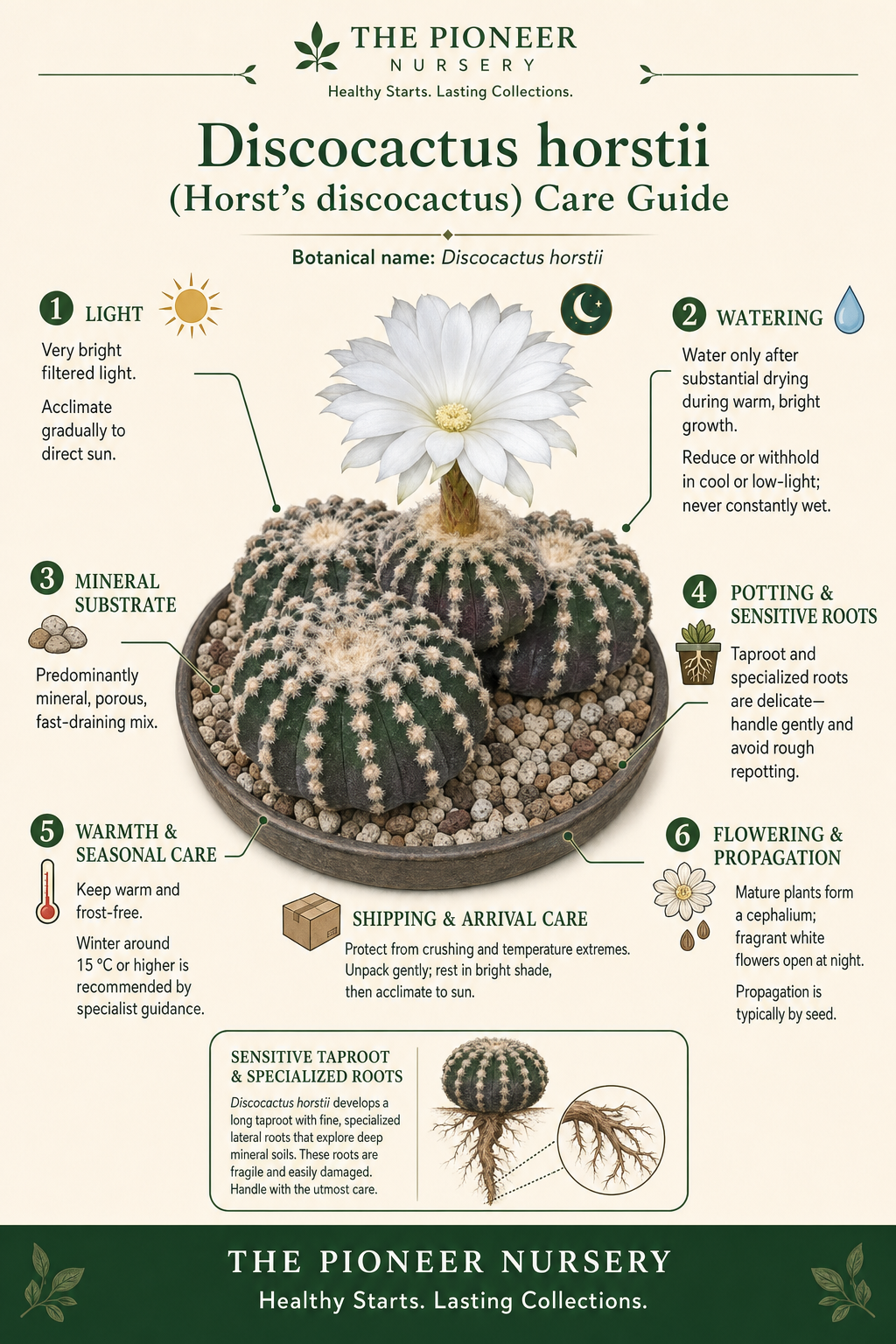
Discocactus horstii, commonly called Horst's discocactus, is a small Brazilian cactus known for developing a cephalium and producing fragrant white flowers at night. It grows best with very bright light, sustained warmth, excellent drainage, and careful watering. Own-root plants need especially cautious handling because their specialized roots are sensitive to excess moisture and disturbance; grafted plants are also common in cultivation.
Quick Care Summary
- Provide very bright filtered light or gradually acclimated direct sun.
- Use a predominantly mineral, porous, fast-draining substrate.
- Water after substantial drying during warm, bright growth.
- Reduce or withhold water during cool or low-light conditions.
- Keep warm and frost-free; winter temperatures around 15 °C or higher are recommended by specialist guidance.
- Handle the sensitive taproot and specialized roots carefully.
- Protect shipped plants from crushing, temperature extremes, and abrupt sun.
About Discocactus horstii
Discocactus horstii is native to Minas Gerais, Brazil, where it grows in a seasonally dry tropical environment. Mature plants can produce a cephalium, the specialized structure from which flowering occurs. Plants of the World Online lists Discocactus woutersianus as a heterotypic synonym, while an older CITES treatment differed. The submitted species identity, Discocactus horstii, is a valid botanical name and is retained here as the primary identity.
Light
Provide very bright light, including strong filtered sun or carefully acclimated direct sun. Increase exposure gradually after shipping or whenever growing conditions change, since abrupt intense light can cause sunburn and stress. Insufficient light may produce weak or distorted growth and can reduce flowering.
Watering
Water during active growth when the porous substrate has substantially dried, then let excess water drain completely. Discocactus horstii is not suited to constantly wet roots. It may use water more regularly during warm, bright growth than some desert cacti, but reduce or withhold watering when temperatures or light are inadequate. Cold conditions combined with wet substrate create a serious root-rot risk.
Soil and substrate
Use a very porous, fast-draining, predominantly mineral substrate with excellent aeration. Specialist cultivation guidance emphasizes silica sand, rock, and slightly acidic conditions. Avoid dense or water-retentive mixes, especially for own-root plants.
Potting and roots
Choose a pot only moderately larger than the root system and provide an unobstructed drainage hole. The species has a sensitive taproot and other specialized underground roots, so handle them carefully during potting. After root disturbance, use cautious watering and avoid keeping the substrate moist while the plant is recovering. Grafted plants should be protected from impact around the graft union.
Temperature and seasonal growth
Keep Discocactus horstii warm and frost-free. Specialist guidance recommends warm winter conditions, with one cactus-society source specifying approximately 15 °C or higher in the winter greenhouse. This is not a conventional cold-dormant cactus: warmth and strong light support growth and flowering throughout the year. During a cool or low-light period, sharply reduce watering and maintain good ventilation rather than keeping the substrate moist. The species has no meaningful frost tolerance.
Fertilizer
Species-specific fertilizer rates are limited. If you fertilize, use a dilute, low-nitrogen cactus fertilizer only during warm, active growth. Never fertilize dry, recently disturbed, or cold roots.
Flowering
Mature plants can develop a cephalium and produce fragrant white flowers that open in the evening or at night. The flowers are typically short-lived and may fade by the following morning. Adequate maturity, strong light, and warm winter conditions support flowering. Immature plants or plants overwintered too cool may not flower.
Propagation
Propagation by seed is documented and can be successful, but seedlings take time to reach flowering maturity and develop a cephalium. Grafting is commonly used because own-root plants can be difficult and sensitive in cultivation. Grafting is a legitimate horticultural method, but it should not be presented as inherently superior in every respect.
Shipping and arrival care
Inspect the plant after arrival and protect it from crushing, temperature extremes, and excess moisture. Because the roots are sensitive to disturbance, avoid immediate watering after major root damage or disturbance. Provide ventilation and acclimate the plant gradually to stronger light. Grafted plants may be easier to handle, but protect the graft union from impact and extreme temperatures.
Common Problems
- Root rot: Usually associated with cold, wet, or poorly aerated substrate.
- Own-root decline: Excess watering or root disturbance can cause failure in sensitive own-root plants.
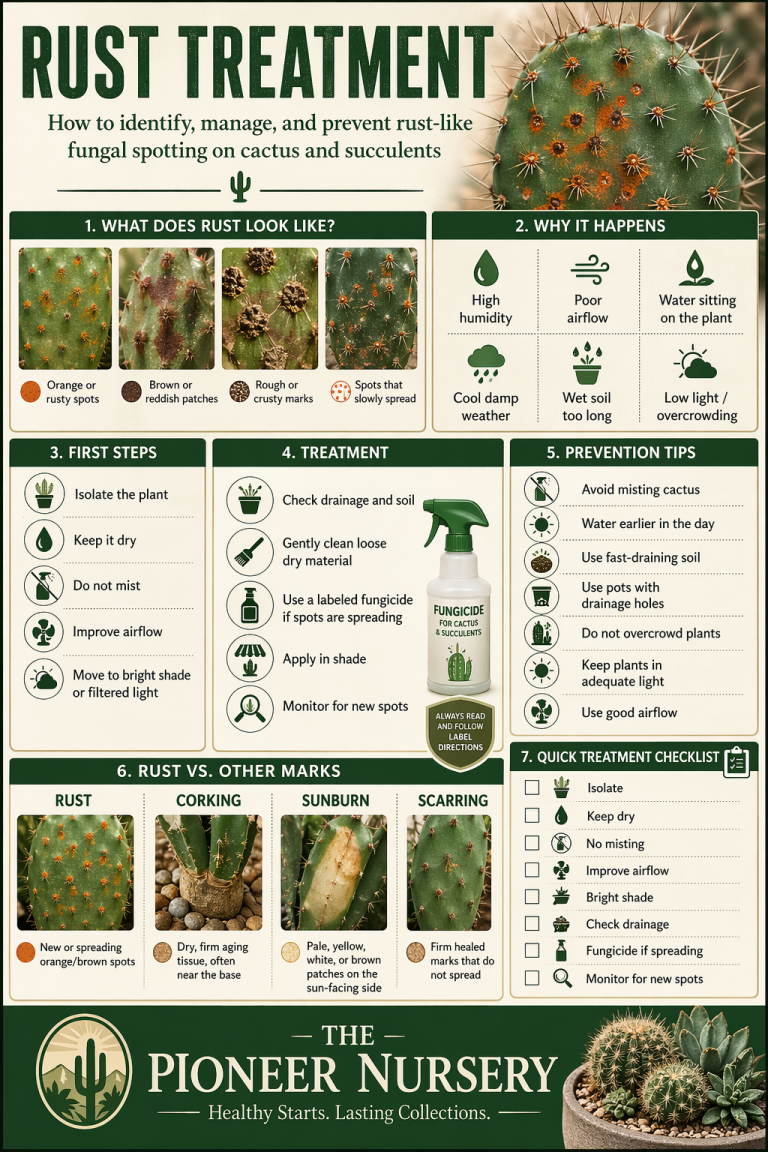
- Sunburn: Abrupt exposure to intense light can damage the plant.
- Weak or distorted growth: Often linked to insufficient warmth or light.
- Cold or frost damage: The species has no meaningful frost tolerance.
- Failure to flower: Immature plants or plants overwintered too cool may not bloom.
Frequently Asked Questions
How should I water Discocactus horstii?
Water during warm, bright active growth after the porous substrate has substantially dried, then drain excess water completely. Reduce or withhold water when temperatures or light are inadequate.
Does Discocactus horstii need a cold winter rest?
No. It is not a conventional cold-dormant cactus. Growth and flowering favor warmth and strong light, while cool or low-light periods call for sharply reduced watering and good ventilation.
Should Discocactus horstii be grown on its own roots or grafted?
Both approaches are used. Own-root plants are sensitive to excess moisture and root disturbance, while grafting is a common horticultural method that can assist cultivation. Neither should be described as inherently superior in every respect.
Why is my plant not flowering?
Flowering depends on maturity, strong light, and warm winter conditions. Immature plants or plants kept too cool over winter may not flower.
How do I care for a shipped plant?
Inspect it, provide ventilation, protect it from temperature extremes, and acclimate it gradually to stronger light. If roots were disturbed or damaged, avoid immediate watering and resume cautiously after recovery.
Can Discocactus horstii be grown from seed?
Yes. Seed propagation is documented, but seedlings require time to reach flowering maturity and develop a cephalium.
Discocactus horstii rewards careful growers who can provide warmth, strong light, mineral drainage, and disciplined watering. Pay particular attention to the sensitive root system, especially with own-root plants, and acclimate shipped specimens gradually. Because Discocactus is regulated under CITES Appendix I, trade should be limited to properly documented, artificially propagated material.