Euphorbia bupleurifolia Care Guide
Learn how to grow Euphorbia bupleurifolia, the slow-growing pine cone plant, with guidance on light, seasonal watering, drainage, potting, propagation, and shipping recovery.
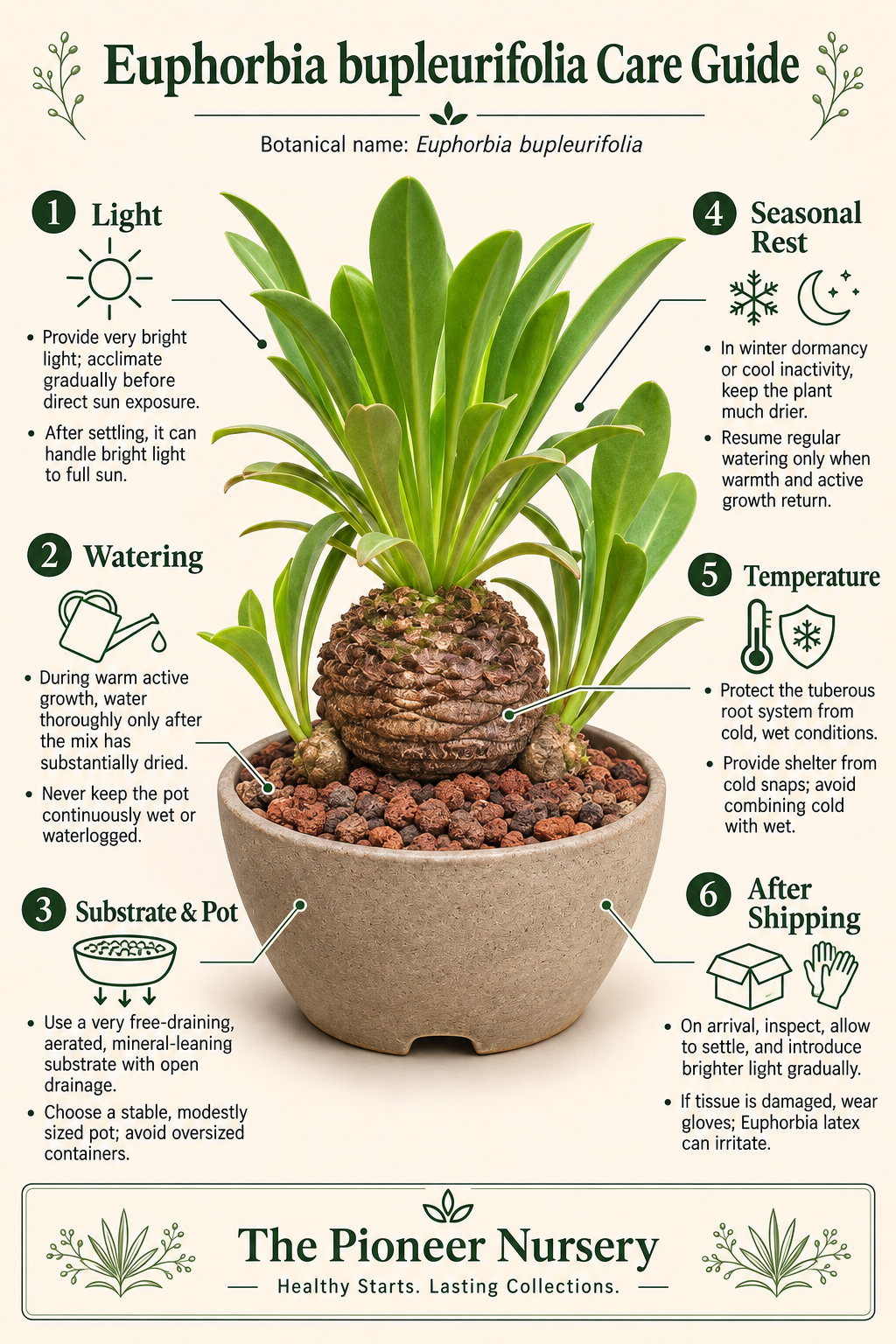
Euphorbia bupleurifolia, commonly called the pine cone plant or cycad spurge, is a slow-growing, spineless succulent with a rounded tuberous body and a crown of leaves. Give it bright light, very free drainage, and a seasonal watering rhythm: more moisture during warm active growth, then much less in winter. Its underground structure makes careful potting and gentle post-shipping acclimation especially important.
Quick Care Summary
- Give bright light to full sun after gradual acclimation.
- Water thoroughly during warm active growth once the substrate has substantially dried.
- Keep the plant much drier during winter dormancy or cool inactivity.
- Use a very free-draining, aerated, mineral-leaning substrate.
- Choose a stable pot with excellent drainage; avoid oversized containers.
- Protect the tuberous root system from cold, wet conditions.
- Handle damaged tissue with gloves because Euphorbia latex can irritate.
About Euphorbia bupleurifolia
This species is a tuberous geophyte or subshrub native to southeastern South Africa, from the Eastern Cape to KwaZulu-Natal. Its rounded underground structure supports seasonal leafy growth. It is not a constantly dry desert cactus; during warm summer growth it may accept more regular watering when the substrate dries between waterings. Damaged tissue can release irritating milky latex.
Light
Provide bright light to full sun once acclimated. Strong light helps maintain compact growth, while insufficient light can produce weak, elongated growth. After shipping or a move from lower light, begin in bright but sheltered conditions and increase direct sun gradually. Light shade may help during very hot conditions or initial adjustment.
Watering
During warm active growth, water thoroughly only after the substrate has substantially dried. SANBI notes that summer watering may be more regular, including approximately weekly watering when the soil is dry, but frequency depends on temperature, light, pot size, and substrate. During winter dormancy or marked slowdown, reduce watering substantially and do not leave the plant wet; cold, wet conditions increase rot risk around the tuberous roots.
Soil and substrate
Use a very well-drained, aerated, mineral-leaning succulent mix. Sandy or sandy-loam conditions are consistent with the species’ reported growing conditions, but the key requirement is that moisture does not remain around the tuber for long periods. If the mix stays wet well after watering, it is too moisture-retentive.
Potting and roots
Choose a stable container with excellent drainage and enough depth for the tuberous underground structure. Avoid oversized pots that hold moisture too long. Repot only when necessary and handle the roots carefully. After root disturbance, follow a simple sequence: pot the plant, allow damaged roots or tissue to dry, let the plant stabilize, then resume watering only when it is actively growing and the mix is dry. Wear protective gloves when handling damaged plants and keep latex away from eyes and mouth.
Temperature and seasonal growth
Keep Euphorbia bupleurifolia warm and frost-free where possible. It is associated with subtropical South African habitats and is listed by a botanical-garden resource as suitable from approximately USDA Zone 9. Protect it from frost, prolonged cold, and cold wet soil. Expect winter dormancy or a marked slowdown.
Fertilizer
Feed only during active summer growth, using a small amount of dilute, balanced fertilizer. Do not fertilize a dry, dormant, recently repotted, or stressed plant.
Propagation, flowering, and seed production
Propagation by seed is possible, although germination may be difficult. SANBI reports sowing temperatures around 18–24 °C at night, with high daytime warmth, and germination may take up to 30 days. Flowering may occur in winter, spring, or early summer. Seed production can require compatible male and female plants because one plant may not consistently provide both sexes for successful reproduction. Specialist Euphorbia guidance also describes decapitation of solitary plants to encourage offsets. This advanced technique involves cutting and latex exposure and is not a routine propagation method.
Shipping and arrival care
Inspect the plant on arrival for impact to the tuberous body, roots, or crown. Pot it into a very free-draining mix, keep it warm, and place it in bright but initially sheltered light. After bare-root shipping or significant root disturbance, allow damaged roots or tissue to dry and let the plant stabilize before watering. Resume thorough watering only when the substrate is dry and the plant is actively growing.
Common problems
• Root or stem rot: Linked to cool, poorly drained, or continuously wet conditions. Improve drainage and keep the plant drier during inactive periods.
• Sun scorch: Can follow sudden intense light. Acclimate gradually after shipping or greenhouse production.
• Weak, elongated growth: Indicates insufficient light; increase brightness gradually.
• Latex exposure: Cutting, repotting, or damaged tissue may release irritating milky sap. Wear gloves and keep it away from eyes, mouth, children, and pets.
Frequently Asked Questions
How often should I water Euphorbia bupleurifolia?
During warm active growth, water thoroughly after the substrate has substantially dried. Frequency depends on the pot, mix, temperature, and light; reduce watering substantially during winter dormancy.
Can Euphorbia bupleurifolia grow in full sun?
Yes, once acclimated. Increase direct light gradually, especially after shipping or lower-light conditions, because abrupt exposure can cause scorch.
What kind of soil does the pine cone plant need?
Use a very well-drained, aerated, mineral-leaning succulent substrate. Sandy or sandy-loam conditions are appropriate if the mix does not remain wet around the tuberous roots.
Why should watering be reduced in winter?
The plant may enter dormancy or a marked slowdown. In cool, inactive conditions it uses less water, while wet soil increases rot risk.
Can I propagate it from seed?
Yes, but germination can be difficult and may take up to 30 days under the reported warm sowing conditions. Seed production may require compatible male and female plants.
Is Euphorbia bupleurifolia safe to handle?
Damaged tissue can release irritating milky latex. Wear protective gloves and keep sap away from eyes, mouth, children, and pets.
Euphorbia bupleurifolia rewards patience. Provide warmth, bright light, fast drainage, and seasonal watering that follows active growth rather than a fixed calendar. Careful root handling and a measured return to watering are especially valuable after shipping or repotting.