Fockea edulis Care Guide
Learn how to grow Fockea edulis, a climbing caudiciform vine with a water-storing tuberous rootstock. This guide covers light, watering, soil, seasonal growth, potting, flowering, propagation, and shipping recovery.
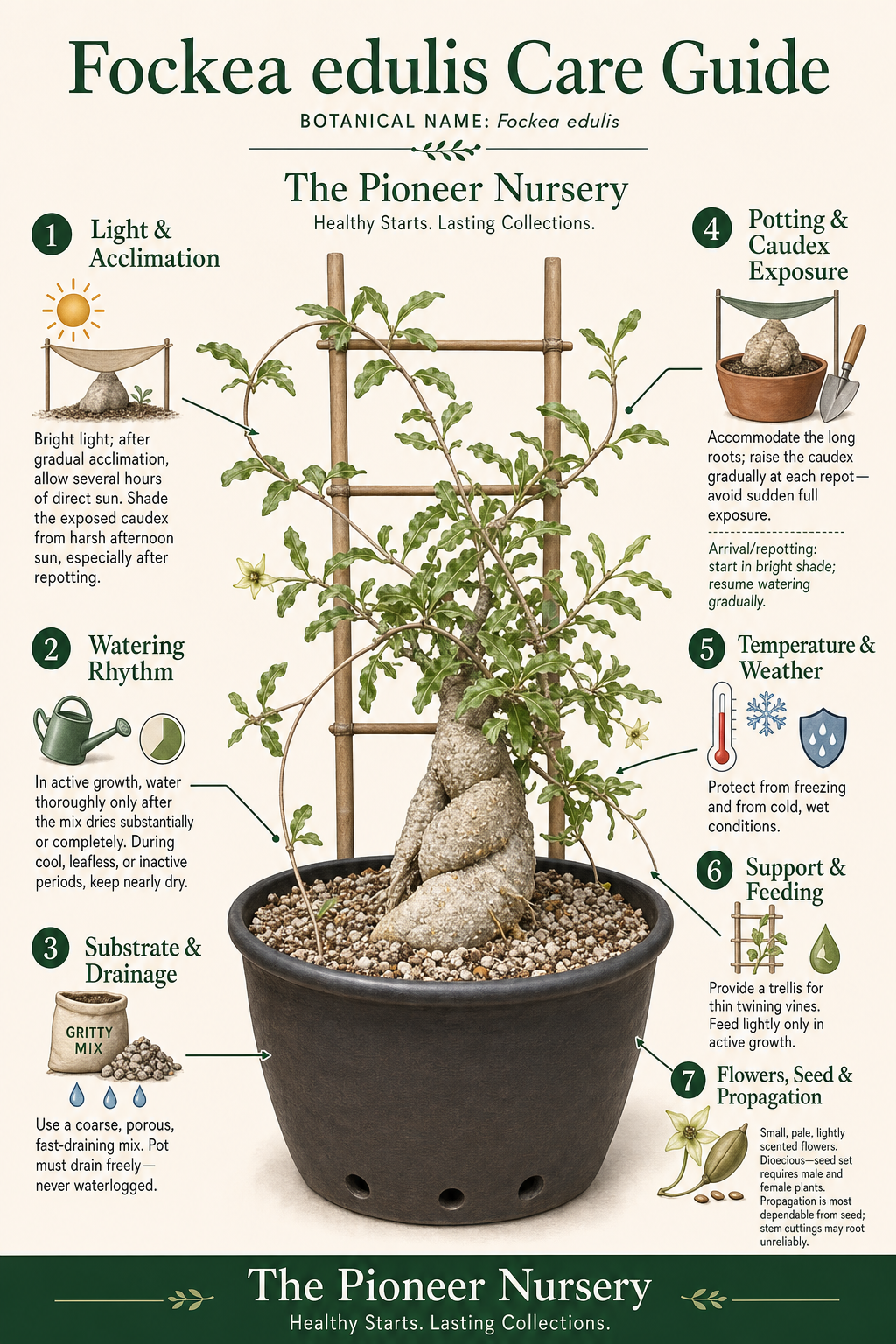
Fockea edulis is a climbing, twining caudiciform vine in the Apocynaceae family. Its swollen tuberous rootstock stores water and is often partly or wholly underground in nature, while its thin stems benefit from support. The main care priorities are excellent drainage, careful watering during cool or inactive periods, bright light with gradual acclimation, and protection of any newly exposed caudex from harsh afternoon sun.
Quick Care Summary
- Bright light with several hours of direct sun after gradual acclimation.
- Protect an exposed caudex from intense afternoon sun, especially after repotting.
- Use a coarse, porous, fast-draining substrate.
- Water thoroughly during active growth only after the mix dries substantially or completely.
- Keep nearly dry during cool, leafless, or inactive periods.
- Protect from freezing and cold, wet conditions.
- Provide support for the thin twining vines.
- Use seed for more dependable propagation; stem cuttings may root unreliably.
About Fockea edulis
Often called Hottentot bread, Fockea edulis develops a swollen storage root and slender climbing or twining vines. It is semi-deciduous, so growth may slow and foliage may decline during cooler or drier periods. The caudex is naturally often buried, but growers may gradually expose it for display.
Light
Provide bright light with several hours of direct sun once the plant is acclimated. The foliage can tolerate strong light, but protect an exposed caudex from intense afternoon sun with partial shade. This protection is especially important after raising the caudex during repotting. After shipping, begin with bright filtered or indirect light and increase sun exposure gradually.
Watering
During active growth, water thoroughly after the fast-draining substrate has dried substantially or completely, then allow it to dry again. Reduce watering as growth slows. During cool or leafless periods, keep the plant nearly dry because cold, wet conditions greatly increase rot risk. Slight caudex softening or shriveling can indicate a need for a cautious drink, but watering should not follow a fixed calendar.
Soil and substrate
Use a coarse, porous, fast-draining mix with strong aeration and limited water retention. Avoid dense mixes and substrate that remains wet for long periods. Good drainage is particularly important when the plant is cool or dormant.
Potting and roots
Choose a container with drainage and size it around the plant's tuberous root system. Young plants may grow more rapidly in a relatively large container, but excessive unused soil can stay wet too long. A wide, shallow clay pot can suit established specimens, while a deeper container may be useful when preserving more of the root system. The caudex can be exposed gradually, but newly exposed tissue needs protection from harsh sun.
Temperature and seasonal growth
Protect Fockea edulis from freezing temperatures and prolonged cold, wet conditions. Although it may tolerate an occasional light frost in favorable conditions, treat it as frost-sensitive and keep it above freezing, especially when the substrate is moist. The plant may retain some leaves or become nearly leafless; regardless, sharply reduce watering when growth stops or foliage declines.
Fertilizer
Feed modestly and only during active growth. Use a dilute balanced fertilizer or a restrained slow-release formulation. Avoid heavy feeding, particularly when light or temperature is insufficient, since excessive soft vine growth is more vulnerable to stress and rot.
Flowering
The flowers are small, pale, and lightly scented, and flowering is associated with warm-season growth. Fockea species are dioecious, meaning male and female plants are separate. A single plant may flower without producing viable seed; compatible male and female plants are generally needed for seed production.
Propagation
Seed is the preferred and more dependable propagation method. Because the species is dioecious, seed production generally requires compatible male and female plants. Stem cuttings may be attempted, but rooting can be difficult or unreliable.
Support for the vines
The thin stems are climbing or twining, so a suitable support can help the plant grow naturally and keep the vines organized. Weak, excessively elongated growth usually indicates inadequate light or excessive fertilizer.
Shipping and arrival care
Inspect the plant after arrival for caudex, vine, and root damage. Protect it from freezing temperatures and prolonged moisture. If it arrived bare-root or the roots were substantially disturbed, allow damaged areas to dry and callus before cautious watering. Avoid immediate heavy watering when roots have been disturbed, especially in cool weather. Start in bright filtered or indirect light and acclimate gradually to stronger sun.
Common Problems
- Caudex or root rot: Usually associated with cold, poorly drained, or persistently wet substrate during slow growth or dormancy.
- Caudex sun damage: Newly exposed tissue can burn even when the foliage tolerates stronger light.
- Weak, elongated vines: Often caused by inadequate light or excessive fertilizer.
- Leaf yellowing or drop: Seasonal slowing, cold, drought, or root stress may be involved; assess the substrate and caudex before watering more.
- Cutting failure: Stem cuttings may root slowly, poorly, or unreliably.
Frequently Asked Questions
How often should I water Fockea edulis?
Do not use a fixed schedule. During active growth, water thoroughly after the fast-draining substrate dries substantially or completely. Reduce watering as growth slows and keep the plant nearly dry during cool or leafless periods.
Can Fockea edulis take full sun?
It can receive several hours of direct sun after acclimation. Protect an exposed caudex from intense afternoon sun, particularly after it has been raised during repotting.
Does Fockea edulis go dormant?
It is semi-deciduous and may slow substantially or lose foliage. Some cultivated plants retain leaves, while others become nearly leafless. Reduce watering sharply whenever growth stops or foliage declines.
Should the caudex be buried or exposed?
The swollen rootstock is often partly or wholly underground in nature. It may be exposed gradually for display, but newly exposed tissue should be shaded from harsh sun.
Can I grow Fockea edulis from a cutting?
Stem cuttings may be attempted, but rooting is difficult or unreliable. Seed is the preferred and more dependable propagation method.
Why did my plant flower but produce no seeds?
Fockea edulis is dioecious, so male and female plants are separate. A single plant may flower without producing viable seed.
Fockea edulis rewards a careful balance: give the vines bright light and support, keep the substrate sharply draining, and adjust watering to active growth rather than the calendar. During cool or inactive periods, dryness and warmth are safer than persistent moisture, while any newly exposed caudex needs protection from strong afternoon sun.