Tylecodon wallichii Care Guide
Learn how to grow Tylecodon wallichii, a sculptural, deciduous South African succulent with winter growth, summer dormancy, and distinctive knobby branches.
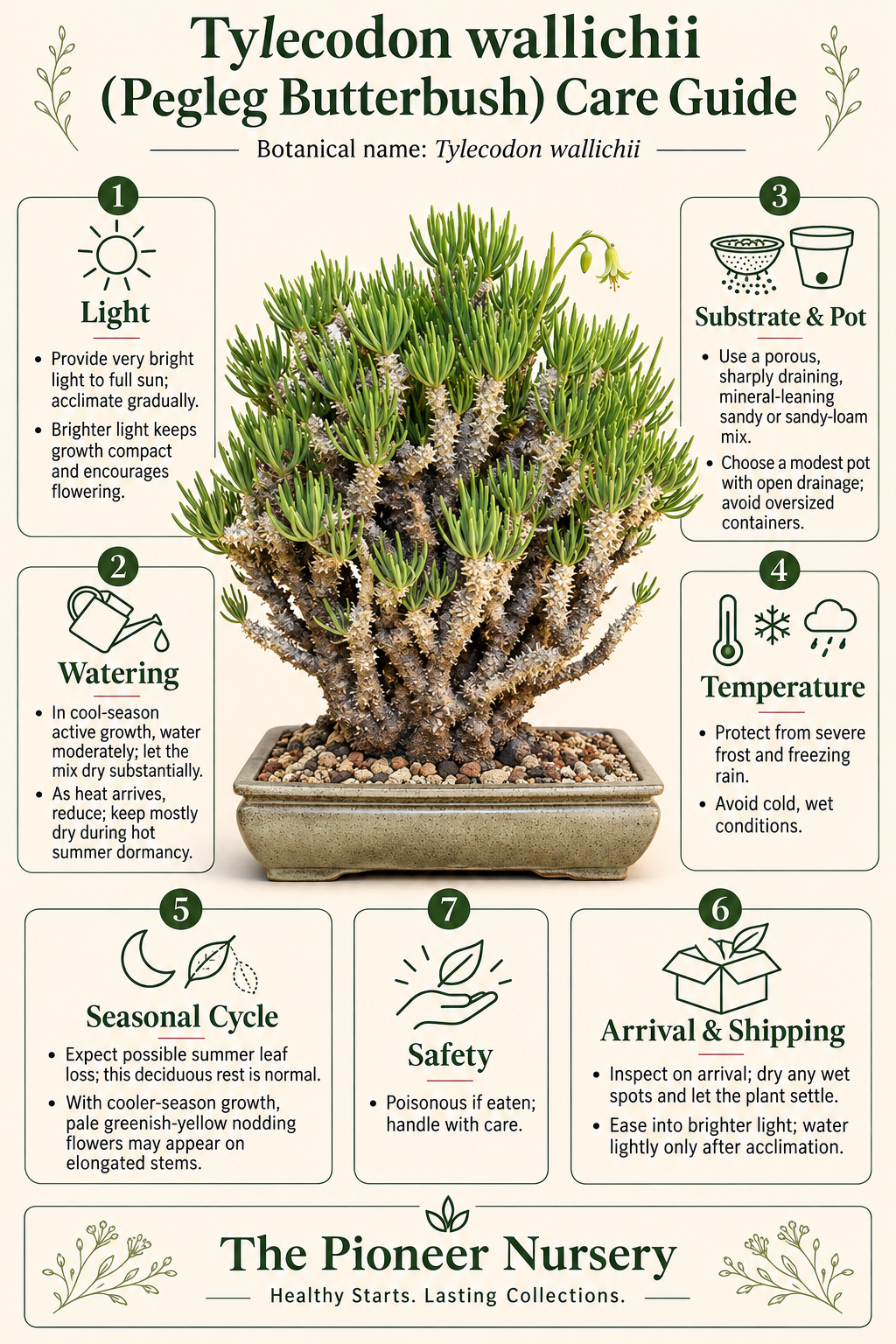
Tylecodon wallichii is a deciduous, winter-growing succulent shrub from South Africa, known for thick knobby branches and hardened leaf-scar structures that give it a sculptural, bonsai-like appearance. Its care differs from many summer-growing succulents: provide strong light, water moderately while it is actively growing in winter, and keep it mostly dry during hot summer dormancy. Excellent drainage and protection from abrupt sun, severe frost, and cold wet conditions are especially important.
Quick Care Summary
- Bright light to full sun supports compact growth and flowering; acclimate gradually.
- Water moderately during active winter growth, allowing the substrate to dry substantially.
- Reduce watering as spring growth slows and keep the plant mostly dry during hot summer dormancy.
- Use a porous, sharply draining, mineral-leaning sandy or sandy-loam substrate.
- Avoid oversized pots and any conditions that leave the roots wet for long periods.
- Protect from severe frost, freezing rain, and cold wet conditions.
- Expect possible summer leaf loss as part of normal deciduous dormancy.
- Handle with care because the plant is poisonous if eaten.
About Tylecodon wallichii
Also known as pegleg butterbush, quiver bush, kokerbos, kandelaarbos, krimpsiektebos, and Wallich cotyledon, this species is a South African endemic associated with dry regions of the Eastern, Northern, and Western Cape. It is generally deciduous, shedding leaves as summer dormancy develops. Cotyledon wallichii is a documented older synonym, but Tylecodon wallichii is the accepted species name used here.
Light
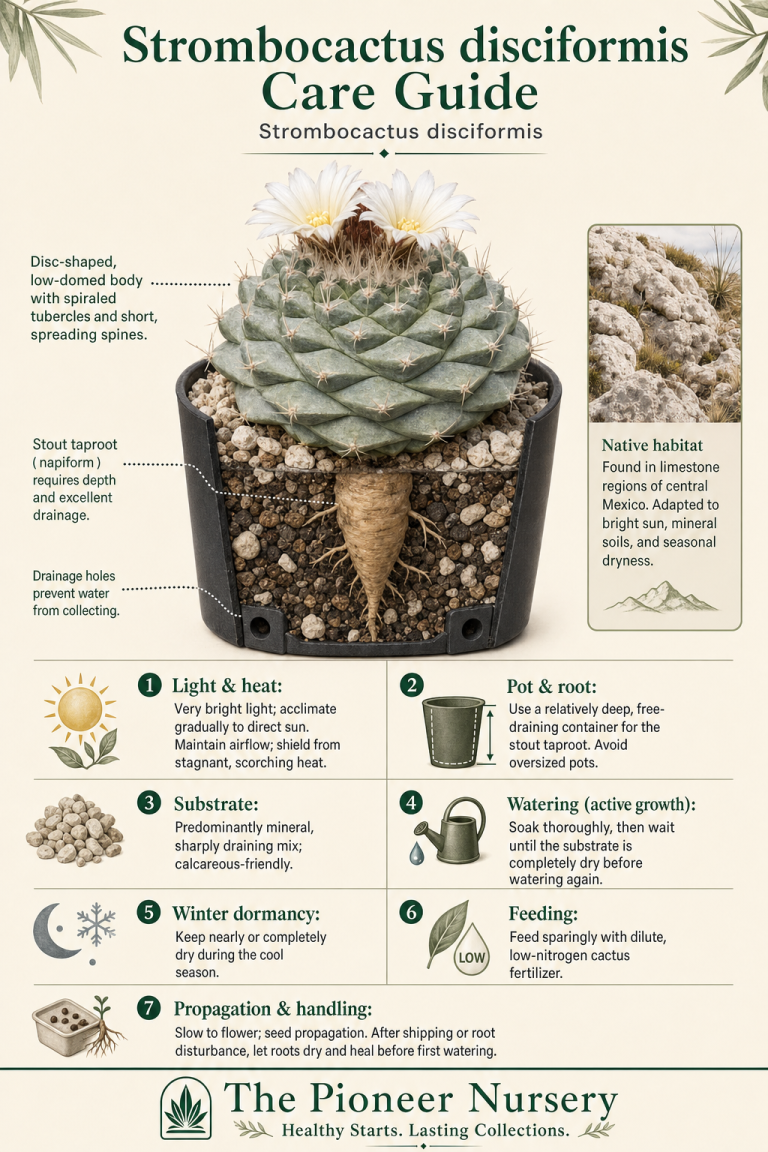
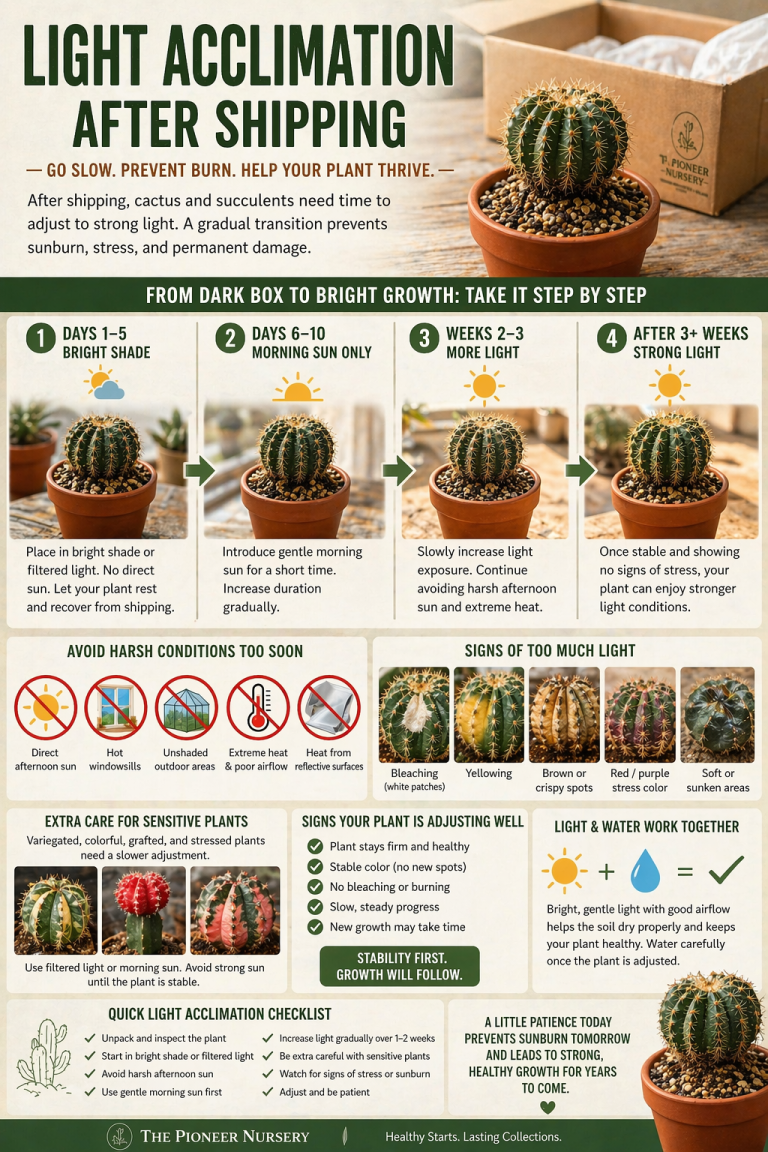
Provide bright light to full sun. Strong light helps maintain compact growth and supports flowering, but acclimate gradually when moving the plant from shade, greenhouse protection, or shipping into direct sun. Abrupt exposure can cause sunburn. In very hot climates, mild afternoon shade may be useful, particularly while maintaining good airflow.
Watering
Water moderately during active winter growth, allowing the substrate to dry substantially between waterings. As spring growth slows, reduce watering. During hot summer dormancy, provide little or no water unless the plant shows clear active growth or excessive shriveling. Wet conditions are especially risky during dormancy and in cool weather because they can lead to root or stem rot.
Soil and substrate
Use a sharply draining, porous, mineral-leaning mix based on sandy or sandy-loam material. The substrate should hold enough moisture for winter growth while releasing excess water quickly and keeping roots aerated. Poor drainage is a major contributor to rot in this species.
Potting and roots
Choose a container with excellent drainage and avoid oversized pots that stay wet for too long. Repotting near the beginning of the active growth season is practical when needed. After repotting or major root disturbance, allow damaged roots to dry and recover before resuming cautious watering.
Temperature and seasonal care
Tylecodon wallichii grows primarily during the cooler winter-rainfall season and is generally dormant in summer. Winter growth can tolerate cool conditions when the substrate drains well, but protect the plant from severe frost and freezing rain. During hot summer weather, keep it dry and provide ventilation. Leaf loss during summer may be a normal part of dormancy rather than a sign of decline.
Fertilizer
Fertilize sparingly during active winter growth with a dilute, balanced or low-nitrogen succulent fertilizer. Do not fertilize a dormant, leafless plant or one growing in dim, cool, or waterlogged conditions.
Flowering
The flowers are pale greenish-yellow to yellowish-green, nodding, and carried on elongated flowering stems. Flowering is reported in early summer, approximately December to January in South Africa, often after or around the deciduous phase. Strong light and appropriate seasonal growth help support flowering.
Propagation
Propagation is possible from fresh seed or stem cuttings. Autumn is reported as a suitable time for both, allowing new plants to establish during the winter growing season. Sow the small seeds on the surface of a well-drained medium rather than burying them deeply. Keep stem cuttings in well-drained substrate and water cautiously but consistently enough to support rooting once the cutting is stable.
Common problems and safety
Root or stem rot usually reflects excessive moisture, poor drainage, or watering during summer dormancy. Stretching and weak growth indicate inadequate light, while abrupt movement into intense sun can cause sunburn. Severe frost or freezing wet conditions can cause cold damage. Normal summer leaf loss may be mistaken for decline. This species is poisonous if eaten and is associated with livestock poisoning in its native range; do not treat it as edible or medicinal, and keep it away from grazing animals, children, and pets.
Shipping and arrival care
Inspect the plant after arrival and place it in bright, sheltered conditions. Acclimate gradually to direct sun rather than moving it immediately into intense light. If it arrives bare-rooted, recently cut, chilled, or with disturbed roots, do not water immediately; allow wounds and damaged roots to dry and recover first. Resume watering cautiously according to its seasonal growth and the dryness of the substrate. These precautions are especially important because wet conditions can encourage rot.
Frequently Asked Questions
When should I water Tylecodon wallichii?
Water moderately during active winter growth and let the substrate dry substantially between waterings. Reduce watering as spring growth slows, then provide little or no water during hot summer dormancy unless the plant is clearly growing or excessively shriveled.
Why is my Tylecodon wallichii losing its leaves?
This species is generally deciduous and may shed leaves as summer dormancy develops. Leaf loss can be normal, especially when it coincides with slowing growth and hot conditions.
Can Tylecodon wallichii grow in full sun?
Yes. Bright light to full sun is appropriate, but acclimate gradually after shade, greenhouse protection, or shipping to reduce the risk of sunburn. Mild afternoon shade may help in very hot climates.
What soil should I use?
Use a porous, sharply draining, mineral-leaning substrate based on sandy or sandy-loam material. The mix should support winter growth without remaining waterlogged.
Should I water immediately after shipping?
Not necessarily. If the plant arrives bare-rooted, recently cut, chilled, or root-disturbed, allow wounds and damaged roots to dry and recover first. Then resume cautious watering based on seasonal growth and substrate dryness.
Is Tylecodon wallichii safe around pets or livestock?
No. The species is reported as poisonous if eaten and is associated with livestock poisoning in its native range. Keep it away from grazing animals, children, and pets, and do not use it as food or medicine.
Tylecodon wallichii rewards growers who follow its natural rhythm: bright light, active winter growth, and a dry summer rest. Focus on drainage, seasonal watering, and gradual changes in light, and its unusual branches and deciduous habit can remain a striking part of the collection.