Coryphantha elephantidens Care Guide: Growing Elephant Tusk Cactus
Learn how to grow Coryphantha elephantidens with bright light, porous soil, careful seasonal watering, and a dry winter rest.
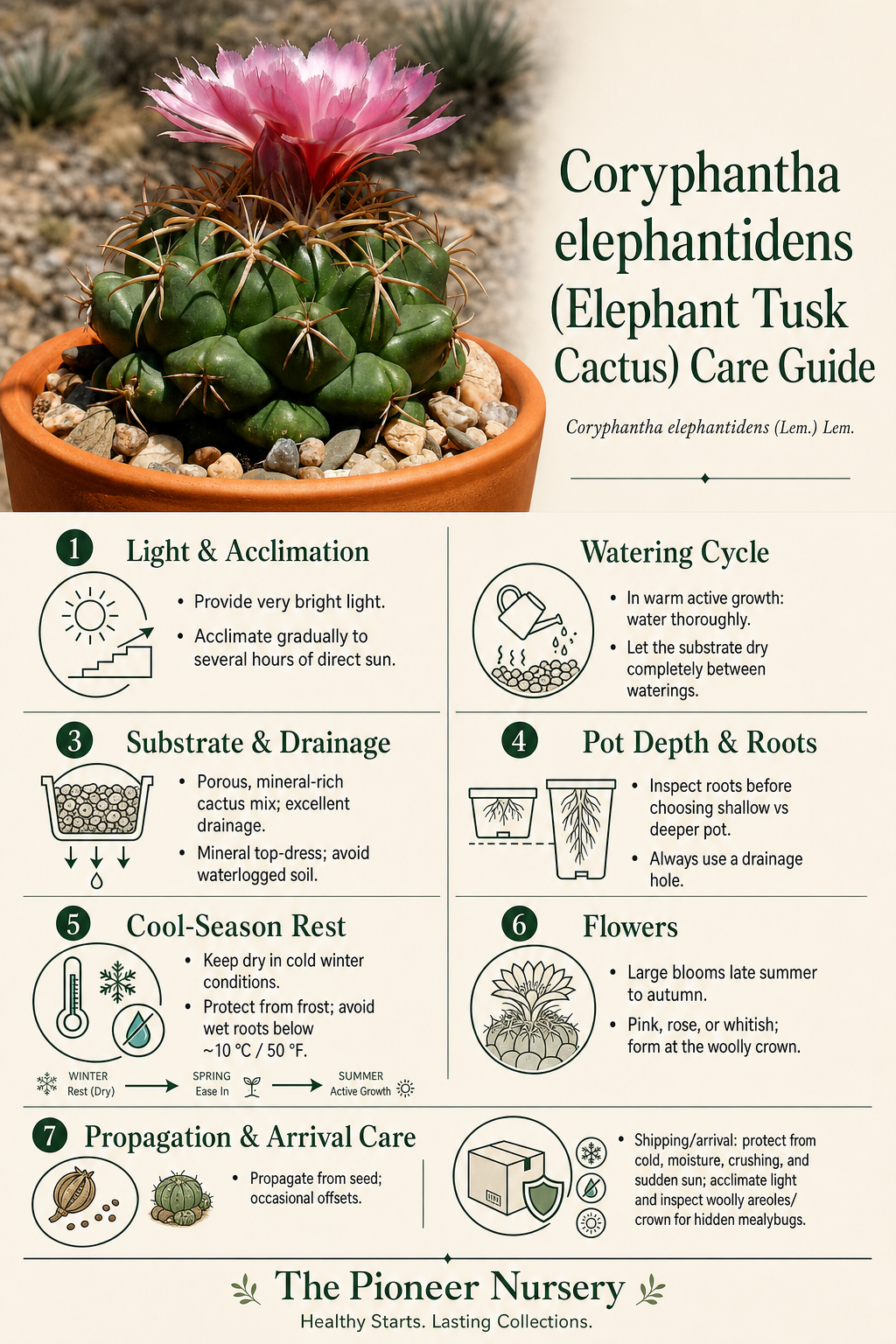
Coryphantha elephantidens, commonly called elephant tusk cactus or elephant’s tooth, is a Mexican, warm-season cactus known for its rounded form and large, showy flowers. Its main care priorities are strong light with gradual acclimation, sharply draining soil, thorough watering only while actively growing, and very dry conditions during cold weather. Because this species belongs to a taxonomically difficult group and root form can vary, inspect the individual plant rather than applying a single potting rule to every specimen.
Quick Care Summary
- Provide very bright light and acclimate gradually to several hours of direct sun.
- Use a porous, mineral-rich cactus substrate with excellent drainage.
- Water thoroughly during warm active growth, then let the substrate dry completely.
- Reduce watering substantially in winter and keep the plant dry in cold conditions.
- Protect from frost and avoid wet roots when nighttime temperatures are below approximately 10 °C/50 °F.
- Inspect the roots before choosing between a shallow or deeper container.
- Watch woolly areoles and the crown for concealed mealybugs.
About the plant
Coryphantha elephantidens is an accepted species native to Mexico, where it is associated with dry shrubland, grassland, and xerophyllous scrub. Related Coryphantha names can be difficult to distinguish, so nursery labels may occasionally require verification. Do not automatically treat names such as varieties, subspecies, or horticultural forms as interchangeable with the species name.
Light
Provide very bright light with several hours of direct sun after gradual acclimation. Plants moving from greenhouse conditions, shade, or shipping should not be placed immediately into intense sun. Light shade or filtered protection during the hottest part of the day can help reduce heat stress and sun damage, especially in intense summer conditions.
Watering
During warm, active growth, water thoroughly and then allow the substrate to dry completely before watering again. Avoid frequent light watering that keeps the root zone intermittently damp. Reduce watering substantially in winter and keep the plant dry during cold conditions. During periods of extreme summer heat, reduced activity may also call for less watering; follow actual growth, temperature, ventilation, and substrate drying rather than a fixed calendar.
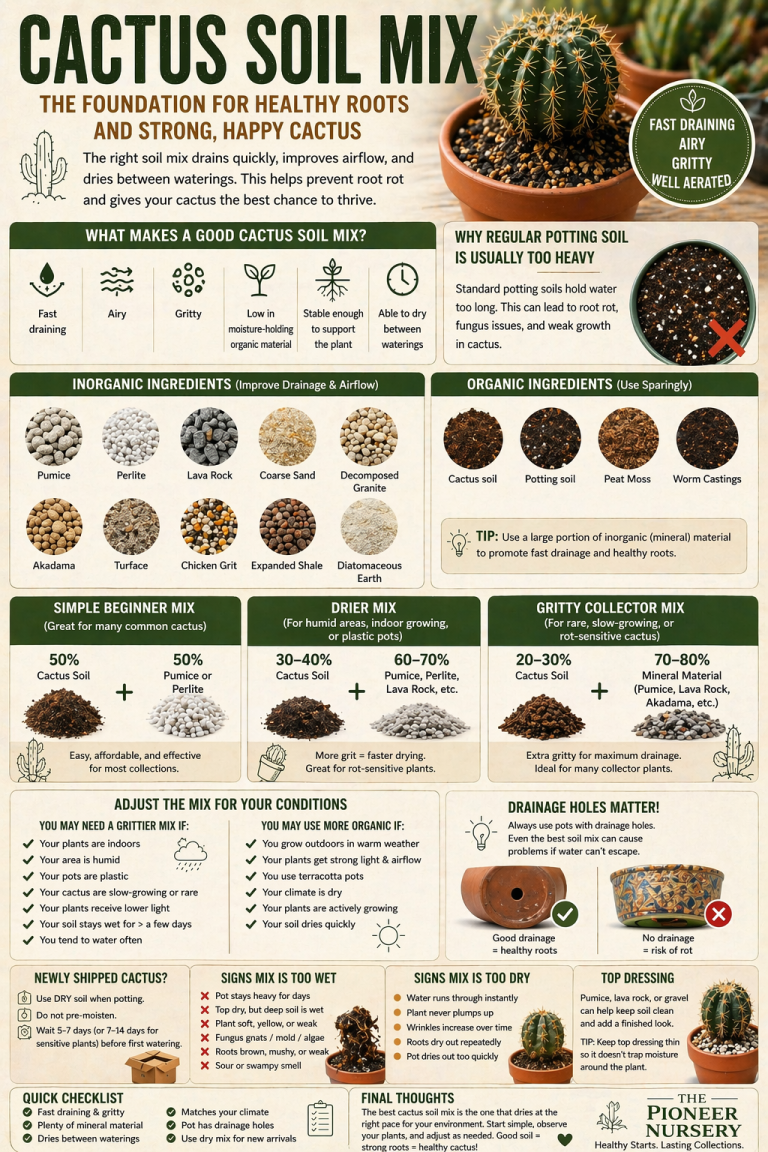
Soil and substrate
Use a sharply draining, porous cactus mix with strong aeration and limited water retention. A mineral-rich substrate containing pumice, grit, or similar drainage material is appropriate. Poor drainage and stagnant, wet soil increase the risk of root and basal rot.
Potting and roots
Use a container with an unobstructed drainage hole and avoid oversized pots. Some specialist guidance favors a shallow pot only slightly wider than the plant, while other reports describe substantial roots in certain forms. Inspect the actual root system before choosing pot depth. Repot during active growth, disturb roots as little as practical, and delay heavy watering after major root disturbance until damaged roots have dried and begun to recover.
Temperature and winter care
Keep the plant warm during active growth. It has been reported to tolerate brief temperatures around -3 °C when kept dry, but this should not be treated as a general container-culture target. Provide frost protection, and keep the plant dry when nighttime temperatures are below approximately 10 °C/50 °F. Cold combined with wet roots is a major rot risk.
Seasonal growth and dormancy
Growth is primarily seasonal, with the strongest activity during warm weather and reduced activity during winter. Winter care should emphasize dryness and protection from cold, wet conditions. Watering should resume cautiously when warmth, light, and active growth return, allowing the substrate to dry fully between waterings.
Fertilizer
Feed only during active growth. Use a dilute, low-nitrogen cactus fertilizer or a balanced fertilizer at modest frequency. Do not fertilize dry, dormant, recently repotted, or root-damaged plants.
Flowering
Coryphantha elephantidens produces large, showy flowers commonly described as pink to rose or whitish. Flowering is generally associated with late summer through autumn, although greenhouse-grown plants may flower from spring into early autumn. Yellow flowers have been reported in some infraspecific taxa or populations, so flower color alone should not be used to identify every plant as the same form.
Propagation
Propagation is principally by seed. The species may also produce offsets, although offset production can be infrequent. Seedlings grow slowly and may be susceptible to damping-off, so clean conditions, careful moisture control, and excellent ventilation are important. Tissue-culture propagation has been documented, but it is a specialized laboratory or commercial technique rather than ordinary nursery propagation. For dependable seed production, cross-pollinate flowers from genetically distinct plants rather than assuming that every plant is self-fertile.
Common problems
Root or basal rot: Usually associated with wet substrate, poor drainage, or watering while the plant is cold. Improve drainage and keep the plant dry in cold conditions.
Sunburn: Can follow abrupt exposure to strong direct light, particularly after greenhouse culture or shipping. Acclimate gradually.
Damping-off: Seedlings are vulnerable when humidity is excessive or ventilation is inadequate. Use clean conditions and careful moisture control.
Mealybugs: These may hide in the woolly areoles and crown. Inspect beneath the wool rather than relying only on surface sprays.
Misidentification: Coryphantha elephantidens belongs to a difficult species complex. Related taxa and nursery labels should not be assumed to be identical without appropriate review.
Shipping and arrival care
Inspect the plant after arrival for damage, moisture, and signs of stress. Protect it from freezing temperatures, prolonged moisture, crushing, and sudden intense light. If it arrives bare-root or with disturbed roots, place it in a dry, porous medium and allow damaged roots to dry and acclimate before resuming cautious watering. Gradually reintroduce direct sun after shipping; the recovery approach should reflect the plant’s actual root condition and environmental conditions.
Frequently Asked Questions
How often should I water Coryphantha elephantidens?
Do not use a fixed schedule. Water thoroughly during warm active growth only after the substrate has dried completely, then reduce watering substantially in winter and keep the plant dry when cold.
Can Coryphantha elephantidens take full sun?
It benefits from very bright light and several hours of direct sun, but acclimate gradually. Filtered protection during the hottest conditions can help prevent sun damage and heat stress.
What type of pot does it need?
Use a draining container and avoid oversized pots. Root form varies: some plants suit shallow pots, while others may have more substantial roots. Inspect the individual root system before selecting pot depth.
When does it flower?
Flowering is generally associated with late summer through autumn, though greenhouse-grown plants may flower from spring into early autumn. Flowers are commonly pink, rose, or whitish.
How is it propagated?
Seed is the principal method. Occasional offsets may be possible, but production can be infrequent. Seedlings require careful moisture control and ventilation because damping-off is a risk.
Should I cross-pollinate the flowers?
For dependable seed production, cross-pollinate flowers from genetically distinct plants rather than assuming self-fertility, because reports differ and a peer-reviewed study found obligate outcrossing in the population studied.
With strong light, porous soil, careful drying between waterings, and a genuinely dry winter rest, Coryphantha elephantidens can be a rewarding specimen cactus. Pay particular attention to the plant’s root condition, seasonal activity, and gradual acclimation after shipping or changes in light.