Aztekium ritteri Care Guide
Aztekium ritteri is an exceptionally slow-growing miniature cactus that needs bright light, an open mineral substrate, careful watering, and a distinctly dry winter rest.
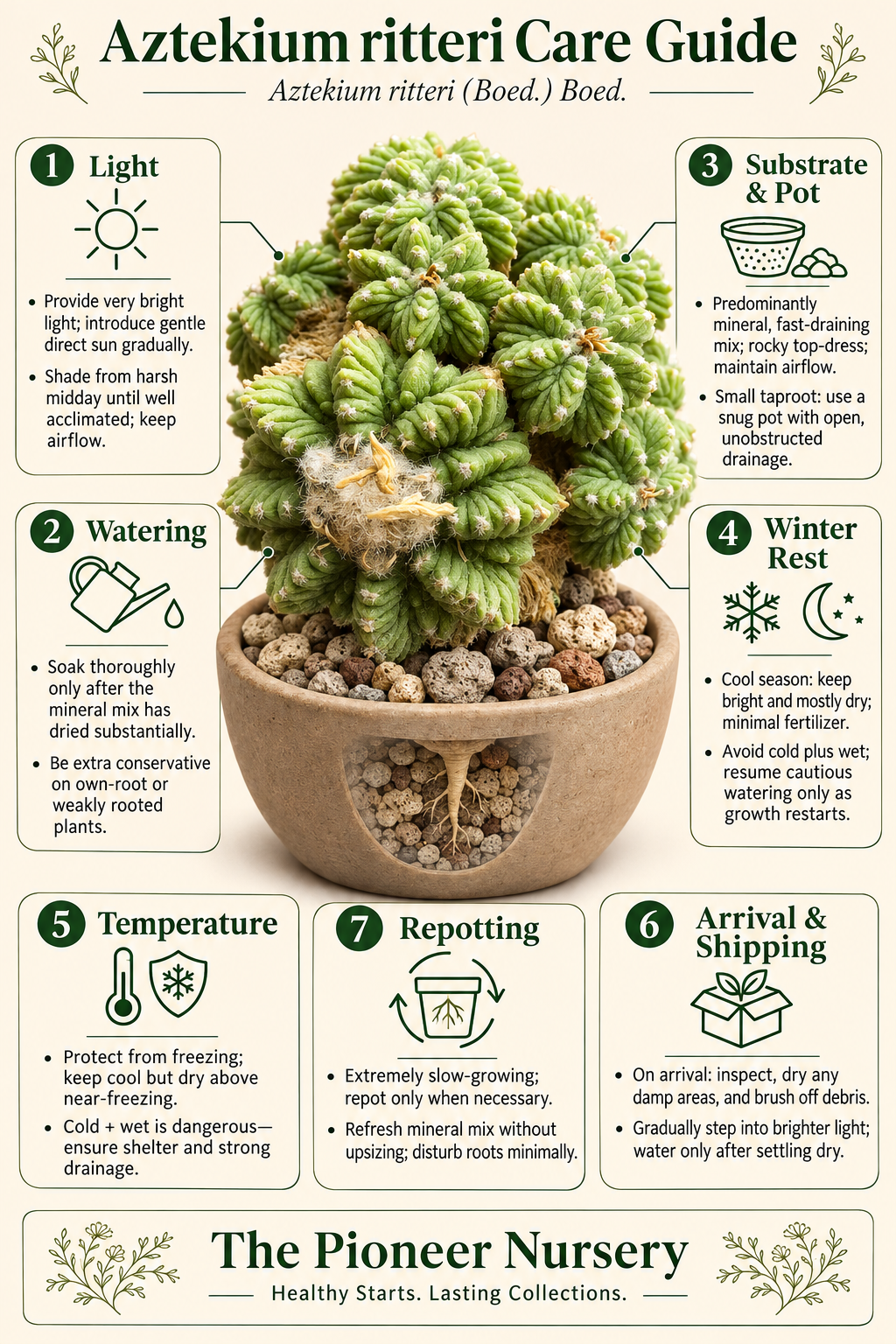
Aztekium ritteri, sometimes called the Aztec cactus, is a small globular cactus with a small taproot and exceptionally slow growth. Its unusual form and delicate root system make root health more important than rapid growth. Provide bright light, excellent air movement, a sharply draining mineral substrate, and cautious watering—especially for own-root plants and during cool weather.
Quick Care Summary
- Provide bright light with gradual acclimation to full sun.
- Use strong air movement and a predominantly mineral, fast-draining substrate.
- Water thoroughly only after the substrate has dried substantially.
- Keep own-root and weakly rooted plants especially conservative with water.
- Maintain a distinctly drier winter rest, particularly in cool conditions.
- Protect the plant from freezing and cold, wet roots.
- Repot only when necessary because the species is extremely slow-growing.
About Aztekium ritteri
Aztekium ritteri is a specialized miniature cactus associated with rocky habitats in northeastern Mexico. It remains very small and grows exceptionally slowly, so changes in size may be gradual even when the plant is healthy. Grafted plants often grow faster and may reach flowering sooner, while own-root plants require especially careful handling because their roots can be weak and easily disturbed.
Light and air movement
Provide bright light with good air movement. Established plants can tolerate full sun, but acclimate gradually after shipping, repotting, grafting, or time in lower light. In hot conditions or under intense midday sun, light shade or filtered afternoon light can reduce scorching. Insufficient light may produce weak, elongated growth, while abrupt exposure to strong sun can cause scorch.
Watering
Use a cautious wet-dry cycle. During active growth, water thoroughly only after the substrate has dried substantially, then let excess water drain completely. Own-root plants and weakly rooted older specimens should be watered more conservatively than vigorous grafted plants. Avoid prolonged moisture, particularly when temperatures are cool, because wet roots in cold conditions greatly increase the risk of rot.
Soil and substrate
Use a very open, fast-draining, predominantly mineral mix with high air-filled porosity. Pumice, lava, grit, coarse sand, or similar mineral components are appropriate. Keep any organic portion limited and stable. The finished substrate should drain promptly and should not remain wet after irrigation.
Potting and roots
Choose a small pot with excellent drainage and enough depth for the small taproot and associated roots, without leaving a large volume of unused wet substrate. Repot only when necessary because this species grows very slowly and can be sensitive to root disturbance. Handle roots carefully. If roots are damaged, allow cuts or damaged areas to dry and begin recovery before cautiously resuming irrigation.
Temperature and seasonal rest
Protect Aztekium ritteri from freezing and from cold, wet conditions. Warm, well-ventilated conditions are preferred during active growth. Give own-root plants a distinctly drier winter rest; in a cool winter greenhouse, keep them nearly dry and resume watering gradually as temperatures, light, and growth activity increase. Grafted plants may tolerate somewhat more moisture, but the rootstock must also be protected from overwatering and rot.
Fertilizer
Fertilize sparingly during active growth with a dilute, low-nitrogen cactus fertilizer. Do not fertilize dormant, recently repotted, root-damaged, or visibly stressed plants. Because the species is exceptionally slow-growing, more fertilizer is not a reliable way to produce healthy rapid growth.
Flowering
Mature plants produce small pale pink to whitish flowers, generally during the warmer growing season. Flowering is slow to achieve from seed because of the species’ exceptionally slow growth. Grafting can accelerate maturity and flowering, although it may change the plant’s appearance and growth habit.
Propagation
Propagation is primarily by seed, but seedlings are extremely slow. Young seedlings may need prolonged warm, humid, carefully ventilated conditions before they can tolerate ordinary dry cactus culture. Grafting is widely used to accelerate growth and improve establishment. Tissue-culture propagation has also been documented experimentally. De-grafting and re-rooting can be difficult, so minimize root disturbance.
Shipping and arrival care
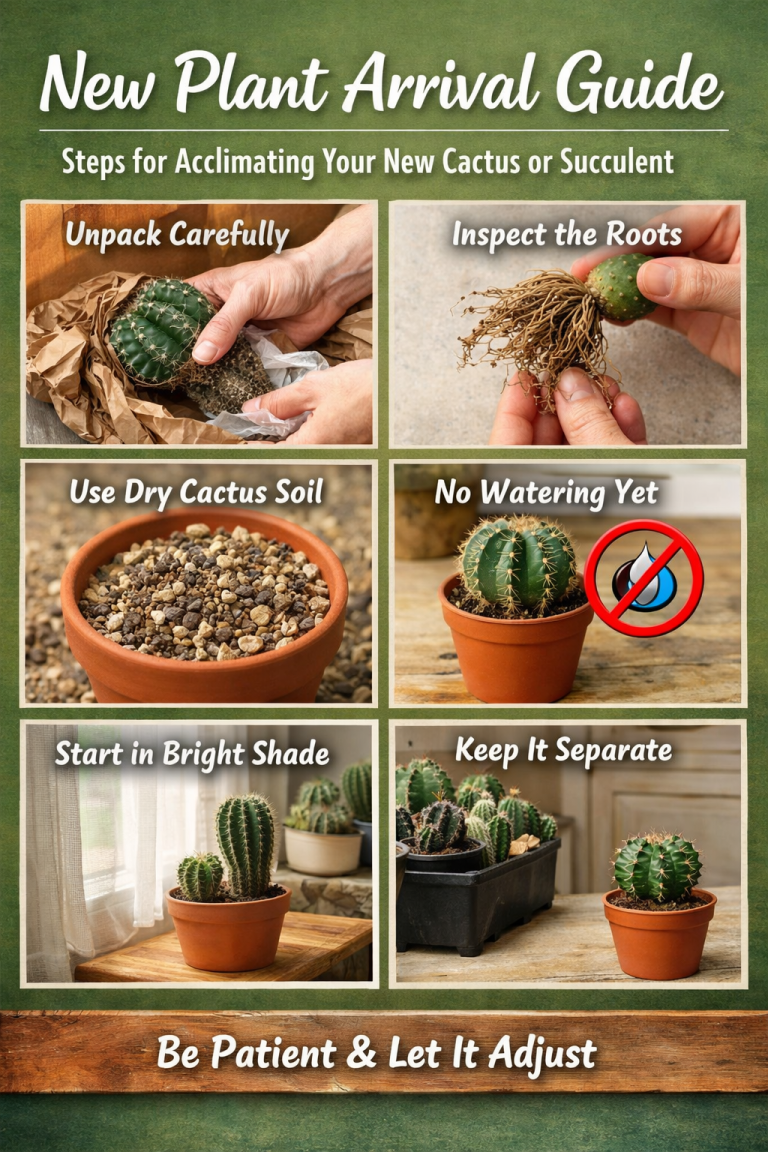
After arrival, provide bright but initially moderated light and good ventilation, then acclimate gradually to stronger sun. Keep the plant dry during recovery, especially if it is own-root or weakly rooted. After bare-root shipping or significant root disturbance, allow damaged roots to dry and begin recovery before cautiously resuming irrigation. For grafted plants, monitor both the scion and the rootstock.
Common problems
Root or basal rot usually follows frequent watering, poor drainage, or cool wet conditions. Severe root disturbance can cause root loss or failure to re-root, particularly in old or de-grafted specimens. Sudden movement from shade, shipping darkness, or filtered greenhouse light into strong sun can cause scorch. Insufficient light may produce weak, etiolated growth. Slow growth and delayed flowering are expected, especially in own-root seed-grown plants. Monitor for mealybugs or scale, which can be difficult to spot among ribs and wool.
Frequently Asked Questions
How often should I water Aztekium ritteri?
Do not follow a fixed calendar. During active growth, water thoroughly only after the substrate has dried substantially, then drain completely. Keep own-root and weakly rooted plants drier, and be especially cautious in cool weather.
Can Aztekium ritteri grow in full sun?
Established plants can tolerate full sun, but acclimate gradually after shipping, repotting, grafting, or lower-light conditions. Light shade or filtered afternoon light can reduce stress during intense heat.
Why is my Aztekium ritteri growing so slowly?
Exceptionally slow growth is a normal characteristic of the species, particularly for own-root plants grown from seed. Prioritize healthy roots and avoid trying to force growth with excess water or fertilizer.
Should Aztekium ritteri be kept dry in winter?
Yes. Give it a distinctly drier winter rest, especially when temperatures are cool. Resume watering gradually as temperatures, light, and growth activity increase.
Is grafting useful for Aztekium ritteri?
Grafting is widely used to accelerate growth and improve establishment, and it can bring plants to flowering sooner. It may alter appearance and growth habit, and both the scion and rootstock must be protected from overwatering and rot.
When can I water a shipped plant?
After bare-root shipping or significant root disturbance, do not water immediately. Provide moderated bright light and ventilation, allow damaged roots to dry and begin recovery, then resume irrigation cautiously.
Aztekium ritteri rewards patience. Keep the roots airy, let the substrate dry substantially between waterings, provide bright light with careful acclimation, and treat winter as a dry resting period. For this exceptionally slow-growing cactus, steady root health is a better measure of success than rapid size or flowering.