Dorstenia lancifolia Care Guide
Learn how to grow Dorstenia lancifolia, a warm-growing caudiciform that needs bright filtered light, excellent drainage, active-season watering, and a much drier cool-season rest.
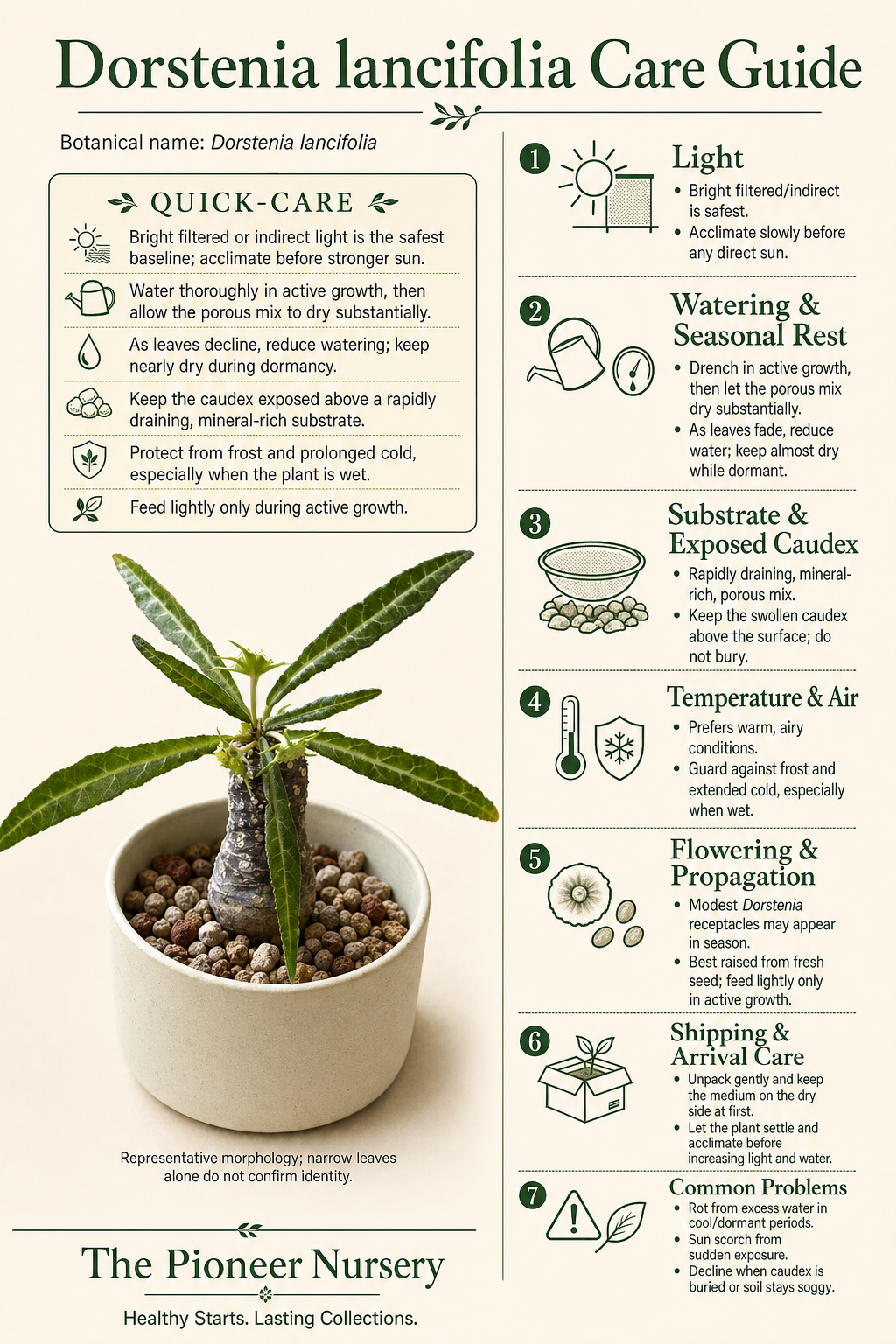
Dorstenia lancifolia is a warm-growing caudiciform with a swollen caudex and narrow leaves. It is commonly used in horticulture and collector commerce as an abbreviated name for the accepted taxon Dorstenia foetida subsp. lancifolia (Rendle) Friis. Because plants sold under this name can vary and may include hybrids or inconsistently labeled material, focus on the plant’s condition as well as its label. Bright filtered light, rapid drainage, careful seasonal watering, and protection from cold wet conditions are the main priorities.
Quick Care Summary
- Bright filtered or indirect light is the safest baseline.
- Acclimate gradually before exposing the plant to stronger direct sun.
- Water thoroughly during active growth, then allow the porous mix to dry substantially.
- Reduce watering as leaves decline and keep the plant nearly dry during dormancy.
- Keep the caudex exposed above a rapidly draining, mineral-rich substrate.
- Protect from frost and prolonged cold, especially when the plant is wet.
- Feed lightly only during active growth.
About Dorstenia lancifolia
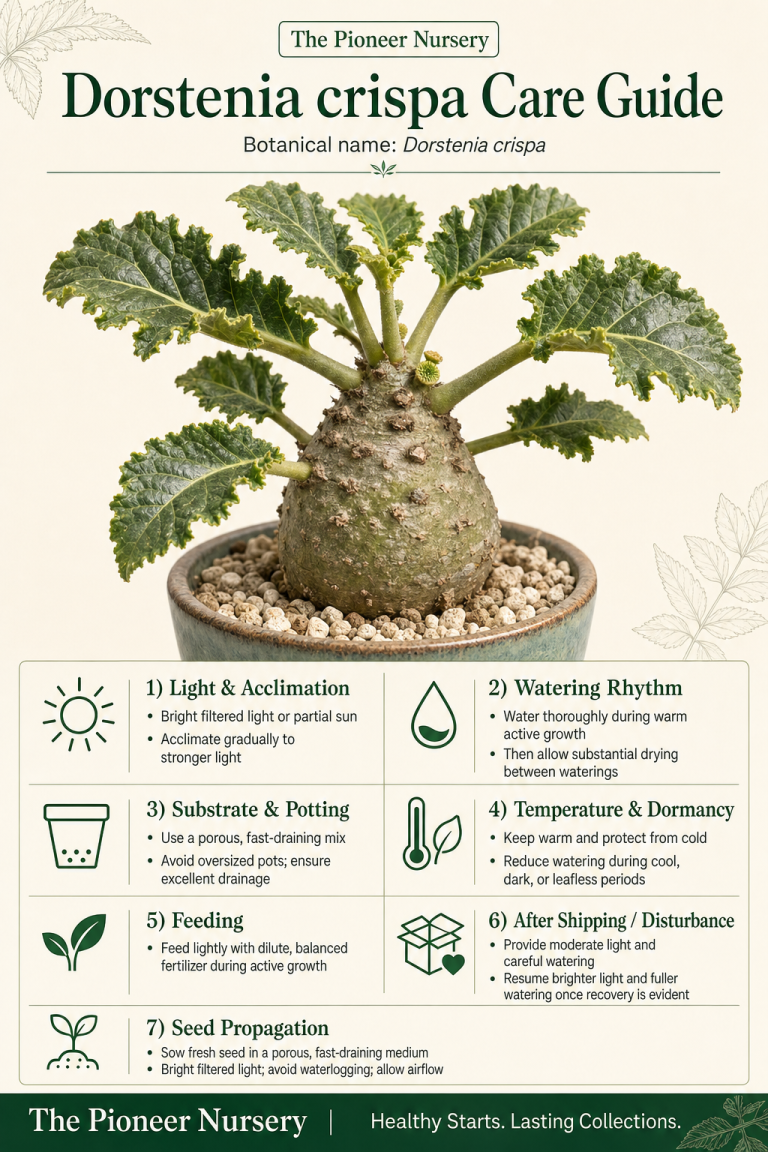
This plant may develop a swollen caudex and narrow, lance-shaped foliage, although appearance can vary with genetics and growing conditions. Leaf shape alone does not confirm its identity. The caudex should remain visible above the substrate. Dorstenia produces flattened receptacles, which are specialized inflorescences rather than typical showy flowers.
Light
Provide bright filtered light or bright indirect light. Gentle morning or late-afternoon sun may work after gradual acclimation, but abrupt exposure to intense direct sun can scorch the leaves and caudex. Too little light may cause elongated, weak growth and reduce flowering.
Watering
During active growth, water thoroughly when the plant is in leaf, then allow the porous substrate to dry substantially before watering again. Reduce irrigation as growth slows or leaves are shed, and keep the plant nearly dry during dormancy. Never keep the roots constantly wet. Cold, wet conditions create a significant rot risk.
Soil and substrate
Use a porous, rapidly draining mix with substantial mineral content and enough organic material to retain limited moisture without compacting. Strong root aeration is important, and the medium should not remain saturated.
Potting and roots
Choose a container with generous drainage holes. Keep the swollen caudex at or above the substrate surface rather than burying it. Repot only when necessary and handle the roots and caudex carefully. If roots are disturbed or damaged, allow them to dry before resuming irrigation.
Temperature and seasonal growth
Warm growing conditions are preferred. Protect the plant from frost and prolonged cold. Specialist guidance places active growth broadly around 18–28 °C and recommends avoiding temperatures below approximately 5 °C, especially when the plant is wet. A seasonal rest or reduced-growth period may occur under cool or short-day conditions. As foliage declines, reduce watering progressively and keep the plant much drier until new growth returns.
Fertilizer
Feed lightly only during active growth, using a balanced fertilizer diluted below label strength. Do not fertilize dormant, recently repotted, or root-damaged plants.
Flowering
Healthy plants may produce their distinctive flattened receptacles repeatedly during active growth. Some Dorstenia can self-pollinate and produce seed, but seed set and fertility should not be assumed for every individual.
Propagation
Seed propagation is the principal documented method for maintaining the caudiciform habit. Sow fresh or properly matured seed in a warm, porous medium and keep it lightly moist while germination is being evaluated. Specific storage and germination requirements for this taxon are not sufficiently documented to state as universal rules.
Shipping and arrival care
Ship and receive during warm, frost-free weather when possible. Inspect the plant for physical damage, especially to the caudex, and watch for prolonged moisture in the package. After arrival, provide bright filtered light and acclimate gradually before stronger sun. If the plant was shipped bare-root or its roots were disturbed, allow damaged roots to dry and avoid immediate heavy watering.
Common Problems
- Root or caudex rot: Usually associated with saturated substrate, poor drainage, or cool wet conditions.
- Sun scorch: Can follow abrupt exposure to intense direct light.
- Weak, elongated growth: Often indicates inadequate light.
- Spider mites: May be more likely in hot, dry conditions.
- Scale insects: Check older or pale stems carefully, where they may be difficult to see.
- Leaf loss or growth interruption: Sudden changes in temperature, light, watering, or repotting can trigger setbacks.
Frequently Asked Questions
How often should I water Dorstenia lancifolia?
Water based on active growth and substrate dryness rather than a fixed calendar. Water thoroughly while the plant is in leaf, allow the mix to dry substantially, and reduce watering as growth slows or leaves are shed.
Can Dorstenia lancifolia take direct sun?
Bright filtered light is the safest baseline. Gentle morning or late-afternoon sun may be suitable after gradual acclimation, but intense unacclimated sun can scorch the foliage and caudex.
Should the caudex be buried?
No. Keep the swollen caudex at or above the substrate surface and use a container with generous drainage.
What should I do if my plant loses its leaves?
Leaf loss may signal seasonal rest or a response to sudden changes in temperature, light, watering, or repotting. Reduce irrigation as growth declines and keep the plant much drier until new growth resumes, while checking for rot.
Can it flower or produce seed?
Healthy plants may flower repeatedly during active growth. Some Dorstenia can self-pollinate, but seed production and fertility are not guaranteed for every plant.
Is Dorstenia lancifolia the accepted name?
The name is widely used in horticultural and collector commerce. Plants of the World Online accepts Dorstenia foetida subsp. lancifolia (Rendle) Friis and lists Dorstenia crispa var. lancifolia as a synonym. Commercial plants may still vary in identity.
Dorstenia lancifolia is best grown as a warm, carefully watered caudiciform: provide bright filtered light, excellent drainage, an exposed caudex, and a much drier rest when growth slows. Because plants in commerce may be variable, observe the individual plant closely and adjust care to its growth, root condition, and seasonal response.