Astrophytum caput-medusae Care Guide
Learn how to grow Astrophytum caput-medusae, an unusual cactus with elongated tubercles and a specialized tuberous root system.
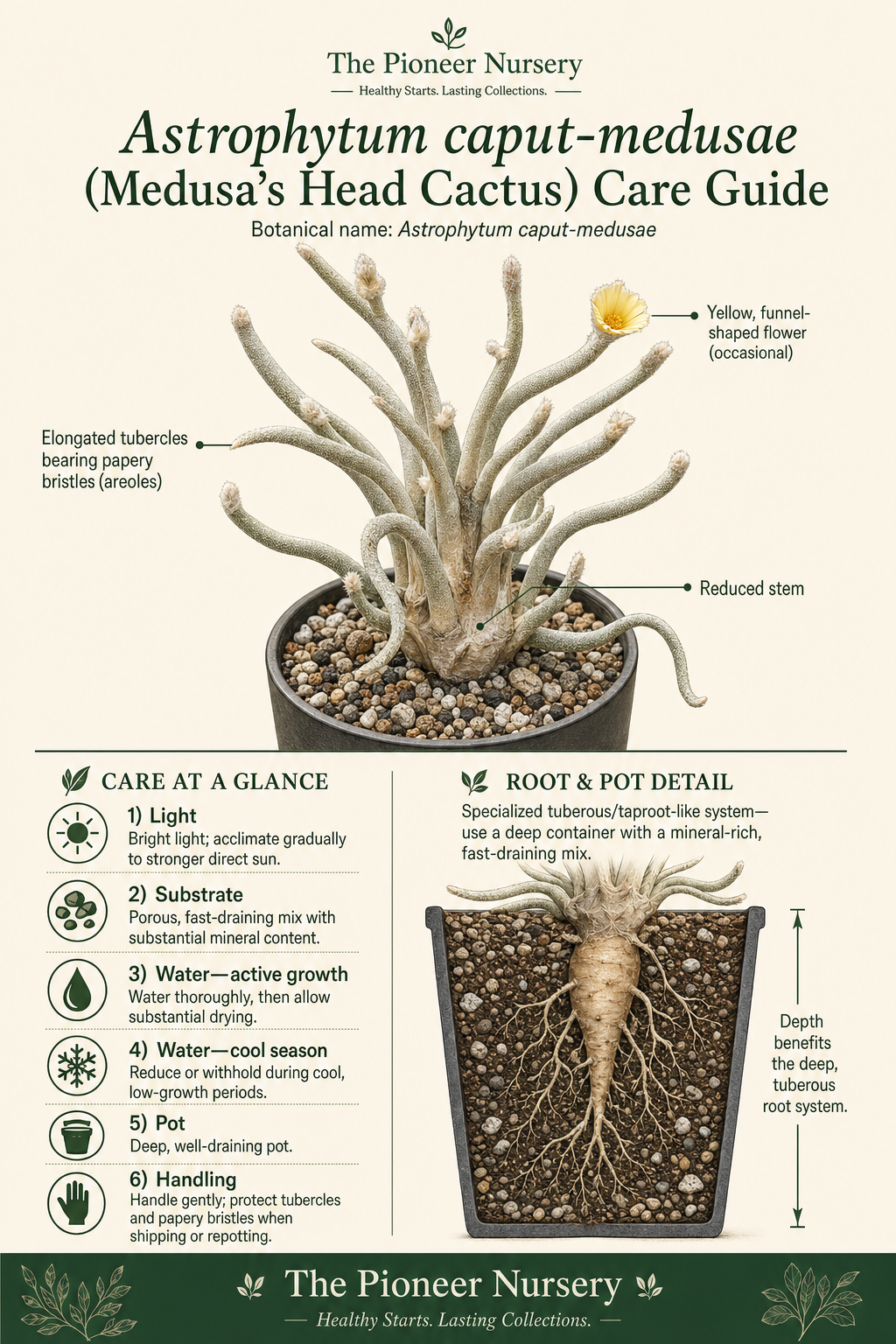
Astrophytum caput-medusae, commonly called Medusa's head cactus or Medusita, is one of the most distinctive Astrophytum species. Its reduced stem, elongated finger-like tubercles, papery bristles, and specialized underground root structure mean it should not be treated exactly like a typical globular cactus. The main priorities are bright but gradually acclimated light, a porous fast-draining substrate, careful watering, and protection from cold wet conditions. Its tuberous root system—an enlarged underground root structure—also calls for thoughtful potting and gentle handling.
Quick Care Summary
- Bright light, with gradual acclimation to stronger direct sun.
- Use a porous, fast-draining substrate with substantial mineral content.
- Water thoroughly during active growth, then let the substrate dry substantially.
- Reduce or withhold water during cool, low-growth conditions.
- Use a draining container suited to the specialized root system and handle it gently.
About the Plant
Astrophytum caput-medusae is an accepted species in the genus Astrophytum. It was formerly circulated under the name Digitostigma caput-medusae, which is treated as a synonym or former generic placement. The plant has a reduced stem and long, delicate tubercles that can be damaged by bending, crushing, or abrasion. Its specialized underground root system also affects pot selection and watering.
Light and Air Movement
Provide bright light, introducing stronger direct sun gradually. Sudden intense sunlight can cause sunburn, especially after shipping, repotting, greenhouse production, or indoor cultivation. Good air movement is beneficial, particularly after watering or during cooler conditions.
Watering
During active growth, water thoroughly and then allow the substrate to dry substantially before watering again. Do not keep the roots constantly wet. Reduce or withhold watering during cool, darker conditions when growth slows, but avoid prolonged severe dehydration in own-root plants because the elongated tubercles may shrivel. Grafted plants may need somewhat more regular moisture to support the rootstock, while still requiring rapid drainage.
Soil and Substrate
Use a very fast-draining, porous cactus substrate with substantial mineral content, such as pumice, perlite, coarse grit, or similar materials. A small amount of organic material may be included for limited moisture retention. Avoid dense or water-retentive soil, especially in cold conditions.
Potting and Roots
Use a container deep enough to accommodate the tuberous or taproot-like roots without crowding them. Always choose drainage holes, and avoid oversized containers that remain wet for long periods. Handle the roots and root crown—the transition area where the roots meet the plant—carefully. After root damage or significant disturbance, allow the affected plant to dry and recover before watering. Exact pot depth should be adjusted to the individual root system.
Temperature and Dormancy
Warm growing conditions are preferred. Protect the plant from frost, freezing temperatures, and cold drafts. Cooler winter conditions can be used for rest when the plant is kept comparatively dry and well ventilated. Growth generally slows during the cooler, darker part of the year, so reduce or withhold water when temperatures are low or the plant is not actively growing while maintaining bright light.
Fertilizer
Feed sparingly during active growth with a dilute, low-concentration cactus or balanced fertilizer. Do not fertilize dormant, cold, recently repotted, or root-damaged plants.
Flowering
Astrophytum caput-medusae produces funnel-shaped yellow flowers, often with a darker or orange-toned center. Flowers are borne from woolly floral structures on developing tubercles and are generally associated with the warmer growing season.
Propagation
Propagation is primarily by seed or grafting. Seed propagation is more difficult and slower than for many other Astrophytum species. Grafting is common because it can improve vigor and establishment, but own-root plants are also grown. The species is reported to be difficult or unreliable to hybridize with other Astrophytum species.
Shipping and Arrival Care
Inspect the plant after arrival, especially the elongated tubercles, root crown, and roots. For a bare-root specimen, allow damaged root areas to dry and heal before potting into a dry, porous substrate; delay watering until root disturbance has recovered. Grafted specimens require attention to both the scion—the grafted upper plant—and the rootstock. Gradually acclimate the plant to stronger light.
Common Problems
Root rot is associated with dense substrate, poor drainage, or watering during cold conditions. Prolonged severe dehydration can cause shriveling or tubercle loss. Abrupt exposure to intense direct sunlight can cause sunburn. Monitor for mealybugs, scale, and other common cactus pests. Handle elongated tubercles and the root crown carefully during shipping and repotting. On grafted plants, overwatering or chilling can contribute to rootstock decline or graft failure.
Frequently Asked Questions
How can I tell whether my plant is own-root or grafted?
Check whether the upper plant is joined to a separate rootstock. If it is grafted, account for the rootstock when adjusting moisture and seasonal care; own-root plants should not undergo prolonged severe dehydration.
What is the most important potting consideration?
Match the container to the specialized root system: provide enough depth without crowding, use drainage holes, and avoid an oversized pot that stays wet for long periods.
What should I prioritize after receiving a bare-root plant?
Inspect the roots and elongated tubercles, allow damaged root areas to dry and heal, then pot into dry porous substrate. Delay watering until root disturbance has recovered.
Can stronger sunlight be introduced immediately?
No. Begin with bright light and acclimate gradually to stronger direct sun, particularly after shipping, repotting, or indoor cultivation.
Is grafting necessary for this species?
No. Own-root plants are also grown, although grafting is common and may improve vigor and establishment. Seed propagation is comparatively difficult and slow.
Astrophytum caput-medusae rewards careful handling and close attention to its unusual root system. Keep the substrate porous, match watering to active growth and temperature, protect the plant from cold wet conditions, and introduce strong light gradually.