Astrophytum asterias — Monstrose Care Guide
Learn how to grow Astrophytum asterias — Monstrose, including light, conservative watering, mineral soil, winter dormancy, potting, flowering, propagation, and shipping recovery.
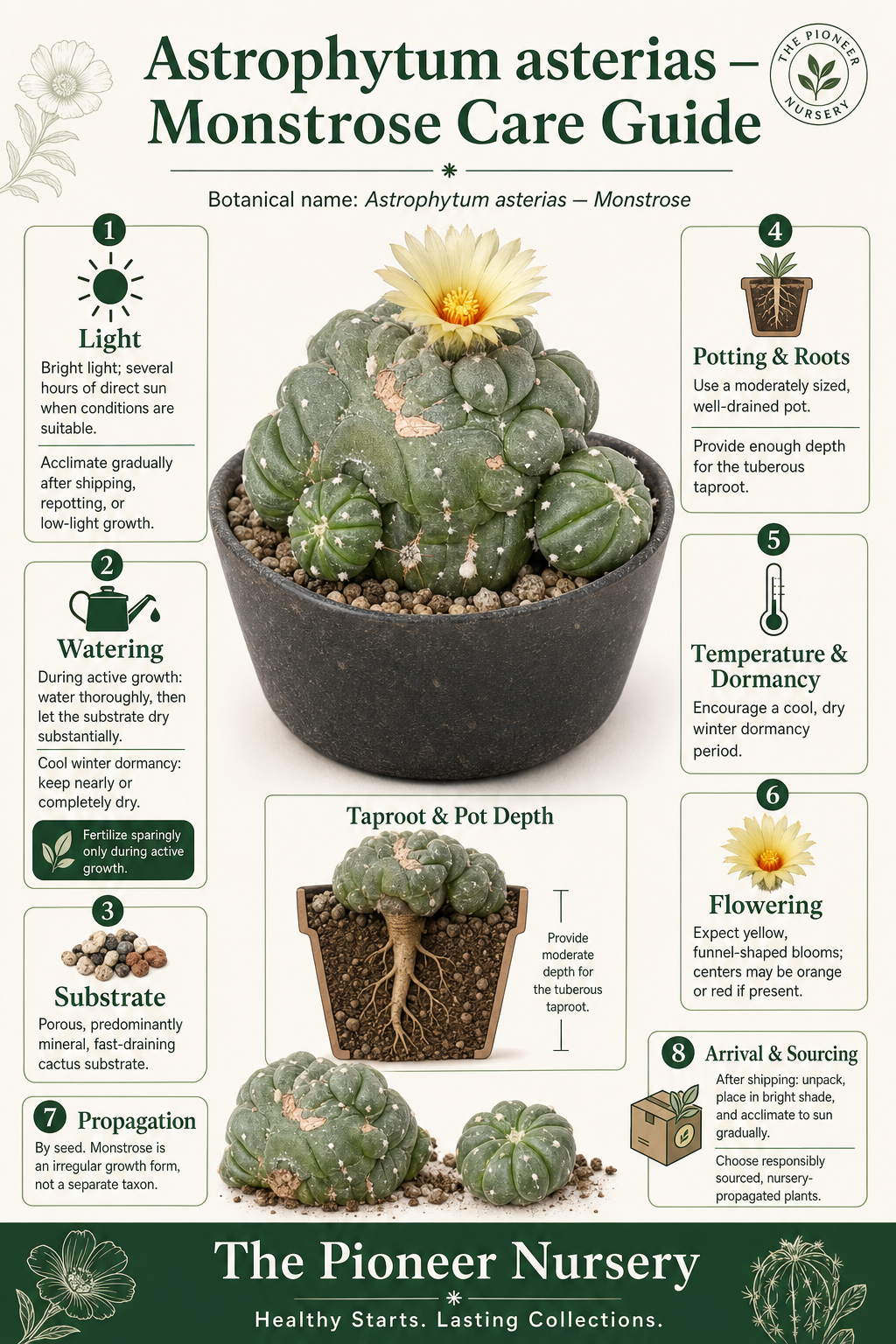
Astrophytum asterias — Monstrose is the irregular-growth form of the accepted species Astrophytum asterias, commonly called star cactus or sand dollar cactus. Monstrose plants may be lumpy, asymmetric, clustered, or otherwise unusual in shape, and individual specimens can vary considerably. Successful care depends on bright light, excellent drainage, careful watering, and a cool, dry winter rest. The species has a somewhat tuberous taproot and is especially vulnerable to rot when kept cold and wet.
Quick Care Summary
- Bright light with several hours of direct sun when conditions are suitable.
- Acclimate gradually after shipping, repotting, or low-light growth.
- Use a porous, predominantly mineral cactus substrate.
- Water thoroughly during active growth, then let the substrate dry substantially.
- Keep the plant nearly or completely dry during cool winter dormancy.
- Use a moderately sized, well-drained pot with enough depth for the tuberous taproot.
- Fertilize sparingly only during active growth.
- Expect irregular monstrose growth; it does not indicate a separate botanical taxon.
About the plant
Astrophytum asterias is a slow-growing cactus with a somewhat tuberous taproot. The word “monstrose” describes irregular vegetative growth; it is not a separate species, formal variety, or automatically recognized cultivar. Mature plants can produce funnel-shaped yellow flowers, often with orange or red centers, from the stem apex during the warmer growing season.
Light
Provide bright light with several hours of direct sun when temperatures and ventilation are suitable. Acclimate gradually after shipping, repotting, or time in low light to reduce sunburn. In very hot greenhouse or outdoor conditions, light afternoon shade can help prevent heat stress while maintaining compact growth.
Watering
Water thoroughly during active growth, then allow the substrate to dry substantially before watering again. Avoid frequent small sips and never keep the root zone constantly wet. Reduce watering as growth slows, and keep the plant dry during cool winter dormancy. Cold, wet conditions are a major rot risk. If the plant has shriveled after excessive dryness, rehydrate gradually rather than repeatedly keeping it wet.
Soil and substrate
Use a very fast-draining, porous, predominantly mineral cactus substrate that provides good root aeration. A modest organic fraction is acceptable, but the mix should not remain wet for extended periods. Slightly calcareous or near-neutral conditions are compatible; precise pH adjustment is not normally necessary.
Potting and roots
Choose a container with generous drainage holes and make it only moderately larger than the root system. Because the plant develops a somewhat tuberous taproot, adequate depth is preferable to a very shallow dish. Repot at the beginning of active growth when possible. After significant root disturbance, allow damaged roots to dry and callus before cautious rewatering.
Temperature and winter rest
Protect the plant from frost and prolonged cold, particularly when the substrate is wet. Growth commonly slows or stops during the cooler, darker part of the year. A cool, dry winter rest is beneficial; completely dry dormant plants may be kept around 5–15 °C (41–59 °F), according to the supplied research. Resume watering gradually when temperatures are warmer, light is stronger, and visible spring growth returns. In humid conditions, warm temperatures, airflow, and a dry root collar are especially important.
Fertilizer
Feed sparingly during active growth with a dilute, low-nitrogen cactus fertilizer, or use a balanced fertilizer at reduced strength. Do not fertilize dry, dormant, recently repotted, or root-damaged plants.
Flowering
Mature plants produce showy, funnel-shaped yellow flowers, often marked with orange or red centers, from the stem apex. Flowering generally occurs during the warmer growing season. Strong light, seasonal dryness, and steady active-season growth support flowering.
Propagation
Seed is the primary and most reliable propagation method. Grafting is also used by growers to accelerate growth or preserve difficult selected forms; grafted plants should be watered according to the needs of their rootstock. A monstrose plant may produce irregular offsets or branches, but offset production should not be assumed, and vegetative propagation is not reliably available from every specimen.
Conservation and responsible sourcing
Astrophytum asterias is listed as endangered under United States federal conservation rules and included in international CITES regulatory documentation. Use nursery-propagated, properly documented material, and verify applicable requirements before transporting or selling plants across jurisdictions. Wild collection should not be encouraged.
Common problems
Root or basal rot usually results from poor drainage, overwatering, or cool wet conditions. Sunburn can follow abrupt exposure to intense direct light, especially after indoor culture or shipping. Soft tissue, fungal damage, or scarring may follow shipping injury or high humidity with inadequate airflow. Insufficient light can cause weak growth and loss of compact form. Grafted plants may also experience graft failure, rootstock incompatibility, or rootstock decline. Monitor collection plants for scale insects, mealybugs, and other sap-feeding pests.
Shipping and arrival care
Whenever possible, ship and receive the plant dry, protected from freezing temperatures and prolonged high heat. After arrival, inspect for damage or rot. If roots were disturbed or the plant arrived bare-root, allow damaged roots to dry before cautious rewatering. Begin with bright but initially filtered light, then acclimate gradually to full sun. Recovery needs vary with root condition, shipping stress, and season.
Frequently Asked Questions
How often should I water Astrophytum asterias — Monstrose?
There is no fixed calendar. Water thoroughly during active growth, then wait until the substrate has dried substantially. Reduce watering as growth slows and keep the plant dry during cool winter dormancy.
Does this cactus need direct sun?
It benefits from bright light and several hours of direct sun when temperatures and ventilation are suitable. Acclimate gradually after shipping, repotting, or low-light culture to reduce sunburn.
What kind of pot does it need?
Use a pot with generous drainage holes and only moderately more space than the root system. Provide adequate depth because the plant develops a somewhat tuberous taproot.
Why is the plant growing lumpy or unevenly?
That irregular growth is the meaning of “monstrose.” It is a horticultural growth descriptor, not a separate species or formal botanical variety.
Can I propagate a monstrose specimen from offsets?
Some monstrose plants may produce irregular offsets or branches, but this should not be assumed. Seed is the primary and most reliable propagation method, while grafting is also used by collectors and growers.
How should I care for the plant after shipping?
Inspect it for damage or rot, allow disturbed or bare roots to dry, start it in bright filtered light, and acclimate gradually to full sun. Avoid keeping a stressed or root-damaged plant wet.
Give Astrophytum asterias — Monstrose bright light, fast drainage, and a deliberate dry period between waterings. Its unusual form makes every specimen distinctive, but the same conservative, root-conscious care remains essential. Source plants responsibly and keep conservation regulations in mind when transporting or selling.