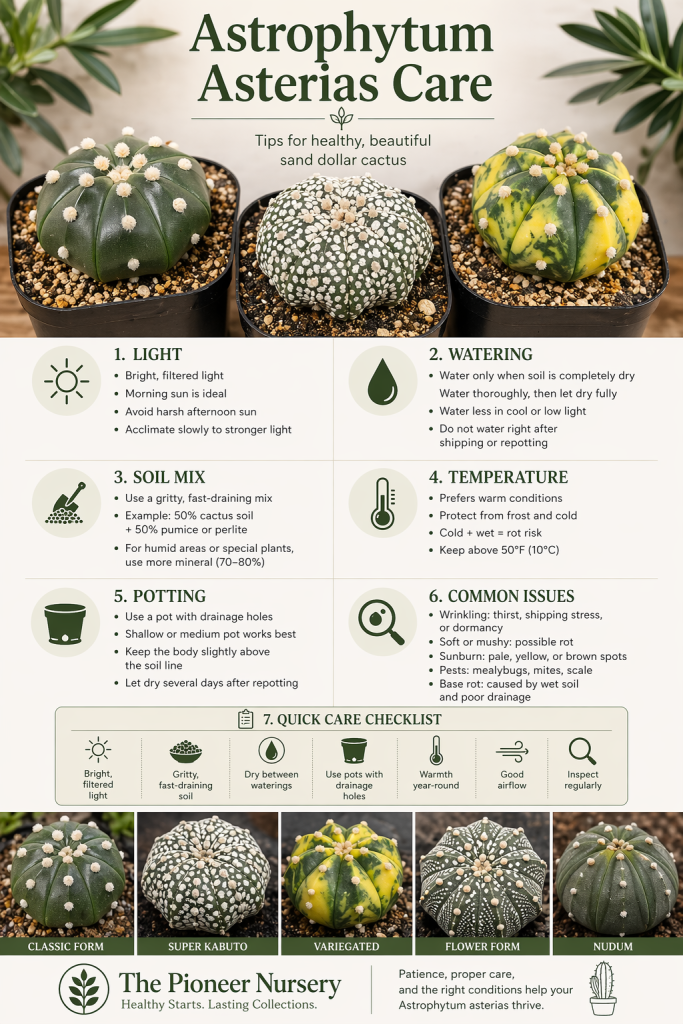
Astrophytum Asterias Care
Astrophytum asterias is one of the most beloved collector cactus species because of its smooth, spineless body, rounded shape, distinct rib pattern,…
Astrophytum asterias is one of the most beloved collector cactus species because of its smooth, spineless body, rounded shape, distinct rib pattern, and decorative white flecking. Many collectors know it as the “sand dollar cactus” because mature plants can have a flattened, rounded appearance that resembles a small sea dollar or star-patterned disc.
This species is beautiful, but it also rewards careful growing. Astrophytum asterias prefers bright light, a gritty soil mix, careful watering, warmth, and excellent drainage. It is especially important to avoid keeping this cactus too wet, because the low, rounded body and sensitive roots can be prone to rot if conditions are too damp.
Light Requirements
Astrophytum asterias likes bright light, but it should be protected from sudden harsh sun, especially after shipping or repotting. A healthy plant can often handle gentle morning sun, filtered sun, or strong bright indirect light.
Good light options include:
- Bright filtered light
- Morning sun
- A shaded greenhouse bench
- A bright windowsill without harsh afternoon heat
- A grow light placed at a safe distance
Avoid moving a newly arrived plant directly into intense afternoon sun. Even cactus that enjoy strong light can sunburn if they are moved too quickly from a shipping box, shaded area, or indoor setup into direct sun.
If the plant begins to look pale, bleached, yellowed, or scorched on one side, reduce the light and allow it to recover in bright shade.
Watering
Astrophytum asterias should be watered carefully. Like many cactus, it prefers a wet-to-dry cycle: water when conditions are warm and the soil is completely dry, then let the soil dry fully before watering again.
Do not keep the soil constantly moist. This species can rot if water sits around the roots or against the lower body.
During warm active growing conditions, water thoroughly only after the soil is dry. During cooler months, dormancy, low light, or humid weather, water much less often.
Helpful watering guidelines:
- Water only when the soil is fully dry.
- Use less water in cool or low-light conditions.
- Do not water immediately after shipping or repotting.
- Avoid letting water sit around the base of the plant.
- Let the pot dry completely between waterings.
If your Astrophytum asterias was shipped bare root, pot it into dry soil and wait about 7–14 days before the first watering, especially if the roots were trimmed or disturbed.
Soil Mix
A gritty, fast-draining cactus mix is one of the most important parts of Astrophytum asterias care. Heavy potting soil can hold too much moisture and increase the risk of root problems.
A good mix should be airy, mineral-heavy, and quick to dry.
A simple mix for many growers:
50% cactus soil
50% pumice or perlite
For more sensitive plants, humid climates, indoor growing, or collector specimens, use a grittier mix:
20–30% cactus soil
70–80% mineral material
Good mineral ingredients include pumice, perlite, lava rock, coarse sand, decomposed granite, akadama, turface, chicken grit, expanded shale, or diatomaceous earth.
The goal is to give the roots moisture when watered, but also enough oxygen and drainage to prevent rot.
Potting and Repotting
Choose a pot with drainage holes. Astrophytum asterias does not need an oversized pot, and too much extra soil can stay wet longer than the plant needs.
A shallow or moderately sized pot is often better than a deep oversized one, as long as the roots fit comfortably.
When potting, keep the body of the cactus slightly above the soil line. Do not bury the lower body deeply. Moist soil against the plant’s base can increase the chance of rot.
After repotting, keep the plant dry for several days before watering. This gives disturbed roots time to heal.
Temperature
Astrophytum asterias prefers warm growing conditions and should be protected from frost. Cold and wet conditions together are especially risky.
If temperatures are cool, reduce watering. If nighttime temperatures are low, avoid watering until conditions warm up again.
Keep this cactus away from freezing temperatures, cold drafts, and damp winter soil.
Humidity and Airflow
Good airflow helps the soil dry properly and reduces the risk of fungal spots, rot, and pests. This is especially important in greenhouses, crowded shelves, humid climates, or indoor growing areas.
If plants are packed tightly together, moisture can linger longer than expected. Give Astrophytum asterias enough spacing and airflow to stay dry between waterings.
Fertilizer
Astrophytum asterias does not need heavy fertilizer. During active growth, you can feed lightly with a diluted cactus fertilizer.
Avoid fertilizing a newly shipped, freshly repotted, stressed, or dormant plant. Let the plant settle first.
Too much fertilizer can encourage weak growth, especially when the plant does not have enough light.
Variegated and Special Forms
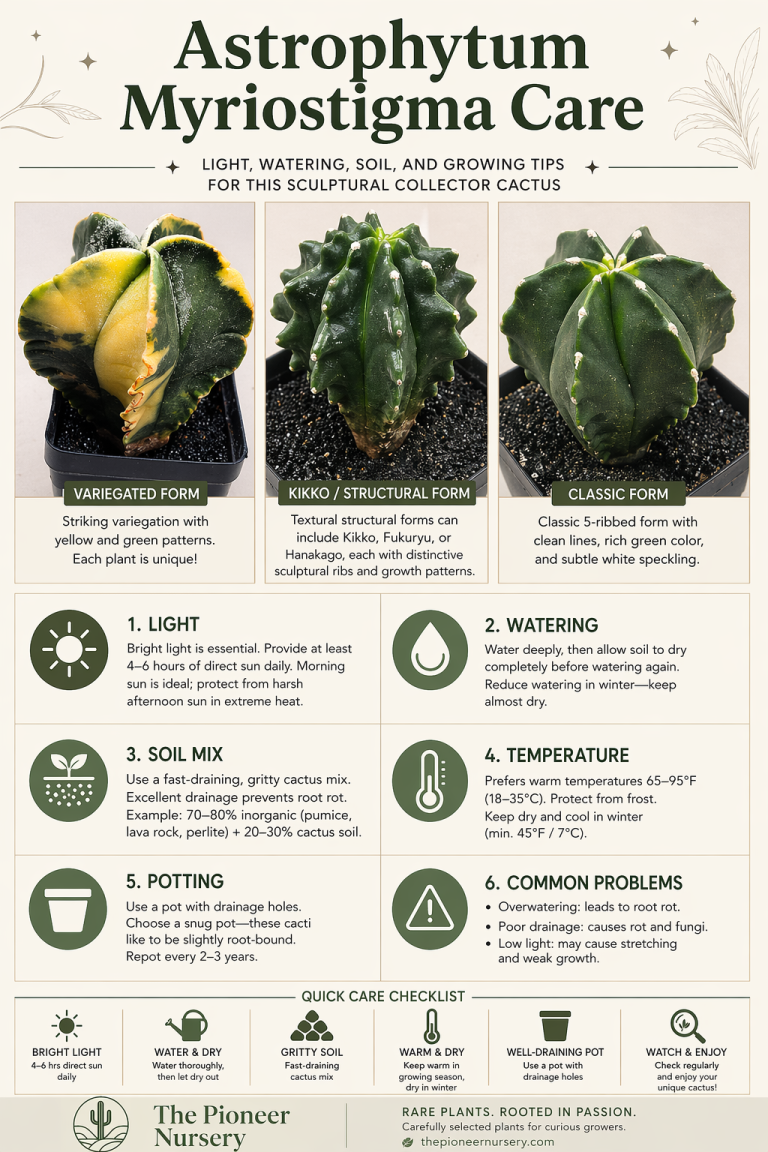
Astrophytum asterias is popular in many forms, including variegated, super kabuto, nudum, kikko, flower-form, and other selected types. These special forms may grow more slowly and may be more sensitive to sun, watering, and root disturbance.
Variegated plants can be especially sensitive because pale yellow, cream, or white tissue has less chlorophyll. These plants need enough light to maintain strong color, but they may burn more easily than fully green plants.
For variegated or specialty Astrophytum asterias, use extra care with:
- Harsh sun
- Overwatering
- Cold wet soil
- Heavy organic soil
- Sudden environmental changes
- Fresh root damage
Bright filtered light, gritty soil, warmth, and patient watering are usually the safest approach.
Common Problems
Wrinkling
Slight wrinkling can happen after shipping, during dormancy, or when the plant is thirsty. If the plant is firm and recently shipped, do not rush to water immediately. Let it settle first.
Soft or Mushy Areas
Soft, black, wet, or mushy areas may indicate rot. Stop watering, isolate the plant, and inspect it closely.
Sunburn
Sunburn may appear as pale, yellow, tan, brown, or crispy damaged areas. It often happens when the plant is moved into strong sun too quickly.
Rot at the Base
Because Astrophytum asterias sits low to the soil, base rot can happen if the plant is buried too deeply or if moisture sits against the body. Keep the plant body above the soil line and use fast-draining soil.
Pests
Astrophytum can be affected by mealybugs, root mealybugs, spider mites, and scale. Inspect the areoles, base, soil line, and roots during repotting.
After Shipping Care
When your Astrophytum asterias arrives, unpack it carefully and inspect the plant. If it was shipped bare root, dry roots are normal.
Start with:
- Dry, gritty cactus soil
- A pot with drainage holes
- Bright shade or filtered light
- No immediate watering
- Good airflow
- A short quarantine period
Wait before watering and avoid harsh sun right away. The plant may take time to settle before it begins growing again.
Quick Care Checklist
- Use bright filtered light or gentle morning sun.
- Avoid sudden harsh afternoon sun.
- Use gritty, fast-draining cactus soil.
- Plant in a pot with drainage holes.
- Keep the body slightly above the soil line.
- Let the soil dry completely between waterings.
- Water less in cool, humid, or low-light conditions.
- Protect from frost and cold wet soil.
- Provide good airflow.
- Fertilize lightly only during active growth.
- Inspect regularly for pests, soft spots, and base rot.
Final Thoughts
Astrophytum asterias is a beautiful collector cactus with a clean, sculptural look and a wide range of desirable forms. It is not difficult to grow, but it does best when kept in the right conditions.
Give it bright filtered light, a gritty soil mix, a pot with drainage, warmth, airflow, and careful watering. Avoid rushing water after shipping or repotting, and do not let moisture sit around the base. With patience and proper care, Astrophytum asterias can become a standout plant in any cactus collection.