Pseudolithos migiurtinus Care Guide
Learn how to grow Pseudolithos migiurtinus, a rounded Somali stem succulent that needs intense light, mineral soil, warm conditions, and careful watering to avoid rot.
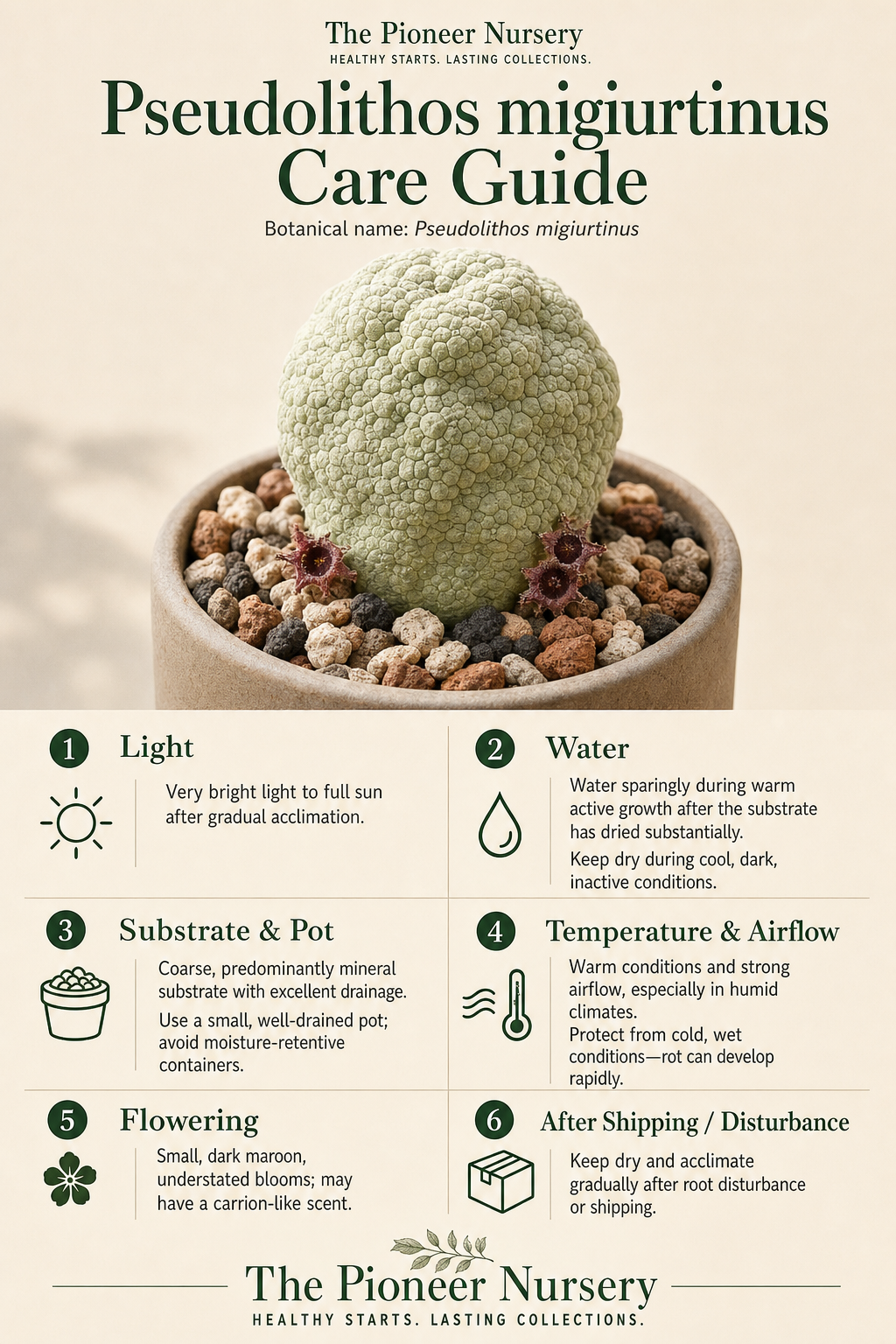
Pseudolithos migiurtinus is a leafless, rounded to semi-spherical stem succulent from Somalia. Its unusual form and carrion-scented flowers make it a fascinating collector plant, but it is less forgiving than many common succulents. The key to success is a very porous mineral substrate, strong light, warm growing conditions, and cautious watering that avoids prolonged moisture around the roots.
Quick Care Summary
- Provide very bright light to full sun after gradual acclimation.
- Use a coarse, predominantly mineral substrate with excellent drainage.
- Water sparingly during warm active growth after the substrate has dried substantially.
- Keep the plant dry during cool, dark, inactive conditions.
- Use a relatively small pot and avoid containers that retain moisture.
- Provide strong airflow, especially in humid climates.
- Protect the plant from cold, wet conditions because rot can develop rapidly.
About the plant
Pseudolithos migiurtinus belongs to the Apocynaceae family and is naturally associated with dry shrubland and desert habitats in Somalia. It may also be encountered under documented synonyms including White-sloanea migiurtina, Ceropegia migiurtina, Lithocaulon sphaericum, and Pseudolithos sphaericus. These names refer to nomenclatural synonyms and do not change the care approach described here.
Light and airflow
Provide very bright light to full sun once the plant is acclimated. If it has been grown in shade or arrived from a shaded greenhouse, increase light gradually to reduce the risk of sunburn. Strong airflow is especially helpful in humid climates and helps the substrate dry more reliably.
Watering
Water sparingly during warm, active growth, and only after the substrate has dried substantially. Avoid standing water and prolonged wetness. Do not water when conditions are cool and poorly ventilated, because this species can rot rapidly. Severe, prolonged drought can cause deflation and distorted growth, so the goal is careful drying between appropriate waterings rather than permanent dehydration.
Soil and substrate
Use a coarse, very fast-draining substrate made predominantly from mineral materials. Keep water-retentive organic material to a minimum and prioritize root aeration. A porous, mineral-based medium is especially important because the plant is highly sensitive to wet roots.
Potting and roots
Choose a relatively small or under-sized pot with unobstructed drainage. Avoid oversized containers, which can hold moisture around the roots for too long. Repot only when necessary, handle the stem and roots carefully, and allow damaged or disturbed roots to dry before cautious rewatering.
Temperature and seasonal growth
Keep Pseudolithos migiurtinus warm and protect it from cold, particularly when the plant or substrate is wet. A conservative cultivation approach is to keep it above approximately 10°C/50°F and completely dry during cooler periods; this is a precaution, not a verified hardiness limit. Growth may slow or pause during cooler, darker, or seasonally dry conditions. Reduce or suspend watering during inactivity and resume only when warmth, light, and signs of active growth return.
Fertilizer
If you fertilize, use a light application of a low-strength succulent fertilizer during active growth. A cautious slow-release fertilizer incorporated into the growing medium is another supported option. Avoid heavy feeding when growth is inactive.
Flowering
Small dark reddish-brown to maroon flowers may appear several times a year under favorable conditions. They can have a strong carrion-like odor, a feature associated with pollination by carrion flies. Position the plant where this scent will not be an issue when flowers open.
Propagation
Seed is the primary propagation method. Healthy cut sections may sometimes be rooted after removing rot, but this is best treated as an emergency recovery technique rather than the standard method. Grafting may also be used experimentally or for preservation, while reliable seed propagation remains the normal recommendation.
Safety
The sap may irritate skin and may be toxic if ingested. Keep the plant away from children and pets, and avoid contact with sap. Handle it carefully during potting or any cutting work.
Shipping and arrival care
Inspect the plant after arrival and protect it from crushing, prolonged cold, and excessive heat. If it arrived bare-root or experienced substantial root disturbance, keep it dry while roots and wounds stabilize. Reintroduce bright light gradually, and delay watering until conditions are warm, ventilated, and the plant is showing recovery. Because this species is especially prone to rapid rot, wet packing and immediate watering after root disturbance are hazardous.
Common Problems
- Rot: Usually associated with overwatering, poor drainage, cool wet conditions, or inadequate airflow. Improve drainage and keep the plant dry during unsuitable conditions.
- Sunburn: Can follow an abrupt move from shade into intense sun. Acclimate gradually.
- Deflation or distortion: May result from prolonged severe drought. Resume careful watering only when conditions support active growth.
- Root loss or delayed recovery: Can occur after shipping or repotting. Keep disturbed roots dry while they stabilize, then rewater cautiously.
- Sucking insects: These may occur and should be monitored for during routine inspection.
- Unpleasant flower scent: The dark flowers may produce a pungent odor related to carrion-pollination biology.
Frequently Asked Questions
How often should I water Pseudolithos migiurtinus?
Do not follow a fixed calendar. Water sparingly during warm active growth, after the substrate has dried substantially. Reduce or stop watering during cool, dark, or inactive conditions.
Can Pseudolithos migiurtinus grow in full sun?
Yes, very bright light to full sun is appropriate once the plant is acclimated. Increase light gradually if it was previously grown in shade, and provide good airflow.
What soil is best for this species?
Use a coarse, very fast-draining, predominantly mineral substrate with little water-retentive organic material.
Why is my plant becoming soft or rotting?
Rot is commonly associated with overwatering, poor drainage, cool wet conditions, or inadequate airflow. This species is notably sensitive to prolonged moisture around its roots.
How should I handle a bare-root plant after shipping?
Keep it dry while disturbed roots and wounds stabilize, gradually reintroduce bright light, and delay watering until conditions are warm, ventilated, and the plant is recovering.
How is Pseudolithos migiurtinus propagated?
Propagation is primarily by seed. Emergency rooting of healthy cut sections after rot removal is possible in specialist cultivation, but it is not the standard method.
Pseudolithos migiurtinus rewards careful observation rather than a rigid schedule. Give it intense but acclimated light, mineral soil, warmth, airflow, and enough drying time between waterings, especially during cool or inactive periods.