Astrophytum Myriostigma Care
Astrophytum myriostigma is a classic collector cactus known for its smooth, sculptural shape, spineless body, star-like form, and beautiful white speckling. It…
Astrophytum myriostigma is a classic collector cactus known for its smooth, sculptural shape, spineless body, star-like form, and beautiful white speckling. It is commonly called the Bishop’s Cap cactus because many plants develop a clean, angular shape that resembles a bishop’s hat when viewed from above.
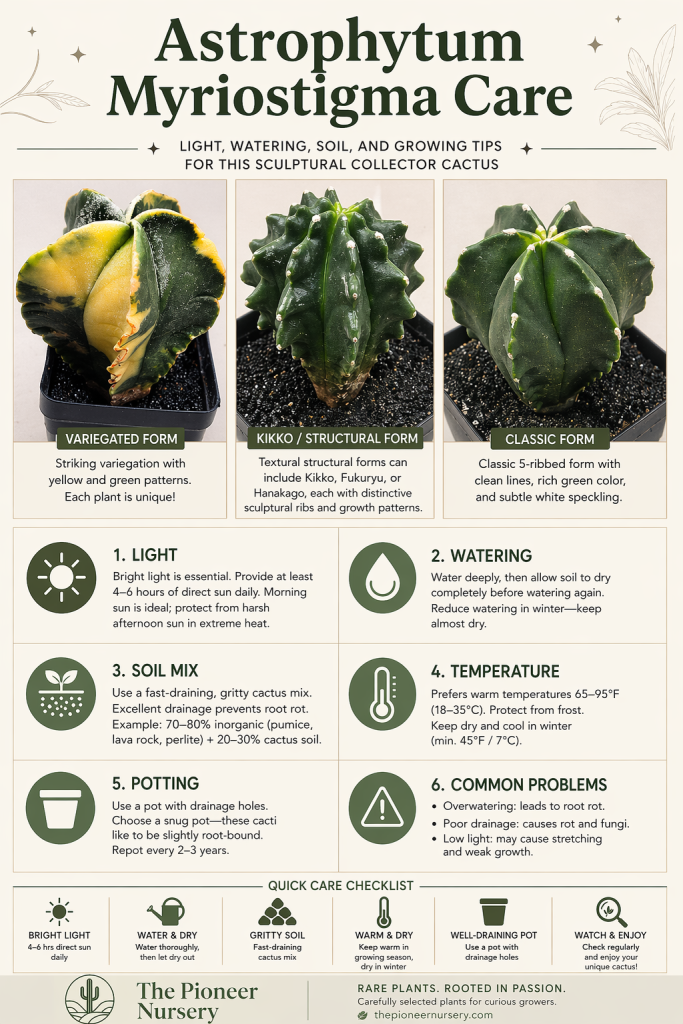
This cactus is popular with both beginners and collectors because it has a striking look without the heavy spines found on many other cactus. Special forms such as kikko, nudum, variegated, quadricostatum, and tricostatum make Astrophytum myriostigma even more desirable in collections.
Although it is fairly manageable, it still needs the right care: bright filtered light, fast-draining soil, careful watering, warmth, and good airflow.
Light Requirements
Astrophytum myriostigma grows best in bright light. It can often handle more light than some softer or more colorful cactus, but it should still be acclimated slowly, especially after shipping or repotting.
Good light options include:
- Bright filtered light
- Gentle morning sun
- A bright windowsill
- A greenhouse bench with light shade
- A grow light placed at a safe distance
Avoid sudden harsh afternoon sun, especially if the plant was recently shipped. A cactus that has spent several days in a box can burn if it is placed directly into intense sunlight too quickly.
If the plant starts to look pale, bleached, yellowed, or scorched, reduce light and allow it to recover in bright shade.
Watering
Astrophytum myriostigma should be watered only when the soil is fully dry. It does not like sitting in wet soil for long periods.
During warm active growing conditions, water thoroughly and then allow the pot to dry completely before watering again. During cool weather, dormancy, low light, or humid conditions, water much less often.
A safe watering approach:
- Water when the soil is completely dry.
- Water more during warm active growth.
- Water less in cool or low-light conditions.
- Do not water immediately after shipping or repotting.
- Let the soil dry fully between waterings.
If your plant arrived bare root, pot it into dry cactus soil and wait about 5–7 days before the first light watering. If roots were freshly trimmed or the plant is a sensitive specimen, waiting 7–14 days may be safer.
Soil Mix
Use a gritty, fast-draining cactus soil mix. Astrophytum myriostigma has a strong cactus structure, but its roots still need airflow and dry periods.
A beginner-friendly mix:
50% cactus soil
50% pumice or perlite
For indoor growing, humid climates, plastic pots, or collector forms, use a grittier mix:
30–40% cactus soil
60–70% mineral material
Mineral ingredients may include pumice, perlite, lava rock, coarse sand, decomposed granite, akadama, turface, chicken grit, expanded shale, or diatomaceous earth.
The goal is a mix that drains quickly, allows oxygen around the roots, and dries between waterings.
Potting and Repotting
Choose a pot with drainage holes. Astrophytum myriostigma does not need to be placed in an oversized pot. A pot that comfortably fits the root system is usually better than one with too much extra soil.
When potting, keep the lower body of the cactus slightly above the soil line. Do not bury the plant too deeply, because moisture sitting against the body can lead to rot.
After repotting, keep the plant dry for several days before watering so disturbed roots can heal.
Temperature
Astrophytum myriostigma prefers warm conditions and should be protected from frost. Cold and wet conditions together are especially risky.
If nighttime temperatures are low or the weather is cool and damp, reduce watering. During winter or dormancy, the plant may need very little water depending on your growing setup.
Avoid freezing temperatures, cold drafts, and damp soil during cold weather.
Humidity and Airflow
Good airflow helps prevent fungal spots, pests, and soil that stays wet too long. This is especially important if the cactus is grown indoors, in a greenhouse, or on a crowded plant shelf.
If your environment is humid, increase airflow and use a grittier soil mix. Make sure plants are spaced well enough that moisture does not stay trapped around them.
Fertilizer
Astrophytum myriostigma can be fertilized lightly during the active growing season. Use a diluted cactus fertilizer and avoid heavy feeding.
Do not fertilize a newly shipped, freshly repotted, stressed, or dormant plant. Let the plant settle first.
Too much fertilizer can encourage weak or unnatural growth, especially if light is not strong enough.
Special Forms and Collector Types
Astrophytum myriostigma is especially popular because of its many forms.
Common collector forms include:
- Kikko forms with raised or textured rib patterns
- Nudum forms with little or no white flecking
- Variegated forms with yellow, cream, orange, or green patterning
- Quadricostatum forms with four ribs
- Tricostatum forms with three ribs
- Onzuka and other heavily patterned forms
These forms may grow more slowly or may require extra care. Variegated plants can be more sensitive to harsh sun because pale tissue has less chlorophyll. Kikko and unusual forms may also need careful watering because their textured bodies can hold moisture in creases.
For special forms, use bright filtered light, strong drainage, gentle watering, and extra patience.
Common Problems
Wrinkling
Slight wrinkling can happen from thirst, shipping stress, root disturbance, or dormancy. If the plant is firm and recently shipped, do not rush to water. Let it settle first.
Soft or Mushy Areas
Soft, black, wet, or mushy areas may indicate rot. Stop watering, isolate the plant, and inspect it closely.
Sunburn
Sunburn may appear as pale, yellow, tan, brown, or crispy patches. It usually happens when the plant is moved into strong sun too quickly.
Rot at the Base
Base rot can happen when the cactus is buried too deeply, watered too soon after repotting, or kept in soil that stays wet too long. Keep the body slightly above the soil line and use a fast-draining mix.
Pests
Astrophytum myriostigma can be affected by mealybugs, root mealybugs, spider mites, and scale. Inspect the areoles, base, ribs, soil line, and roots during repotting.
Fungal Spots
Rust-like or fungal spots can appear in damp, low-airflow conditions. Improve airflow, avoid misting, and keep the plant dry while evaluating the issue.
After Shipping Care
When your Astrophytum myriostigma arrives, unpack it carefully and inspect the plant. If it was shipped bare root, dry roots are normal.
Start with:
- Dry, gritty cactus soil
- A pot with drainage holes
- Bright shade or filtered light
- No immediate watering
- Good airflow
- A short quarantine period
Wait before watering and avoid harsh sun right away. Stability comes before growth.
Quick Care Checklist
- Use bright filtered light or gentle morning sun.
- Avoid sudden harsh afternoon sun.
- Use gritty, fast-draining cactus soil.
- Plant in a pot with drainage holes.
- Keep the body slightly above the soil line.
- Let the soil dry completely between waterings.
- Water less in cool, humid, or low-light conditions.
- Protect from frost and cold wet soil.
- Provide good airflow.
- Fertilize lightly only during active growth.
- Inspect regularly for pests, soft spots, and fungal spotting.
Final Thoughts
Astrophytum myriostigma is a beautiful, sculptural cactus that can be both beginner-friendly and highly collectible. Its clean shape, spineless body, white flecking, and unusual forms make it a standout plant in any collection.
Give it bright filtered light, a gritty soil mix, careful watering, warmth, drainage, and airflow. For newly shipped or specialty forms, move slowly with water and light. With patience and the right conditions, Astrophytum myriostigma can thrive for years and become a centerpiece in your cactus collection.