Seeds and Seedling Cactus Care
Growing cactus from seed is one of the most rewarding parts of the hobby. It takes patience, but it also gives you…
Growing cactus from seed is one of the most rewarding parts of the hobby. It takes patience, but it also gives you the chance to watch cactus develop from tiny seedlings into unique plants with their own shapes, colors, and character.
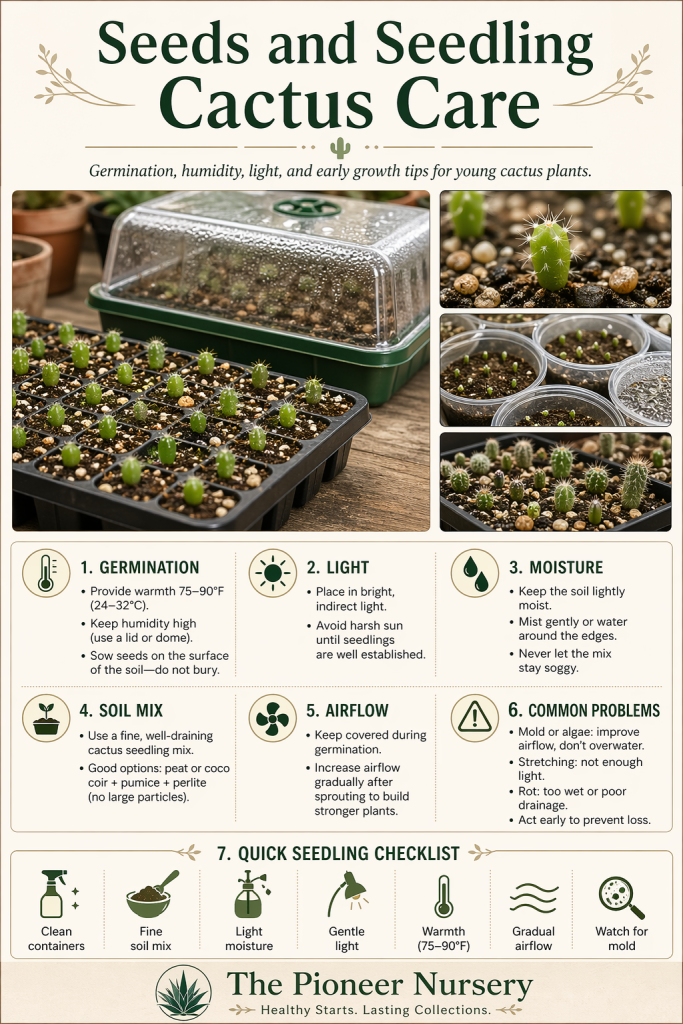
Cactus seedlings are different from mature cactus. They need more consistent moisture, gentler light, warmth, and protection while they are young. The goal is to create a safe, stable environment where seeds can germinate and seedlings can grow without drying out too quickly.
Why Cactus Seedlings Need Different Care
Mature cactus can usually handle dry periods, strong light, and gritty soil. Seedlings are much more delicate. Their roots are tiny, their bodies are soft, and they do not yet have the same water storage ability as older plants.
Young seedlings need:
- Consistent light moisture
- Warm temperatures
- Bright but gentle light
- High humidity during early germination
- Clean soil and containers
- Protection from pests, mold, and harsh sun
As seedlings mature, they can slowly be transitioned into more cactus-like care with more airflow, brighter light, and longer dry periods.
Choosing a Seed Starting Container
Cactus seeds can be started in small pots, seed trays, takeout-style containers, or clear-lidded propagation containers. The container should hold humidity while still allowing you to monitor the seedlings.
A good seed starting container should be:
- Clean
- Shallow to moderately deep
- Able to hold moisture
- Easy to cover
- Easy to label
- Suitable for drainage or controlled moisture
Clear lids or plastic covers help maintain humidity during germination. This is especially helpful for tiny cactus seedlings.
Soil Mix for Cactus Seeds
Seedling soil should be fine enough for tiny roots to enter, but still well-draining enough to avoid becoming swampy. A mix that is too chunky can make it difficult for small seedlings to anchor. A mix that is too heavy can stay too wet and cause rot or mold.
A good seedling mix may include:
- Fine cactus soil
- Pumice or perlite
- Fine mineral grit
- Coarse sand
- Sifted inorganic material
For many cactus seeds, a simple seedling mix can be:
50% fine cactus soil
50% fine pumice, perlite, or mineral grit
For rare or rot-sensitive cactus, use a more mineral-heavy mix and keep the surface clean.
Cleanliness Matters
Cleanliness is important when starting cactus seeds because the warm, humid conditions that help seeds germinate can also encourage mold, algae, and fungus.
Before sowing seeds:
- Use clean containers.
- Use fresh or cleaned soil mix.
- Remove large bark pieces or debris.
- Wash your hands or tools.
- Label the container with species and date.
Some growers sterilize seedling soil before sowing. This can help reduce fungus and mold problems, especially when using closed containers or high-humidity methods.
How to Sow Cactus Seeds
Moisten the soil before adding seeds. The mix should be evenly damp but not muddy or flooded.
Sprinkle the seeds on the surface of the soil. Most cactus seeds are very small and should not be buried deeply. Many can be gently pressed into the surface or covered with only a very light dusting of fine grit.
After sowing:
- Mist gently if needed.
- Cover the container with a clear lid or plastic cover.
- Place it in bright, indirect light.
- Keep it warm.
- Avoid direct harsh sun.
Do not let the seed surface dry out during the early germination stage.
Humidity During Germination
Many cactus seeds germinate best in a humid environment. A covered container helps keep moisture stable and prevents the surface from drying too quickly.
The soil should stay lightly moist, not soggy. If water collects heavily on the lid or the soil looks flooded, open the container briefly to allow extra moisture to escape.
Once seedlings appear and begin to grow, gradually increase airflow over time.
Light for Seedlings
Cactus seedlings need light, but not harsh direct sun. Strong sunlight can cook or burn tiny seedlings very quickly, especially inside a covered container.
Good seedling light options include:
- Bright indirect light
- Filtered window light
- A shaded greenhouse area
- Grow lights placed at a safe distance
If seedlings stretch, lean, or look pale, they may need more light. If they turn red, brown, white, or look scorched, the light may be too intense.
The goal is steady, gentle light that supports compact growth without burning the seedlings.
Temperature for Germination
Most cactus seeds germinate best in warm conditions. A comfortable warm room, seedling heat mat, or warm greenhouse shelf can help improve germination.
Avoid cold, damp conditions. Cold wet soil can slow germination and increase the risk of rot.
If using a heat mat, use gentle warmth and avoid overheating the container. Covered containers can become surprisingly hot under direct light.
Watering Seedlings
Seedlings need more moisture than mature cactus, especially at first. The soil should stay lightly moist during germination and early growth.
As seedlings get larger, you can slowly allow the soil surface to dry slightly between waterings. Do this gradually. Do not suddenly treat tiny seedlings like mature cactus.
Helpful watering methods include:
- Misting gently
- Bottom watering
- Using a spray bottle
- Adding small amounts of water along the container edge
Avoid blasting seedlings with a strong stream of water. They can be knocked over or buried easily.
When to Add Airflow
Once seedlings are established, gradually introduce airflow. Do not remove the lid permanently all at once if the seedlings have been growing in a humid container.
A simple transition method:
- Open the lid briefly each day.
- Increase the open time over several days or weeks.
- Crack the lid slightly for longer periods.
- Remove the lid once seedlings can handle normal humidity.
This slow transition helps prevent sudden drying and shock.
When to Transplant Cactus Seedlings
Cactus seedlings do not need to be transplanted too early. In many cases, they can stay together in the seedling container for several months or longer, depending on species, spacing, and growth rate.
Transplant when:
- Seedlings are crowded
- They are large enough to handle safely
- Roots are filling the container
- The soil is breaking down
- Algae, mold, or pests become a problem
- They need a more mature cactus mix
When transplanting, handle seedlings gently and avoid damaging their tiny roots. After transplanting, keep them in gentle light and avoid heavy watering until they settle.
Common Seedling Problems
Mold
Mold can appear when conditions are too wet, stagnant, or full of organic debris. Improve airflow gradually, remove debris, and avoid overwatering.
Algae
Algae often appears as green growth on the soil surface. It is usually caused by moisture, light, and organic material. A cleaner mix and better airflow can help.
Stretching
Seedlings that grow tall, thin, or leaning may need more light. Move them closer to a grow light or into brighter indirect light gradually.
Red or Brown Stress Coloring
Some color change can be normal, but strong red, brown, or white coloring may mean too much light or heat. Move seedlings to gentler light.
Rot
Rot can happen when seedlings stay too wet, too cold, or too crowded. Remove affected seedlings if possible and improve conditions.
Fungus Gnats
Fungus gnats are attracted to moist soil. Clean seed-starting conditions, airflow, and careful watering can help reduce them.
Fertilizer for Cactus Seedlings
Seedlings do not need heavy fertilizer. Once they are established and actively growing, you can use a very diluted fertilizer occasionally.
Avoid fertilizing freshly sprouted seedlings or seedlings that are stressed, rotting, or growing in poor light.
Weak, steady growth is better than pushing seedlings too hard.
Transitioning Seedlings to Mature Cactus Care
As seedlings grow, slowly move them toward mature cactus care.
This means:
- More airflow
- Slightly brighter light
- Less constant humidity
- Longer dry periods
- Grittier soil over time
- More space between plants
This transition should be gradual. A sudden change from humid seedling conditions to dry adult cactus conditions can shock young plants.
Quick Seeds and Seedling Checklist
- Use clean containers and fresh soil.
- Label seeds with species and date.
- Use fine, well-draining seedling mix.
- Keep soil lightly moist during germination.
- Use bright, gentle light.
- Avoid harsh direct sun.
- Keep seedlings warm.
- Maintain humidity at first.
- Gradually increase airflow.
- Water gently.
- Do not transplant too early.
- Watch for mold, algae, stretching, and rot.
- Transition slowly into mature cactus care.
Final Thoughts
Growing cactus from seed takes patience, but it is one of the most exciting ways to build a collection. Seedlings may start tiny and fragile, but with stable moisture, gentle light, warmth, and gradual airflow, they can develop into strong young cactus.
The key is to care for seedlings differently than mature cactus. Keep them protected while they are young, then slowly introduce brighter light, more airflow, and drier conditions as they grow. Over time, those tiny seedlings can become some of the most rewarding plants in your collection.